
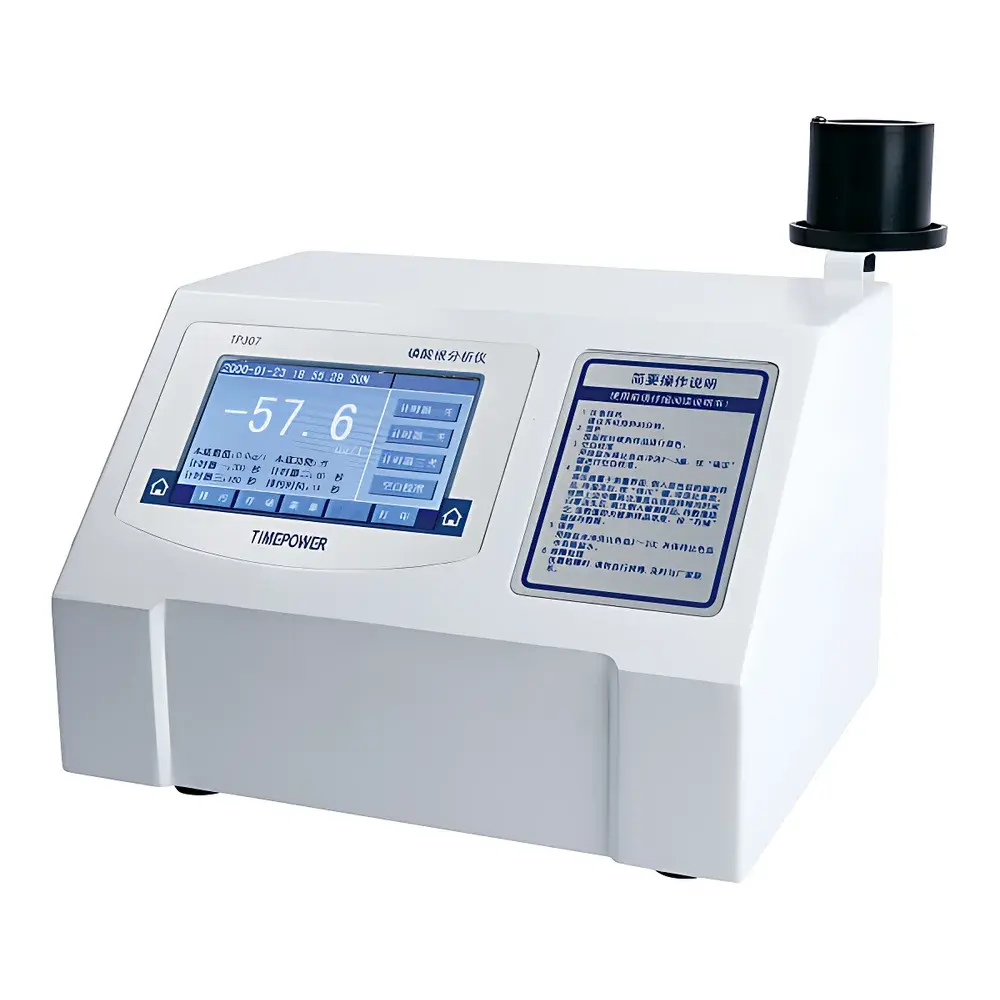
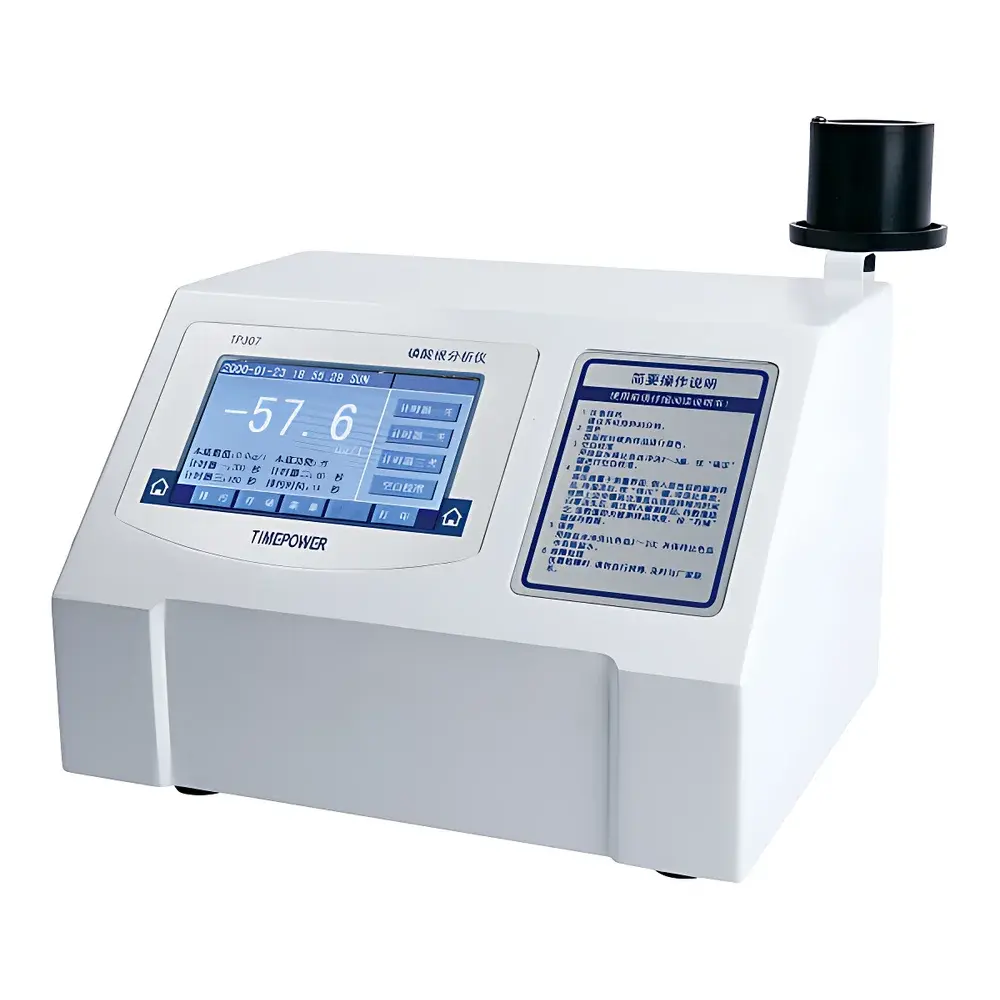
Timepower TP307 Phosphate Analyzer
| Brand | Timepower |
|---|---|
| Origin | Beijing, China |
| Manufacturer Type | Direct Manufacturer |
| Regional Classification | Domestic (China) |
| Model | TP307 |
| Instrument Type | Benchtop Laboratory Analyzer |
| Pricing | Upon Request |
Overview
The Timepower TP307 Phosphate Analyzer is a benchtop laboratory instrument engineered for precise, trace-level quantification of orthophosphate (PO₄³⁻) in ultra-pure water streams critical to power generation and high-purity industrial processes. It operates on the principle of colorimetric photometry based on the vanadomolybdophosphoric acid method: in acidic medium, orthophosphate reacts with ammonium metavanadate and ammonium molybdate to form a stable yellow heteropolyacid complex—phosphovanadomolybdic acid—whose absorbance at 420 nm is linearly proportional to phosphate concentration per the Beer–Lambert law. Designed specifically for monitoring boiler feedwater, condensate, desalinated water, and process streams in thermal power plants, pharmaceutical clean utilities, chemical fiber production, and fine chemical synthesis, the TP307 delivers reliable performance under stringent water purity requirements where phosphate contamination must be controlled below 20 µg/L (0.02 mg/L) to prevent scale formation and corrosion in high-pressure steam cycles.
Key Features
- Integrated optical architecture featuring an imported monochromatic cold-light source (LED-based), ensuring long-term spectral stability, low thermal drift, and >50,000-hour operational lifetime.
- High-precision photometric detection system with temperature-compensated silicon photodiode and optimized optical path design, minimizing stray light interference and enhancing signal-to-noise ratio.
- Advanced surface-mount technology (SMT) PCB layout and fully enclosed modular chassis for electromagnetic compatibility (EMC), vibration resistance, and long-term reliability in laboratory environments.
- Embedded single-chip microcontroller (MCU) platform enabling real-time data processing, automatic timing control, and intelligent calibration management without external computing hardware.
- 5.0-inch capacitive touch color LCD interface with native Chinese language support, intuitive menu navigation, and on-screen prompt guidance for calibration, measurement, and maintenance procedures.
- Dual-range selectable measurement capability: 0–20 mg/L and 0–50 mg/L, both configurable via software; resolution of 0.01 mg/L ensures sensitivity appropriate for low-concentration regulatory compliance testing.
Sample Compatibility & Compliance
The TP307 is validated for use with Type I and Type II reagent water (per ISO 3696 and ASTM D1193), including high-resistivity water generated by mixed-bed ion exchange or EDI systems. Sample matrices include deionized water, condensate polish effluent, boiler drum water, and pharmaceutical purified water (PW) and water for injection (WFI) pre-treatment streams. While not certified for GMP or GLP environments out-of-the-box, its design supports audit-ready operation when deployed with documented standard operating procedures (SOPs), calibration logs, and user access controls. The analyzer complies with general electrical safety standards (IEC 61010-1) and environmental operating conditions defined in IEC 60721-3-3 (Class 3K3: 5–45°C, ≤90% RH non-condensing). For regulatory alignment, users may configure the instrument within a broader quality system adhering to ISO/IEC 17025, USP , or EP 2.2.42 frameworks.
Software & Data Management
The TP307 incorporates embedded firmware supporting full-cycle data lifecycle management: up to 256 measurement records are stored internally with timestamp, operator ID (manual entry), range setting, and calibration status flags. Data overwrite logic follows FIFO (first-in, first-out) protocol upon memory saturation. Built-in blank calibration and multi-point curve calibration routines support zero-drift correction and linearity verification per ASTM D859 or ISO 6878. Although no USB or Ethernet connectivity is provided, all stored data can be reviewed, filtered, and exported manually via on-screen browsing. For laboratories requiring electronic record integrity, external integration with LIMS or ELN systems is achievable through optional RS232 serial output (available upon request), enabling export of ASCII-formatted results compatible with CSV parsing and 21 CFR Part 11-compliant validation packages.
Applications
- Power plant chemistry control: continuous monitoring of phosphate carryover in turbine condensate and feedwater to prevent deposition in superheaters and economizers.
- Pharmaceutical water systems: verification of phosphate removal efficiency in pretreatment stages prior to distillation or membrane polishing.
- Chemical fiber manufacturing: detection of residual phosphate from catalyst wash steps in polyethylene terephthalate (PET) or viscose rayon production.
- Research laboratories: method development and validation for low-level phosphorus speciation studies in ultrapure water matrices.
- Environmental reference labs: supporting interlaboratory comparison exercises for phosphate proficiency testing under ISO/IEC 17043 guidelines.
FAQ
What sample volume is required for a single measurement?
A minimum of 30 mL of well-mixed, particle-free sample is recommended to ensure representative reaction kinetics and optical path consistency.
Is the TP307 suitable for field deployment or only fixed-lab use?
It is designed exclusively as a benchtop laboratory analyzer; no battery operation, shock resistance, or IP-rated enclosure is provided—transportation requires secure packaging and post-move recalibration.
Can the instrument measure total phosphorus or only orthophosphate?
The TP307 measures only reactive orthophosphate (PO₄³⁻); total phosphorus determination requires separate acid digestion (e.g., persulfate oxidation per ISO 6878) prior to analysis.
How often must calibration be performed to maintain accuracy?
Daily blank calibration is mandatory; full multi-point calibration using NIST-traceable phosphate standards is recommended every 14 days or after reagent lot changes, ambient temperature shifts >5°C, or optical component cleaning.
Are reagents supplied with the instrument?
No—only the analyzer unit, power cord, sample cup, and drainage tube are included; phosphate standard solutions, vanadomolybdate reagent kits, and acid buffers must be procured separately from authorized chemical suppliers meeting ACS or ISO-grade specifications.







