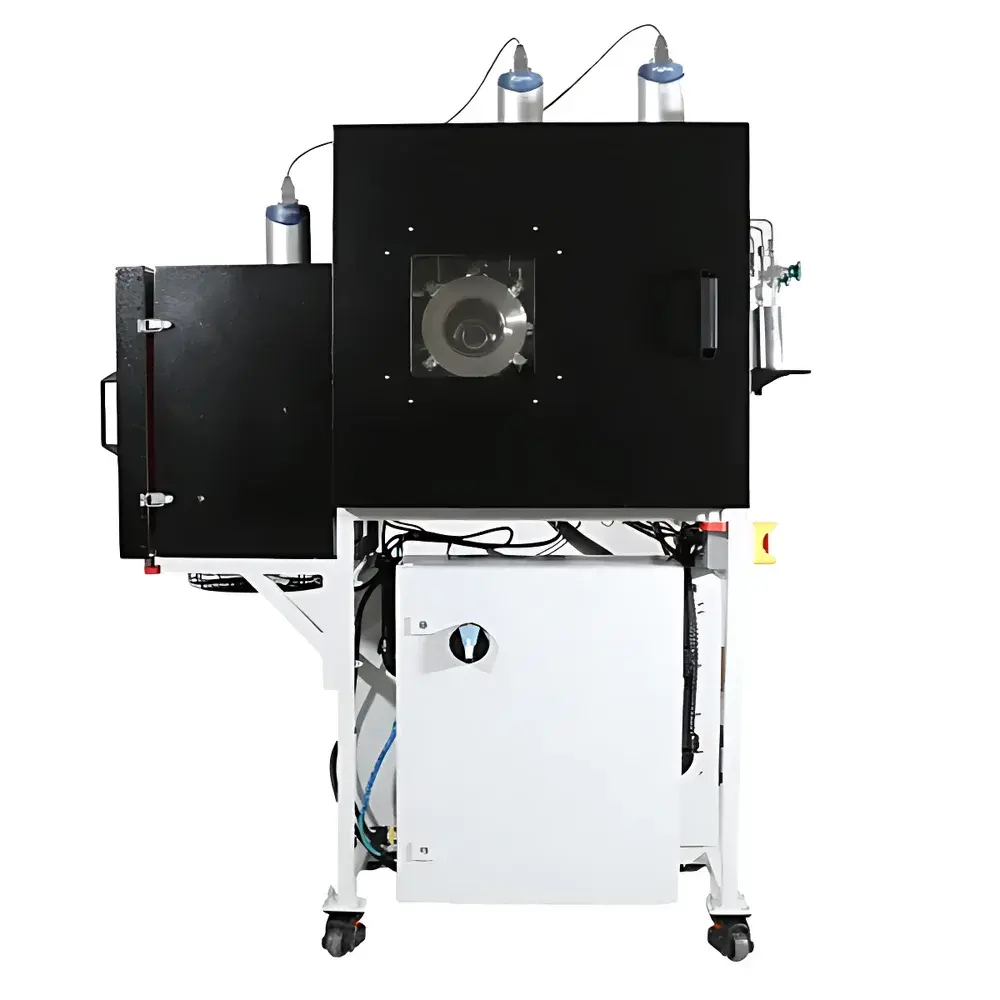
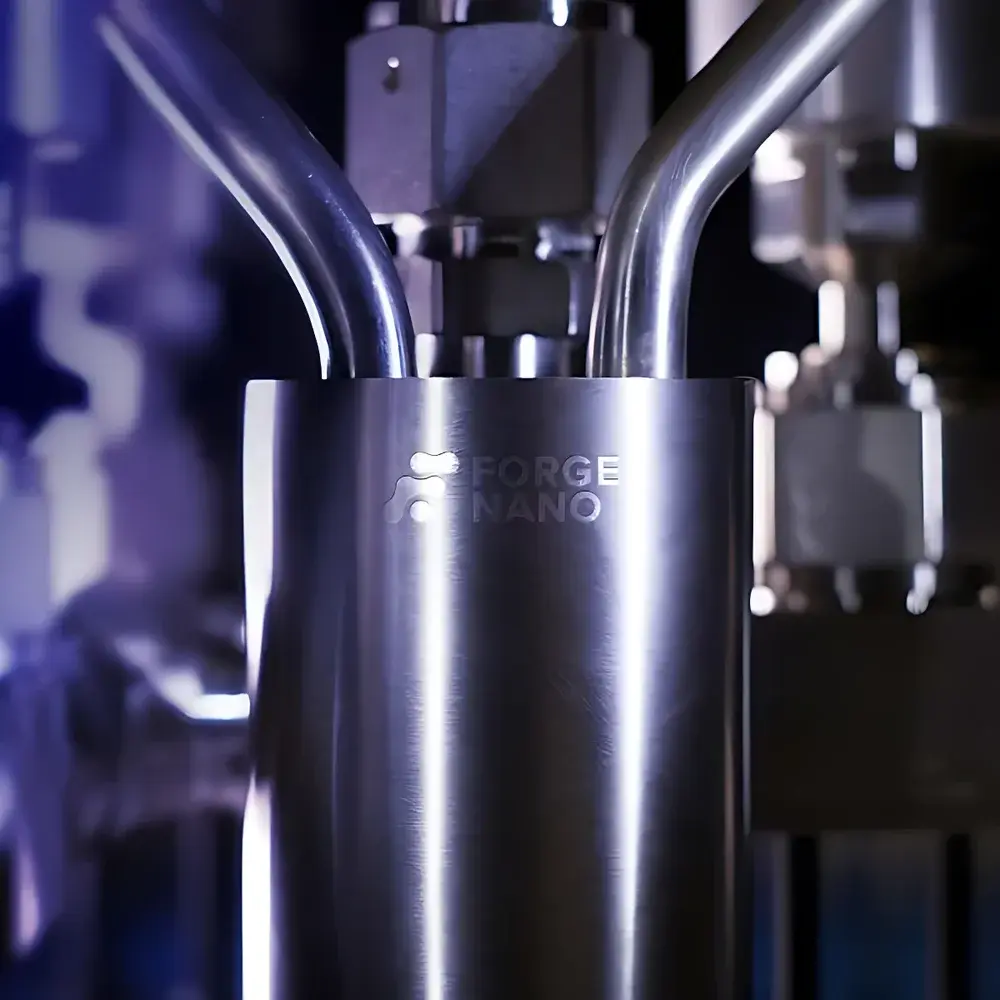
Forge Nano PANDORA Desktop Multi-Mode Atomic Layer Deposition System
| Brand | Forge Nano |
|---|---|
| Origin | USA |
| Model | PANDORA |
| Substrate Capacity | 10×10 cm² planar / 100 mL powder |
| Max Process Temperature | 200 °C |
| Precursor Channels | 2–6 |
| Weight | >100 kg |
| Dimensions (W×H×D) | 125 × 98 × 98 cm |
| Film Uniformity | <1% RMS variation on planar substrates |
| Powder Coating Uniformity | Conformal monolayer coverage across entire particle surface |
Overview
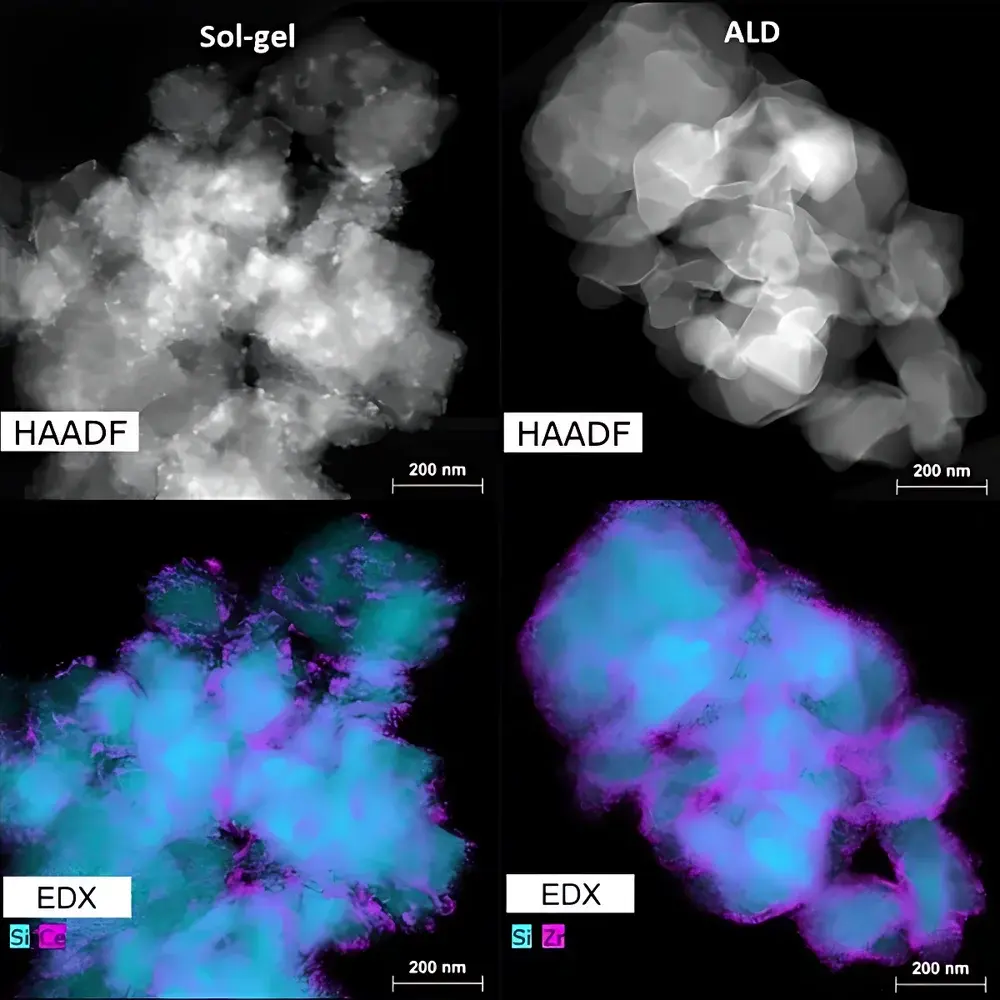
The Forge Nano PANDORA Desktop Multi-Mode Atomic Layer Deposition System is an engineered solution for precision surface functionalization of both planar and particulate substrates. Based on the self-limiting surface reaction mechanism of atomic layer deposition (ALD), the system enables sub-nanometer-thick, chemically precise, and conformal thin-film growth—whether on flat wafers, electrodes, fibers, or high-surface-area powders such as battery cathode materials, catalysts, or pharmaceutical excipients. Unlike conventional liquid-phase coating methods—which suffer from agglomeration, non-uniform thickness, solvent residue, and irreversible structural damage—the PANDORA leverages gas-phase, sequential precursor dosing to achieve true atomic-scale control. Its dual-mode architecture integrates a rotating powder chamber and a quick-swap planar stage within a single compact footprint, eliminating cross-contamination risks and reducing reconfiguration time to under two minutes.
Key Features
- Rotating reaction chamber optimized for uniform precursor exposure across irregular, high-aspect-ratio powder beds—enabling conformal ALD on particles down to sub-micron sizes without fluidization or segregation.
- Modular precursor delivery with 2–6 independently controlled, mass-flow-regulated channels—compatible with both continuous-flow and pulsed static-dose operation modes for kinetic studies and process optimization.
- Integrated in-situ quartz crystal microbalance (QCM) for real-time mass gain monitoring during ALD cycles—critical for quantifying growth per cycle (GPC), detecting incomplete ligand exchange, and validating self-limiting behavior.
- Optional add-ons include plasma source (for plasma-enhanced ALD), ozone generator (for metal oxide deposition), online FTIR or residual gas analyzer (RGA) for byproduct identification, and pneumatic assist for powder handling.
- Optical observation window with anti-fogging heating—enables direct visual verification of powder rotation dynamics, bed homogeneity, and absence of caking during thermal processing.
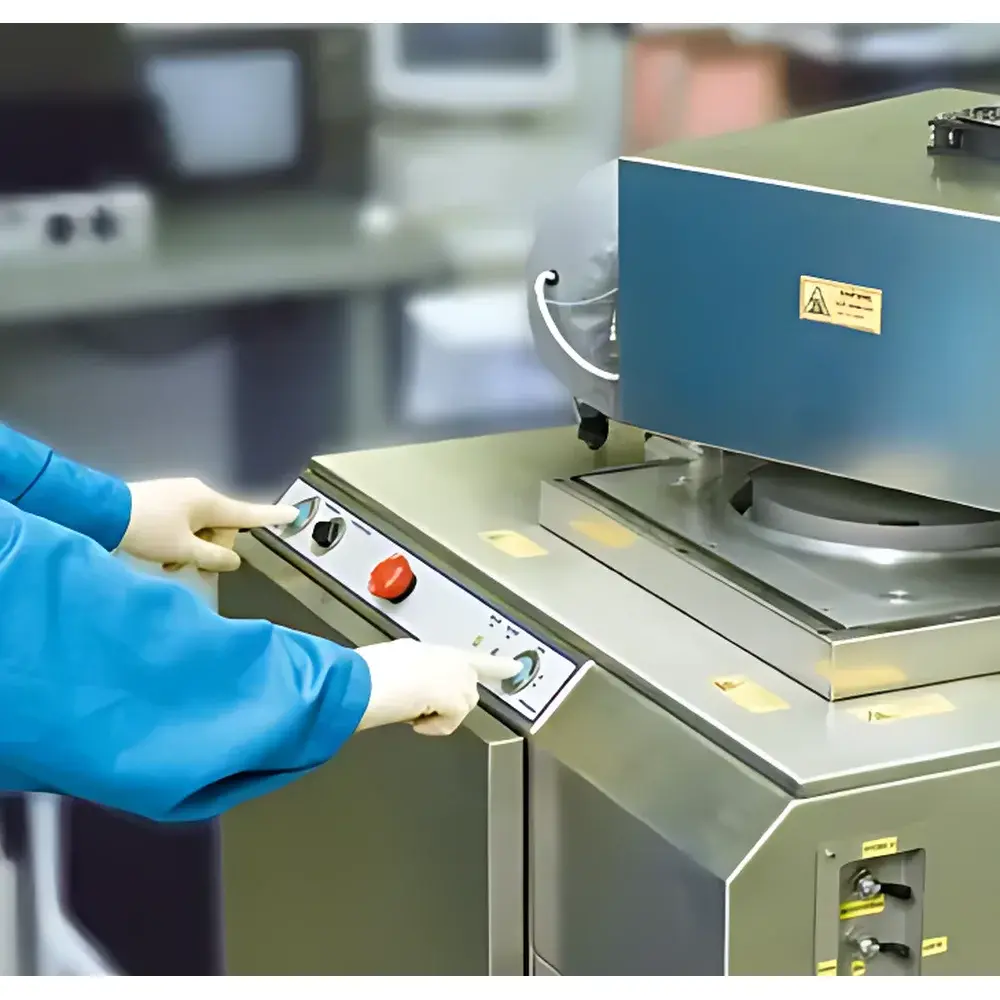
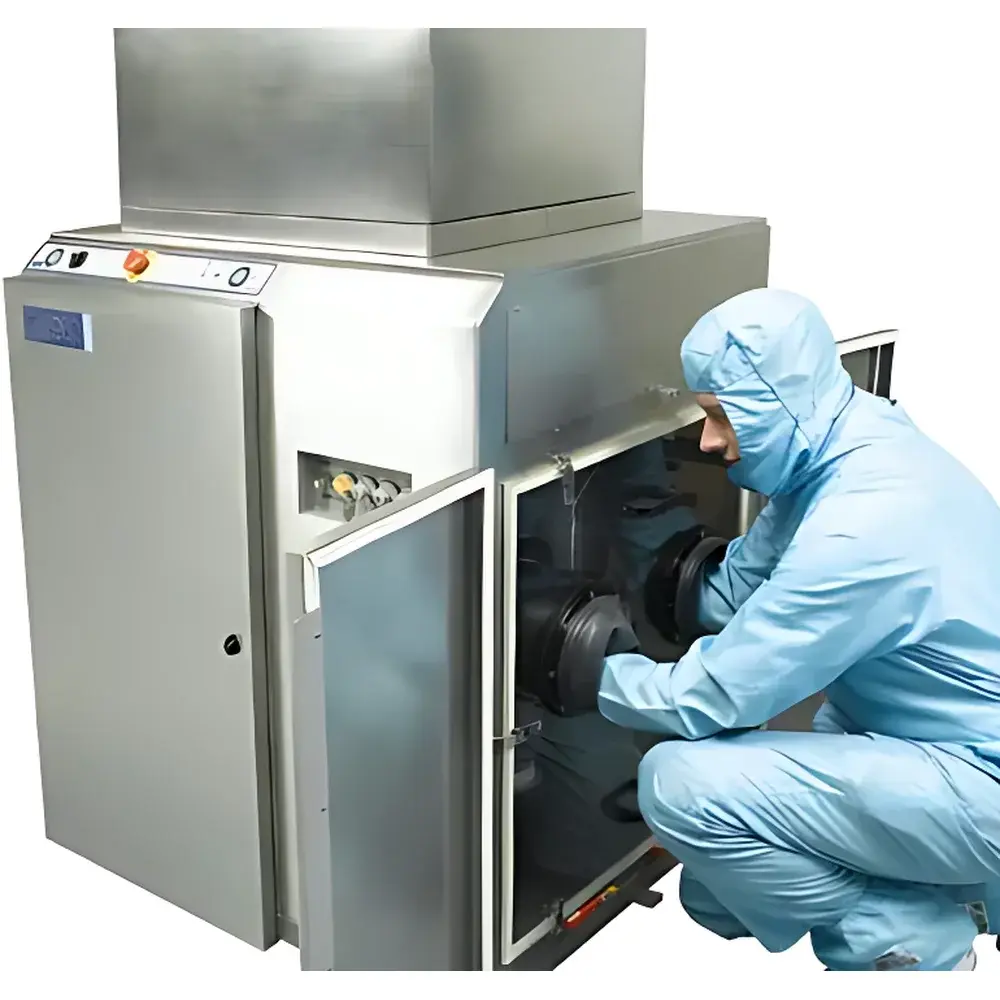
- Compact desktop form factor (125 × 98 × 98 cm) with full vacuum and gas safety interlocks—designed for Class 1000 cleanroom compatibility and benchtop deployment in university labs, corporate R&D centers, and GMP pilot facilities.
Sample Compatibility & Compliance
The PANDORA accommodates diverse substrate geometries: free-flowing powders (up to 100 mL volume), planar samples up to 10 × 10 cm², fibrous mats, porous monoliths, and packaged microdevices. Its temperature-controlled chamber (ambient to 200 °C) supports thermally activated ALD chemistries including Al₂O₃, TiO₂, SiO₂, ZnO, and HfO₂—without thermal degradation of sensitive substrates such as polymer-coated particles or API crystals. The system meets mechanical and electrical safety standards per UL 61010-1 and IEC 61000-6-3. For regulated environments, optional audit-trail-enabled software supports 21 CFR Part 11 compliance, including electronic signatures, user role-based access control, and immutable process log archiving—making it suitable for cGMP-compliant pharmaceutical surface modification and preclinical material qualification.
Software & Data Management
PANDORA operates via a Windows-based control suite with deterministic real-time scheduling of dose, purge, and pump sequences. All process parameters—including pulse width, purge duration, chamber pressure, heater setpoints, and QCM frequency shift—are timestamped and stored in SQLite databases with configurable export (CSV, HDF5). The software includes recipe templating, multi-step sequence chaining, and alarm-triggered automatic shutdown. Optional integration with LabArchives ELN or DeltaV DCS enables traceable data linkage from synthesis to characterization. Raw QCM data are processed using Sauerbrey-equation-based mass calibration, with drift compensation algorithms trained on inert-gas baselines.
Applications
- Battery Materials: Al₂O₃ or LiAlO₂ ALD coatings on NMC, LFP, or silicon anode powders to suppress side reactions, reduce transition-metal dissolution, and improve Coulombic efficiency over 500+ cycles.
- Heterogeneous Catalysis: Precise Pt or Pd overlayers on mesoporous silica or carbon supports—controlling metal dispersion at sub-nm scale to maximize active site density and turnover frequency.
- Pharmaceutical Engineering: Amorphous solid dispersion stabilization via ultrathin SiO₂ or MgO barriers on drug nanoparticles—enhancing shelf-life, dissolution kinetics, and bioavailability while maintaining crystallinity.
- Sensors & MEMS: Functionalization of nanowire arrays or cantilever surfaces with responsive polymer films or metal–organic frameworks (MOFs) for selective gas detection.
- Academic Method Development: Rapid screening of novel precursors, co-reactants, and thermal/plasma activation protocols—accelerating ALD process mapping without requiring custom reactor fabrication.
FAQ
What substrate types can be processed simultaneously?
The PANDORA does not process planar and powder substrates concurrently; however, switching between modes takes less than 120 seconds due to its tool-free chamber interchange design.
Is remote monitoring supported?
Yes—via secure VNC or OPC UA interface, with configurable alerts for vacuum loss, temperature deviation, or precursor depletion.
Can the system be validated for ISO/IEC 17025 testing laboratories?
Yes—documentation packages include IQ/OQ protocols, calibration certificates for MFCs and thermocouples, and uncertainty budgets for film thickness derived from QCM and ellipsometry correlation studies.
What maintenance intervals are recommended?
Quarterly inspection of O-rings and valve actuators; annual recalibration of pressure transducers and mass flow controllers—both supported by Forge Nano’s global service network.
Does the system support glovebox integration?
Yes—optional airlock-compatible flanges and inert-gas purged feedthroughs enable seamless integration with nitrogen- or argon-filled gloveboxes for oxygen/moisture-sensitive precursors.