
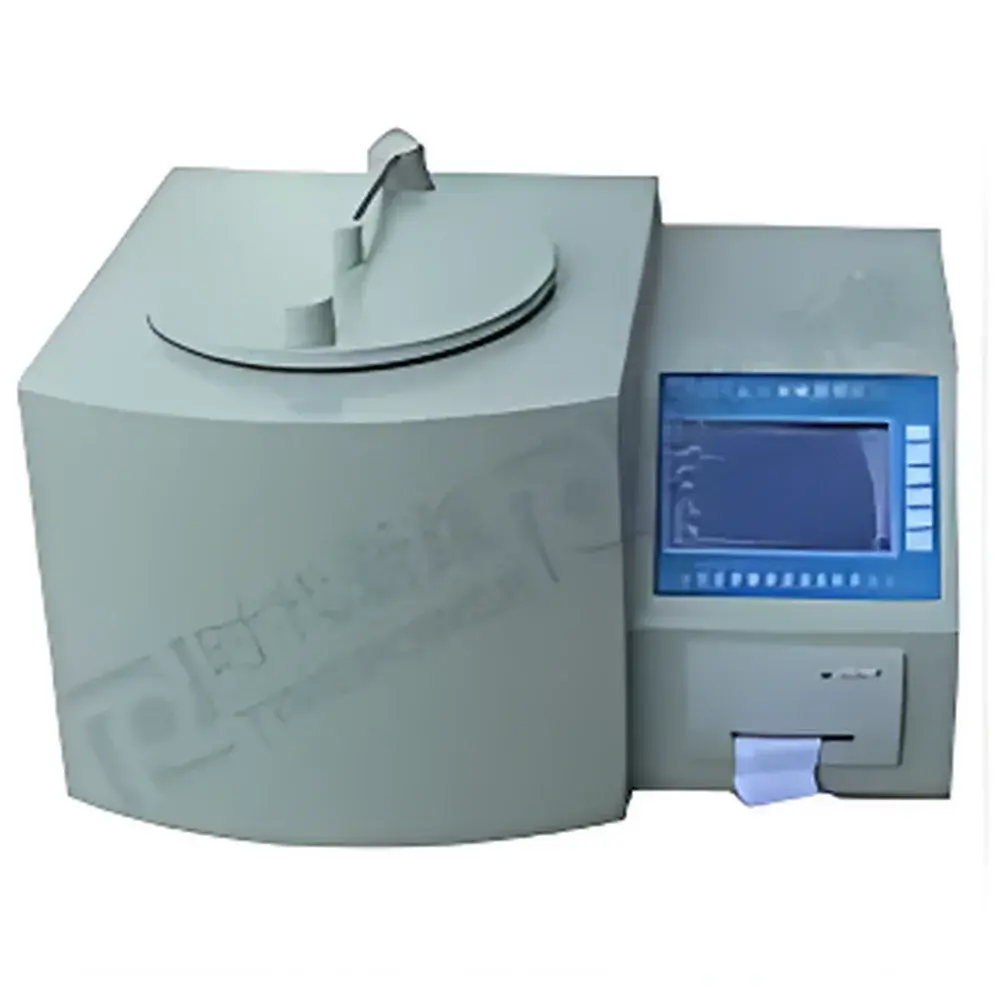
Timepower TP532 Fully Automated Acid Number Analyzer for Petroleum Oils
| Brand | Timepower |
|---|---|
| Model | TP532 |
| Origin | Beijing, China |
| Manufacturer Type | Direct Manufacturer |
| Country of Origin | China |
| Measurement Range | 0.0001–0.4000 mg KOH/g |
| Accuracy | ±0.01 mg KOH/g (for acid number 0.001–0.100 mg KOH/g) |
| Repeatability | 0.02 mg KOH/g |
| Resolution | 0.0001 mg KOH/g |
| Titration Method | Potentiometric Endpoint Detection via Neutralization |
| Sample Capacity | 6 positions |
| Display | TFT LCD (480 × 272 pixels) |
| Power Supply | AC 220 V ±10%, 50 Hz ±5% |
| Operating Temperature | 5–40 °C |
| Relative Humidity | ≤85% RH |
| Dimensions (W × D × H) | 465 × 335 × 260 mm |
| Weight | 11.98 kg |
| Power Consumption | 60 W |
| Printer | Thermal printer |
Overview
The Timepower TP532 Fully Automated Acid Number Analyzer is an electromechanical analytical instrument engineered for precise, reproducible determination of acid number in petroleum-based insulating oils—including transformer oil, turbine oil, and hydraulic fluids—according to standardized neutralization titration methodology. It operates on the principle of potentiometric endpoint detection, where a pH-sensitive electrode continuously monitors the potential shift during titration with standardized alcoholic potassium hydroxide (KOH) solution. The system automates solvent extraction (using xylene or toluene), sample transfer, magnetic stirring, reagent delivery, endpoint recognition, and data reporting—eliminating manual intervention and operator-induced variability. Designed specifically for compliance-driven environments, the TP532 implements a dual-CPU architecture to ensure deterministic timing control and fault-tolerant operation, making it suitable for routine quality control laboratories operating under ISO/IEC 17025, ASTM D974, ASTM D664, and GB/T 264–2019 regulatory frameworks.
Key Features
- Automated multi-step workflow: solvent extraction, sample transfer, titrant dosing, endpoint detection, cup rotation, and thermal printing—all executed without manual handling
- Dual-CPU microcontroller architecture for independent control of motion subsystems (peristaltic pumps, stepper-driven carousel, motorized syringe drive) and electrochemical signal acquisition
- Imported low-power laser-based optical alignment system for precise reagent tube positioning and liquid level verification—enhancing long-term calibration stability
- Potentiometric titration module with high-impedance input amplifier and adaptive slope algorithm for robust endpoint identification across variable matrix viscosities and conductivity profiles
- 6-position sample carousel with integrated PTFE-coated magnetic stir bars and temperature-compensated vessel holders to minimize thermal drift during sequential analysis
- TFT LCD interface (480 × 272 resolution) with icon-free tactile keypad—designed for gloved operation in industrial laboratory settings
Sample Compatibility & Compliance
The TP532 is validated for use with mineral-based and synthetic insulating oils conforming to IEC 60296, ASTM D3487, and GB 2536 specifications. It supports samples with kinematic viscosity up to 100 cSt at 40 °C and water content below 50 ppm—within typical limits for power transformer maintenance testing. All automated fluid pathways are chemically inert (borosilicate glass, PTFE, and polypropylene), minimizing adsorption artifacts and cross-contamination. The instrument meets electromagnetic compatibility requirements per GB/T 18268.1–2010 (equivalent to IEC 61326-1) and safety standards per GB 4793.1–2007 (IEC 61010-1). Its operational protocol aligns with GLP documentation practices, supporting audit-ready traceability through embedded timestamped event logging.
Software & Data Management
The embedded firmware supports full audit trail functionality—including user login history, method parameter changes, calibration records, and raw titration curves—with non-volatile storage retaining ≥10,000 test results. Data export is available via USB port in CSV format compatible with LIMS integration. While no external PC software is bundled, the device generates compliant printouts containing test ID, date/time stamp, sample identifier, acid number result, uncertainty statement, analyst ID, and instrument serial number—satisfying minimum reporting requirements under ISO/IEC 17025 Clause 7.8. Optional RS-232 or Ethernet modules (available upon request) enable remote monitoring and centralized fleet management in multi-instrument labs.
Applications
- Routine condition monitoring of transformer oil in substation preventive maintenance programs
- Acceptance testing of new turbine oils prior to commissioning in thermal and nuclear power plants
- Quality assurance of lubricants in petrochemical refining and distribution facilities
- Research-grade acid number profiling during oxidation stability studies (e.g., ASTM D2440)
- Third-party conformity assessment for commercial inspection agencies accredited to CNAS or ILAC-MRA scopes
FAQ
What standards does the TP532 comply with for acid number determination?
It implements GB/T 264–2019 and GB 7599–2015, and its measurement methodology is technically equivalent to ASTM D974 (color-indicator) and ASTM D664 (potentiometric), though formal ASTM certification requires third-party validation.
Can the TP532 analyze used oils with sludge or particulate contamination?
Samples must be pre-filtered (≤5 µm) and homogenized prior to loading; undissolved solids may clog reagent lines or interfere with electrode response.
Is the instrument capable of performing blank correction automatically?
Yes—the firmware executes a dedicated blank titration cycle before each batch using fresh solvent and reagent, subtracting background contribution from final results.
How often does the pH electrode require recalibration?
Calibration is recommended before each daily shift using two-point buffer verification (pH 4.01 and 7.00); drift exceeding ±2 mV/h necessitates cleaning or replacement.
Does the TP532 support custom titration methods beyond standard acid number?
No—it is purpose-built for acid number per GB/T 264; modification of titrant concentration, solvent ratio, or endpoint algorithm is not supported in factory firmware.
Related Products






