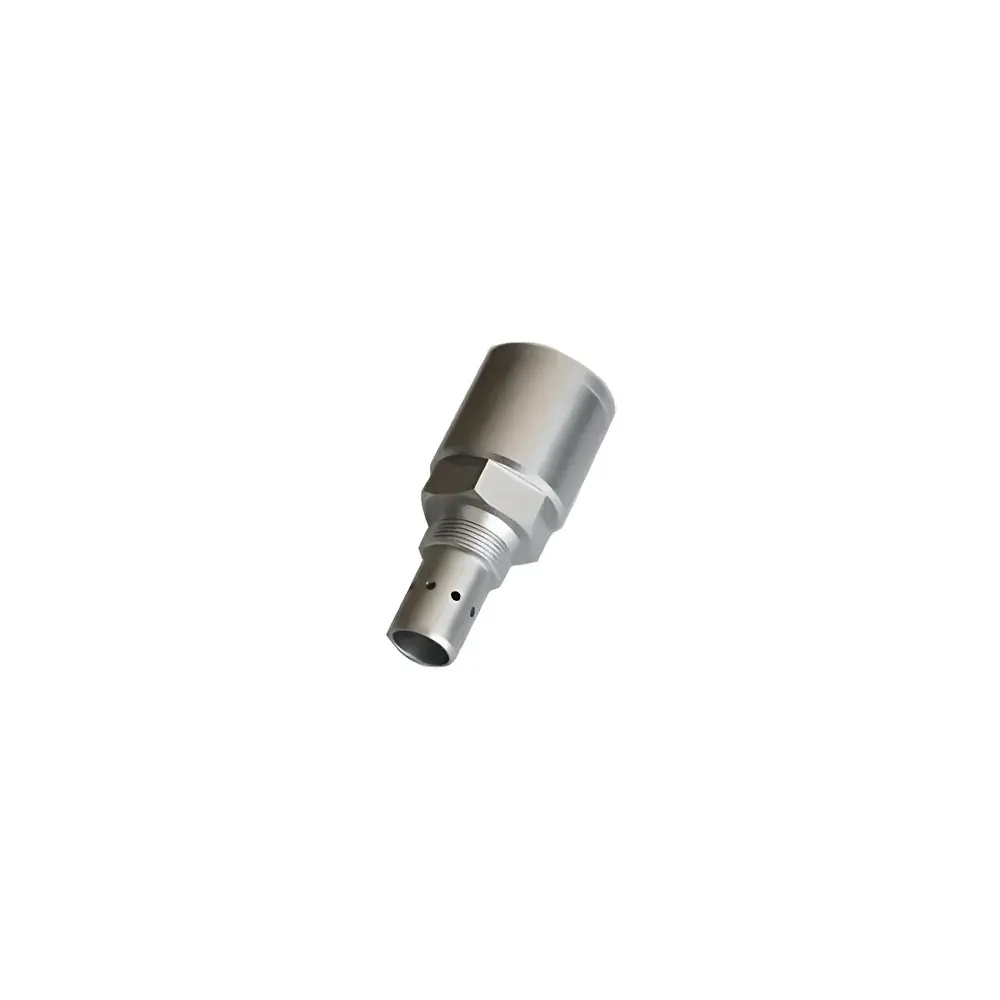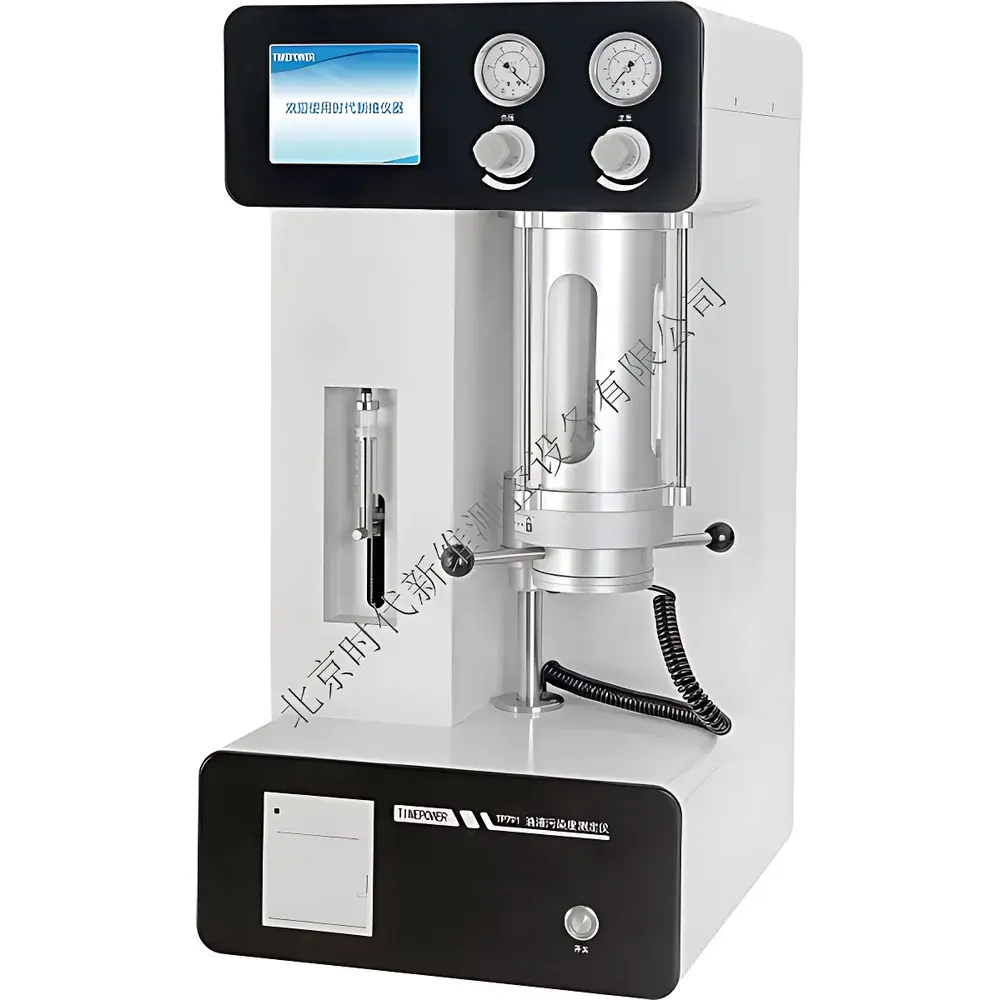
TimePower TP791 Automatic Oil Contamination Analyzer (Light Obscuration Particle Counter)
| Brand | TimePower |
|---|---|
| Origin | Beijing, China |
| Manufacturer Type | Direct Manufacturer |
| Country of Origin | China |
| Model | TP791 |
| Pricing | Available Upon Request |
Overview
The TimePower TP791 Automatic Oil Contamination Analyzer is a precision-engineered instrument designed for quantitative determination of solid particulate contamination in liquid media—primarily hydraulic fluids, lubricating oils, transformer (insulating) oils, turbine oils, gear oils, engine oils, aviation kerosene, and water-glycol hydraulic fluids. It operates on the internationally standardized light obscuration (or light blockage) principle, as defined in ISO 11171, ISO 4406, NAS 1638, GJB 420B, DL/T 432, GB/T 18854, and SAE AS4059F. In this method, particles suspended in a fluid stream pass through a precisely dimensioned sensing zone intersected by a collimated laser beam. Each particle attenuates the incident light proportionally to its effective cross-sectional area, generating voltage pulses whose amplitude correlates with particle size and frequency with particle count. The system digitizes and classifies these pulses across 16 user-configurable size channels within a detection range of 0.8 µm to 600 µm—dependent on sensor selection—enabling traceable, repeatable, and metrologically sound contamination grading per global hydraulic cleanliness standards.
Key Features
- High-stability semiconductor laser source with low-noise photodetector architecture, ensuring consistent signal-to-noise ratio and long-term measurement reproducibility (RSD < 2%).
- Precision syringe pump sampling system with programmable volume control (0.2–1000 mL), volumetric accuracy better than ±0.5%, and adjustable flow rate (5–80 mL/min).
- Dual-pressure (positive/negative) sample handling chamber capable of vacuum-assisted degassing (max. −0.08 MPa) and pressurized delivery (up to +0.8 MPa), accommodating oils with viscosity up to 650 cSt.
- Pre-loaded calibration curves compliant with ISO 11171, NAS 1638, GJB 420B, SAE AS4059F, DL/T 432, GB/T 14039, and GOST 17216; supports user-defined calibration protocols and multi-standard concurrent reporting.
- Integrated color touchscreen interface with Chinese-language input support, onboard data storage, automatic grade classification per selected standard, and built-in thermal printer.
- RS232 serial interface for bidirectional communication with LIMS, ELN, or custom laboratory informatics platforms; compatible with FDA 21 CFR Part 11-compliant audit trail configurations when deployed with validated software extensions.
Sample Compatibility & Compliance
The TP791 is validated for use with mineral- and synthetic-based hydrocarbon oils, ester-based dielectric fluids, polyalkylene glycols (PAGs), and other optically transparent or semi-transparent non-aqueous liquids exhibiting minimal intrinsic fluorescence or turbidity. It meets functional requirements outlined in ASTM D6786 (Standard Test Method for Determining Particle Count in Aviation Turbine Fuels), ISO 4406:2017 (Fluids—Methods for coding the level of contamination by solid particles), and IEC 60567 (Oil-filled electrical equipment—Sampling of gases and oil for analysis). While not certified as a GLP/GMP instrument out-of-the-box, its hardware architecture—including traceable sensor calibration, pressure-controlled sampling, and deterministic pulse processing—supports qualification under ISO/IEC 17025 for accredited testing laboratories. All firmware and operational logic are designed to facilitate full documentation of test parameters, environmental conditions, and raw pulse histograms for regulatory review.
Software & Data Management
The embedded operating system provides real-time particle count histograms, cumulative/differential distribution plots, and auto-generated contamination codes (e.g., “ISO 4406:2017 18/16/13”). Raw pulse data and metadata—including date/time stamp, operator ID, sample ID, temperature, viscosity setting, and calibration curve version—are stored internally with time-stamped integrity. Export options include CSV and PDF formats via USB or RS232. Optional PC-based software (sold separately) enables advanced statistical analysis, trend monitoring across batches, multi-instrument fleet management, and electronic signature workflows aligned with 21 CFR Part 11 Annex 11 requirements. Audit trails record all parameter changes, report generations, and user logins with immutable timestamps.
Applications
This analyzer serves critical roles in predictive maintenance programs across aerospace (hydraulic system fluid health monitoring per SAE AS4059F), power generation (transformer oil condition assessment per IEEE C57.104 and DL/T 432), marine propulsion (lubricant wear debris trending), wind turbine gearbox oil surveillance, and semiconductor manufacturing (ultra-pure process fluid verification). It also supports R&D applications such as filter efficiency validation, additive stability studies, and degradation modeling of synthetic lubricants under accelerated aging protocols. Its adaptability to varied container types—including standard ISO clean bottles, disposable sampling cups, and pressurized reservoirs—ensures seamless integration into both field-deployed and central lab environments.
FAQ
What particle size standards does the TP791 support natively?
It includes factory-loaded calibration curves for ISO 11171, NAS 1638, GJB 420B, SAE AS4059F, DL/T 432, GB/T 14039, and GOST 17216. Custom calibrations may be imported using NIST-traceable reference materials.
Can the instrument handle high-viscosity oils without dilution?
Yes—its dual-pressure sampling system enables reliable analysis of oils up to 650 cSt, including unfiltered gear oils and heavy-duty engine lubricants, without pre-dilution or heating.
Is external degassing required before analysis?
No—the integrated vacuum chamber allows in-situ degassing at up to −0.08 MPa, minimizing bubble-induced false counts in viscous or volatile samples.
How is measurement repeatability verified?
Repeatability is validated per ISO 4402 and ASTM D6786 using certified latex sphere suspensions; typical RSD is <2% for repeated measurements of identical samples under controlled temperature and pressure.
Does the system comply with regulatory data integrity requirements?
The base unit records full audit-relevant metadata. When paired with optional validated software and procedural controls, it supports compliance with FDA 21 CFR Part 11, EU Annex 11, and ISO/IEC 17025 documentation mandates.