
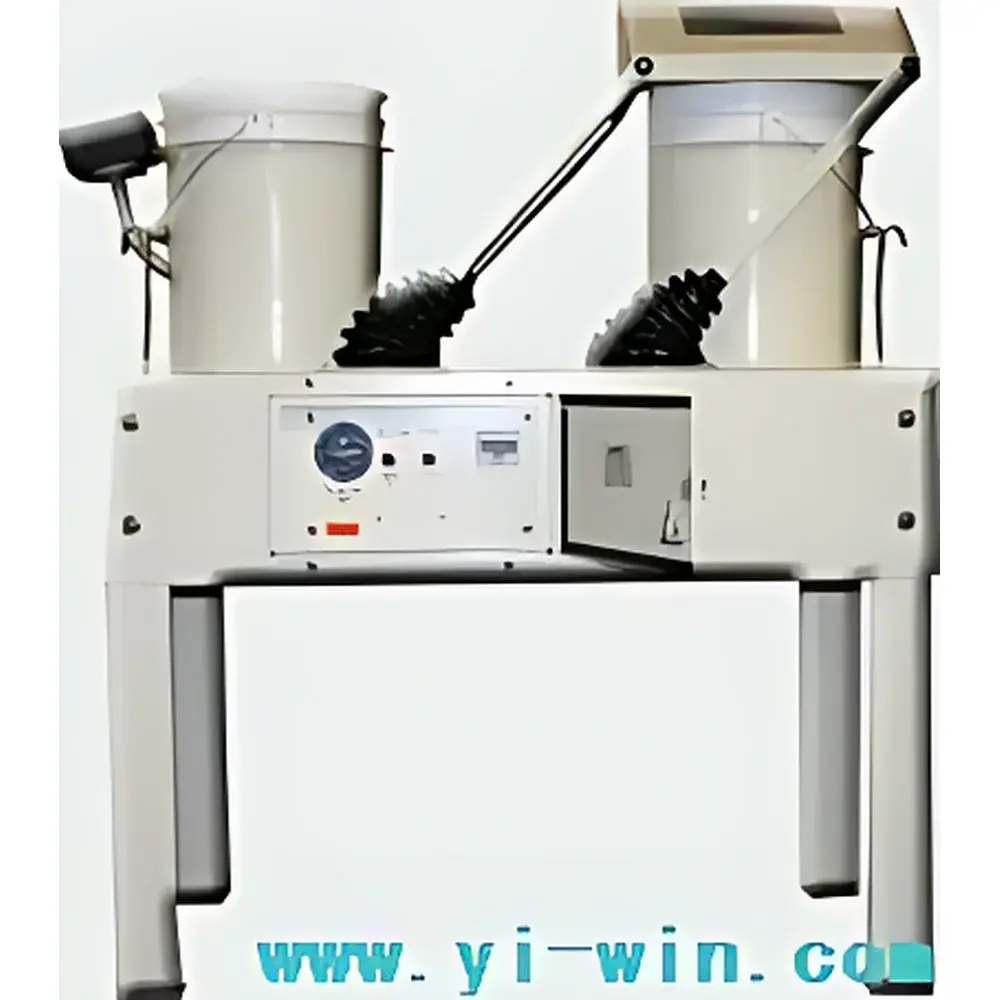
Tisch TE-78-100 Atmospheric Precipitation Sampler (APS) with Dry/Wet Deposition Separation
| Brand | Tisch |
|---|---|
| Origin | USA |
| Model | TE-78-100 |
| Sampling Principle | Dual-Mode Sequential Deposition Collection |
| Housing Material | Powder-Coated Aluminum Frame |
| Actuation | Rain-Sensor-Triggered Motorized Lid Control |
| Collector Configuration | Symmetrical Dual-Collector Array |
| Operating Environment | Unmanned Field Deployment (–30 °C to +50 °C) |
| Compliance | ASTM D5926, ISO 10395, US EPA Method IO-3.3 |
Overview
The Tisch TE-78-100 Atmospheric Precipitation Sampler (APS) is an engineered field-deployable instrument designed for the autonomous, time-resolved collection and physical separation of wet deposition (rain, snow, fog drip) and dry deposition (aerosol particulates, dust, soluble salts) under ambient atmospheric pressure conditions. It operates on a dual-collector sequential sampling principle grounded in the standardized distinction between hydrometeor-driven and gravity/impaction-driven deposition pathways. Unlike passive bulk collectors, the TE-78-100 integrates real-time meteorological logic—via a calibrated optical rain sensor—to trigger motorized actuation of two geometrically identical, horizontally aligned polyethylene collection funnels. This ensures strict temporal segregation: one funnel remains hermetically sealed during dry periods to accumulate airborne particulates via gravitational settling and Brownian diffusion; the other opens only upon confirmed precipitation onset, capturing event-specific aqueous-phase analytes without cross-contamination. The system’s architecture conforms to the functional requirements outlined in ASTM D5926 (Standard Practice for Collection of Wet and Dry Deposition Samples) and supports data traceability for regulatory reporting under US EPA IO-3.3 and ISO 10395 (Ambient Air—Sampling of Particulate Matter).
Key Features
- Motorized dual-funnel mechanism with fail-safe rain-sensing logic—prevents false triggering from dew, high humidity, or wind-blown moisture
- Powder-coated aluminum structural frame offering corrosion resistance and thermal stability across –30 °C to +50 °C operational range
- Interchangeable, acid-washed polyethylene collection vessels (standard 1-L capacity) compatible with subsequent ion chromatography, ICP-MS, and pH/conductivity analysis
- No external power dependency beyond standard 12 V DC input—designed for solar-battery hybrid field stations
- Integrated lid-position feedback circuitry providing digital confirmation of open/closed status for remote telemetry integration
- Modular mounting interface supporting tripod, roof-mount, or mast installation with minimal site preparation
Sample Compatibility & Compliance
The TE-78-100 collects chemically intact deposition samples suitable for quantitative determination of major ions (SO₄²⁻, NO₃⁻, Cl⁻, NH₄⁺, Ca²⁺, Na⁺), trace metals (Pb, Cd, Zn), pH, specific conductivity, and total suspended particulate (TSP) mass. Its collection geometry minimizes splash loss and evaporative bias per ISO 10395 Annex B guidelines. All wetted surfaces are inert polyethylene (USP Class VI compliant), eliminating leachable interference in low-concentration analyses. The instrument meets design validation criteria for GLP-compliant environmental monitoring networks and satisfies audit readiness requirements for US EPA National Atmospheric Deposition Program (NADP) Tier-1 sites. Optional NIST-traceable calibration certificates are available for rain sensor threshold verification.
Software & Data Management
While the TE-78-100 operates as a standalone electromechanical sampler, its digital I/O interface (RS-485 or discrete TTL outputs) enables seamless integration with third-party data loggers (e.g., Campbell Scientific CR1000X, Onset HOBO RX3000). Rain event timestamps, lid position status, and optional temperature/humidity inputs can be logged with millisecond resolution. Sample metadata—including start/end times, cumulative precipitation depth (when paired with co-located tipping-bucket gauge), and ambient temperature—is structured to align with EPA STORET and EEA Eionet data schemas. No proprietary software is required; raw binary logs are exportable as CSV or NetCDF for downstream statistical analysis in R, Python (Pandas/Xarray), or MATLAB.
Applications
- Long-term trend analysis of acid deposition chemistry in forested, alpine, and coastal ecosystems
- Source apportionment studies linking dry deposition fluxes to regional industrial or agricultural emissions
- Validation of chemical transport models (e.g., CMAQ, WRF-Chem) through spatially distributed ground-truth deposition measurements
- Monitoring of atmospheric nutrient loading (e.g., nitrogen, phosphorus) in sensitive watersheds and protected areas
- Compliance sampling for transboundary air pollution agreements (e.g., UNECE CLRTAP) requiring speciated wet/dry deposition reporting
FAQ
Does the TE-78-100 require routine maintenance in remote deployments?
Yes—biannual inspection of the rain sensor window, lid gasket integrity, and funnel alignment is recommended. No lubrication or recalibration is required under normal operation.
Can it distinguish between rain and snow events?
No—the optical rain sensor detects liquid-phase precipitation only. Snow collection requires manual override or integration with a heated precipitation gauge.
Is the system compatible with automated sample preservation (e.g., refrigeration or acidification)?
Not natively. However, the standard 1-L vessels accept post-collection addition of preservatives (e.g., HNO₃ for metals); refrigerated enclosures may be externally integrated via DIN-rail mounting.
What is the minimum detectable rainfall intensity for reliable actuation?
The factory-calibrated threshold is 0.2 mm/hr, adjustable within ±0.1 mm/hr via firmware update using Tisch’s configuration utility.
How is sample contamination from wind-driven resuspension mitigated?
The symmetrical collector layout includes aerodynamic baffles and a 15° downward tilt—validated in wind tunnel testing at 8 m/s—to suppress turbulent entrainment while maintaining representative deposition velocity capture.







