
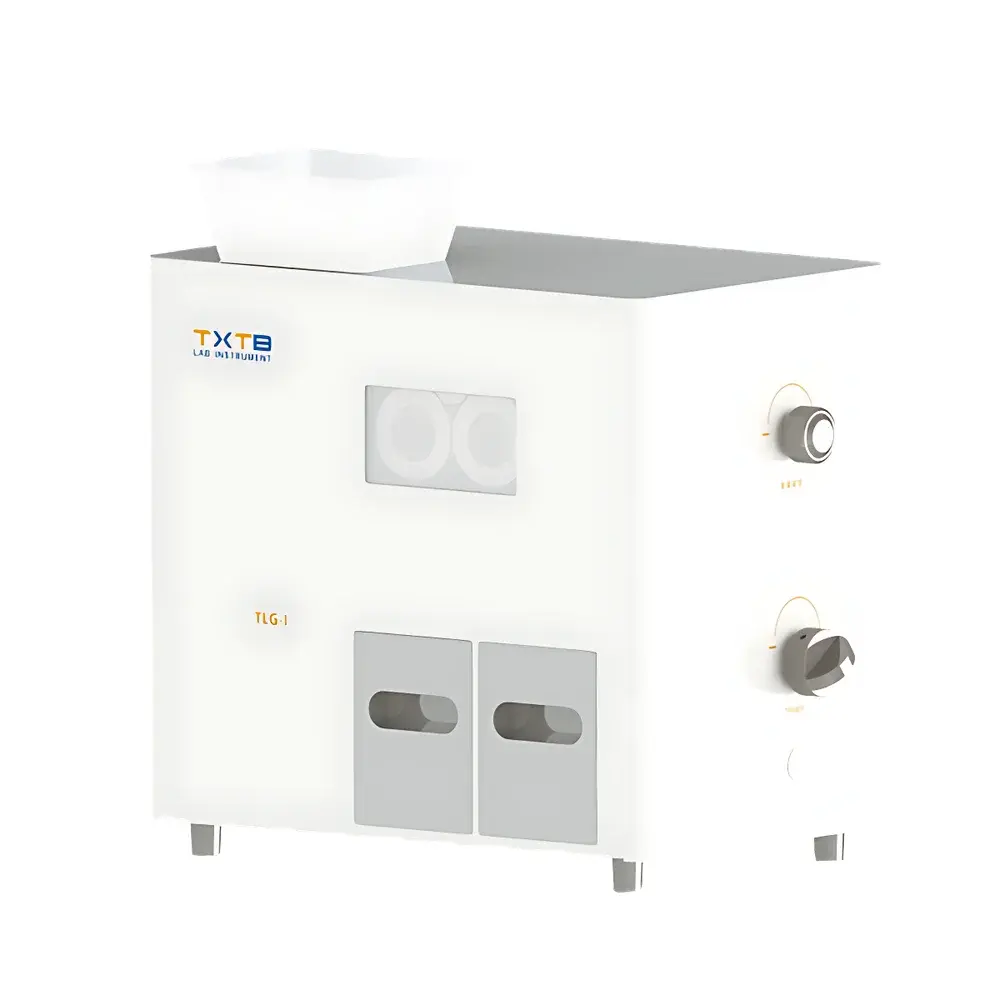
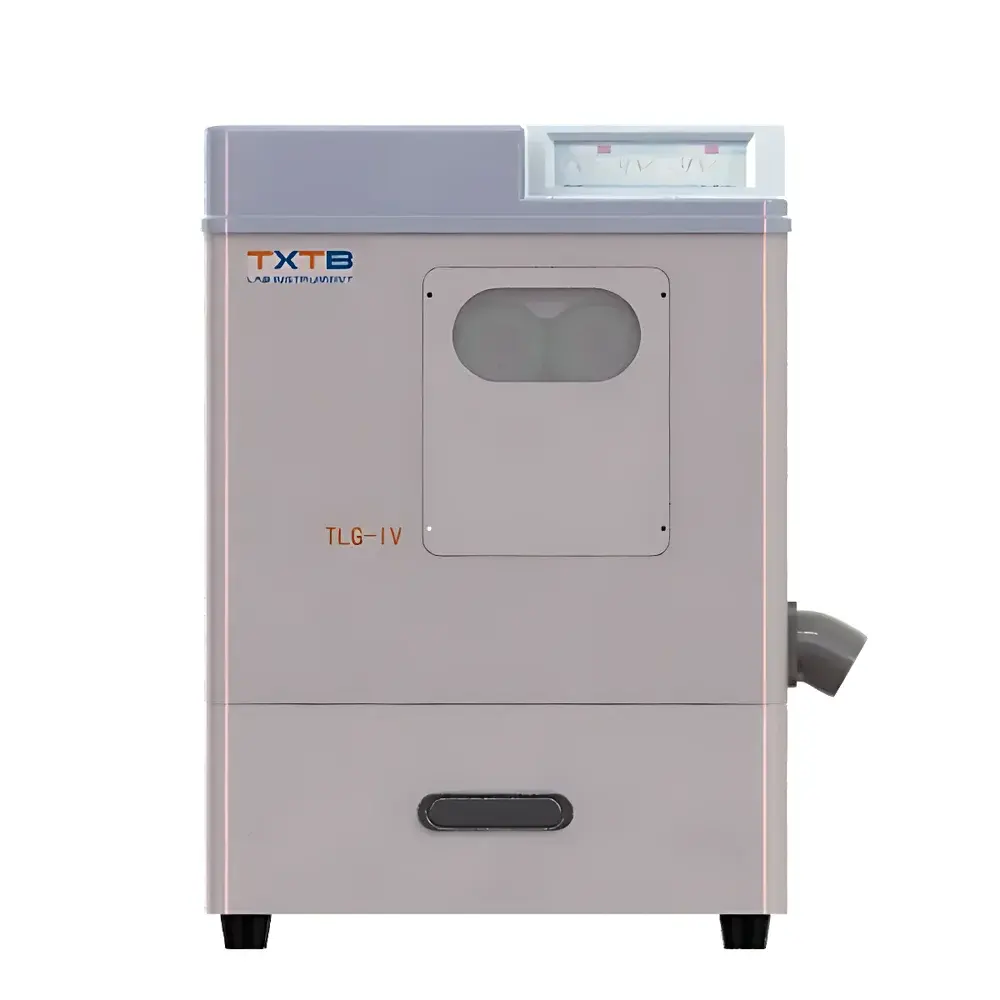
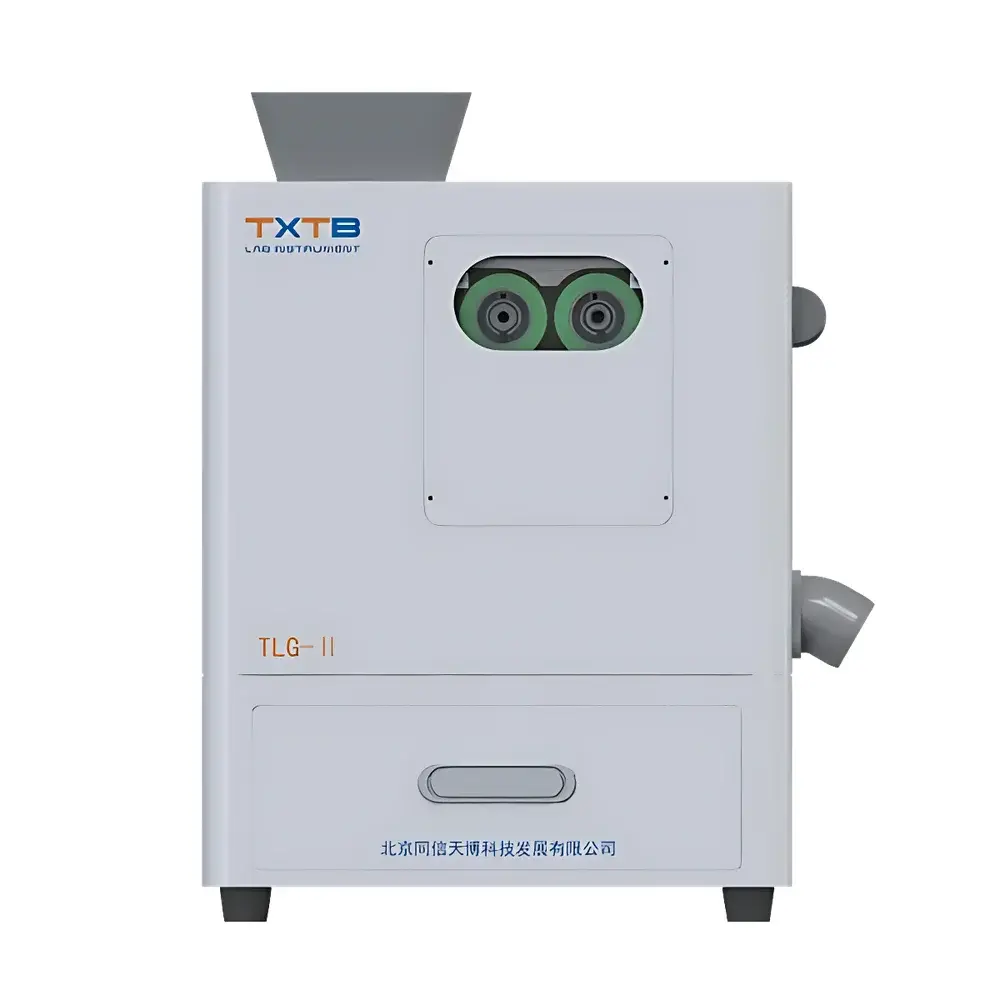
Tongxintianbo TGL-I/TGL-II/TGL-III Laboratory Paddy Husker
| Brand | Tongxintianbo |
|---|---|
| Origin | Beijing, China |
| Model | TGL-I / TGL-II / TGL-III |
| Power Supply | 220 V AC, 50 Hz |
| Application | Paddy husking for糙米 (brown rice) preparation in grain quality testing |
| Compliance | GB/T 5495–2008 “Grain and Oil Inspection — Determination of Brown Rice Yield” |
Overview
The Tongxintianbo TGL-I/TGL-II/TGL-III Laboratory Paddy Husker is an electromechanical grain processing instrument engineered for standardized, reproducible dehulling of paddy (unmilled rice) in quality control and research environments. It operates on the principle of controlled frictional abrasion between rotating rubber rollers—configured in a Couette-type arrangement—to selectively remove the outer husk layer while preserving kernel integrity. Unlike industrial-scale hullers, this benchtop system is calibrated to meet the precision requirements of official grain inspection protocols, particularly GB/T 5495–2008, which defines methodology and acceptance criteria for brown rice yield determination. Its design prioritizes operator safety, process transparency, and traceable sample handling—making it suitable for accredited laboratories conducting routine analysis under GLP-aligned workflows.
Key Features
- Transparent observation window integrated into the separation chamber, enabling real-time visual monitoring of husk–kernel separation dynamics without interrupting operation.
- Manually adjustable rubber roller coupling mechanism with calibrated micrometer-scale positioning, facilitating rapid clearance of feed blockages and precise alignment maintenance after repeated use.
- Variable-speed automatic feeder system with stepless electronic control, allowing feed rate modulation from 10 g/min to 60 g/min to accommodate diverse paddy moisture contents and varietal hardness profiles.
- Dual-stage roller gap adjustment system (coarse + fine), coupled with independently controllable aspiration airflow (0–12 m/s range), ensures complete husk removal while minimizing mechanical stress on kernels.
- Roller surface fabricated from food-grade nitrile rubber compound with Shore A 65 hardness and low hysteresis characteristics—engineered to reduce kernel fracture incidence and maintain consistent abrasion efficiency over >10,000 operational cycles.
- Brushless DC motor drive (24 V nominal, 300 W continuous rating) delivering stable torque output across variable load conditions, eliminating carbon brush wear and associated particulate contamination risks.
Sample Compatibility & Compliance
The TGL series accommodates paddy samples ranging from 5 g to 200 g per batch, supporting both indica and japonica subspecies with moisture content between 12.0% and 15.5% (w.b.). Sample trays are constructed from 304 stainless steel with laser-etched volume markings conforming to GB/T 5491–2008 sampling guidelines. All wetted surfaces comply with GB 4806.7–2016 (Food Contact Materials – Plastics) and ISO 8587:2021 (Sensory Analysis – General Guidance for Instrumental Testing). The instrument’s measurement repeatability (RSD ≤ 1.2% for brown rice yield across n=10 replicates, per GB/T 5495–2008 Annex B) has been verified using certified reference materials traceable to CNAS-accredited interlaboratory studies.
Software & Data Management
While the TGL-I/TGL-II/TGL-III operates as a standalone electromechanical unit without embedded firmware or digital interface, its mechanical design incorporates audit-ready features essential for regulated environments: engraved serial number plates (laser-marked, corrosion-resistant), physical calibration logbook slots, and standardized test record templates aligned with GB/T 27404–2008 (Laboratory Quality Control Guidelines). For laboratories implementing LIMS integration, optional USB-connected digital tachometer and mass balance modules (sold separately) support automated data capture of feed rate, runtime, and post-husking weight—enabling compliance with FDA 21 CFR Part 11 when paired with validated electronic signature workflows.
Applications
- Routine determination of brown rice yield (outturn) in national grain grading centers and provincial CDC laboratories.
- Preparation of standardized brown rice specimens for subsequent amylose content (GB/T 15683), gel consistency (GB/T 15684), and cooking quality analysis.
- Method validation studies comparing husking efficiency across paddy cultivars during breeding program evaluation.
- Training platform for food science students on cereal grain anatomy, milling physics, and standard method execution per ISO/IEC 17025 clause 7.2.2.
- Supporting ISO 22000-certified food processors in establishing HACCP critical control points related to raw material specification verification.
FAQ
Does the TGL series comply with international standards such as ISO or ASTM?
It is designed to fulfill GB/T 5495–2008, the national standard referenced in ISO 7301:2011 (Rice – Specification) for brown rice yield assessment. While not directly certified to ISO/IEC 17025, its mechanical repeatability and documentation architecture support laboratory accreditation under that framework.
Can the instrument handle parboiled or high-moisture paddy?
Operation is validated only for air-dried paddy within 12.0–15.5% moisture content. Parboiled or green paddy requires pre-conditioning per GB/T 5497–2018 to avoid roller slippage and inconsistent dehulling.
Is routine calibration required, and what tools are needed?
No periodic electronic calibration is necessary. Users perform mechanical verification using supplied gauge blocks (0.1 mm and 0.5 mm) and anemometer (included in TGL-III configuration) to confirm roller gap and aspiration velocity settings prior to each analytical session.





