
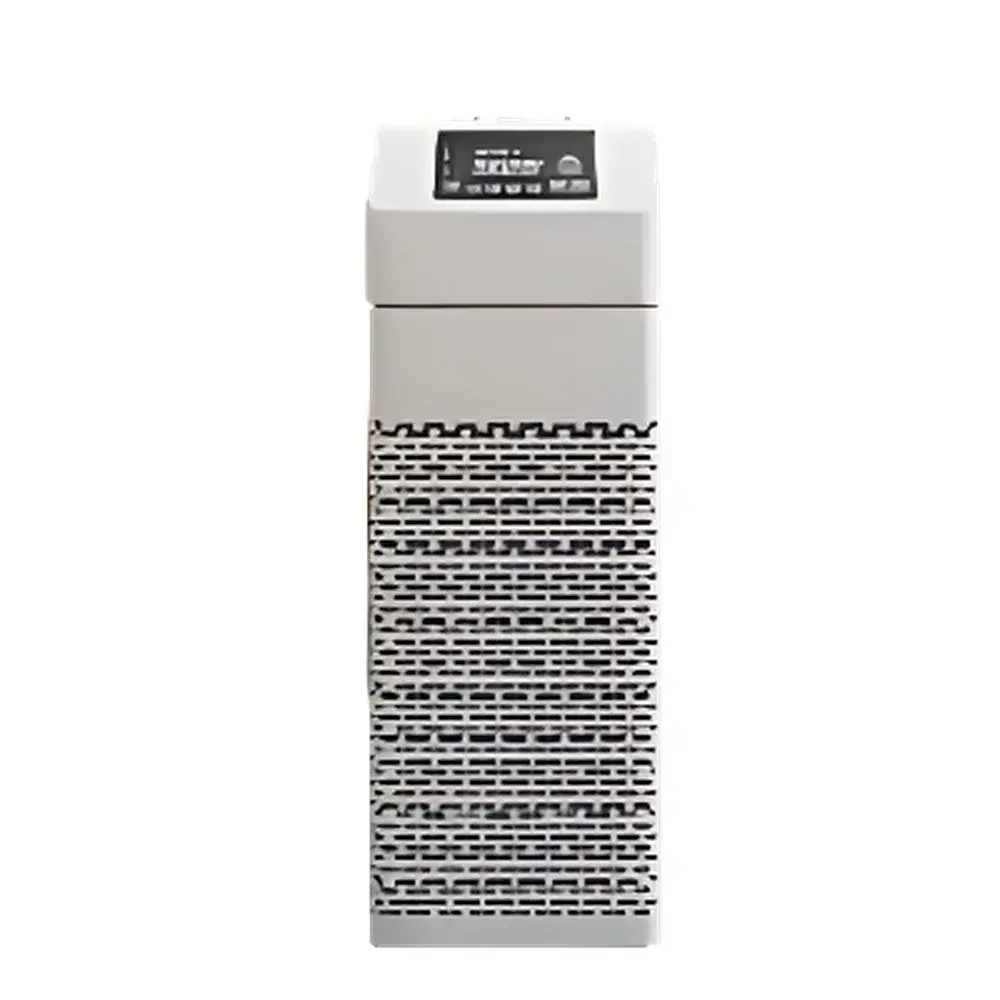
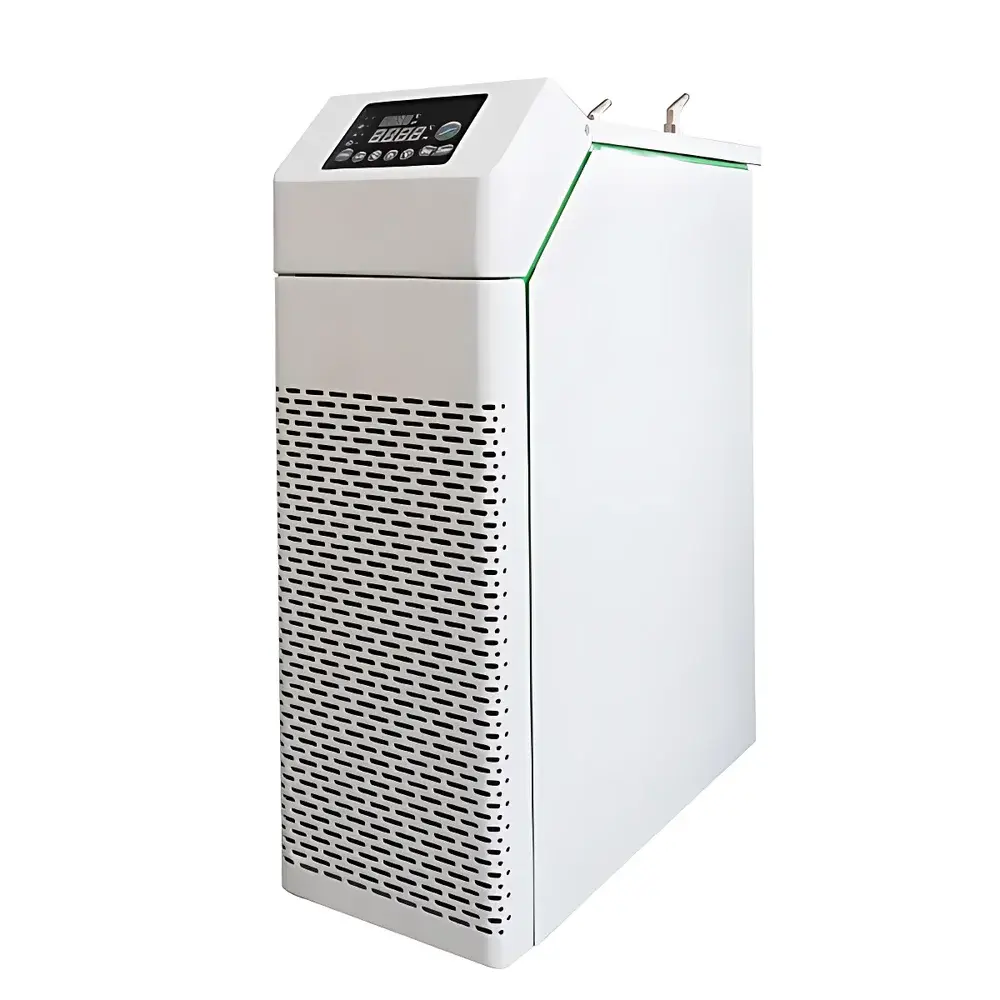
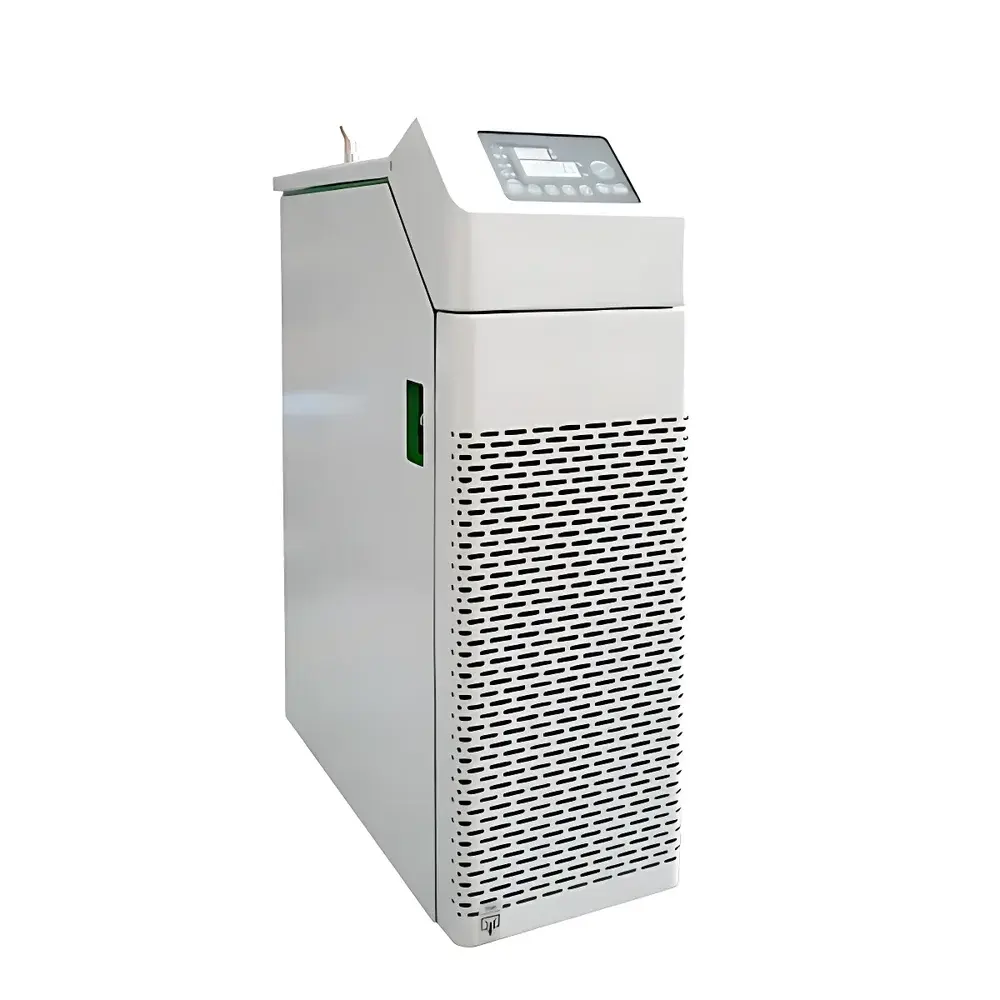
Tongzhou Weipu T1 Integrated Circulating Chiller
| Brand | Tongzhou Weipu |
|---|---|
| Origin | Beijing, China |
| Manufacturer Type | Direct Manufacturer |
| Instrument Type | Integrated (Benchtop) Circulating Chiller |
| Cooling Method | Water-Cooled |
| Temperature Control Range | −20 °C to 95 °C |
| Refrigeration Capacity | 300 W to 1800 W |
| Temperature Stability | ±0.1 °C to ±0.5 °C |
| Circulating Pump Pressure | 0.7–6 bar |
| Circulating Pump Flow Rate | 1–10 L/min |
| Reservoir Volume | 2.5–7 L |
| Refrigeration Principle | Compressor-Based Vapor-Compression Cycle |
| Certification | CE Marked (EU Directive 2014/30/EU & 2014/35/EU) |
| Refrigerant | R-134a or R-290 (ODP = 0, GWP-compliant variants available) |
Overview
The Tongzhou Weipu T1 Integrated Circulating Chiller is an engineered thermal management solution designed specifically for precise temperature control of low-to-medium heat-load laboratory instruments. It operates on a closed-loop vapor-compression refrigeration cycle—utilizing a hermetically sealed scroll or rotary compressor, copper-aluminum microchannel condenser, and thermostatically regulated expansion valve—to deliver stable, controllable cooling and heating across a wide operational range (−20 °C to 95 °C). Unlike modular chillers requiring external plumbing or dedicated utility connections, the T1 integrates all core components—including refrigeration circuit, insulated reservoir, variable-speed circulation pump, PID-controlled heater, and digital temperature controller—into a compact benchtop chassis. Its primary function is to maintain consistent coolant temperature and flow during extended operation of sensitive analytical systems where thermal drift compromises measurement fidelity, such as rotary evaporators, differential scanning calorimeters (DSC), bomb calorimeters, Kjeldahl digestors, and UV-Vis spectrophotometer Peltier accessories.
Key Features
- Integrated benchtop architecture with footprint under 300 × 400 mm—optimized for placement beneath fume hoods, inside gloveboxes, or adjacent to instrumentation without floor space compromise.
- Open-bath reservoir design (2.5–7 L capacity) enables dual-mode operation: as a circulating chiller for external equipment or as a standalone low-temperature constant-temperature bath for sample conditioning or reaction cooling.
- High-reproducibility temperature regulation achieved via dual-sensor feedback (reservoir + outlet), adaptive PID algorithm, and optional external PT100 probe input for process-critical applications.
- Variable-flow centrifugal pump (1–10 L/min, max. 6 bar head pressure) accommodates diverse tubing diameters (¼″–⅜″ OD) and system backpressure profiles—including vacuum-jacketed rotary evaporator condensers and capillary-based distillation manifolds.
- Energy-efficient operation certified per IEC 60034-30-1 (IE3 efficiency class motor), with automatic compressor staging and intelligent idle-mode power reduction to minimize standby consumption.
- CE-marked compliance with electromagnetic compatibility (EMC) and low-voltage directives; compatible with global AC inputs (100–240 VAC, 50/60 Hz) and configured for R-134a (GWP 1430) or ultra-low-GWP alternatives (e.g., R-290, GWP 3) upon request.
Sample Compatibility & Compliance
The T1 is validated for continuous duty cycles with instruments generating thermal loads between 300 W and 1800 W—covering standard rotary evaporators (up to 5 L flask volume), automated Kjeldahl systems, micro-distillation units, and small-format molecular pumps (<5 × 10⁻⁶ mbar base pressure). Its temperature stability (±0.1 °C typical at 25 °C, ±0.5 °C at extremes) meets ASTM E2252-21 requirements for calorimetric reference stability and aligns with ISO 17025 clause 6.4.3 regarding environmental condition monitoring for accredited testing laboratories. The unit conforms to RoHS 2011/65/EU restrictions on hazardous substances and supports GLP/GMP traceability through optional audit-log-enabled firmware (timestamped setpoint changes, alarm history, and runtime counters).
Software & Data Management
While the T1 operates autonomously via its front-panel capacitive touchscreen interface, it supports RS-485 Modbus RTU communication for integration into centralized lab infrastructure. Third-party SCADA or LIMS platforms can poll real-time parameters—including actual temperature, setpoint, compressor status, pump RPM, and fault codes—enabling remote supervision and automated shutdown protocols. Optional USB data-logging module records up to 30 days of 1-second-interval temperature/flow data in CSV format, compliant with FDA 21 CFR Part 11 requirements when paired with user-defined electronic signatures and access controls.
Applications
- Rotary evaporation: Maintains condenser coolant at −5 °C to 10 °C to maximize solvent recovery efficiency for ethyl acetate, dichloromethane, and low-boiling hydrocarbons.
- Calorimetry: Provides stable thermal sink for oxygen bomb calorimeters and isothermal titration calorimeters (ITC), minimizing baseline noise during enthalpy-of-combustion or binding-constant measurements.
- Distillation & extraction: Supplies regulated coolant to short-path and fractional distillation heads, preventing vapor-phase recondensation and ensuring sharp fraction separation.
- Biochemical incubation: When operated in bath mode at 4 °C or 10 °C, serves as auxiliary cold block for enzyme kinetics assays, protein precipitation, or nucleic acid purification workflows.
- Instrument accessory cooling: Stabilizes temperature-sensitive optics in UV-Vis detectors, CCD sensors in fluorescence spectrometers, and vacuum-stage Peltiers in Raman systems.
FAQ
What is the maximum allowable inlet temperature for the T1’s cooling loop when used with a rotary evaporator condenser?
The T1 is rated for return coolant temperatures up to 45 °C; sustained inlet temperatures above this threshold may trigger thermal protection and reduce compressor lifespan.
Can the T1 operate continuously at −20 °C ambient temperature?
Yes—the unit’s insulation, condensate management, and compressor oil-heater circuit permit uninterrupted operation in controlled environments down to −20 °C ambient, provided ventilation clearance ≥50 mm is maintained.
Is external water supply required for the water-cooled condenser version?
No—the “water-cooled” designation refers to the condenser heat rejection method using facility tap water or a secondary cooling tower loop; the T1 itself remains a self-contained chiller with no dependency on municipal water for its primary cooling loop.
Does the T1 support external temperature probes for cascade control?
Yes—via the optional analog input port (0–10 V or 4–20 mA), users may connect an external PT100 or thermistor probe mounted directly on the instrument’s jacket or condenser surface for process-coupled temperature regulation.
What maintenance intervals are recommended for optimal long-term performance?
Compressor oil inspection every 24 months; refrigerant charge verification every 36 months; reservoir descaling (with 5% citric acid solution) every 6 months if using non-deionized water; filter replacement every 12 months.
Related Products



