
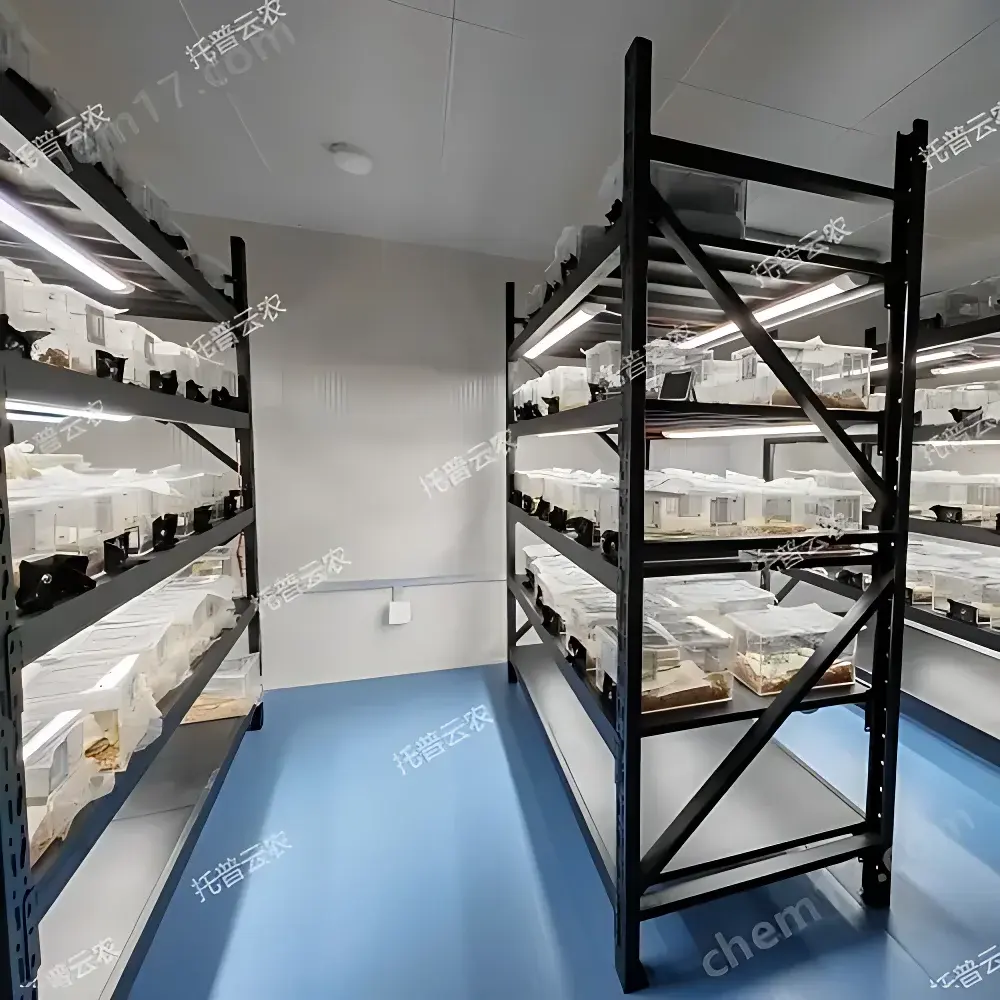
Top Cloud-agri Plant Tissue Culture Laboratory System
| Brand | Top Cloud-agri |
|---|---|
| Origin | Zhejiang, China |
| Manufacturer Type | Direct Manufacturer |
| Product Origin | Domestic (China) |
| Model | TC-TCR Series |
| Price | Upon Request |
| Temperature Control Range | 4–35°C |
| Humidity Control | Not Specified |
| Illumination Range | 0–2000 / 0–5000 / 0–10000 lux (Customizable) |
| Lighting System | LED-based Cold Light Source for Plant Tissue Culture |
| Remote Management | IoT Cloud Platform with Mobile APP Interface |
| Structural Configuration | Modular Design with Dedicated Preparation Zone, Sterile Operation Chamber, and Controlled Growth Chambers |
Overview
The Top Cloud-agri Plant Tissue Culture Laboratory System is a fully integrated, modular artificial climate environment engineered specifically for aseptic plant micropropagation. It implements precise environmental regulation—temperature, photoperiod, spectral quality, and air hygiene—to support the three core operational zones required by standardized tissue culture workflows: (1) media preparation and sterilization area, (2) laminar-flow sterile operation chamber (ISO Class 5 compliant when equipped with certified HEPA filtration), and (3) controlled growth incubation zone. Unlike conventional incubators, this system operates on a closed-loop environmental control architecture, where real-time sensor feedback (PT100 temperature probes, capacitive humidity sensors, and calibrated quantum PAR meters) drives proportional-integral-derivative (PID) actuation of refrigeration, humidification (if integrated), and multi-channel LED lighting arrays. Its design adheres to foundational biosafety principles outlined in ISO 22000 and GLP-compliant facility guidelines, ensuring reproducibility across subculturing cycles and minimizing somaclonal variation through stable thermal and photometric profiles.
Key Features
- Modular spatial configuration supporting functional separation: preparation, sterilization, aseptic transfer, and growth incubation—each zone independently controllable for pressure differential management.
- Programmable LED lighting system delivering uniform photosynthetic photon flux density (PPFD) across customizable spectra (e.g., 660 nm red + 450 nm blue dominant peaks), optimized for callus induction, shoot proliferation, and root development stages.
- Multi-layer adjustable shelving with per-tier lighting control, enabling simultaneous cultivation of multiple genotypes under divergent photoperiodic regimes (e.g., 16/8 h light/dark vs. continuous low-light).
- Embedded IoT controller with encrypted MQTT communication protocol, enabling remote monitoring and parameter adjustment via web dashboard or native iOS/Android application—with audit-trail logging compliant with FDA 21 CFR Part 11 requirements when configured with user authentication and electronic signature modules.
- Energy-efficient thermal management utilizing inverter-driven compressors and high-insulation sandwich panels (U-value ≤ 0.25 W/m²·K), reducing standby power consumption by up to 38% versus fixed-speed refrigeration systems.
- Optional integration with autoclave interlock signaling and CO₂ enrichment ports for advanced physiological studies requiring gas-phase modulation.
Sample Compatibility & Compliance
The system accommodates standard tissue culture vessels—including Magenta boxes, glass jars, Petri dishes (90 mm and 100 mm), and disposable bioreactor bags—within its adjustable shelf matrix. All interior surfaces are constructed from electropolished 304 stainless steel or antimicrobial-coated aluminum, facilitating validated cleaning protocols per ISO 14644-1 cleanroom standards. Airflow distribution follows unidirectional laminar flow principles in the operation zone (when fitted with Class II A2 biosafety cabinet integration), while the growth chamber maintains ISO 14644-3 particle count compliance at ≥99.99% efficiency for ≥0.3 µm particles. The platform supports documentation traceability aligned with ISO/IEC 17025 for calibration records and ASTM D6329 for environmental chamber validation.
Software & Data Management
The embedded firmware runs on a Linux-based RTOS with dual redundancy: local SD-card logging (12-month buffer at 1-min sampling interval) and cloud-synchronized storage. Environmental logs include timestamped temperature (±0.2°C accuracy), relative humidity (±2% RH), irradiance (±5% full-scale), and door-open event detection. Data export supports CSV, JSON, and direct API push to LIMS platforms (e.g., LabVantage, Thermo Fisher SampleManager). Role-based access control (RBAC) enforces data integrity; critical setpoint changes require dual authorization, generating immutable audit trails with SHA-256 hash verification.
Applications
- Clonal propagation of elite horticultural cultivars (e.g., orchids, strawberries, banana) under GMP-aligned conditions for commercial nursery production.
- Genetic transformation workflows involving Agrobacterium-mediated delivery and subsequent selection under antibiotic/herbicide pressure.
- In vitro germplasm conservation of endangered species and crop wild relatives using slow-growth storage protocols.
- Functional genomics studies requiring synchronized developmental staging—e.g., CRISPR-edited lines subjected to hormone-gradient assays across illuminated gradients.
- Secondary metabolite profiling under controlled elicitor exposure (e.g., methyl jasmonate + UV-B co-stimulation) with concurrent real-time growth imaging.
FAQ
Does the system meet international cleanroom classification standards?
Yes—when equipped with certified HEPA filtration and laminar airflow modules, the sterile operation zone conforms to ISO 14644-1 Class 5 (equivalent to Federal Standard 209E Class 100).
Can illumination spectra be customized beyond standard red/blue ratios?
Yes—optional tunable LED drivers support user-defined spectral power distributions (SPDs) across 400–700 nm, programmable via GUI or external spectroradiometer feedback loop.
Is validation documentation provided for regulatory submissions?
Factory-installed IQ/OQ documentation packages are available upon request, including as-built schematics, sensor calibration certificates (NIST-traceable), and performance qualification test reports per ASTM E2500.
What is the maximum permissible load for the adjustable shelving system?
Each tier supports up to 25 kg uniformly distributed load; structural integrity is verified per ISO 8564-2 static loading tests.
How is cybersecurity addressed in the IoT cloud interface?
All communications use TLS 1.3 encryption; device firmware updates require signed binaries; and session tokens expire after 15 minutes of inactivity, complying with IEC 62443-3-3 SL2 requirements.





