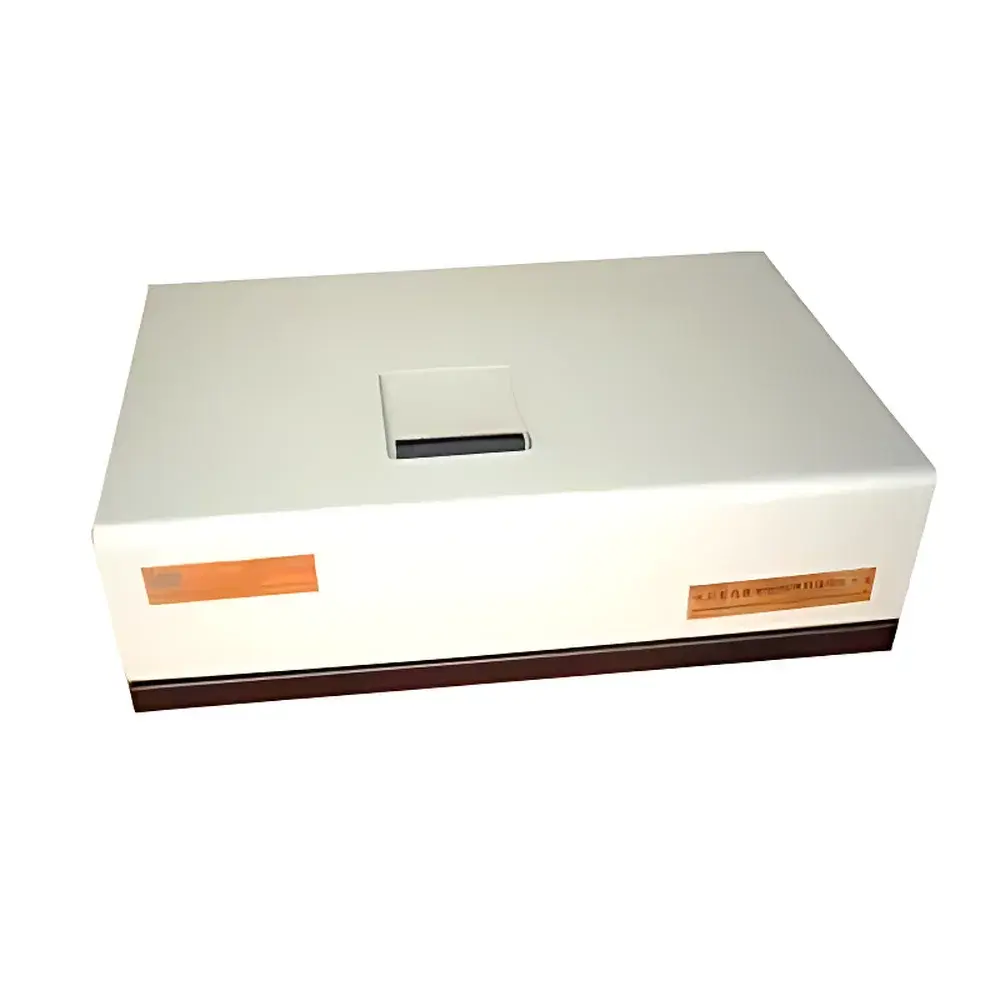
Top Cloud-agri TPMS-X-1 Wheat Spike Morphometric Analyzer
| Brand | Top Cloud-agri |
|---|---|
| Origin | Zhejiang, China |
| Manufacturer Type | Direct Manufacturer |
| Country of Origin | China |
| Model | TPMS-X-1 |
| Dimensions | 460 × 330 × 15 mm |
| EVA Backboard Size | 450 × 300 × 1.5 mm |
| Baseplate Material | Black Double-Sided Fine-Matte Acrylic |
| Measurement Range | 5–20 cm |
| Accuracy | ±2% |
| Image Resolution | 2400 × 1080 pixels |
| Camera Sensor | 64 MP Android-based CMOS |
| Battery Capacity | 3010 mAh |
| Operating Time | >5 hours per charge |
| Onboard Storage | 50 GB |
| Max Simultaneous Spikes Analyzed | 10 |
| Processing Time | <3 seconds per image |
| GPS Integration | Yes |
| Export Format | Excel (.xlsx) |
| OS | Android |
Overview
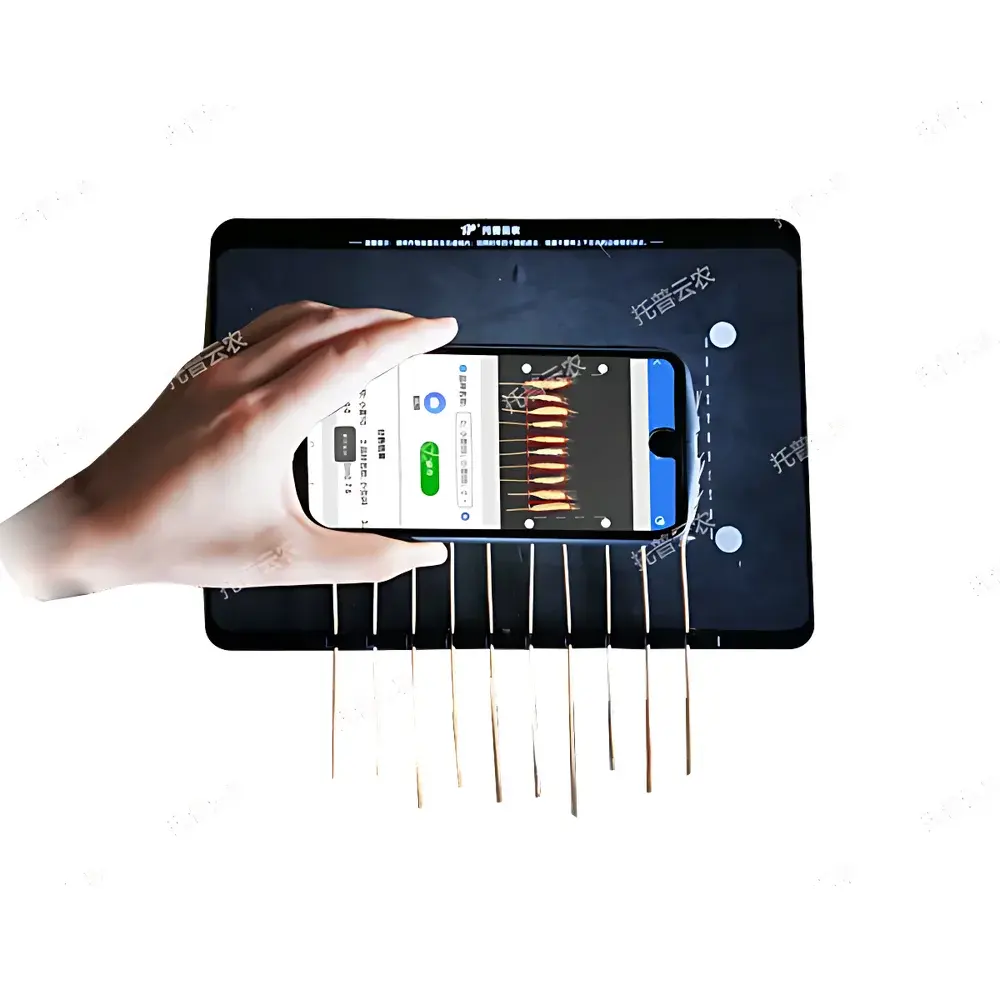
The Top Cloud-agri TPMS-X-1 Wheat Spike Morphometric Analyzer is a field-deployable, vision-based instrumentation system engineered for non-destructive, high-throughput quantification of morphological traits in wheat spikes (Triticum aestivum L.). It operates on the principle of calibrated digital photogrammetry: using a fixed-geometry background plate and embedded high-resolution imaging, the device captures top-down or oblique-angle images of fresh or excised spikes under ambient lighting. Proprietary computer vision algorithms—incorporating perspective transformation correction, adaptive illumination normalization, and sub-pixel edge detection—enable robust estimation of geometric parameters without manual scale reference or darkroom setup. Designed specifically for plant phenotyping workflows in breeding programs and genetic studies, the TPMS-X-1 delivers traceable, operator-independent measurements aligned with FAO and CIMMYT-standardized spike morphology descriptors (e.g., spike length, spikelet count, rachis internode spacing proxy). Its architecture eliminates reliance on laboratory-bound equipment, supporting longitudinal monitoring of spike development in situ via time-series image capture and relative growth rate derivation.
Key Features
- Handheld, ultra-portable form factor with integrated EVA-backed acrylic measurement stage—optimized for both greenhouse and field deployment.
- 64-megapixel Android-based imaging module with real-time auto-white balance and dynamic exposure control, ensuring consistent metric fidelity across variable solar irradiance, cloud cover, and shadow conditions.
- Simultaneous multi-spike analysis: processes up to 10 individual spikes in a single frame using spatial segmentation and centroid-based feature isolation.
- Automated scale calibration via embedded fiducial markers on the matte-black acrylic baseplate; compensates for lens distortion and angular deviation using homography-based geometric rectification.
- On-device data management: 50 GB internal storage retains raw images, metadata (timestamp, GPS coordinates, operator ID), and computed metrics for ≥2 years at typical field sampling frequency (≤500 measurements/day).
- Offline-capable operation: full image acquisition, processing, and reporting functionality available without network connectivity—critical for remote trial sites.
- Export-ready output: structured CSV/Excel reports include spike length (cm), spikelet count, positional metadata, and image thumbnails—compatible with downstream statistical platforms (R, Python pandas, SAS).
Sample Compatibility & Compliance
The TPMS-X-1 supports both detached (ex situ) and intact (in planta) spike assessment without physical contact or tissue disruption. It accommodates spikes across major bread wheat and durum cultivars, including compact, lax, and nodding architectures. The matte-black acrylic substrate minimizes specular reflection and ensures uniform contrast for reliable edge detection across varying glume pigmentation and awn density. While not certified to ISO/IEC 17025 for metrological traceability, the system adheres to principles outlined in ISO 20609:2021 (Plant phenotyping—Requirements for image-based trait measurement) and aligns with Good Phenotyping Practice (GPP) guidelines for repeatability, documentation, and environmental bias mitigation. Data export logs meet minimum requirements for GLP-compliant record retention (21 CFR Part 11 audit trail elements implemented via timestamped, immutable file naming conventions).
Software & Data Management
The embedded Android application provides a validated, version-controlled firmware environment (v3.2+). All image processing pipelines—including perspective correction, contrast-limited adaptive histogram equalization (CLAHE), Otsu thresholding, and Hough-transform-assisted rachis axis fitting—are executed locally to preserve data sovereignty. Measurement history is browsable by date, location, or experimental plot ID; filters support cohort-based comparison (e.g., parental lines vs. F₂ progeny). Batch reprocessing is supported: users may re-analyze stored images with updated algorithm parameters or recalibrate against new ground-truth reference sets. Export functions generate ISO 8601-compliant timestamps and WGS84-encoded GPS coordinates, enabling integration with GIS-enabled breeding databases (e.g., BreedBase, BrAPI endpoints).
Applications
Primary use cases include quantitative trait locus (QTL) mapping of spike architecture, selection efficiency assessment in recurrent backcross programs, and validation of CRISPR-Cas9 edited alleles affecting inflorescence development (e.g., homologs of TaFT, TaGW2, or Vrn genes). The system enables high-frequency phenotyping for drought-responsive spike elongation kinetics and thermal time modeling of anthesis-to-maturity intervals. In national variety testing networks, it serves as a standardized proxy for labor-intensive manual measurements required under UPOV TG/12/8 (Test Guidelines for Triticum aestivum), reducing inter-observer variability and accelerating registration cycles.
FAQ
Does the TPMS-X-1 require controlled lighting or shading during field use?
No. The adaptive illumination compensation algorithm normalizes luminance gradients across the image plane, eliminating need for portable light tents or overcast-day scheduling.
Can spikelet counting accuracy be validated against manual dissection counts?
Yes. Published validation studies (e.g., Plant Phenomics, 2023; DOI:10.34133/2023/9872453) report mean absolute error of ≤0.8 spikelets per spike (n=127 genotypes) versus expert manual counts.
Is GPS metadata embedded in exported Excel files?
Yes. Latitude, longitude, altitude, and horizontal dilution of precision (HDOP) are included as discrete columns in all exports.
What is the recommended maintenance protocol for the acrylic measurement surface?
Wipe with lint-free microfiber cloth and isopropyl alcohol (70%) after each day’s use to prevent dust accumulation and maintain optical uniformity.
Does the device support firmware updates via USB or Wi-Fi?
Firmware updates are delivered via encrypted USB flash drive only—no cloud-based OTA updates—to ensure data integrity and compliance with institutional IT security policies.