
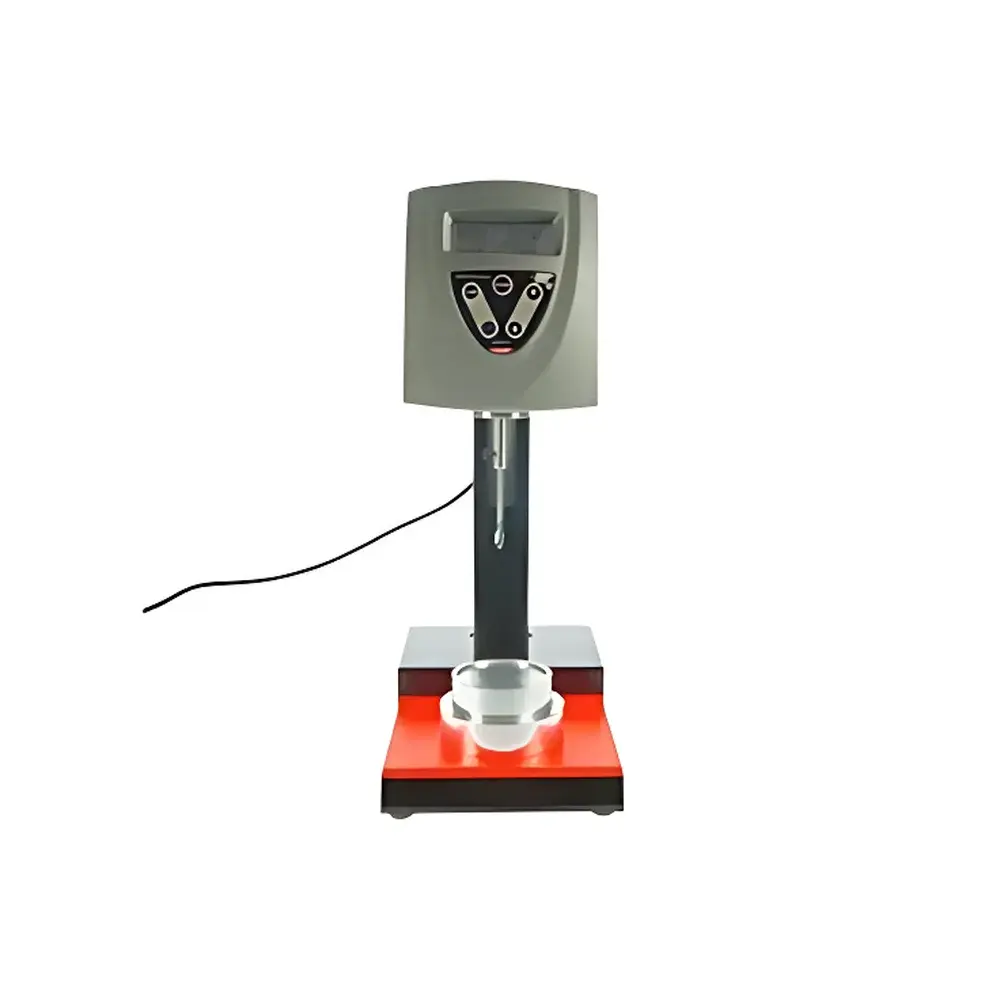
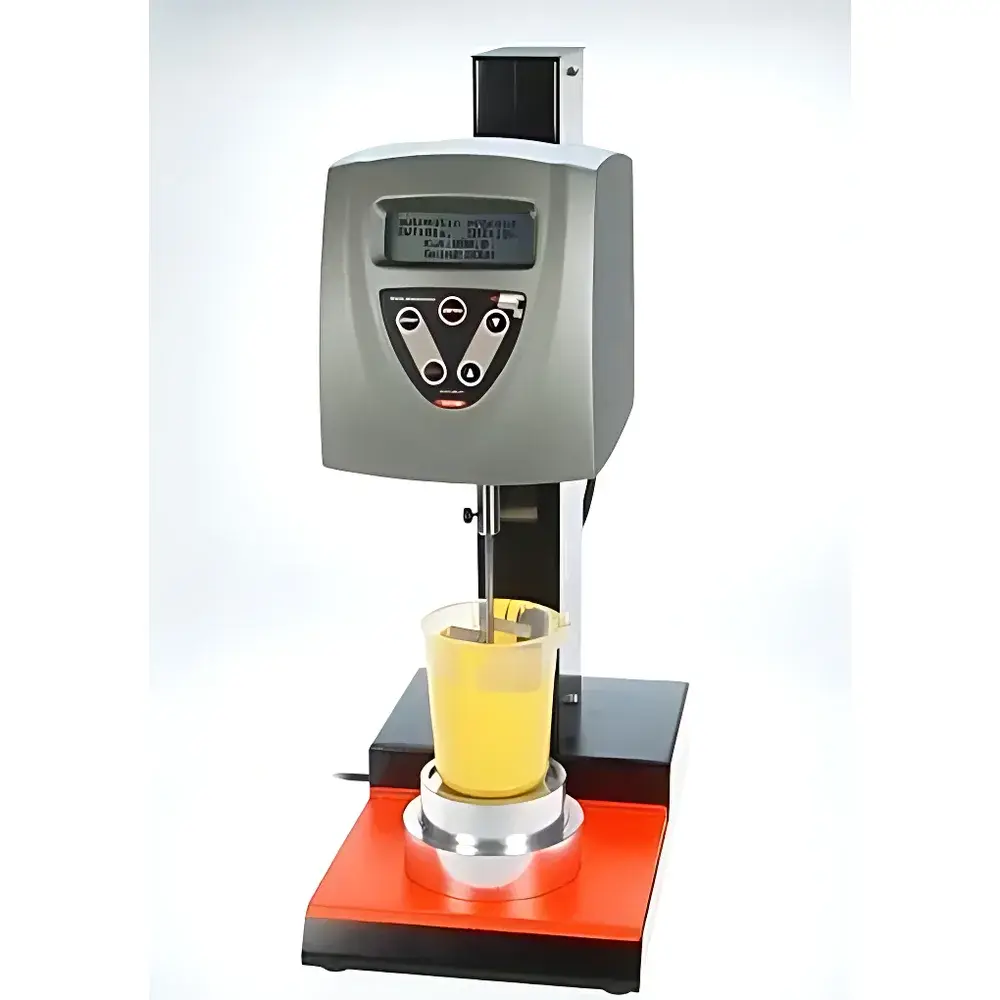
TQC DV1300 Automated Krebs Viscometer
| Brand | TQC |
|---|---|
| Origin | Netherlands |
| Model | DV1300 |
| Instrument Type | Rotational Viscometer |
| Viscosity Range | 40.2 – 141 KU |
| Speed | 200 rpm |
| Resolution | 0.1 KU |
| Weight | 8.5 kg |
| Power Supply | 100–240 V, 50–60 Hz |
| Operating Temperature | +10 °C to +40 °C |
| Protection Rating | IP20 |
| Interface | Unidirectional RS232 |
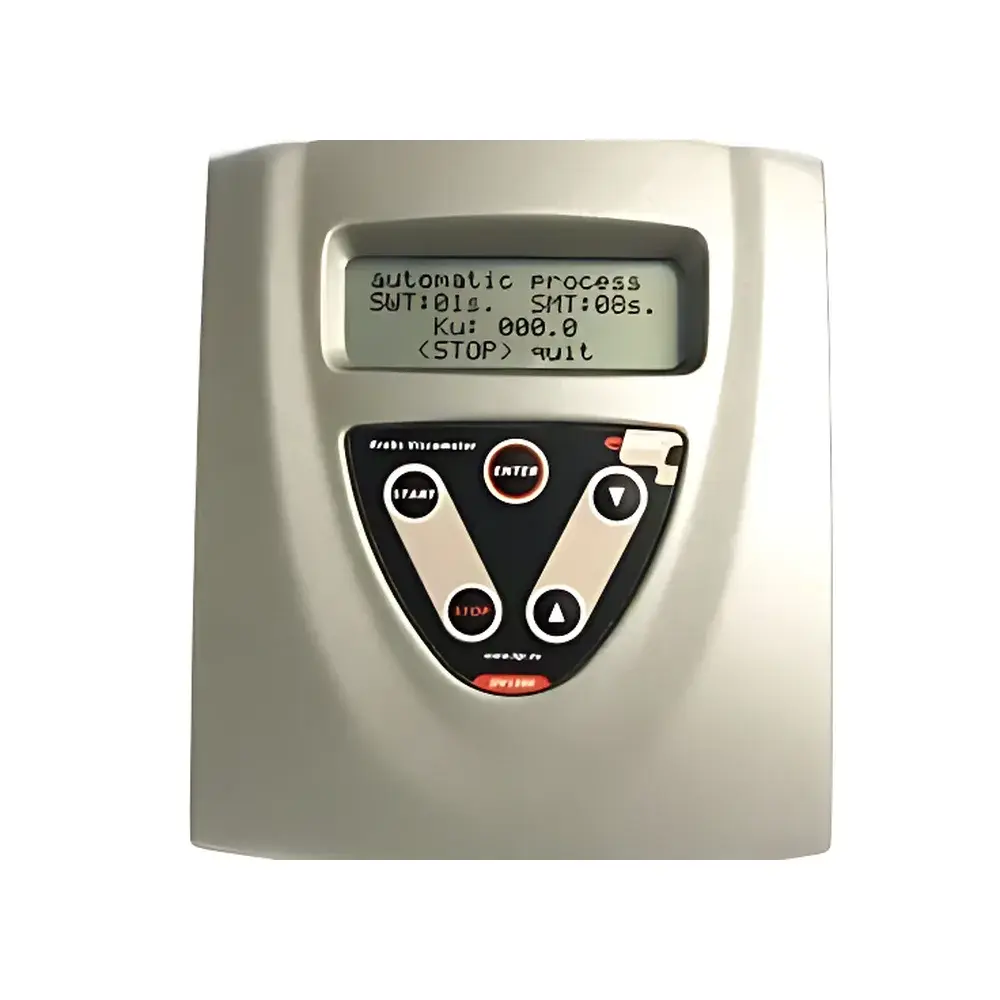
| Display | 4-line backlit LCD |
| Compliance | ASTM D562, ASTM D1131, ASTM D856 |
Overview
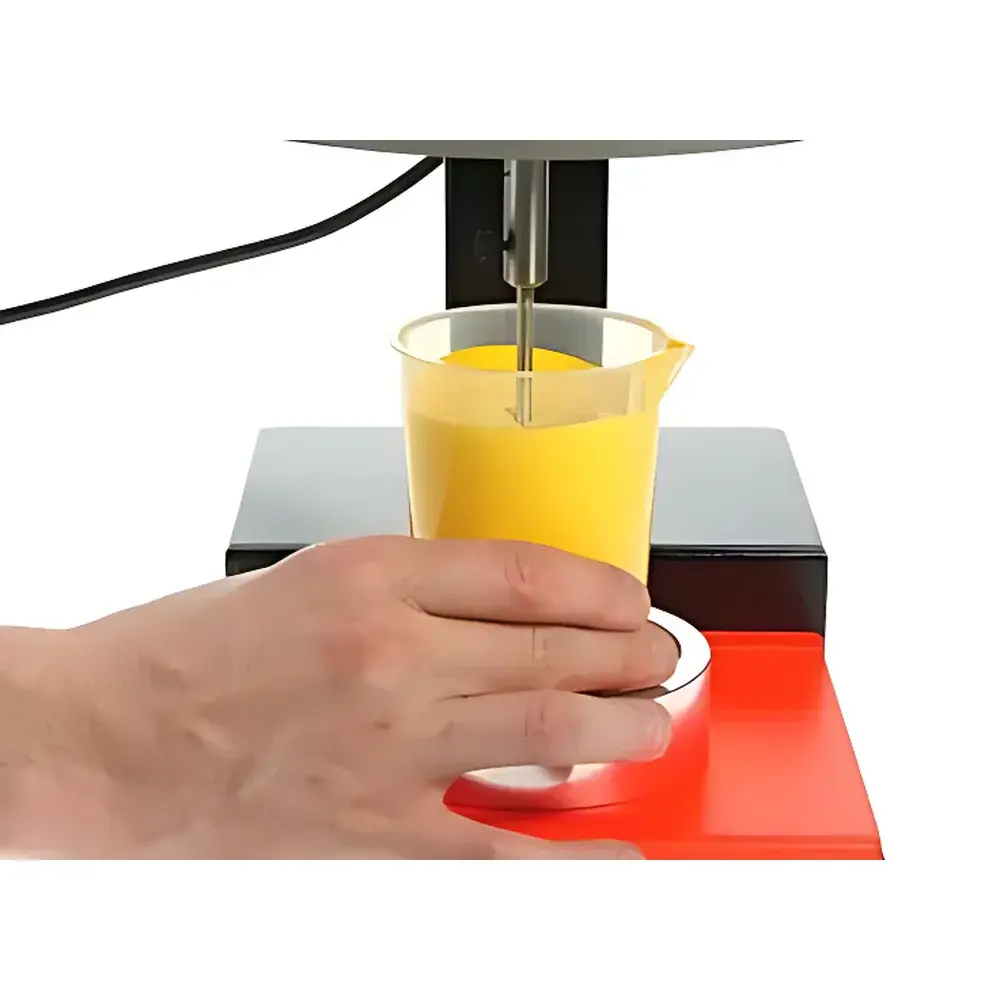
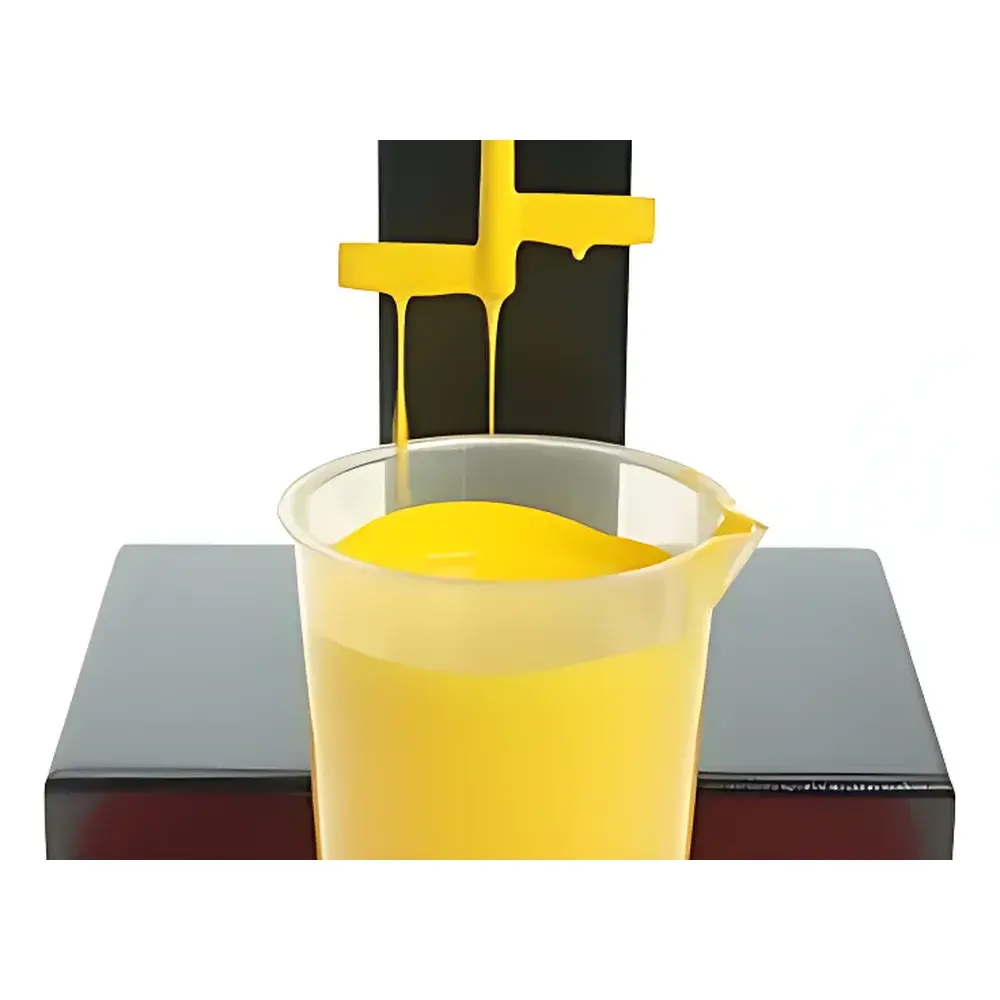
The TQC DV1300 Automated Krebs Viscometer is an engineered solution for precise, repeatable measurement of Krebs Units (KU) — a standardized viscosity scale widely adopted in the coatings, paints, inks, and related formulation industries. Unlike general-purpose rotational viscometers, the DV1300 implements the specific geometry, rotational speed (200 rpm), and spindle immersion depth defined in ASTM D562 for Krebs-type measurements. It operates on the principle of torque resistance: as the proprietary Krebs paddle-type rotor rotates at fixed speed through a sample held in a standard 1-pint (473 mL) or ½-pint (237 mL) container, the instrument measures the motor torque required to maintain constant rotation. This torque is converted directly into KU values using the ASTM-defined calibration curve, enabling traceable, inter-laboratory comparable results without manual interpolation or conversion tables.
Key Features
- Automated test cycle with programmable pre-rotation delay (0–99 s) and measurement duration (0–99 s), minimizing operator-induced variability
- Dual-mode operation: fully automated sequence or manual control for method development and troubleshooting
- High-resolution 4-line backlit LCD display providing real-time KU, grams (g), and centipoise (cP) equivalents simultaneously
- Integrated leveling block system for rapid, reproducible positioning of standard 1-pint and ½-pint containers — critical for compliance with ASTM D562 immersion depth requirements
- Unidirectional RS232 serial interface for direct connection to thermal printers or legacy laboratory data loggers; supports GLP-compliant hard-copy documentation
- Rugged yet precision-engineered housing (IP20 rating) designed for stable benchtop use in QC labs and production environments
- Self-contained electronics with universal power input (100–240 V, 50–60 Hz), eliminating need for external voltage regulators
Sample Compatibility & Compliance
The DV1300 is optimized for non-Newtonian, shear-thinning systems typical of architectural coatings, industrial enamels, printing inks, and pharmaceutical suspensions. Its Krebs paddle rotor ensures consistent shear profile across samples with yield stress and moderate thixotropy. The instrument meets the mechanical and procedural specifications of ASTM D562 (Standard Test Method for Consistency of Paints Measuring Krebs Units), ASTM D1131 (Standard Test Method for Apparent Viscosity of Latex Paints), and ASTM D856 (Standard Test Method for Viscosity of Emulsions). While not certified for regulatory submission per se, its design enables full adherence to ISO/IEC 17025 documentation practices when paired with validated SOPs and routine calibration using NIST-traceable reference standards. The device supports quality assurance workflows compliant with FDA 21 CFR Part 11 when integrated with audit-trail-capable data acquisition software via RS232 logging.
Software & Data Management
The DV1300 operates as a standalone instrument with no embedded software stack or network connectivity. All data handling is performed externally via its RS232 port, which outputs ASCII-formatted results including timestamp (if supported by connected device), KU value, equivalent mass (g), and cP reading. This architecture ensures long-term compatibility with laboratory information management systems (LIMS), electronic lab notebooks (ELN), and statistical process control (SPC) platforms that accept serial ASCII input. For regulated environments, users may implement third-party serial capture utilities with configurable metadata tagging, digital signature, and encrypted storage — satisfying ALCOA+ (Attributable, Legible, Contemporaneous, Original, Accurate) data integrity principles. Calibration records, maintenance logs, and performance verification reports must be maintained separately in accordance with ISO 9001 or ICH Q7 requirements.
Applications
- Quality control of architectural and industrial coatings during raw material receipt, in-process blending, and final product release
- R&D screening of rheology modifiers (e.g., fumed silica, associative thickeners) under standardized shear conditions
- Batch-to-batch consistency monitoring in high-volume paint manufacturing lines
- Formulation validation for food-grade coatings (e.g., can linings) and pharmaceutical film-coating suspensions
- Technical service support for OEMs in automotive refinish and coil coating sectors requiring KU-based specification alignment
- Teaching laboratories demonstrating ASTM-compliant viscosity methodology in polymer science and colloid engineering curricula
FAQ
What is the significance of the 200 rpm rotational speed?
The 200 rpm speed is mandated by ASTM D562 to ensure uniform shear rate and paddle immersion dynamics across all Krebs viscometers — enabling cross-manufacturer comparability of KU values.
Can the DV1300 measure viscosity in centipoise (cP) directly?
Yes — the instrument calculates and displays equivalent cP values using the ASTM D562 conversion algorithm (cP = 10.5 × KU − 110), but these are derived estimates; primary certified output remains KU.
Is calibration traceable to national standards?
The DV1300 requires periodic verification using certified KU reference standards (e.g., silicone oil blends with known KU values); traceability is established through user-maintained calibration records aligned with ISO/IEC 17025.
Does the instrument support automatic temperature compensation?
No — temperature control is external; users must stabilize samples at 23 ± 0.5 °C per ASTM D562 prior to testing, as KU is highly temperature-sensitive.
What maintenance is required to ensure long-term accuracy?
Daily cleaning of the Krebs paddle and container contact surfaces with lint-free cloth and isopropyl alcohol; annual verification of motor torque response and display linearity using factory service procedures.



