
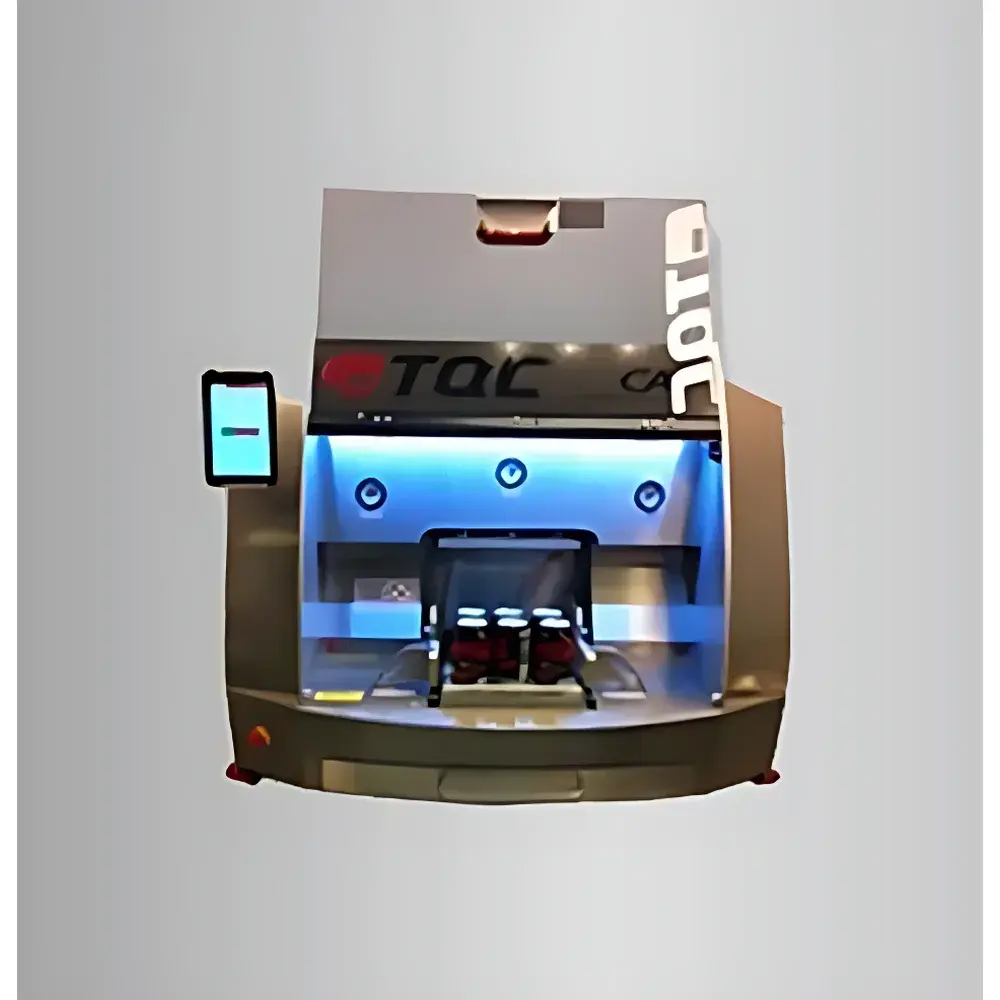
TQC GV Cat Can Friction Tester
| Brand | TQC |
|---|---|
| Origin | Netherlands |
| Manufacturer Type | Authorized Distributor |
| Origin Category | Imported |
| Model | GV Cat Can Friction Tester |
| Pricing | Upon Request |
Overview
The TQC GV Cat Can Friction Tester is a precision-engineered laboratory instrument designed to evaluate the abrasion resistance and mechanical durability of cured coatings applied to metal beverage containers—primarily aluminum and tinplate cans. It operates on the principle of controlled reciprocating motion under defined normal load, simulating real-world handling, stacking, conveying, and packaging stresses encountered during production, distribution, and retail storage. Developed in close collaboration with global beverage manufacturers—including Coca-Cola—and coating suppliers such as AkzoNobel Packaging Coatings and Rexam (now part of Ball Corporation), this tester meets stringent internal specifications for can surface integrity validation. Its design adheres to functional requirements aligned with ASTM D4060 (Abrasion Resistance of Organic Coatings by the Taber Abraser) principles—adapted specifically for cylindrical, pressurized, and dimensionally variable substrates—and supports quality assurance protocols in ISO 9001-certified packaging R&D and QC laboratories.
Key Features
- Adaptive dual-axis mounting system: Top and side support arms equipped with calibrated pneumatic actuators and high-tolerance coil springs enable automatic centering and pressure application across can diameters from 52 mm to 102 mm (150 mL to 1000 mL volume range).
- Adjustable test parameters: Reciprocating frequency continuously adjustable from 0 to 2.5 Hz; stroke length precisely set between 12.7 mm and 50.8 mm (0.5–2.0 inches); test duration programmable up to 24 hours.
- Real-time coating penetration detection: Six gold-plated contact probes mounted on the upper support arm monitor electrical continuity at 1 MHz sampling rate. The system identifies and localizes breakthrough events across seven discrete zones—enabling precise failure mapping without destructive inspection.
- Modular top fixture design: Interchangeable upper brackets allow rapid adaptation to different can geometries (e.g., standard two-piece, easy-open ends, or specialty profiles) without recalibration or tooling.
- Detached control unit: A standalone digital encoder console with menu-driven LCD interface houses all operational logic. Connected via reinforced industrial cable (IP65-rated), it permits flexible placement—including inside environmental chambers (e.g., 40 °C/75% RH or −20 °C conditions) for accelerated aging correlation studies.
- Service-oriented architecture: All wear-prone components—including drive belts, pneumatic seals, and probe contacts—are accessible without specialized tools. Motor and air cylinder oversizing ensures >10,000-hour service intervals under continuous operation.
Sample Compatibility & Compliance
The GV Cat accommodates standard beverage can formats per ISO 20553 (Aluminum beverage cans — Dimensions and tolerances) and EN 10202 (Cold rolled tinmill products). Compatible substrates include coated aluminum (e.g., epoxy-phenolic, polyester, acrylic), lacquered tinplate, and hybrid polymer-metal laminates. Test methodology supports internal specification compliance for major CPG brands (e.g., Coca-Cola Global Packaging Standards, PepsiCo Material Specifications), and aligns with coating supplier qualification frameworks including AkzoNobel’s Acoat® performance benchmarks. While not certified to a single harmonized standard, its operational traceability, audit-ready parameter logging, and repeatable mechanical loading satisfy GLP and GMP-aligned QA workflows per FDA 21 CFR Part 11 when paired with validated software.
Software & Data Management
The embedded controller records timestamped test logs—including frequency, stroke, applied load (in N), elapsed time, and penetration event coordinates—with non-volatile memory retention. Data export is supported via USB 2.0 to CSV format for integration into LIMS or statistical process control platforms (e.g., Minitab, JMP). Optional TQC LabLink™ software (sold separately) adds automated report generation, SPC charting, historical trend analysis, and electronic signature capability compliant with 21 CFR Part 11 Annex 11 requirements. All firmware updates are delivered via secure authenticated download channels with version-controlled changelogs.
Applications
- Validation of interior/exterior can lacquer systems against scuffing, marring, and delamination during high-speed filling lines.
- Comparative evaluation of alternative resin chemistries (e.g., BPA-free epoxy alternatives) under standardized mechanical stress.
- Accelerated shelf-life assessment of printed label adhesion on varnished surfaces.
- Root-cause analysis of field complaints related to coating wear-induced corrosion or product interaction.
- Supplier qualification testing per joint development agreements between can makers, coaters, and brand owners.
FAQ
What types of beverage containers can be tested on the GV Cat?
Standard two-piece aluminum and tinplate cans ranging from 150 mL to 1000 mL capacity—including full-body printed, necked-in, and easy-open end configurations—are supported via interchangeable fixtures.
Is the penetration detection system quantitative or qualitative?
It is semi-quantitative: while it precisely locates and timestamps each coating breakthrough event, absolute thickness loss measurement requires post-test cross-section SEM or profilometry. The system provides pass/fail criteria based on pre-defined zone-specific thresholds.
Can test parameters be locked to prevent operator tampering?
Yes—administrator-level password protection enables parameter lockdown, audit trail activation, and user role assignment (e.g., operator, supervisor, QA manager) within the optional LabLink™ software suite.
Does the instrument require compressed air?
Yes—it operates using clean, dry, oil-free compressed air at 6–8 bar (87–116 psi), supplied via standard DIN ISO 8573-1 Class 2 filtration.
What maintenance intervals are recommended?
Daily visual inspection of probe contacts and belt tension; quarterly calibration verification of pneumatic pressure transducers and encoder accuracy; annual replacement of drive motor brushes and cylinder O-rings—documented in the included Maintenance Logbook per ISO/IEC 17025 guidelines.
Related Products






