
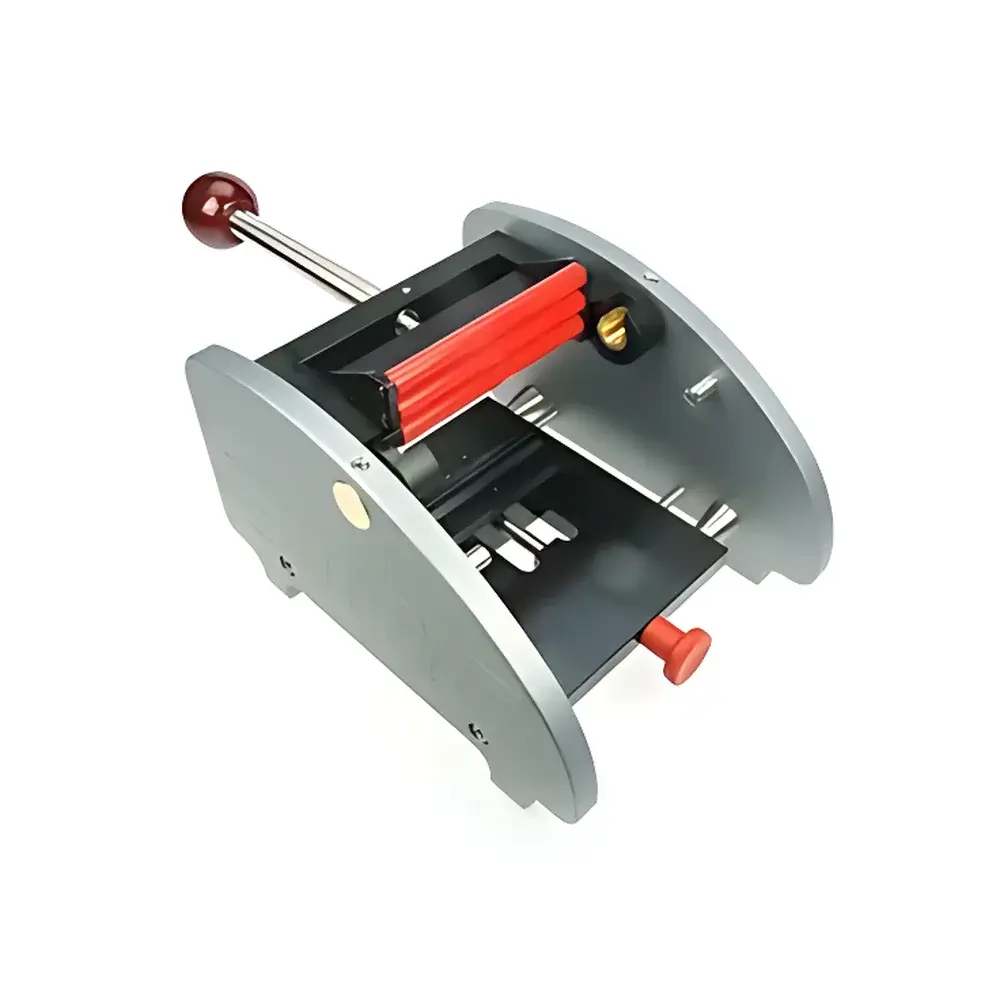
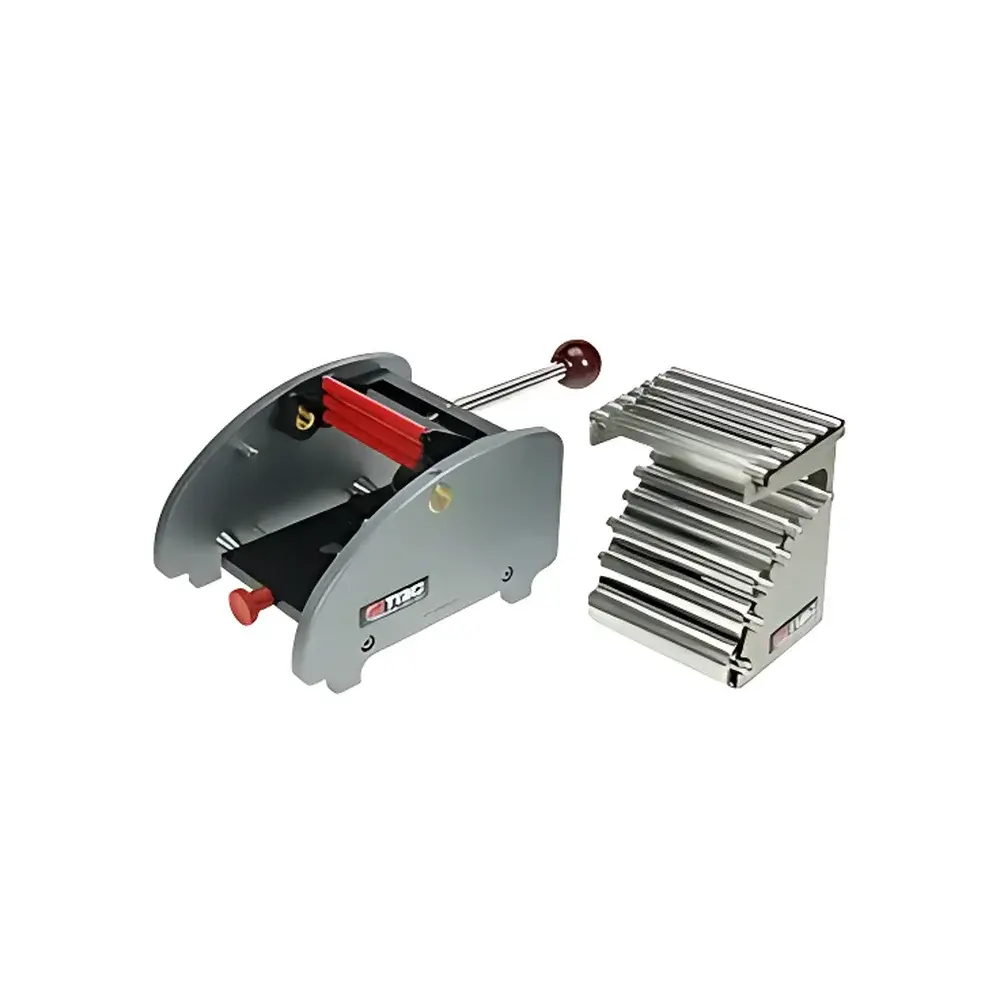
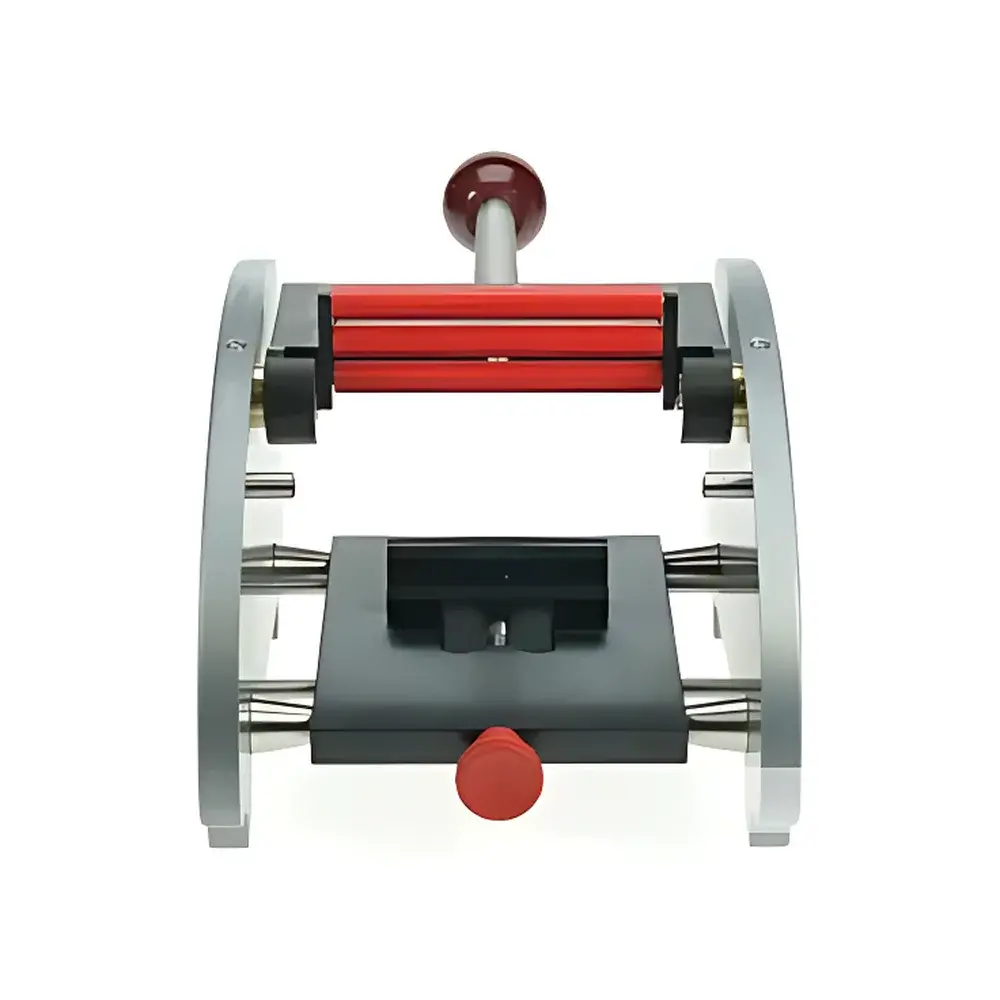
TQC SP1820 Cylindrical Mandrel Bend Tester
| Brand | TQC |
|---|---|
| Origin | Netherlands |
| Model | SP1820 |
| Compliance | ISO 1519 |
| Mandrel Diameters | 2, 3, 4, 5, 6, 8, 10, 12, 13, 16, 19, 20, 25, 32 mm |
| Test Panel Max Size | 150 × 100 mm |
| Certification | QUALICOAT, QIB, GSB accredited |
Overview
The TQC SP1820 Cylindrical Mandrel Bend Tester is a precision-engineered mechanical testing instrument designed for the quantitative evaluation of coating elasticity, ductility, and adhesion performance on metallic substrates. Operating on the principle of controlled plastic deformation, the device subjects coated test panels to uniaxial bending over standardized cylindrical mandrels of defined diameters. As per ISO 1519, this method induces tensile stress on the outer surface of the coating while compressive strain develops on the inner side—enabling direct correlation between mandrel diameter, substrate thickness, and observed failure modes (e.g., cracking, flaking, delamination). The SP1820 delivers repeatable, operator-independent results essential for R&D validation, incoming quality control, and compliance verification in coil coating, architectural finishing, and automotive OEM supply chains.
Key Features
- Full compliance with ISO 1519:2021 — “Paints and varnishes — Determination of resistance to bending (mandrel test)”
- Modular mandrel set comprising 14 hardened steel mandrels with precisely calibrated diameters: 2, 3, 4, 5, 6, 8, 10, 12, 13, 16, 19, 20, 25, and 32 mm — traceable to national metrology standards
- Robust desktop-mounted mandrel support frame with integrated clamping mechanism; optionally wall-mountable for space-constrained laboratory environments
- Accommodates test panels up to 150 mm × 100 mm × ≤1.5 mm thickness — compatible with standard ASTM D522/D522M and EN 13523-7 substrates
- Zero-adjustment-free mechanical design ensures long-term dimensional stability without recalibration
- Designed for integration into GLP-compliant workflows: all mandrels are individually serialized and documented in the supplied calibration certificate
Sample Compatibility & Compliance
The SP1820 is validated for use with pre-coated metal substrates including cold-rolled steel, aluminum alloys (e.g., AA1050, AA3003), and galvanized steel sheets. It supports both liquid-applied and coil-coated systems—including polyester, polyurethane, PVDF, and epoxy-based finishes. Its test methodology aligns with multiple international specifications beyond ISO 1519, including ASTM D522 (conical mandrel), EN 13523-7 (coil coating bend test), and JIS K 5600-5-2. The instrument has undergone third-party technical assessment and is formally recognized by QUALICOAT (for architectural aluminum anodizing and powder coating), QIB (Quality Inspectors Bureau), and GSB International — confirming its suitability for audit-ready quality assurance programs under ISO 9001 and IATF 16949 frameworks.
Software & Data Management
The SP1820 is a manually operated mechanical tester and does not incorporate embedded electronics or digital interfaces. However, it is fully compatible with laboratory documentation systems supporting FDA 21 CFR Part 11 requirements when used in conjunction with validated electronic lab notebooks (ELNs) or LIMS platforms. Test records—including mandrel ID, panel batch number, substrate type, coating formulation, and pass/fail evaluation per ISO 1519 Annex A (visual assessment criteria)—can be systematically logged and archived. TQC provides a comprehensive test report template aligned with ISO/IEC 17025 reporting guidelines, facilitating traceability, reviewer sign-off, and internal audit readiness.
Applications
- Coating formulation development: Screening binder-resin combinations for improved flexibility and crack resistance
- Batch release testing for coil-coated aluminum and steel products in architectural façade manufacturing
- Supplier qualification audits requiring evidence of coating integrity after forming operations (e.g., roll-forming, deep-drawing)
- Failure analysis investigations following field reports of coating chipping or edge cracking
- Supporting technical dossiers for CE marking of construction products under EN 10169 and EN 1396
- Training laboratories in paint technology programs (e.g., FATP, SSPC, AMPP-certified courses)
FAQ
Is the SP1820 suitable for testing non-metallic substrates such as plastics or composites?
No — the SP1820 is specifically validated for rigid metallic substrates per ISO 1519. Substrate stiffness and yield behavior significantly influence bending mechanics; non-metals require alternative test methods (e.g., ASTM D2794 for organic coatings on flexible films).
Can the mandrels be recalibrated or recertified by the user?
Mandrel diameter certification is performed at TQC’s Netherlands facility using coordinate measuring machines (CMM) with ±0.01 mm uncertainty. Recertification must be conducted by an ISO/IEC 17025-accredited metrology lab; users may request revalidation services directly from TQC.
Does the SP1820 meet requirements for automotive OEM specifications such as GMW14872 or Ford CETP?
While the SP1820 itself is not certified to OEM-specific protocols, its ISO 1519 compliance serves as the foundational mechanical test upon which OEMs build additional conditioning steps (e.g., humidity cycling, thermal shock). Many Tier-1 suppliers use the SP1820 as the primary bend test platform prior to OEM submission.
What maintenance is required for long-term accuracy?
Annual visual inspection of mandrel surfaces for nicks or wear is recommended. No lubrication or adjustment is needed; storage in low-humidity conditions prevents oxidation of hardened steel components.



