
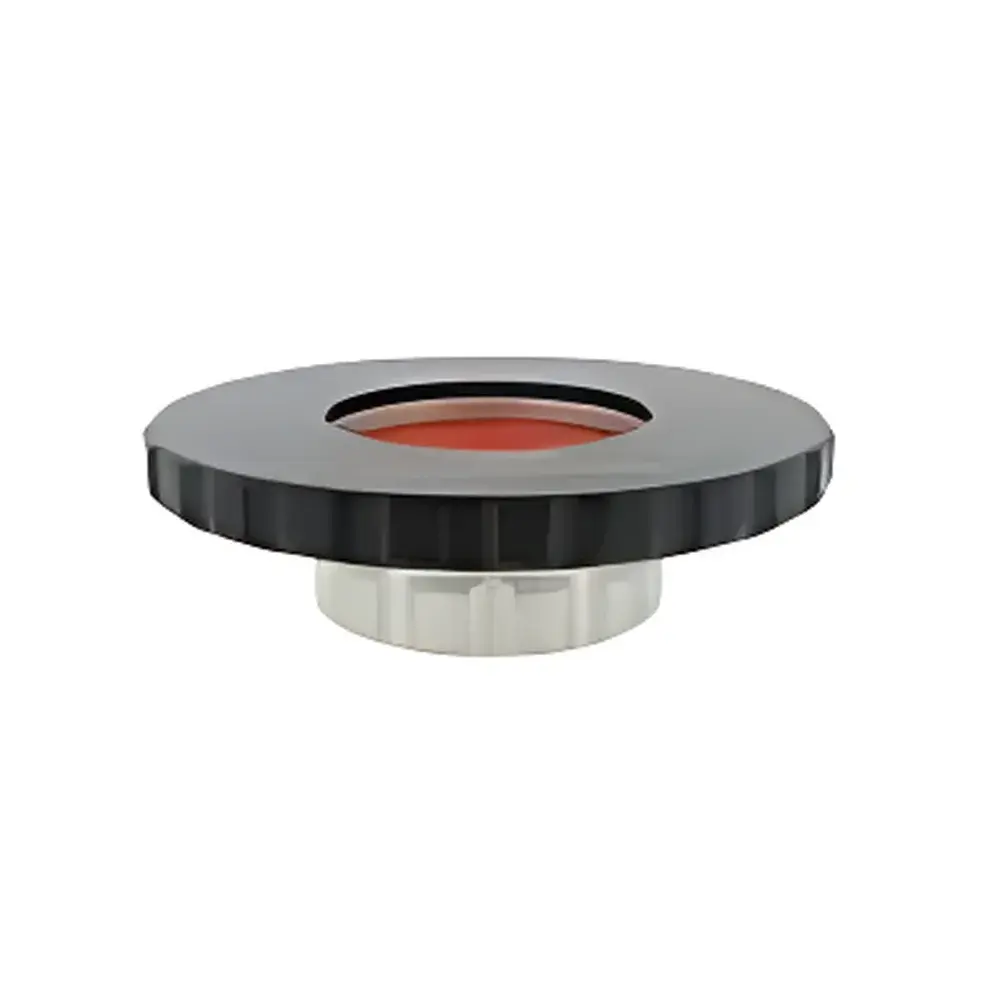
TQC VF2200/2201 Permeation Cup for Water Vapor Transmission Rate (WVTR) Testing
| Brand | TQC |
|---|---|
| Model | VF2200/2201 |
| Compliance | ISO 7783, ASTM D1653, ASTM E96 |
| Construction | Stainless Steel Body with Precision-Machined Sealing Surfaces |
| Cup Volume | 10 mL |
| Sealing Ring Material | FDA-Compliant Silicone Elastomer |
| Cleaning | Autoclavable & Solvent-Compatible |
| Sample Compatibility | Self-Supporting and Non-Self-Supporting Films |
Overview
The TQC VF2200/2201 Permeation Cup is a precision-engineered gravimetric test cell designed for standardized determination of water vapor transmission rate (WVTR) in protective coatings, paints, varnishes, laminates, and packaging barrier materials. Operating on the fundamental principle of dynamic mass change under controlled humidity gradients, this cup enables quantitative assessment of moisture permeability via either the wet-cup method (test specimen exposed to dry atmosphere over saturated salt solution or desiccant) or the dry-cup method (specimen exposed to humid environment over water or saturated salt solution), in strict accordance with ISO 7783-1, ASTM D1653, and ASTM E96 test protocols. Its robust stainless steel construction ensures dimensional stability across thermal and hygroscopic cycles, while the integrated sealing ring prevents rotational misalignment during torque application—critical for maintaining uniform clamping pressure and eliminating edge leakage artifacts. The cup’s geometry and surface finish are optimized to minimize evaporative edge effects and support reproducible film mounting, particularly for thin, low-modulus, or highly crosslinked coating systems where interfacial adhesion and substrate interaction significantly influence diffusion kinetics.
Key Features
- Precision-machined stainless steel body with corrosion-resistant passivation treatment for long-term stability in high-humidity and solvent-rich environments
- Dual-mode compatibility: supports both wet-cup (desiccant-based) and dry-cup (humidified) configurations per ASTM E96 Procedure A and B
- Integrated silicone sealing ring (FDA-compliant, Shore A 60 ± 5) that mechanically inhibits rotation of the retaining ring during tightening—ensuring consistent gasket compression and eliminating seal slippage
- Laser-engraved serial number on base plate for traceability, audit readiness, and GLP/GMP-aligned instrument inventory management
- Smooth, non-porous internal surfaces and chamfered cup rim facilitate rapid cleaning with IPA, acetone, or aqueous detergents; fully compatible with laboratory autoclaving (121 °C, 15 psi, 20 min)
- Optimized 10 mL internal volume balances sensitivity (mass change resolution ≥0.1 mg) and test duration practicality for typical WVTR ranges (0.1–100 g·m⁻²·day⁻¹)
Sample Compatibility & Compliance
The VF2200/2201 accommodates both self-supporting films—freestanding cured coatings detached from substrates—and non-self-supporting films requiring backing substrates such as porous filter paper (e.g., Whatman Grade 1), breathable PET, or permeable release liners. When used with backing media, the system maintains compliance with ISO 7783-2 Annex A for composite-layer permeation evaluation. All components meet material safety requirements for contact with pharmaceutical, food packaging, and automotive coating QC workflows. Test execution adheres to regulatory expectations for method validation: cup assembly repeatability (RSD ≤2.5% across n=6 replicates), environmental chamber stability (±0.5 °C, ±2% RH), and balance calibration traceability to NIST standards. Documentation packages include certificate of conformance to ISO/IEC 17025–accredited manufacturing controls.
Software & Data Management
While the VF2200/2201 operates as a standalone gravimetric cell, it integrates seamlessly into automated WVTR testing platforms equipped with microbalance interfaces (e.g., Mettler Toledo XSR series, Sartorius Entris II). Raw mass-vs.-time datasets export directly to CSV or Excel-compatible formats. When deployed within validated LIMS or ELN ecosystems (e.g., LabWare, Benchling), the engraved serial number enables full chain-of-custody tracking—from cup issuance and cleaning log entries to final test report generation. Audit trails comply with FDA 21 CFR Part 11 requirements when paired with electronic signature-enabled software modules. Optional calibration verification kits (certified mass standards + humidity reference tablets) support periodic performance qualification per ICH Q2(R2) guidelines.
Applications
- QC release testing of automotive OEM clearcoats and primer-surfacer systems for humidity-induced blistering resistance
- Barrier efficacy validation of flexible pharmaceutical blister lidding foils (Alu–PVC–PVDC laminates)
- R&D screening of novel hydrophobic additives in architectural latex paints under tropical climate simulation (85% RH, 40 °C)
- Accelerated aging correlation studies linking WVTR drift to crosslink density loss measured by FTIR or DMA
- Comparative analysis of epoxy–phenolic hybrid coatings versus traditional alkyd systems in marine immersion service conditions
FAQ
What distinguishes the VF2200 from the VF2201 variant?
The VF2200 is configured for standard 35 mm diameter test specimens; the VF2201 features an extended-height cup body optimized for thicker multi-layer assemblies (e.g., adhesive-coated metallized films) requiring ≥2 mm clearance above the specimen plane.
Can the cup be used with non-aqueous vapor sources (e.g., organic solvents)?
No—the design, sealing elastomer, and validation scope are limited to water vapor transmission only. Solvent permeation requires chemically resistant cups with fluoropolymer gaskets and alternative calibration protocols.
Is third-party certification available for ISO/IEC 17025 traceability?
Yes. TQC provides optional factory calibration certificates issued by an ILAC-MRA signatory laboratory, including uncertainty budgets per GUM (JCGM 100:2008) for mass and dimensional parameters.
How often should the sealing ring be replaced?
Under normal use (≤5 cycles/week, cleaned after each use), replacement is recommended every 12 months or after 200 torque cycles—whichever occurs first—to maintain compression set below 15% and ensure leak-tight integrity at 10 kPa differential pressure.





