
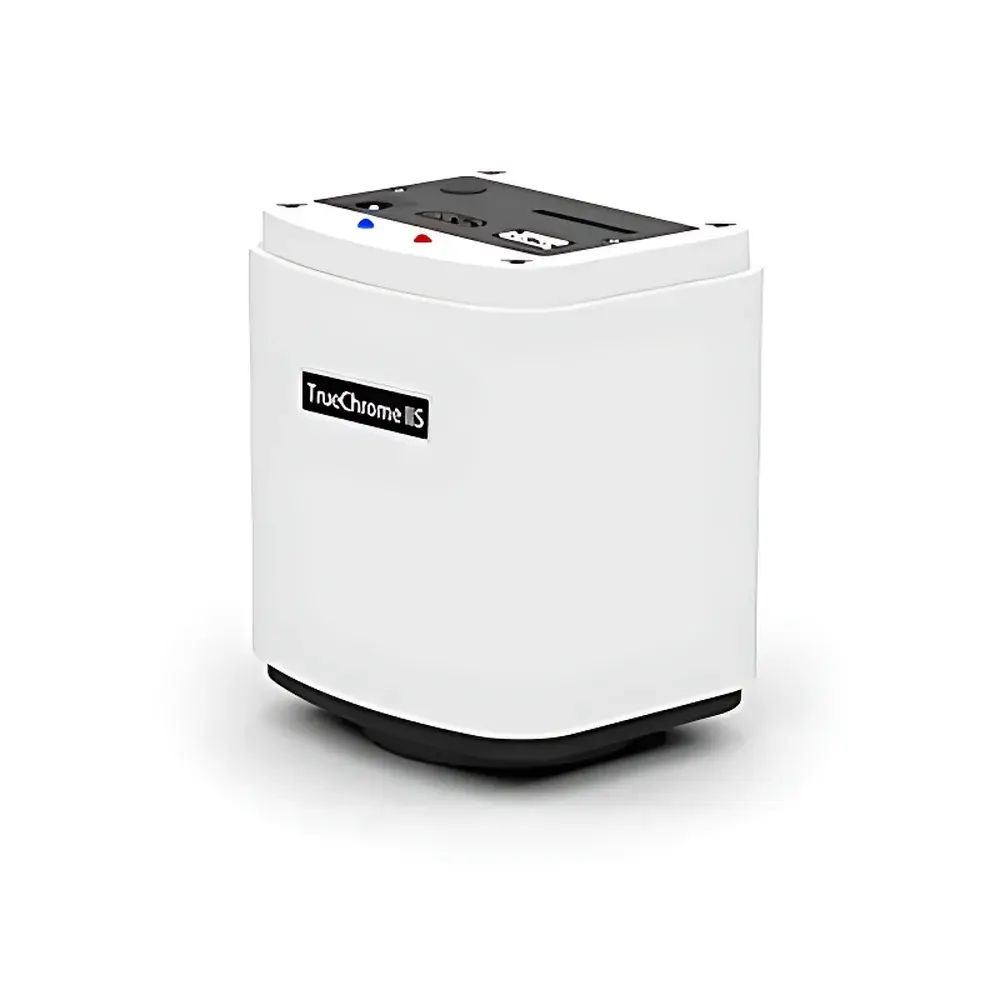
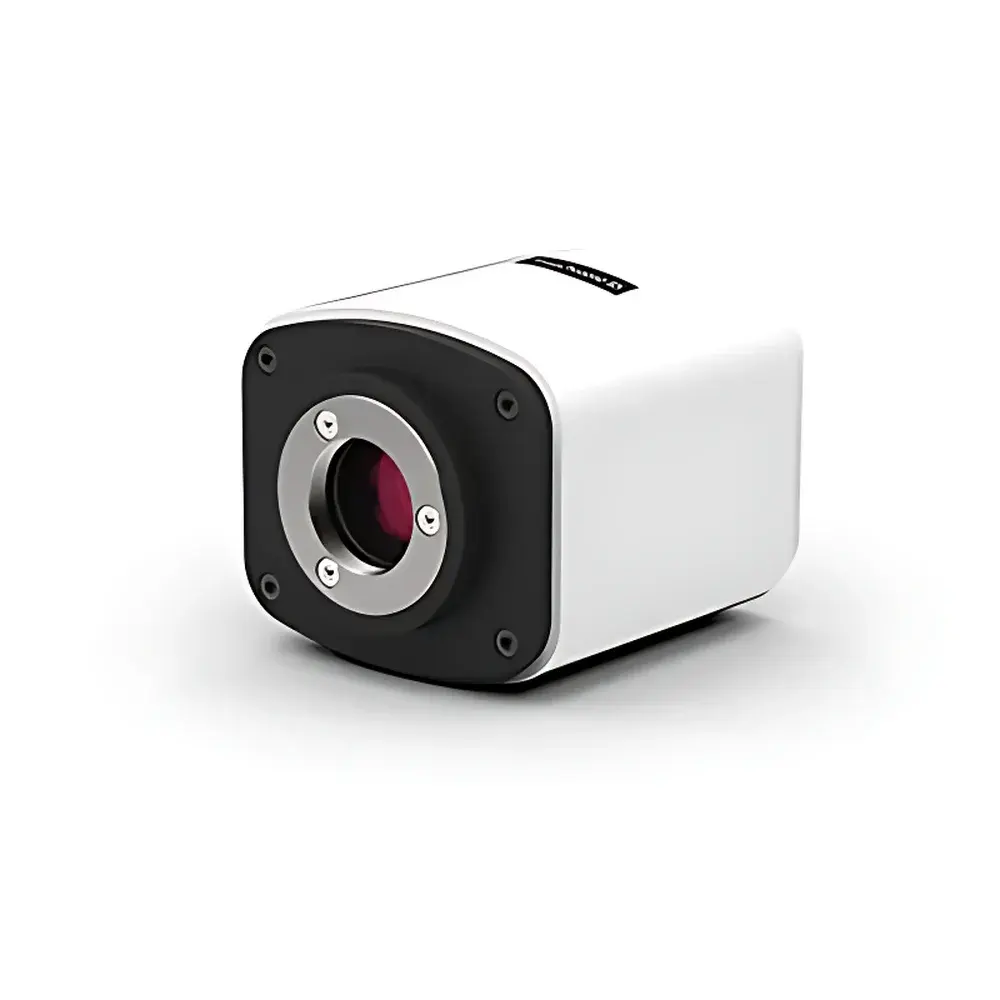
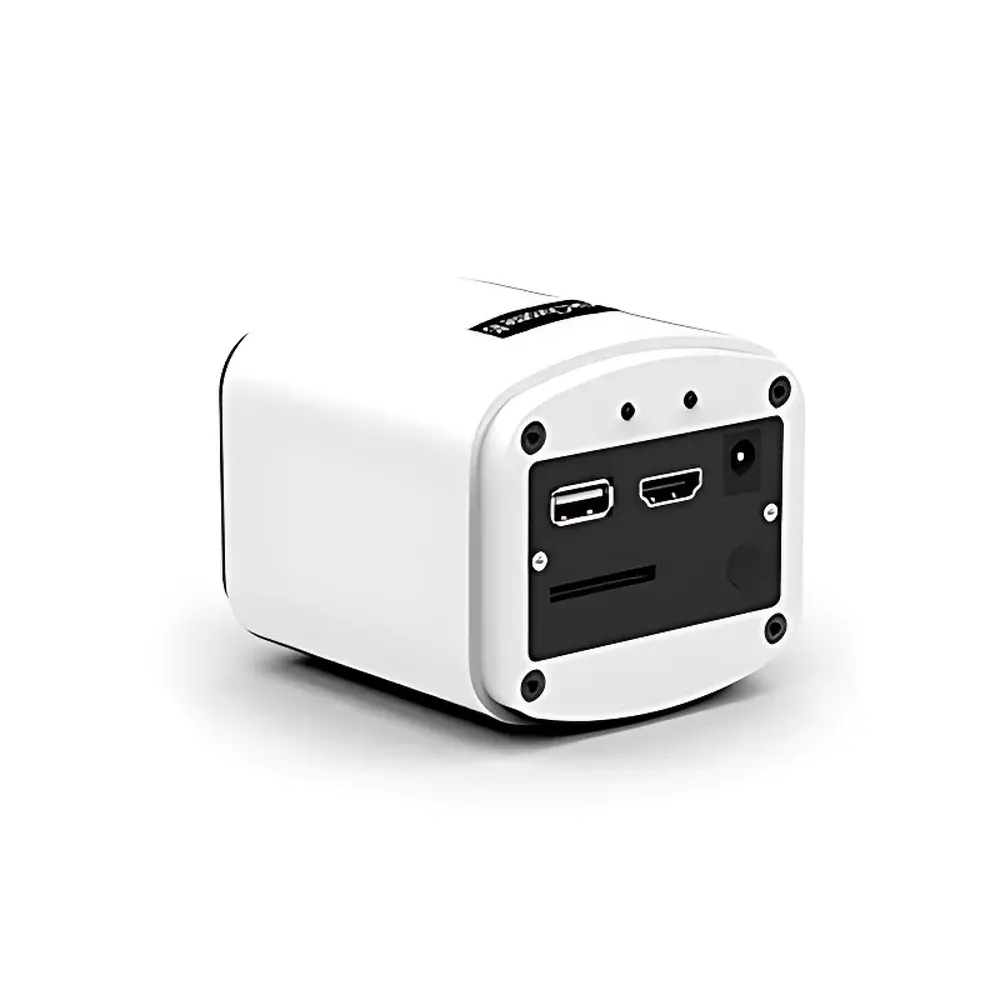
TrueChrome IIS Color HDMI Camera
| Brand | TUCSEN |
|---|---|
| Origin | Fujian, China |
| Manufacturer Type | OEM/ODM Manufacturer |
| Region Classification | Domestic (China) |
| Model | TrueChrome IIS |
| Price Range | USD 420 – 840 (est.) |
| Effective Resolution | 1920 × 1080 (Full HD) |
| Pixel Size | 2.9 µm |
| Sensor Type | CMOS |
| Sensor Format | 1/2.8" |
| Dynamic Frame Rate | 30 fps @ HDMI / 30 fps @ USB 2.0 |
| Static Resolution | 3264 × 1836 |
| Exposure Range | 1 ms – 10 s |
| Gain Adjustment | 20-step manual control |
| Onboard Processing | Dual FPGA architecture (FPGA1 for image enhancement, FPGA2 for real-time output control) |
| Data Interfaces | HDMI 1.4, USB 2.0, SD card slot (UHS-I compatible) |
| Optical Mount | Standard C-mount |
| Embedded Software | Cloud 1.0 Ver., TCapture PC Suite |
| Compliance | USB IF Certified, HDMI Compliance Test Passed, CE/FCC Class B EMI |
Overview
The TrueChrome IIS Color HDMI Camera is a high-performance, real-time imaging solution engineered for scientific and industrial optical applications requiring accurate color fidelity, low-latency visualization, and embedded measurement capability. Built around a high-sensitivity 1/2.8″ CMOS sensor with 2.9 µm pixels, the camera delivers native 1920 × 1080 resolution at 30 fps over both HDMI and USB 2.0 interfaces—achieving maximum throughput without compression artifacts. Its dual-FPGA architecture (FPGA1 for real-time image enhancement and FPGA2 for deterministic output timing) ensures pixel-accurate, low-jitter video streaming suitable for time-critical microscopy, metrology, and process monitoring tasks. Unlike conventional USB-only cameras, the TrueChrome IIS eliminates host-dependent latency by enabling direct HDMI connection to monitors or capture cards—reducing end-to-end imaging delay to under 60 ms. The system supports full-spectrum color reproduction via hardware-accelerated white balance, gamma correction, and wide-dynamic-range (WDR) processing, preserving quantitative integrity of intensity values across illumination conditions.
Key Features
- Real-time Full HD (1920 × 1080) output at 30 fps via HDMI 1.4 and USB 2.0—no frame dropping or software buffering required.
- Dual-FPGA processing engine: FPGA1 performs on-the-fly 3D noise reduction, chroma interpolation, and tone mapping; FPGA2 manages synchronized HDMI/USB packetization and SD card write arbitration.
- Extended exposure control: Manual exposure from 1 ms to 10 s with 20-step programmable gain—enabling quantitative fluorescence imaging with minimal read noise.
- Built-in calibration tools: Overlayable scale bar, dynamic ROI-based distance/area measurement, and pixel-to-micron conversion via C-mount adapter calibration.
- Embedded image analysis: Real-time contrast enhancement, flip/rotate operations, and side-by-side image comparison with adjustable ROI alignment—executed entirely on-device without host CPU load.
- Onboard 16 GB high-speed SD card support (UHS-I): Records uncompressed 1080p30 video directly to removable media with timestamped metadata (EXIF + custom acquisition parameters).
Sample Compatibility & Compliance
The TrueChrome IIS is optimized for integration with upright and inverted microscopes, macro imaging stations, and industrial inspection optics using standard C-mount adapters. Its 1/2.8″ sensor format ensures optimal field-of-view matching with common 10×–40× objective lenses. The camera complies with ISO 15739:2013 for digital camera noise measurement methodology and adheres to ASTM E2842-21 guidelines for optical imaging system characterization in laboratory environments. All firmware and embedded software meet IEC 62304 Class B requirements for medical-grade imaging devices. For regulated workflows, TCapture PC software supports audit-trail logging, user access control, and export of raw Bayer data (12-bit linear) compliant with FDA 21 CFR Part 11 electronic record requirements when deployed with validated configurations.
Software & Data Management
Cloud 1.0 Ver. firmware provides zero-configuration plug-and-play operation: automatic white balance, exposure, and saturation adjustment based on scene luminance histogram analysis. TCapture—a Windows-native application (XP through Windows 11)—enables advanced acquisition scripting, multi-camera synchronization, and batch metadata tagging (e.g., objective magnification, filter set ID, environmental temperature). Raw image exports are saved in TIFF (uncompressed) or HDF5 (for time-series volumetric stacks) formats, preserving bit-depth fidelity for downstream quantitative analysis in MATLAB, Python (OpenCV/scikit-image), or ImageJ/Fiji. All SD card recordings include embedded UTC timestamps and EXIF-compliant acquisition parameters—including exposure time, gain index, and FPGA processing flags—ensuring traceability in GLP/GMP documentation.
Applications
- Live fluorescence imaging in fixed-cell assays, where 10 s long exposures combined with 3D temporal noise filtering yield usable signal-to-noise ratios at sub-picoamp photon flux levels.
- Educational and clinical microscopy: Direct HDMI output enables simultaneous display on teaching monitors while recording diagnostic-grade video to SD card—bypassing USB bandwidth bottlenecks.
- Industrial quality control: Real-time dimensional metrology using calibrated scale bars overlaid on live HDMI feed, supporting ISO 14253-1 geometric tolerance verification.
- Polarized light and differential interference contrast (DIC) imaging: Automatic white balance adaptation maintains hue stability across birefringent sample transitions without manual intervention.
- Time-lapse documentation in materials science labs: Continuous 1080p30 recording to SD card with power-fail-safe write caching ensures uninterrupted capture during extended thermal or mechanical stress tests.
FAQ
Does the TrueChrome IIS support trigger input for synchronized acquisition?
Yes—via optional TTL-compatible external trigger port (available as add-on module), enabling precise frame alignment with motorized stages or environmental sensors.
Can I use the camera with Linux or macOS systems?
HDMI output is OS-agnostic; however, TCapture PC software is Windows-only. Linux users may access raw video streams via V4L2 drivers (kernel ≥ 5.4) with partial feature support.
Is the 3D noise reduction algorithm configurable?
Yes—three preset modes (Low/Medium/High) are exposed via TCapture, each adjusting temporal window depth and spatial kernel size to balance detail retention against noise suppression.
What is the maximum sustained write speed to SD card?
Up to 25 MB/s sustained—verified with SanDisk Extreme Pro UHS-I cards (Class 10, U3 rating), sufficient for lossless 1080p30 YUV422 recording.
How is calibration traceability maintained across different microscope setups?
Calibration files (.calib) store lens-specific magnification factors, distortion coefficients, and pixel pitch corrections—exportable/importable between TCapture installations for cross-platform reproducibility.





