
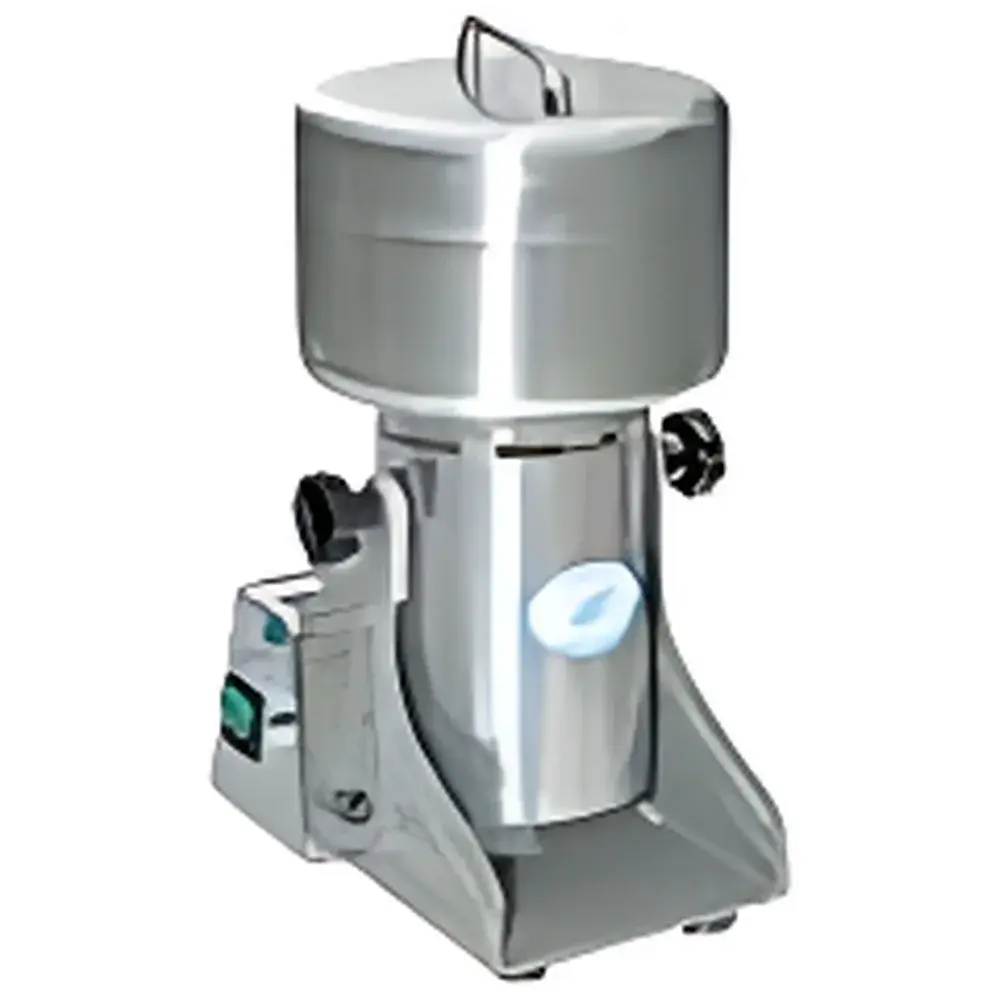
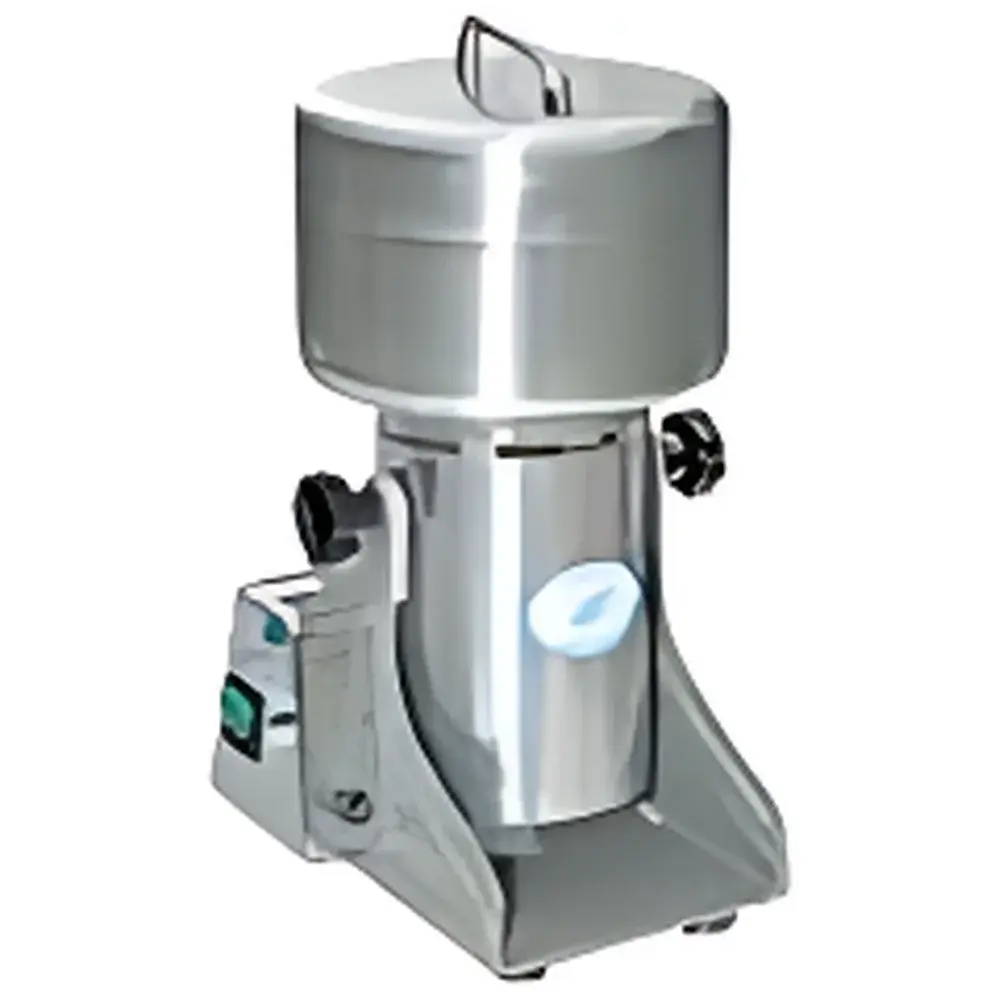
Truelab FW135 Laboratory Benchtop High-Speed Universal Grinder
| Brand | Truelab |
|---|---|
| Origin | Tianjin, China |
| Model | FW135 |
| Instrument Type | High-Speed Universal Grinder |
| Sample Applicability | Hard and Brittle Materials (Herbs, Minerals, Soils, Ores, Grains) |
| Feed Size | ≤10 mm |
| Output Particle Size | 0.01–0.5 mm (60–200 mesh) |
| Batch Capacity | 200 g |
| Input Voltage | 220 V AC |
| Power | 800 W |
| Rotational Speed | 24,000 rpm |
| Chamber Material | Stainless Steel (AISI 304) |
| Dimensions (L×W×H) | 200 × 220 × 330 mm |
| Net Weight | 5.4 kg |
| Gross Weight | 6.5 kg |
Overview
The Truelab FW135 is a compact, high-speed universal benchtop grinder engineered for reproducible, controlled size reduction of hard, brittle, and fibrous laboratory samples. It operates on the principle of high-velocity impact milling—where rapidly rotating stainless-steel blades generate centrifugal force to accelerate sample particles against the inner chamber wall and each other, resulting in efficient mechanical comminution. Designed specifically for regulated research environments, the FW135 delivers consistent particle size distribution without thermal degradation, making it suitable for pre-analytical sample preparation prior to elemental analysis (e.g., XRF, ICP-OES), moisture content determination, homogenization for pharmacopeial testing (USP , EP 2.9.12), or soil nutrient extraction (ISO 11464, ASTM D4292). Its enclosed grinding chamber minimizes airborne particulate release and supports safe handling of non-hazardous solid matrices under standard laboratory ventilation.
Key Features
- Stainless-steel grinding chamber (AISI 304) ensures chemical inertness, corrosion resistance, and ease of cleaning—critical for cross-sample integrity and GLP-compliant workflows.
- High-efficiency air-cooled induction motor (24,000 rpm, 800 W) provides stable rotational torque for consistent energy input across batch loads up to 200 g.
- Optimized blade geometry and chamber contour promote uniform material flow and reduce retention, enabling rapid clearance between runs with minimal carryover.
- Benchtop footprint (200 × 220 × 330 mm) and lightweight design (5.4 kg net) facilitate placement in fume hoods, glove boxes, or mobile lab carts without structural reinforcement.
- Single-knob operation with momentary start/stop control simplifies SOP execution; no programmable timers or variable speed controls are included—intentionally designed for manual, operator-supervised grinding cycles.
Sample Compatibility & Compliance
The FW135 accepts dry, non-oily, non-fibrous-to-moderately-fibrous solid samples with maximum feed dimensions ≤10 mm. Validated applications include dried botanicals (roots, leaves, bark), granular minerals (quartz, limestone, clay aggregates), pulverized ores (hematite, bauxite), agricultural grains (wheat, rice, soy), and homogenized soil cores. It is not intended for wet, sticky, oily, or heat-sensitive materials (e.g., essential oil-rich herbs, polymers, or biological tissues). While not certified to IEC 61000 or UL 61010-1 as a standalone safety-certified device, its construction complies with general electrical safety practices for Class I laboratory appliances operating at 220 V AC. For regulatory traceability, users must implement documented cleaning validation (e.g., visual inspection + swab recovery test per ISO 17025 Clause 7.2.2) and maintain logbooks recording batch ID, sample type, grinding duration, and operator signature.
Software & Data Management
The FW135 is a standalone electromechanical instrument with no embedded firmware, digital interface, or data logging capability. All operational parameters—including run time, load mass, and post-grind sieve analysis—are manually recorded by the user in laboratory notebooks or LIMS-integrated electronic records. This analog architecture eliminates cybersecurity vulnerabilities and aligns with laboratories maintaining legacy instrumentation fleets where audit trails rely on procedural documentation rather than electronic signatures. For FDA 21 CFR Part 11 compliance, institutions may pair the FW135 with validated third-party weighing and sieving systems that support electronic record generation and role-based access control.
Applications
- Pharmaceutical R&D: Preparing herbal powder batches for dissolution testing (USP ) or HPLC assay standardization.
- Environmental labs: Reducing composite soil samples to ≤0.5 mm for heavy metal leaching studies (EPA Method 1311) or pH/conductivity profiling.
- Geological survey units: Milling rock chips for X-ray fluorescence (XRF) pellet preparation (ASTM D5630).
- Food safety testing: Homogenizing cereal grains prior to aflatoxin extraction (AOAC 994.01) or mycotoxin immunoassay.
- Agricultural extension services: Generating representative sub-samples from field-collected mineral fertilizers for nutrient content verification (ISO 8482).
FAQ
What is the recommended cleaning protocol between different sample types?
Wipe the chamber and blades with lint-free cloth dampened with ethanol or isopropanol; follow with air-drying. For mineral residues, use a soft stainless-steel brush. Validate cleanliness via visual inspection and, if required, residue-specific swab testing.
Can the FW135 achieve sub-10 µm particle sizes?
No. Its mechanical impact mechanism yields a practical lower limit of ~10 µm (0.01 mm) under optimal conditions; submicron grinding requires planetary ball mills or jet mills.
Is the FW135 compatible with inert atmosphere grinding?
Not natively. The chamber lacks gas purge ports or sealed glovebox integration; modification voids warranty and compromises electrical safety.
Does Truelab provide calibration certificates or metrological traceability?
No. As a mechanical size-reduction tool—not a measuring instrument—the FW135 does not require calibration. Users perform performance qualification via sieve analysis (e.g., ASTM E11) using certified test sieves.
What maintenance intervals are advised for sustained performance?
Inspect blade sharpness and chamber integrity every 50 operating hours; replace blades after 200 hours or visible wear. Lubrication is not required—motor bearings are permanently sealed.



