
TSE Systems PhenoMaster/LabMaster Activity Monitoring System for Small Animals
| Brand | TSE Systems |
|---|---|
| Origin | Germany |
| Manufacturer Type | Authorized Distributor |
| Origin Category | Imported |
| Model | Activity |
| Pricing | Available Upon Request |
Overview
The TSE Systems PhenoMaster/LabMaster Activity Monitoring System is a modular, integrated platform engineered for longitudinal, non-invasive behavioral phenotyping and metabolic assessment of small laboratory rodents—including mice and rats—under home-cage conditions. Designed around the principle of minimizing experimental stress while maximizing data fidelity, the system employs multiple complementary detection modalities to quantify spontaneous locomotor activity with high temporal resolution and biological relevance. Unlike forced-exercise paradigms or open-field assays, this platform captures naturalistic movement patterns within socially stable, undisturbed housing environments, enabling robust circadian rhythm analysis, habituation studies, and chronic intervention monitoring. Its architecture supports concurrent acquisition of activity metrics alongside core metabolic parameters (e.g., O₂ consumption, CO₂ production, respiratory exchange ratio, food/water intake), establishing a comprehensive physiological-behavioral correlation framework essential for preclinical research in neuroscience, obesity, diabetes, aging, and pharmacology.
Key Features
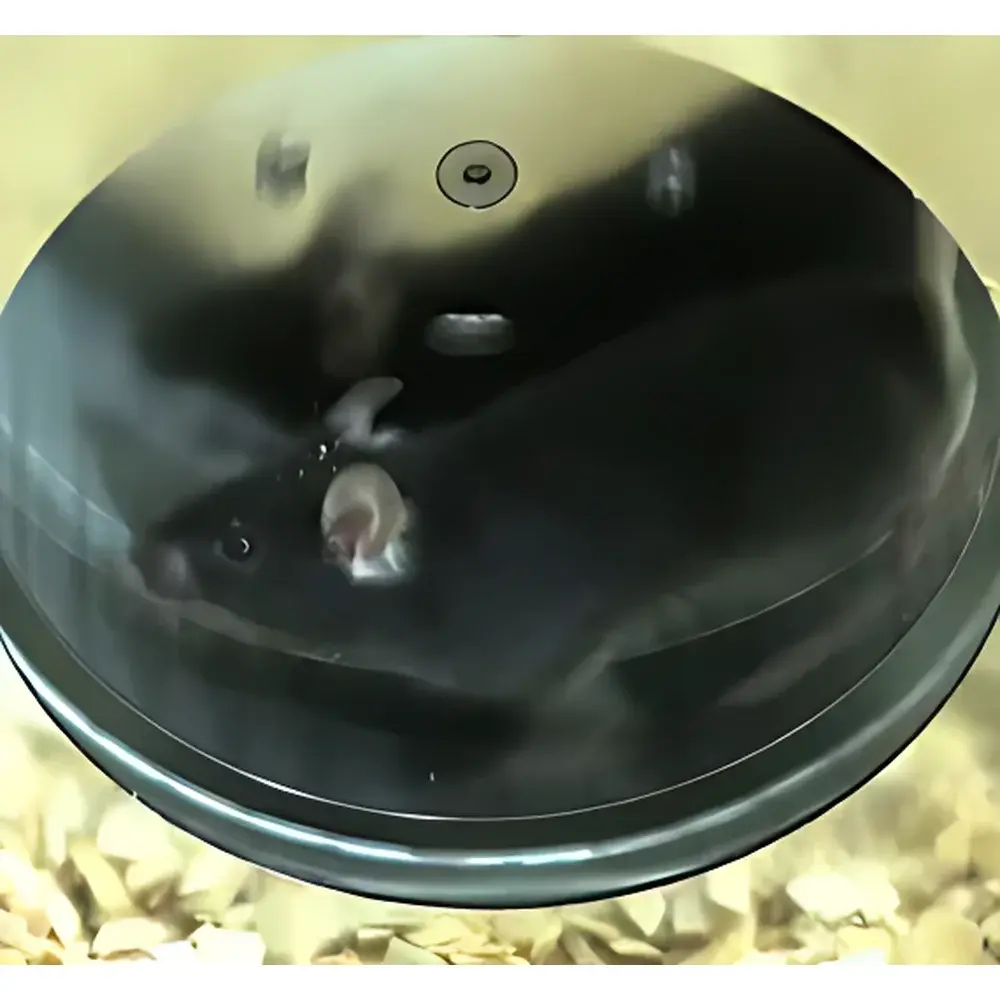
- Multi-modal activity detection: Integrates three independent, validated sensing technologies—ActiMot2 light-beam frame arrays (infrared beam break detection at 16×16 or 32×32 resolution), InfraMot passive infrared (PIR) motion sensors optimized for low-energy movement discrimination, and precision-engineered running wheels with magnetic encoder-based rotation tracking (0.1° angular resolution).
- Home-cage compatibility: All sensors mount externally or integrate seamlessly into standard IVC or individually ventilated cages without cage modification, preserving animal welfare standards and eliminating handling-induced artifacts.
- High-throughput scalability: Supports up to 96 independently monitored cages per system configuration; synchronized data acquisition across all cages ensures temporal alignment for cohort-level statistical analysis.
- Real-time event tagging: Activity bursts, immobility periods, and wheel revolutions are timestamped with microsecond precision and automatically annotated against concurrent metabolic or environmental sensor streams (e.g., temperature, humidity, light cycle).
- Robust mechanical design: Sensors and mounting hardware comply with ISO 17025-accredited calibration traceability; light-beam frames feature dust-resistant optical housings and auto-compensation for minor cage displacement.
Sample Compatibility & Compliance
The system is validated for C57BL/6, BALB/c, CD-1, and FVB mouse strains, as well as Sprague-Dawley and Wistar rat models across weight ranges from 15 g to 500 g. Cage configurations adhere to FELASA and AAALAC International housing guidelines, and sensor placement conforms to NIH Office of Laboratory Animal Welfare (OLAW) recommendations for minimally disruptive monitoring. Data acquisition protocols support GLP-compliant study execution, including full audit trails, user access controls, and electronic signature functionality aligned with FDA 21 CFR Part 11 requirements when deployed with optional LabMaster Suite software modules.
Software & Data Management
Data acquisition, visualization, and analysis are managed through the proprietary PhenoSoft suite (v6.2+), which provides a unified interface for multi-parameter time-series alignment, custom event detection scripting (Python API), and automated report generation compliant with MIAME and MIAPE reporting standards. Raw activity counts, velocity profiles, and bout-duration histograms are exportable in HDF5 and CSV formats for downstream integration with MATLAB, R, or Python-based machine learning pipelines. The software includes built-in circadian analysis tools (e.g., Chi-square periodogram, Lomb-Scargle spectral estimation) and supports batch processing of >10,000 hours of continuous activity data per project.
Applications
- Neuropharmacology: Quantification of psychostimulant-induced hyperactivity, sedative effects, or circadian phase shifts following chronobiological drug administration.
- Metabolic disease modeling: Correlation of spontaneous activity decline with insulin resistance progression in diet-induced obese (DIO) murine models.
- Neurodegenerative research: Detection of early motor deficits in transgenic Alzheimer’s or Parkinson’s disease models prior to histopathological onset.
- Toxicology screening: Assessment of CNS depressant or neurotoxic compound effects on baseline locomotion and exploratory behavior.
- Genetic phenotyping: High-resolution activity profiling across knockout/knockin strain panels under standardized environmental conditions.
FAQ
Can the system distinguish between rearing, grooming, and horizontal locomotion?
Yes—via combined ActiMot2 beam-break pattern recognition and InfraMot spatial-temporal signature analysis, the software classifies discrete behavioral motifs using validated machine-learning classifiers trained on manually annotated ethograms.
Is wheel-running data automatically normalized to body weight or cage occupancy?
Normalization options are configurable per study protocol; default outputs include revolutions per hour, distance (cm), and energy expenditure (kcal) calculated using species-specific biomechanical coefficients.
Does the system support real-time remote monitoring during long-term studies?
Yes—PhenoSoft includes secure web-based dashboard access with TLS 1.3 encryption, live streaming of cage-level activity heatmaps, and customizable alert thresholds for abnormal inactivity or hyperactivity episodes.
How is calibration maintained across extended deployments?
ActiMot2 frames undergo factory calibration with NIST-traceable photodiode reference sources; field recalibration is performed semi-annually using TSE’s certified optical alignment kit (PN CAL-AM-01).
Are raw sensor signals accessible for custom algorithm development?
Full-resolution binary sensor logs (including individual beam-break timestamps and PIR voltage waveforms) are available via the PhenoSoft Developer Mode API under appropriate data use agreements.




