
TSE Systems Stellar Telemetry System for Chronic Physiological Monitoring in Rodents
| Brand | TSE Systems |
|---|---|
| Origin | Germany |
| Model | Stellar Telemetry |
| Receiver Capacity | Up to 256 implants simultaneously |
| Implant Transmission Range | 5 m (free-space, cage-based) |
| Onboard Memory | 2 hours of continuous physiological data storage |
| Implant Lifetime | Single-use, sterilizable design |
| Compliance | Designed for GLP-compliant preclinical research environments |
Overview
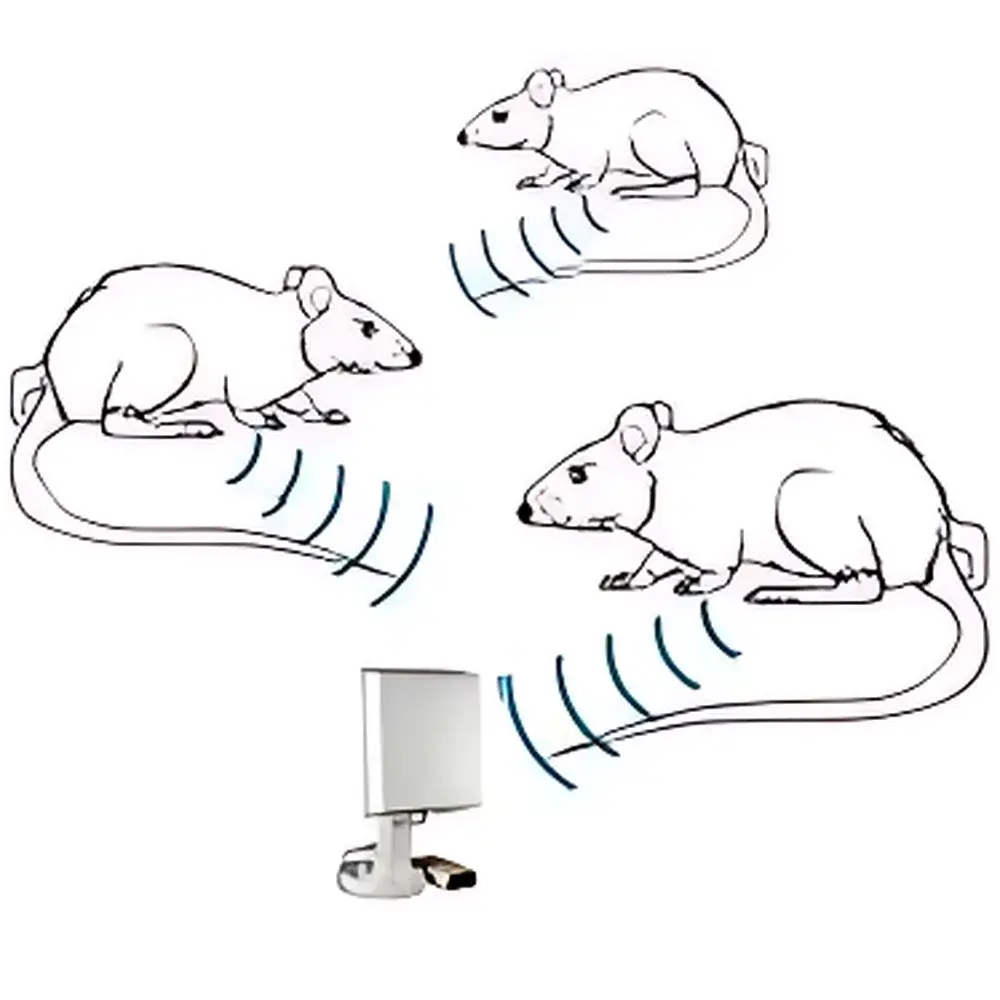
The TSE Systems Stellar Telemetry System is a fully integrated, implant-based wireless telemetry platform engineered for long-term, high-fidelity acquisition of core physiological parameters—including arterial blood pressure, electrocardiogram (ECG), temperature, and activity—in freely moving rodents. Unlike legacy fluid-filled catheter systems or externally tethered recording solutions, Stellar employs miniaturized, battery-powered implantable transmitters with integrated solid-state pressure sensors and digital signal processing circuitry. Its measurement architecture is based on direct piezoresistive transduction at the catheter tip, eliminating hydraulic artifact, damping-related phase lag, and motion-induced noise inherent in conventional fluid-coupled systems. This enables true physiological fidelity—particularly critical for detecting transient hemodynamic events such as baroreflex responses, arrhythmia onset, or drug-induced pressor/depressor surges. The system operates in the ISM 433 MHz band (EU-compliant), ensuring robust RF performance in standard vivarium settings without interference from Wi-Fi or Bluetooth infrastructure.
Key Features
- Patented tip-mounted MEMS pressure sensor: Eliminates fluid-column artifacts, delivers flat frequency response up to 30 Hz, and maintains signal integrity during rapid animal locomotion or cage repositioning.
- Scalable multi-animal monitoring: A single receiver supports concurrent real-time acquisition from up to 256 uniquely addressed implants—deployable across single or multiple adjacent cages without hardware reconfiguration.
- Cage-integrated operation: No handling, restraint, or platform transfer required; data collection occurs continuously while animals remain in their home cages under standard housing conditions.
- Onboard non-volatile memory (2 h capacity): Enables uninterrupted recording even when animals temporarily exit the RF reception zone (e.g., during cage cleaning, transport, or behavioral assays). Data auto-synchronizes upon re-entry.
- Single-use, gamma-sterilizable transmitter design: Each implant is factory-calibrated, pre-validated, and intended for one experimental cohort. Removes recalibration, cleaning validation, and repair logistics—reducing total cost of ownership and accelerating study turnaround.
Sample Compatibility & Compliance
Stellar telemetry implants are validated for chronic implantation in Sprague-Dawley and Wistar rats (250–500 g), with optional configurations available for mice (C57BL/6, BALB/c) and larger species including minipigs and non-human primates (subject to custom transmitter sizing). All implants meet ISO 10993-1 biocompatibility requirements for Class III medical devices. The system architecture supports audit-ready data integrity per FDA 21 CFR Part 11 guidelines: electronic signatures, immutable acquisition timestamps, operator traceability, and full audit trail logging for all parameter changes and data export events. It is routinely deployed in GLP-regulated safety pharmacology studies aligned with ICH S7A and S7B recommendations.
Software & Data Management
Stellar Control Software (v5.x, Windows 10/11) provides centralized configuration, real-time visualization, and automated calibration workflows. Each implant is independently programmable for sampling rate (125–1000 Hz), gain, filtering (Bessel, 2nd-order low-pass), and duty cycling—enabling optimized battery life and dataset granularity per experimental protocol. Raw binary data is stored in HDF5 format with embedded metadata (animal ID, implant SN, timestamp, calibration coefficients). Export modules support MATLAB (.mat), ASCII (.csv), and EDF+ formats for integration with third-party analysis platforms (e.g., Spike2, AcqKnowledge, Python-based neurophysiology toolchains). All software updates and firmware patches are delivered via secure, version-controlled repository with documented change logs.
Applications
- Cardiovascular pharmacology: Dose-response profiling of vasoactive compounds, QT interval assessment, and autonomic tone evaluation via spectral analysis of heart rate variability (HRV).
- Metabolic and circadian research: Continuous core temperature and locomotor activity monitoring across light-dark cycles, including sleep-wake architecture quantification.
- Toxicology endpoints: Detection of delayed-onset hypertension, bradycardia, or thermal dysregulation following subchronic exposure.
- Neuro-cardiovascular coupling: Simultaneous ECG + intracranial pressure (ICP) or cortical EEG acquisition using dual-modality implants.
- Preclinical model validation: Longitudinal tracking of disease progression in models of hypertension, heart failure, diabetes, and sepsis without repeated surgical intervention.
FAQ
Is Stellar telemetry compatible with existing TSE metabolic cages or behavioral arenas?
Yes—Stellar receivers integrate natively with TSE’s PhenoMaster and LabMaster platforms via TCP/IP API, enabling synchronized acquisition of telemetry data alongside oxygen consumption, CO₂ production, food intake, and spontaneous locomotion.
What is the typical battery life of a Stellar implant under continuous 1 kHz ECG + pressure recording?
Approximately 7–10 days depending on sampling configuration and ambient temperature; duty cycling extends operational lifetime to >3 weeks for intermittent protocols.
Can implant data be exported for statistical analysis in R or Python?
Yes—HDF5 exports include standardized metadata schemas and time-aligned channel arrays, fully compatible with pandas, scipy.signal, and NeuroPy toolsets.
Does the system support real-time alerts for predefined physiological thresholds?
Yes—Configurable alarm rules (e.g., systolic BP > 180 mmHg for >30 s) trigger visual notifications and optional email/SNMP alerts via the Stellar Server module.
Are calibration certificates provided with each implant batch?
Yes—Each shipment includes NIST-traceable calibration reports (pressure, temperature, ECG amplitude) and individual device verification logs compliant with ISO/IEC 17025 laboratory accreditation standards.