TSI FHC50 Fume Hood Controller
| Brand | TSI |
|---|---|
| Origin | USA |
| Model | FHC50 |
| Communication Protocols | BACnet®, LonWorks®, Modbus™ |
| Alarm Types | Visual, Audible, Remote |
| Mounting Options | Surface or Flush Mount |
| Actuator Response | Fast-acting |
| Sensor Integration | Sash Position Sensor + Wall-Mounted Face Velocity Sensor |
| Control Method | Linear Venturi Valve or Pressure-Independent Air Valve |
| Compliance Support | ASHRAE 110, ANSI Z9.5, EN 14175 |
Overview
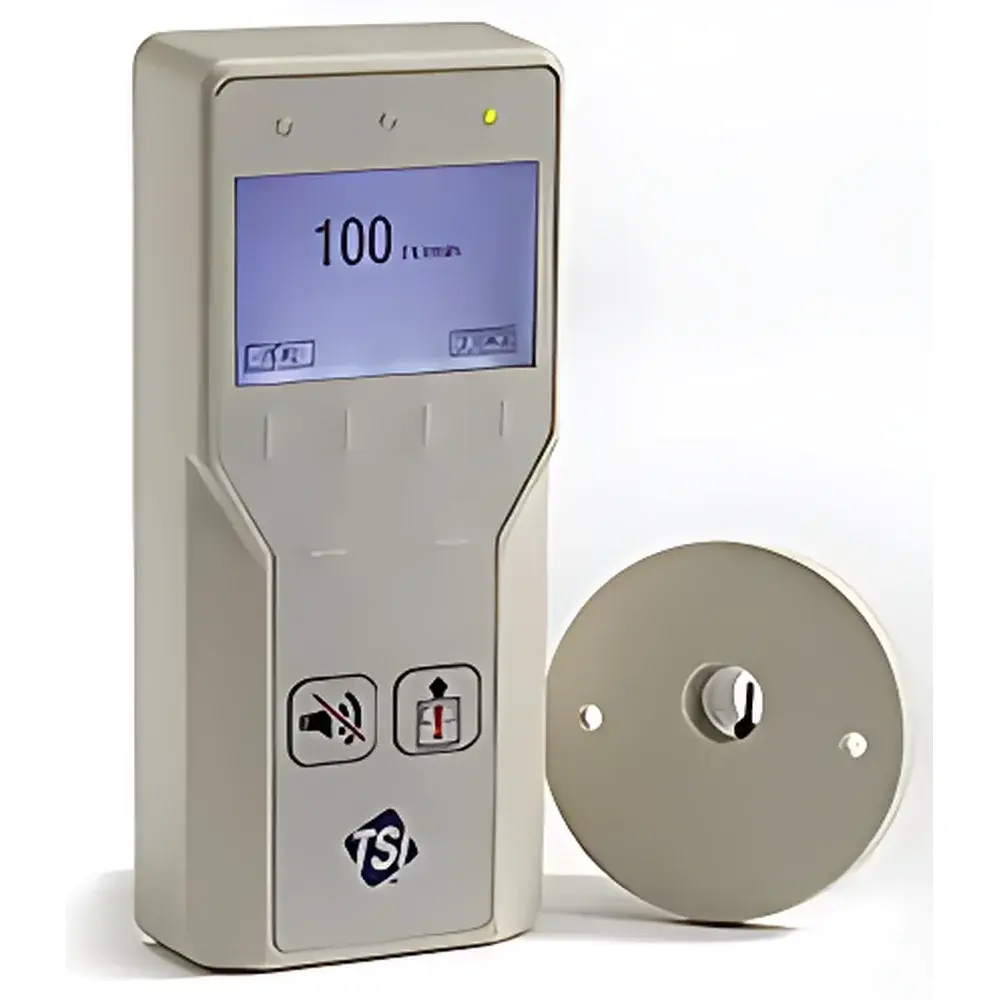
The TSI FHC50 Fume Hood Controller is an engineered safety and energy management system designed for precision regulation of face velocity in laboratory fume hoods. Operating on the principle of real-time feedback control, the FHC50 continuously monitors sash position and face velocity—typically measured via a calibrated thermal anemometer or pitot-static sensor mounted on the hood’s side wall—and dynamically adjusts airflow through a pressure-independent linear Venturi valve or modulating damper. This closed-loop architecture ensures consistent containment performance across variable sash positions while minimizing excess air exhaust, thereby reducing HVAC load and associated energy consumption. The controller meets fundamental engineering requirements defined in ASHRAE Standard 110 (Method of Testing Performance of Laboratory Fume Hoods), ANSI Z9.5 (Laboratory Ventilation), and EN 14175 (Fume Cupboards – Part 3: Type Test Methods), serving as a foundational component in institutional compliance with laboratory safety and sustainability protocols.
Key Features
- Real-time face velocity monitoring with configurable setpoints (typically 0.3–0.6 m/s) and dynamic sash-height compensation
- Fast-acting actuator interface supporting sub-second response to sash movement, maintaining stable airflow during operator interaction
- Triple-protocol digital communication: native BACnet MS/TP and IP, LonWorks FT-10, and Modbus RTU/TCP for seamless integration into enterprise-level Building Management Systems (BMS)
- Dual-sensor architecture support: independent integration of sash position transducers and wall-mounted thermal anemometers for redundancy and accuracy validation
- Configurable alarm hierarchy—including local visual indicators (LED status ring), audible alerts (85 dB at 1 m), and remote SNMP or email notifications via BMS relay—triggered by out-of-spec face velocity, sash over-height, or valve fault conditions
- Backlit 4.3-inch TFT display with intuitive menu navigation, showing real-time velocity, sash height (% open), valve position (% stroke), alarm history, and system diagnostics
- Flexible mounting options: surface-mount enclosure (NEMA 12 rated) or flush-mount panel cutout (standard 4.5″ × 4.5″ opening) with IP54-rated front bezel
Sample Compatibility & Compliance
The FHC50 is compatible with ducted and bypass-type fume hoods utilizing linear Venturi valves, VAV boxes with pressure-independent actuators, or motorized butterfly dampers. It supports analog (0–10 VDC, 4–20 mA) and digital (BACnet, LonWorks, Modbus) input/output interfaces for interoperability with third-party airflow sensors, differential pressure transmitters, and room pressure monitors. From a regulatory standpoint, the controller facilitates adherence to OSHA 1910.1450 (Laboratory Standard), NIH Design Requirements for Laboratories, and ISO/IEC 17025 clause 5.4.2 (equipment verification). While not itself a certified medical device, its data logging and audit trail capabilities align with GLP/GMP documentation expectations where fume hood performance records are required for quality system audits.
Software & Data Management
Configuration and calibration are performed using TSI’s free FHC Configuration Utility (Windows-based), which supports firmware updates, parameter cloning across multiple units, and export of configuration files (.fhcxml). The controller logs timestamped operational events—including alarm triggers, sash transitions, and valve position changes—with internal non-volatile memory retaining up to 30 days of rolling event history. When integrated into a BACnet/IP network, all parameters and alarms become accessible via standard BACnet objects (e.g., AV, BV, AI), enabling centralized dashboards and automated report generation. Optional TSI LogSync™ cloud service (subscription-based) provides encrypted remote access, long-term trend analysis, and CSV export for regulatory record retention.
Applications
The FHC50 serves critical infrastructure roles across research-intensive environments: university chemistry and pharmacology labs requiring ASHRAE-compliant containment; pharmaceutical R&D facilities validating hood performance per ICH Q5C and USP ; clinical diagnostics laboratories managing hazardous reagents under CLIA and CAP accreditation frameworks; and government research centers operating under DOE Order 440.1B (Laboratory Safety). Its adaptability extends to vivarium support labs, environmental testing suites, and industrial hygiene field deployment where portable or modular hood systems demand scalable, standards-aligned control.
FAQ
Does the FHC50 support integration with legacy HVAC controllers lacking BACnet?
Yes—via Modbus RTU over RS-485 or analog 0–10 VDC output, enabling compatibility with older DDC systems and pneumatic-to-electric transducers.
Can it operate without a sash position sensor?
It can function in “velocity-only” mode using only the wall-mounted face velocity sensor, though sash-integrated control is strongly recommended for optimal energy efficiency and safety margin maintenance.
Is firmware update capability available in the field?
Yes—updates are delivered via USB flash drive or Ethernet-connected PC using the official TSI FHC Configuration Utility; no hardware modification is required.
What is the recommended calibration interval for connected velocity sensors?
Per TSI Application Note AN-107, annual verification against a NIST-traceable reference anemometer is advised, with documented as-found/as-left data retained for audit purposes.
Does the unit provide data export for regulatory submissions?
Event logs and configuration snapshots can be exported in CSV and XML formats; when deployed with TSI LogSync™, time-stamped reports meet FDA 21 CFR Part 11 electronic record requirements with user authentication and audit trail functionality.