
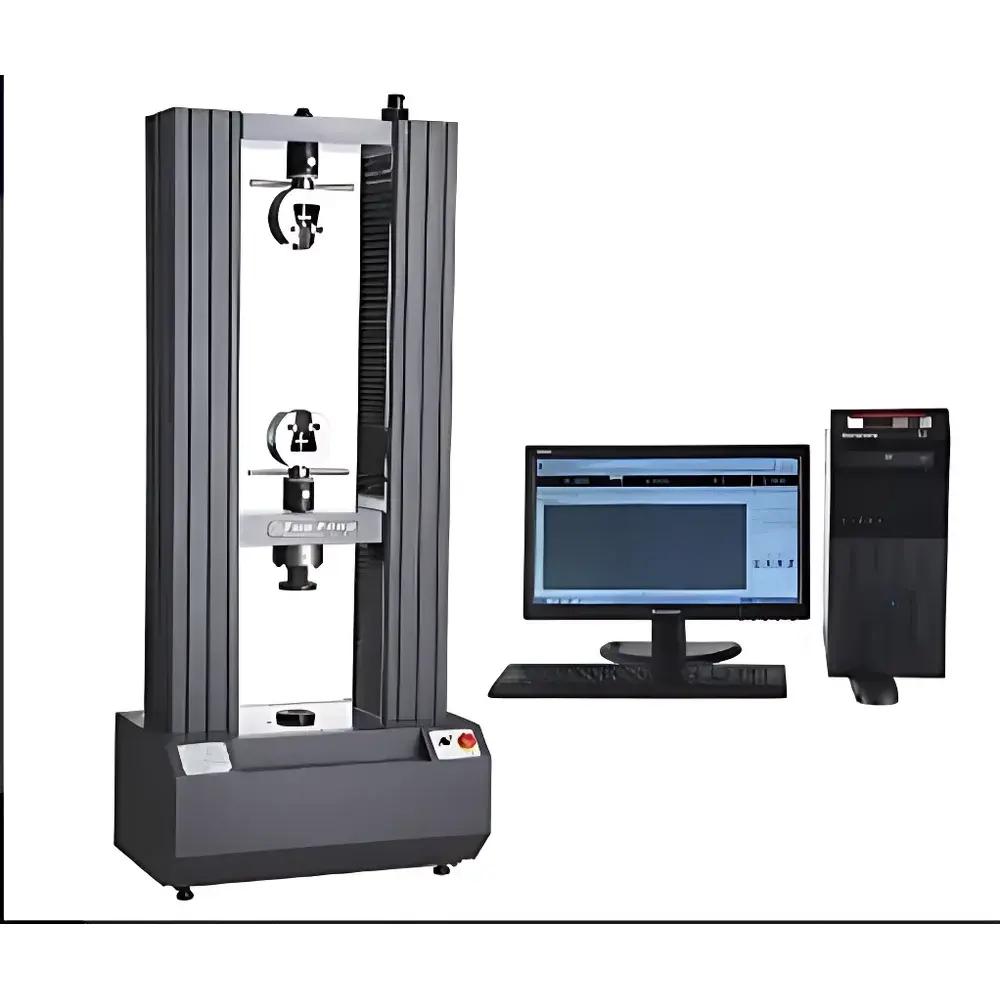
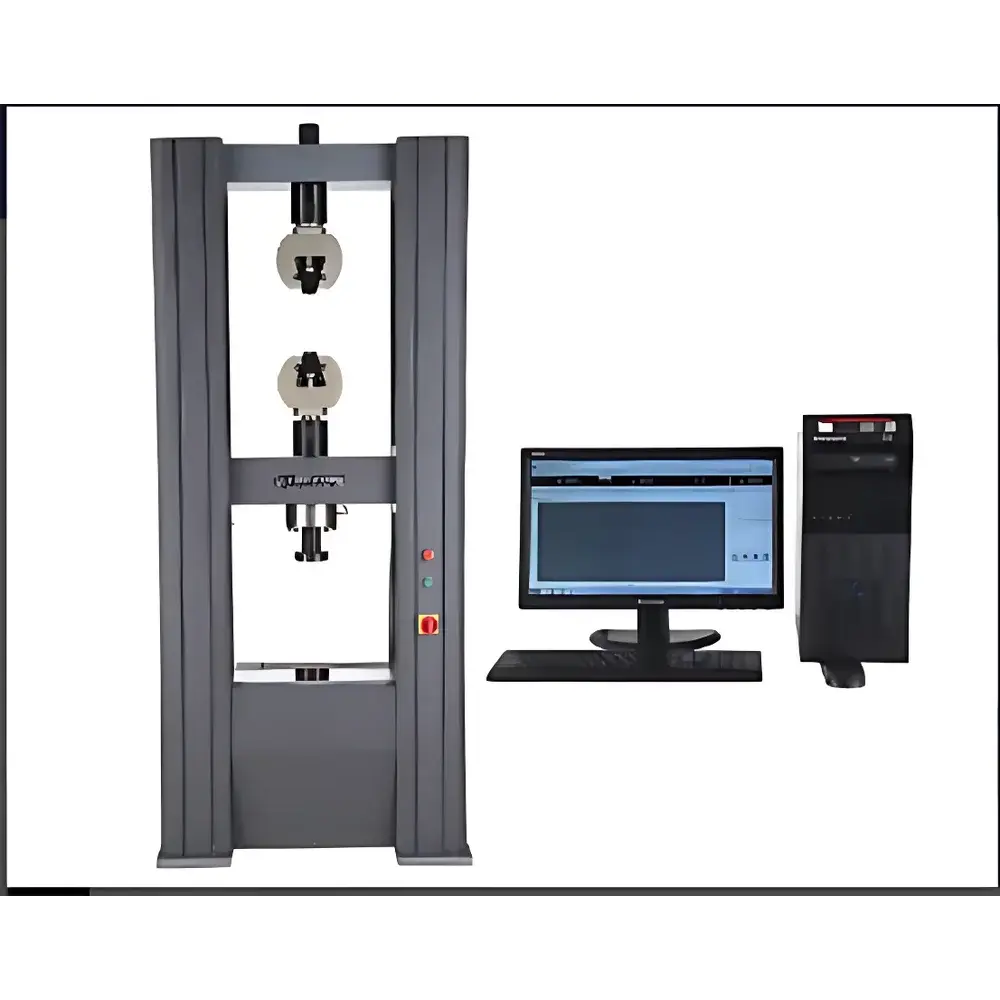
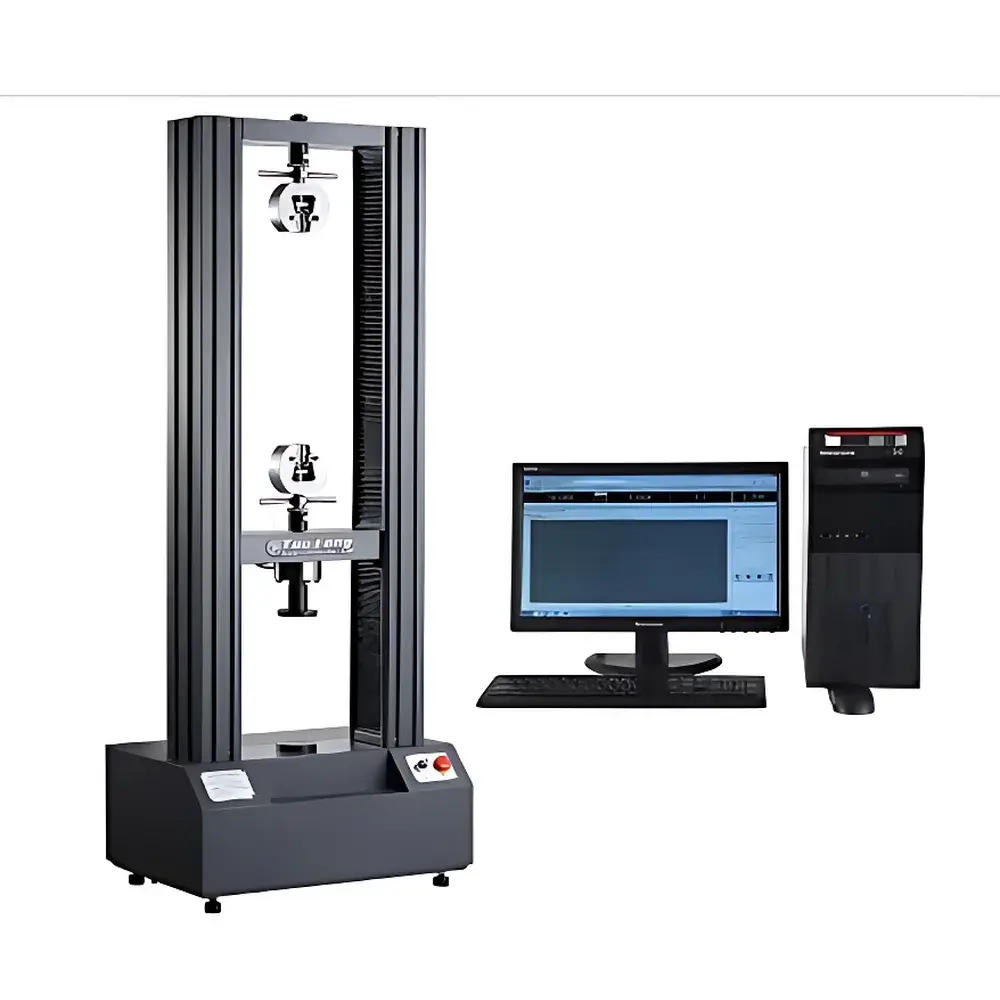
Tuofeng TFW-117 Electronic Universal Testing Machine for Fire-Retardant Materials
| Brand | Tuofeng |
|---|---|
| Origin | Shanghai, China |
| Manufacturer Type | Direct Manufacturer |
| Model | TFW-117 |
| Instrument Type | Electronic Universal Testing Machine |
| Maximum Test Load | 200 kN |
| Force Measurement Range | 1 kg to 200 kN (0.2%–100% FS) |
| Force Accuracy | ±0.5% of reading |
| Crosshead Travel | 1000 mm |
| Displacement Resolution | 0.001 mm |
| Control System | PC-based closed-loop servo control |
| Standards Compliance | GB/T 16491–2008, JJG 475–2008, ASTM E4, ASTM D638, ISO 6892-1, ISO 527, DIN 53455, JIS K 7113, BS EN 10002-1 |
Overview
The Tuofeng TFW-117 Electronic Universal Testing Machine is a high-precision, microprocessor-controlled mechanical testing system engineered for the quantitative evaluation of tensile, compressive, flexural, shear, tear, peel, and puncture properties of fire-retardant materials and related composites. Designed in accordance with international metrological and structural integrity standards—including GB/T 16491–2008 (Chinese standard for electronic universal testing machines) and JJG 475–2008 (verification regulation for electronic universal testers)—the TFW-117 employs a dual-loop closed-loop servo control architecture with high-rigidity load frame, precision-ground ball-screw transmission, and imported AC servo motor drive. Its force transduction system utilizes a calibrated load cell with full-scale resolution of 1/500,000 counts, ensuring traceable, repeatable measurements across the entire dynamic range from 1 kg to 200 kN. The machine operates on fundamental principles of uniaxial mechanical loading under controlled displacement or load rate, enabling accurate derivation of stress–strain relationships, modulus of elasticity, yield point, ultimate tensile strength, elongation at break, and other standardized mechanical descriptors.
Key Features
- High-capacity load frame rated for 200 kN maximum static load, constructed from reinforced steel with optimized column spacing (600 mm effective test width) and vertical rigidity exceeding 1.2 × 10⁶ N/mm
- Ultra-fine displacement resolution of 0.001 mm, achieved via high-resolution optical encoder coupled with backlash-free ball-screw actuation
- Force measurement accuracy of ±0.5% of indicated value over 0.2–100% full scale, certified per ISO 7500-1 Class 0.5 requirements
- Adjustable crosshead travel up to 1000 mm, supporting extended deformation testing of intumescent coatings, mineral wool, phenolic foams, and layered fire barrier assemblies
- Dual-speed motorized crosshead control (fast return + fine positioning), integrated emergency stop, electronic limit switches, and overload protection (auto-shutdown at >110% F.S.)
- Modular fixture interface compatible with standardized grips (pneumatic, wedge, hydraulic), custom-designed clamps for brittle fireproof boards, textile-reinforced membranes, and ceramic fiber mats
Sample Compatibility & Compliance
The TFW-117 accommodates specimens ranging from thin polymer films (<0.1 mm) to structural fire-rated panels (up to 50 mm thick and 300 mm wide). It supports standardized specimen geometries defined in ASTM D638 (tensile bars), ISO 527 (plastics), ASTM C1624 (ceramic coatings), and GB/T 2408 (horizontal/vertical flame spread testing substrates). All test protocols are fully compliant with regulatory frameworks governing fire safety material certification—including UL 723, EN 13501-1, ASTM E84, and GB 8624—where mechanical integrity after flame exposure (e.g., post-fire tensile retention, char layer cohesion) must be quantified. Data acquisition meets GLP audit requirements, with full traceability of calibration certificates, operator ID, environmental logs (optional sensor integration), and raw digital waveform storage.
Software & Data Management
The embedded Windows-based testing software provides multi-mode control (load-controlled, displacement-controlled, strain-controlled, hold-to-load, hold-to-displacement) and real-time visualization of up to four synchronized plots: load–time, load–displacement, stress–strain, and extension–time. Units are freely convertible between SI, imperial, and metric systems; language support includes English, Simplified Chinese, Traditional Chinese, and German. All test results—including calculated parameters such as tensile strength, Young’s modulus, yield offset (0.2%), fracture energy, and peel adhesion (N/mm)—are auto-generated with statistical aggregation (mean, min, max, CV%). Raw data exports to CSV, XML, and PDF formats; report templates conform to ISO/IEC 17025 documentation guidelines. Software architecture supports 21 CFR Part 11-compliant user authentication, electronic signatures, and immutable audit trails for regulated environments.
Applications
- Quantitative assessment of tensile retention in intumescent coatings after ASTM E119 furnace exposure
- Mechanical characterization of fire-resistant gypsum board core cohesion and facer-paper delamination resistance
- Compression testing of calcium silicate insulation boards per ASTM C447
- Peel strength evaluation of flame-retardant laminates used in aircraft cabin interiors (SAE AS4785)
- Flexural modulus determination of halogen-free flame-retardant PCB substrates (IPC-TM-650 2.4.1)
- Shear strength analysis of firestop sealants under thermal cycling per UL 1479
FAQ
Does the TFW-117 comply with ASTM and ISO standards for fire material testing?
Yes—the system is validated for use with ASTM D638, D790, D1876, ISO 527, ISO 178, and EN ISO 11339, and supports post-fire mechanical testing workflows aligned with ASTM E119 and UL 1709 protocols.
Can the machine perform cyclic loading or dwell tests required for fire barrier fatigue analysis?
Yes—programmable load/displacement hold functions enable sustained load application (up to 999 hours) and step-cycle sequences for evaluating creep behavior in fire-exposed composites.
Is third-party calibration and traceable certification available?
Yes—Tuofeng provides factory calibration with NIST-traceable load cells and displacement sensors; optional UKAS or CNAS-certified calibration services are available upon request.
What safety protections are integrated into the mechanical structure?
The system includes dual-channel emergency stop circuitry, hardware-based overload cutoff (>110% F.S.), programmable software limits, mechanical end-of-travel buffers, and CE-compliant electrical isolation per EN 61000-6-2/6-4.
How is software validation handled for GMP/GLP-regulated laboratories?
The software package includes IQ/OQ documentation templates, change control logs, and built-in 21 CFR Part 11 functionality—including role-based access, electronic signatures, and tamper-evident audit trails—for FDA- and EMA-auditable environments.



