
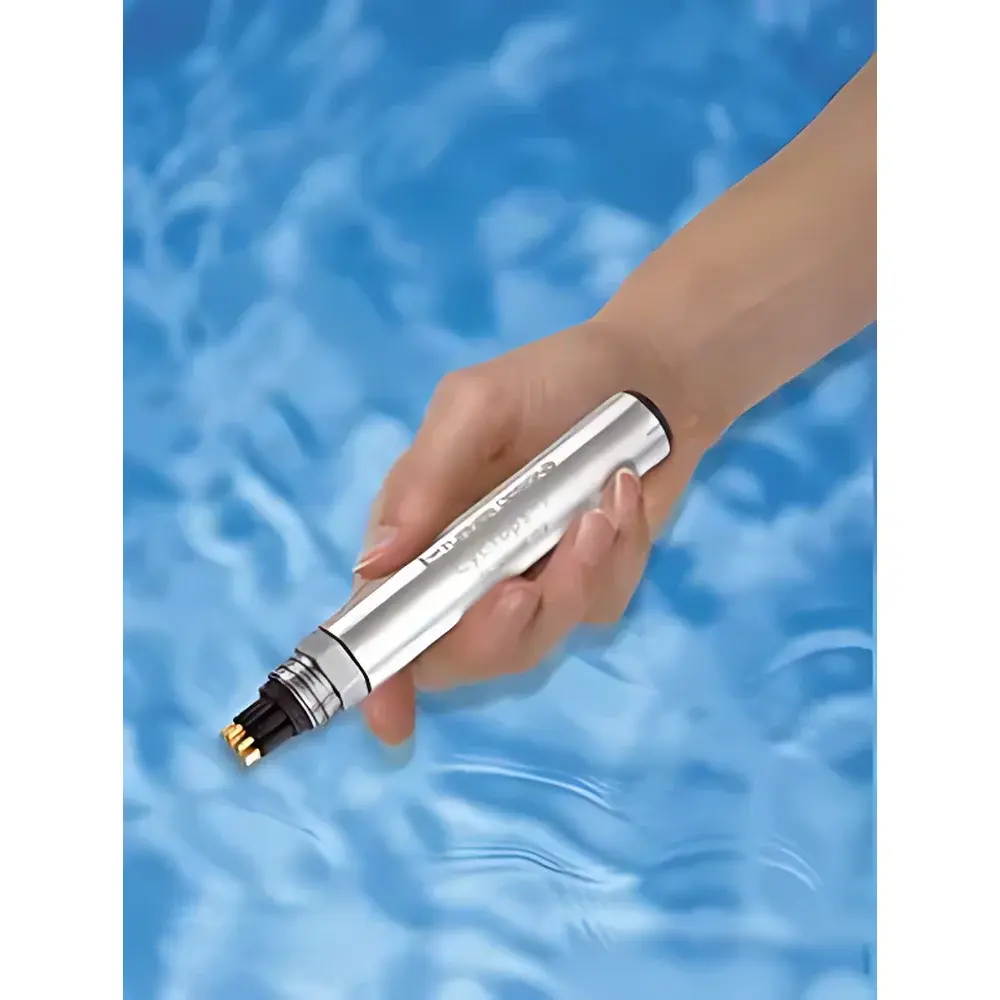
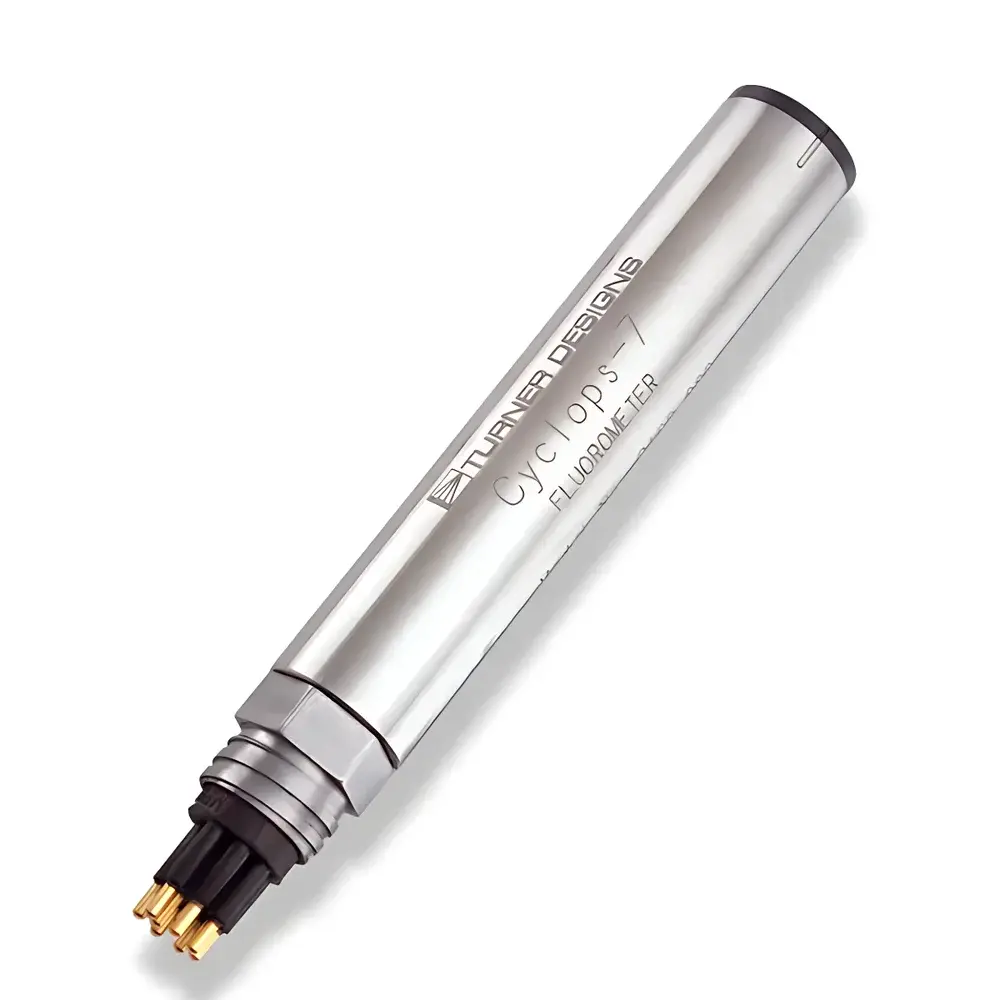
Turner Designs Cyclops-7 Underwater Fluorescence Oil-in-Water Analyzer C7F
| Brand | Turner Designs |
|---|---|
| Origin | USA |
| Model | C7F |
| Instrument Type | Online Analyzer |
| Measurement Principle | Fluorescence Spectrophotometry |
| Measurement Range | 0–1,500 ppb (as hydrocarbon) |
| Detection Limit | 0.2 ppb |
| Power Consumption | <300 mW |
| Output | Real-time Analog (4–20 mA or 0–5 V) |
| Form Factor | Compact, Submersible Sensor Module |
Overview
The Turner Designs Cyclops-7 Underwater Fluorescence Oil-in-Water Analyzer C7F is an engineered submersible sensor designed for continuous, real-time detection and quantification of petroleum hydrocarbons in aqueous environments. Based on the principle of ultraviolet-excited fluorescence spectroscopy, the C7F illuminates water samples with a narrow-band UV LED (typically centered at 365 nm) and measures the intensity of emitted fluorescence in the visible range (e.g., 400–600 nm), which correlates directly with dissolved or dispersed hydrocarbon concentration. This method provides high selectivity for aromatic compounds commonly found in crude oil, diesel, gasoline, and lubricants—enabling reliable field deployment without solvent extraction or sample pre-concentration. The C7F is optimized for integration into multi-parameter environmental monitoring platforms—including buoy-based observatories, wastewater effluent channels, intake screening systems, and offshore platform surveillance networks—where long-term stability, low power demand, and minimal maintenance are operational imperatives.
Key Features
- Submersible, IP68-rated housing rated for continuous operation at depths up to 100 meters, constructed from corrosion-resistant 316 stainless steel and optical-grade fused silica windows.
- Integrated UV LED excitation source with stable spectral output and temperature-compensated drive circuitry ensures measurement repeatability across ambient water temperatures from 0 °C to 40 °C.
- Low-power architecture consuming less than 300 mW during active measurement—enabling solar- or battery-powered deployments over extended periods without thermal drift or signal degradation.
- Compact form factor (Ø38 mm × 127 mm) allows direct mounting onto existing multiparameter sondes (e.g., YSI EXO, In-Situ Aqua TROLL, or RBR Maestro) via standardized mechanical and electrical interfaces.
- Real-time analog output (selectable 4–20 mA or 0–5 V) compatible with SCADA, PLC, and data loggers; optional RS-485 Modbus RTU interface available for digital telemetry integration.
- Factory-calibrated using certified mineral oil standards traceable to NIST SRM 2781; calibration verification supported via built-in dark-current and reference LED diagnostics.
Sample Compatibility & Compliance
The C7F is validated for use in freshwater, seawater, brackish estuarine systems, and treated wastewater effluents. It demonstrates minimal interference from common water constituents including humic substances (up to 20 mg/L DOC), turbidity (<100 NTU), and chlorophyll-a (<50 µg/L), provided appropriate optical path cleaning protocols are followed. The analyzer complies with ASTM D5888–21 (Standard Guide for Fluorescence-Based Hydrocarbon Detection in Water) and supports data integrity requirements aligned with EPA Method 1664B (for qualitative screening correlation). While not a primary compliance instrument for regulatory reporting under 40 CFR Part 136, its output is routinely used for early-warning leak detection, process control feedback, and trend analysis in facilities operating under ISO 14001 or ISO 5667-3 environmental management frameworks.
Software & Data Management
Turner Designs provides the Cyclops Configuration Utility—a Windows-based application enabling users to configure output scaling, perform zero/span adjustments, access diagnostic logs, and export time-stamped calibration history. Raw sensor data can be streamed into third-party platforms such as Campbell Scientific LoggerNet, Aquatic Informatics AQUARIUS, or custom Python-based ingestion pipelines via ASCII serial protocol. All configuration changes and calibration events are timestamped and logged locally within non-volatile memory, supporting GLP-aligned audit trails. When deployed in regulated environments requiring electronic record retention (e.g., municipal wastewater utilities subject to NPDES permit conditions), the C7F’s analog output may be paired with FDA 21 CFR Part 11-compliant data acquisition hardware to satisfy ALCOA+ data integrity criteria.
Applications
- Real-time monitoring of produced water discharge from offshore oil & gas platforms.
- Early detection of pipeline leaks or tank seepage in groundwater monitoring wells and containment sumps.
- Effluent quality assurance in refinery wastewater treatment plants prior to final discharge.
- Ballast water compliance screening for residual hydrocarbon content per IMO Resolution MEPC.279(70).
- Integration into autonomous underwater vehicles (AUVs) and gliders for spatial mapping of hydrocarbon plumes following spill events.
- Long-term ecological studies assessing chronic hydrocarbon exposure in sensitive marine habitats (e.g., coral reefs, mangrove estuaries).
FAQ
Is the C7F suitable for measuring oil-in-water in highly saline environments such as seawater?
Yes—the optical design and calibration methodology account for refractive index shifts associated with salinity up to 35 ppt. Field validation data confirm <±5% deviation from laboratory GC-FID reference values across full oceanic salinity ranges.
Does the sensor require periodic re-calibration in situ?
Field recalibration is recommended every 3–6 months depending on biofouling risk and operational duty cycle; however, the integrated reference LED and dark-current compensation enable drift correction between formal calibrations.
Can the C7F distinguish between different hydrocarbon types (e.g., diesel vs. crude oil)?
No—it provides total fluorescent hydrocarbon concentration as a single integrated value. Compound-specific identification requires complementary techniques such as GC-MS or FTIR.
What maintenance is required for long-term submerged deployment?
Routine cleaning of the optical window using soft lint-free wipes and deionized water is advised every 2–4 weeks in high-fouling environments; optional copper-alloy anti-fouling sleeves or ultrasonic cleaning modules are available as accessories.
Is the C7F compliant with hazardous area classifications (e.g., ATEX or IECEx)?
The standard C7F is not intrinsically safe certified; however, explosion-proof enclosures and barrier kits meeting Class I, Division 2 / Zone 2 requirements are available through authorized system integrators.







