
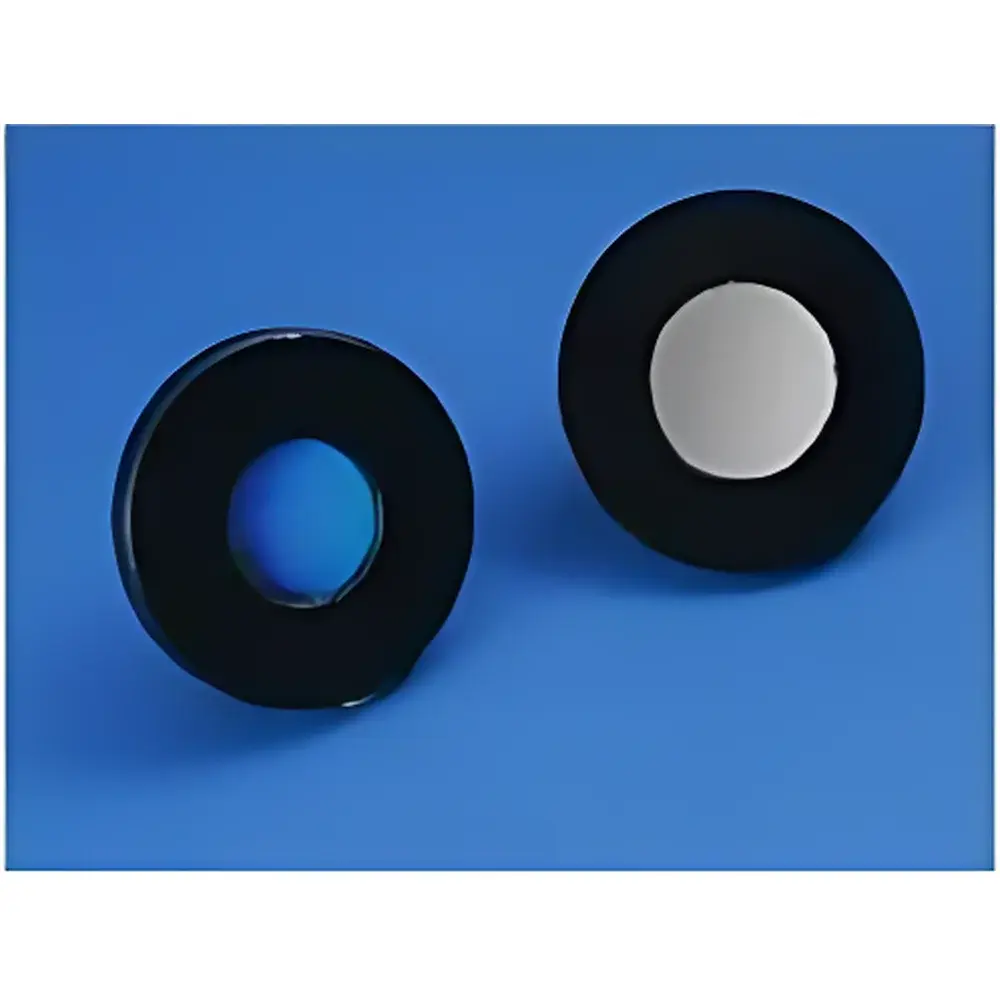
Tydex POL-HDPE-CA50-OD63-T8 Far-Infrared and Terahertz Wire-Grid Polarizer
| Brand | Tydex |
|---|---|
| Origin | Russia |
| Model | POL-HDPE-CA50-OD63-T8 |
| Substrate | High-Density Polyethylene (HDPE) |
| Aperture | Ø63 mm (Circular) |
| Thickness | 8 mm |
| Spectral Range | 7 µm – 1 mm (4.3 THz – 0.3 THz) |
| Polarization Mechanism | Transmission-type Wire-Grid Grating |
| Extinction Ratio | >100:1 (typical in 0.1–3 THz band) |
| Surface Quality | λ/4 @ 633 nm (substrate flatness) |
| Custom Apertures | Up to 110 × 110 mm (square) available on request |
| Component Type | Optical Polarizing Element |
Overview
The Tydex POL-HDPE-CA50-OD63-T8 is a high-performance transmission-type wire-grid polarizer engineered for broadband operation across the far-infrared (FIR) and terahertz (THz) spectral regions—from 7 µm (4.3 THz) up to 1 mm (0.3 THz). Unlike conventional birefringent or dichroic polarizers, this device operates on the principle of selective diffraction and polarization filtering via sub-wavelength metallic line gratings fabricated directly onto ultra-high-molecular-weight high-density polyethylene (HDPE) substrates. HDPE is selected for its exceptionally low absorption coefficient (70% average, unpolarized incident beam) and minimal phase distortion. The grating period—typically <20 µm—is precisely controlled during mechanical ruling to ensure consistent polarization extinction ratios exceeding 100:1 over critical frequency bands used in time-domain spectroscopy (TDS), continuous-wave (CW) THz imaging, and synchrotron-based FIR experiments.
Key Features
- Broadband spectral coverage: validated from 0.3 THz to 4.3 THz (1 mm to 7 µm wavelength), bridging the gap between conventional IR polarizers and microwave grids
- High-density polyethylene (HDPE) substrate with certified homogeneity, low hygroscopicity, and thermal stability up to +60 °C
- Circular aperture of Ø63 mm with nominal thickness of 8 mm—optimized for collimated beam handling in FTIR and THz-TDS optical paths
- Engineered wire-grid architecture with sub-15 µm groove pitch and aspect ratio >3:1, ensuring robust polarization contrast under oblique incidence (up to ±15°)
- No adhesive layers or laminated interfaces—grating is mechanically ruled into bulk HDPE, eliminating delamination risk and ghost reflections
- Available in custom geometries: square (up to 110 × 110 mm) and rectangular apertures supported upon request; edge quality meets ISO 10110-7 specification for optical components
Sample Compatibility & Compliance
The POL-HDPE-CA50-OD63-T8 is compatible with standard optical mounts (e.g., SM1-threaded lens tubes, kinematic rotation stages) and integrates seamlessly into vacuum-compatible cryogenic systems (down to 4 K) without outgassing concerns—HDPE exhibits negligible volatile organic compound (VOC) emission per ASTM E595. It complies with ISO 9022-3 (optical instruments—environmental testing—cold and dry heat) and satisfies material traceability requirements for GLP-compliant spectroscopic setups. While not classified as a medical or safety-critical device, its dimensional and spectral performance adheres to practices referenced in ISO/IEC 17025-accredited laboratories performing THz metrology.
Software & Data Management
As a passive optical component, the POL-HDPE-CA50-OD63-T8 requires no embedded firmware or driver software. However, it is routinely characterized using calibrated THz-TDS systems (e.g., Menlo Systems TeraK15, TOPTICA TeraScan) and Fourier-transform infrared spectrometers (e.g., Bruker VERTEX 80v). Spectral transmission and extinction data are typically exported in ASCII or HDF5 format for integration into MATLAB-, Python- (NumPy/SciPy), or LabVIEW-based analysis pipelines. Full characterization reports—including measured extinction ratio vs. frequency, angular dependence plots, and wavefront distortion maps—are supplied with each unit and archived in accordance with ISO/IEC 17025 documentation retention guidelines.
Applications
- Polarization-resolved THz time-domain spectroscopy for anisotropic crystal analysis (e.g., LiNbO₃, quartz, α-lactose monohydrate)
- Stress-induced birefringence mapping in polymer thin films and multilayer packaging materials
- Contrast enhancement in reflection-mode THz imaging of concealed dielectric objects
- Reference polarizer in dual-polarization interferometric setups for ellipsometric THz measurements
- Calibration standard for polarization-sensitive bolometer arrays and microbolometric focal plane arrays (FPAs)
- Beam conditioning in synchrotron-based FIR beamlines (e.g., BESSY II, ALBA) where atmospheric absorption necessitates high-transmission polarizers
FAQ
What is the maximum operating temperature for this polarizer?
The HDPE substrate maintains structural integrity and polarization performance up to +60 °C; prolonged exposure above this threshold may induce creep deformation and grating period drift.
Can this polarizer be used in ultra-high vacuum (UHV) environments?
Yes—it has been validated for UHV use (≤10⁻⁹ mbar) with total mass loss (TML) <0.05% and collected volatile condensable materials (CVCM) <0.01%, per ASTM E595.
Is the extinction ratio specified at normal incidence only?
Standard specifications assume 0° incidence; angular tolerance is ±15° for extinction ratio >50:1; full angular characterization data is available upon request.
Do you provide NIST-traceable calibration certificates?
While the polarizer itself is not calibrated as a measurement instrument, spectral transmission and extinction data are acquired using NIST-traceable THz power meters and reference standards, and full test reports are included.
Are custom groove periods available for specific frequency targeting?
Standard grating period is optimized for broad THz coverage; application-specific variants (e.g., 10 µm pitch for 1–2 THz focus) can be quoted separately under Tydex’s OEM program.



