
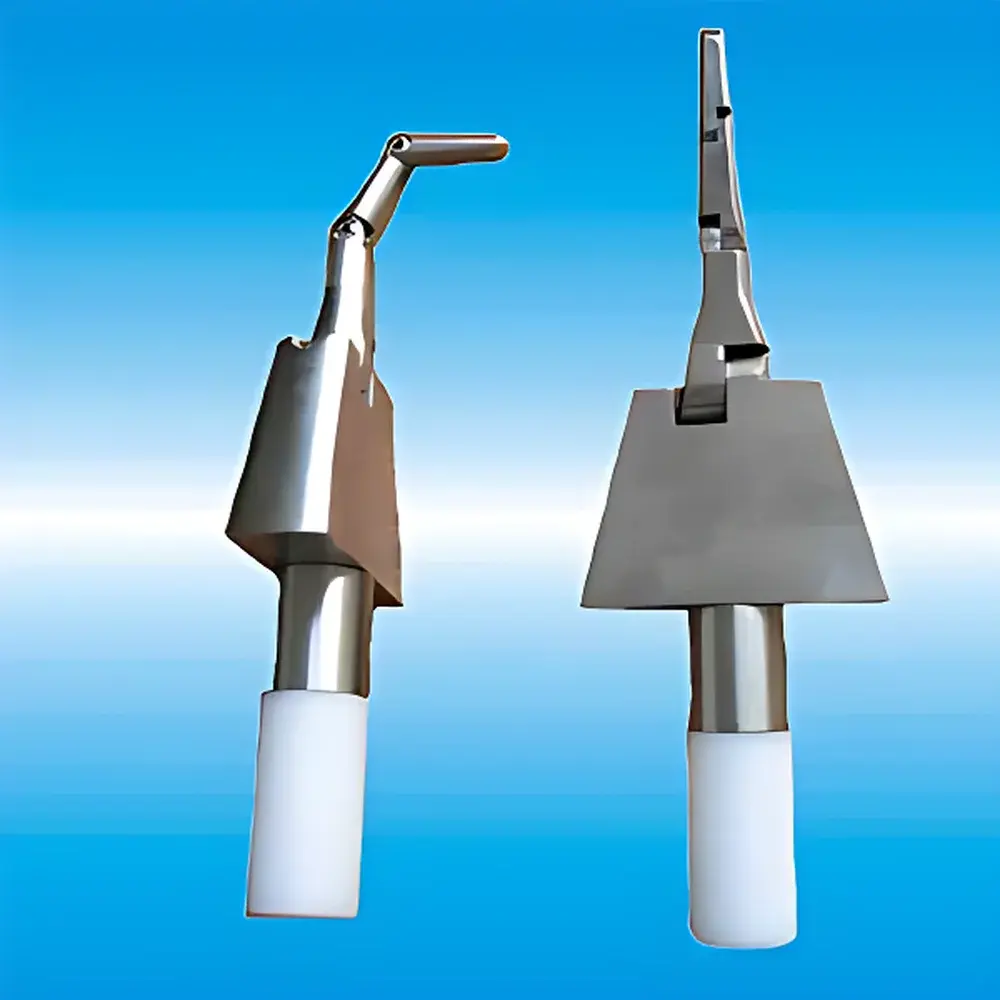
UL-01 UL Test Finger Probe
| Brand | INSMENT (Shanghai Jinsen) |
|---|---|
| Origin | Shanghai, China |
| Model | UL-01 |
| Compliance Standards | UL 476, UL 1026, UL 507 |
| Intended Use | Electrical Appliance Access Protection Testing for Household and Similar Equipment |
| Construction | Precision-machined rigid probe with defined geometry and force-limited articulation per UL requirements |
| Material | Non-conductive, dimensionally stable engineering polymer |
| Dimensions | Conforms to UL-defined tip diameter (12.0 mm), length (80 mm), and joint radii per Clause 8.3 of UL 476 |
Overview
The UL-01 UL Test Finger Probe is a precision-engineered mechanical test device designed to evaluate the accessibility of hazardous live parts in household and similar electrical appliances, in strict accordance with the dimensional, mechanical, and operational requirements specified in UL 476 (Standard for Safety of Electrical Appliances), UL 1026 (Standard for Household Cooking and Food Preparation Appliances), and UL 507 (Standard for Electric Fans). It replicates the reach, curvature, and probing behavior of an adult human finger under controlled insertion force—serving as a physical verification tool within standardized access protection assessments. Unlike electronic or optical simulators, the UL-01 operates on deterministic mechanical geometry and calibrated articulation, ensuring repeatable, traceable, and standards-compliant evaluation of enclosure integrity, aperture size, and barrier effectiveness. Its design embodies the core principle of “mechanical simulation of human interaction” as mandated by IEC/EN 61032 (Figure 4—Test Finger B) and harmonized UL clauses, making it indispensable for pre-compliance screening and formal third-party certification testing.
Key Features
- Exact dimensional fidelity to UL 476 Clause 8.3 specifications: 12.0 mm spherical tip diameter, 80 mm total length, defined joint radii (R = 2.5 mm), and controlled bending moment at the first knuckle.
- Non-conductive, high-strength polymer construction resistant to aging, thermal cycling, and repeated mechanical loading—ensuring long-term dimensional stability and electrical isolation during testing.
- Integrated force-limiting mechanism that restricts axial insertion force to ≤ 10 N, preventing non-standard deformation of enclosures while maintaining compliance with UL’s “gentle but deliberate” probing protocol.
- Modular, serviceable assembly enabling recalibration verification and replacement of wear-prone components without full unit replacement.
- Supplied with NIST-traceable calibration certificate documenting dimensional verification against reference standards per ISO/IEC 17025-accredited procedures.
Sample Compatibility & Compliance
The UL-01 is compatible with all appliance categories covered under UL 1026 (cooking appliances), UL 507 (fans), UL 476 (general-use appliances), and harmonized IEC 60335-1 Annex C requirements. It is routinely deployed in evaluations of front panels, ventilation grilles, control knobs, hinge gaps, and removable covers where user-accessible apertures may expose live parts. The probe meets the mechanical definition of “Test Finger B” per IEC/EN 61032 and satisfies the equivalency clause in UL 60335-1:2012 Edition 6.0, Section 8.1.1. It supports full audit readiness for laboratories operating under ISO/IEC 17025, A2LA accreditation, or FDA-regulated environments requiring documented test method validation. No software or firmware is involved—compliance is inherent to physical form and verified through metrological inspection.
Software & Data Management
The UL-01 is a purely mechanical test instrument with no embedded electronics, firmware, or digital interface. Consequently, it requires no software installation, driver configuration, or data logging capability. All test outcomes are recorded manually in laboratory notebooks or LIMS-integrated test reports using standardized pass/fail criteria defined in UL 476 Section 8.3.2 and UL 1026 Section 19.1. For laboratories subject to FDA 21 CFR Part 11 or GLP/GMP requirements, usage logs—including operator ID, date, equipment ID (UL-01 serial number), and test result—must be maintained as part of the raw data package. Calibration records and traceability documentation are retained per ISO/IEC 17025 Clause 6.4.10.
Applications
- Pre-certification assessment of appliance enclosures prior to UL, TÜV Rheinland, or SGS submission.
- Internal quality assurance audits for OEMs producing kitchen appliances, HVAC units, power tools, and consumer electronics.
- Verification of IP2X-rated ingress protection compliance per IEC 60529, where finger-safe access is required.
- Root cause analysis of field failures involving unintended user contact with live terminals or PCB traces.
- Training and competency assessment for laboratory technicians performing UL-required mechanical safety tests.
FAQ
Is the UL-01 probe certified to UL or IEC standards?
No—the probe itself is not “certified,” but it is manufactured to fully conform to the dimensional and mechanical specifications defined in UL 476, UL 1026, and IEC/EN 61032 Figure 4. Certification applies to the tested appliance, not the probe.
Does the UL-01 require periodic recalibration?
Yes—dimensional verification must be performed at least annually or after 5,000 insertion cycles, per ISO/IEC 17025 Clause 6.4.9, using calibrated gauges and optical comparators.
Can the UL-01 be used for CE marking under the Low Voltage Directive (LVD)?
Yes—it satisfies the mechanical access protection requirements of EN 60335-1 Annex C and is accepted by Notified Bodies for LVD conformity assessment when applied per harmonized standards.
What is the expected service life under routine lab use?
With proper handling and annual metrological verification, the UL-01 maintains compliance for ≥ 5 years; tip wear and joint elasticity degradation are monitored during calibration.
Is there a version compliant with IEC 61032 Test Finger B1 (child finger)?
No—the UL-01 implements Test Finger B (adult); INSMENT offers a separate UL-02 model conforming to IEC 61032 Figure 5 (Test Finger B1) for child-access evaluation.



