
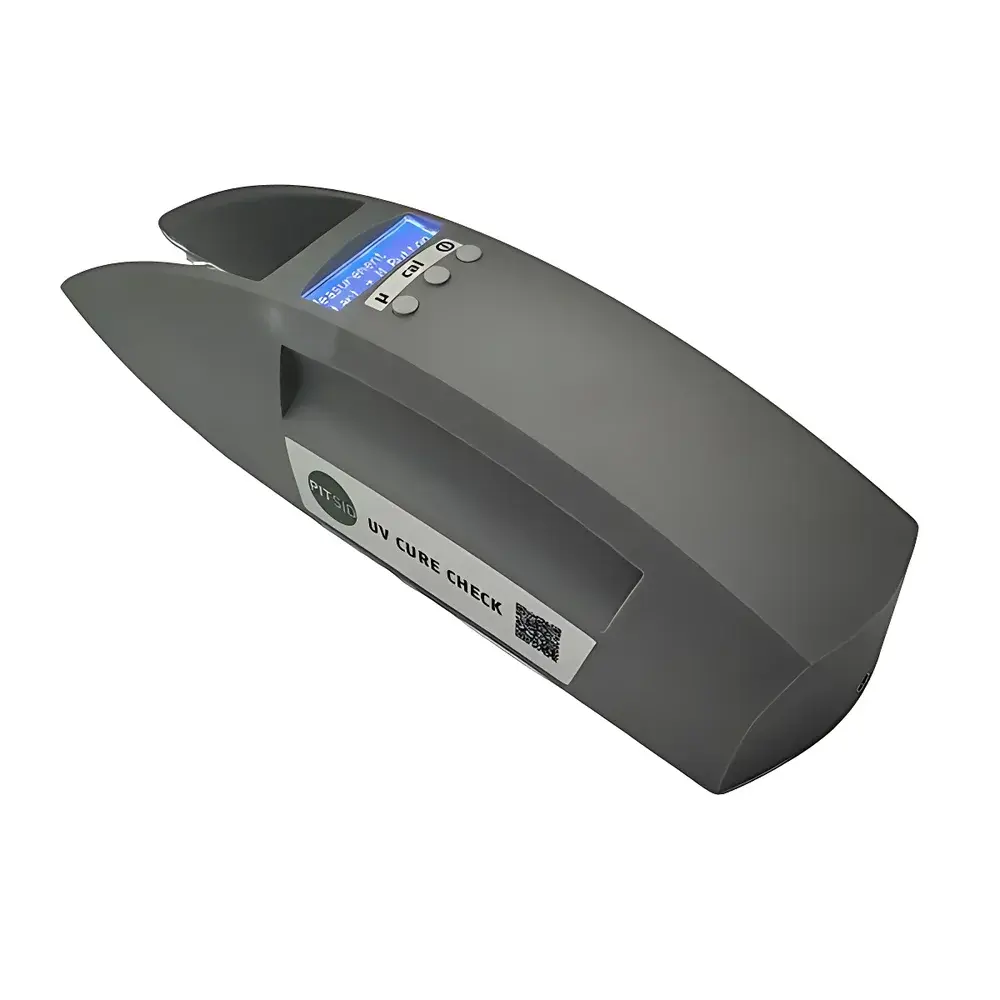
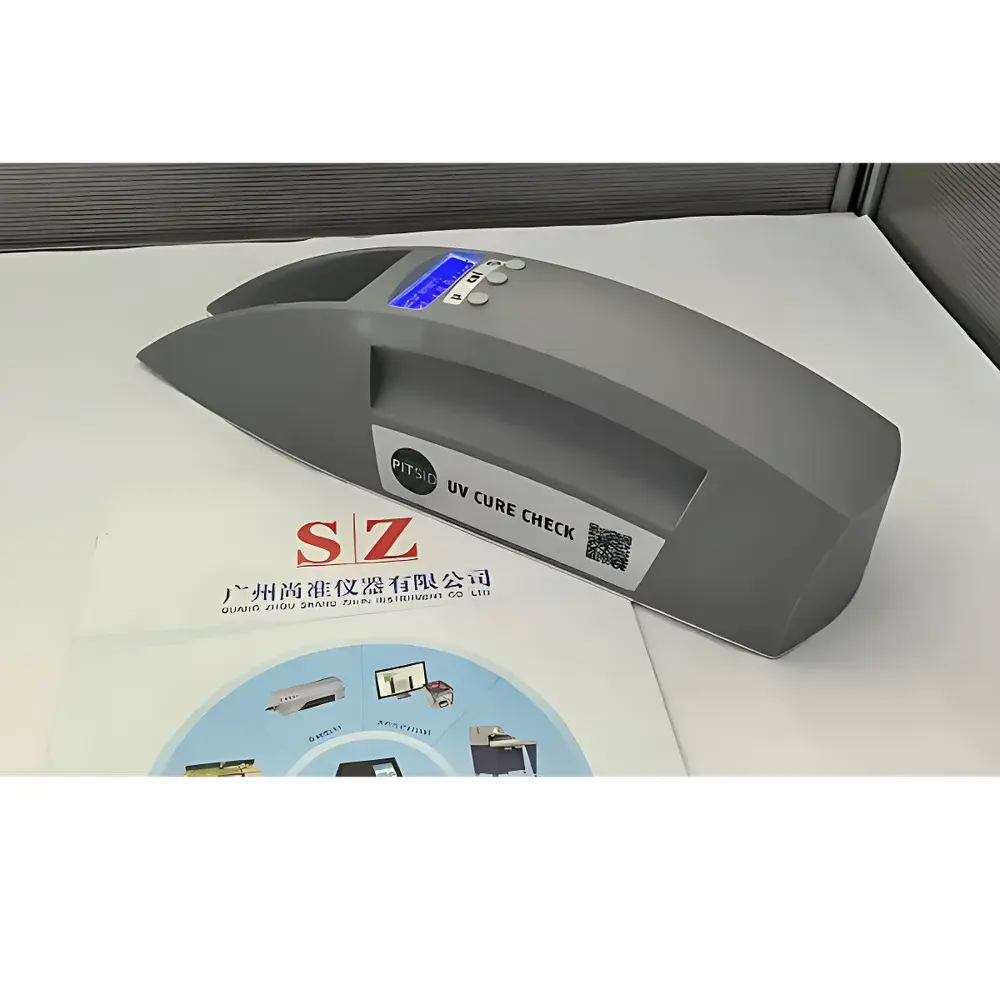
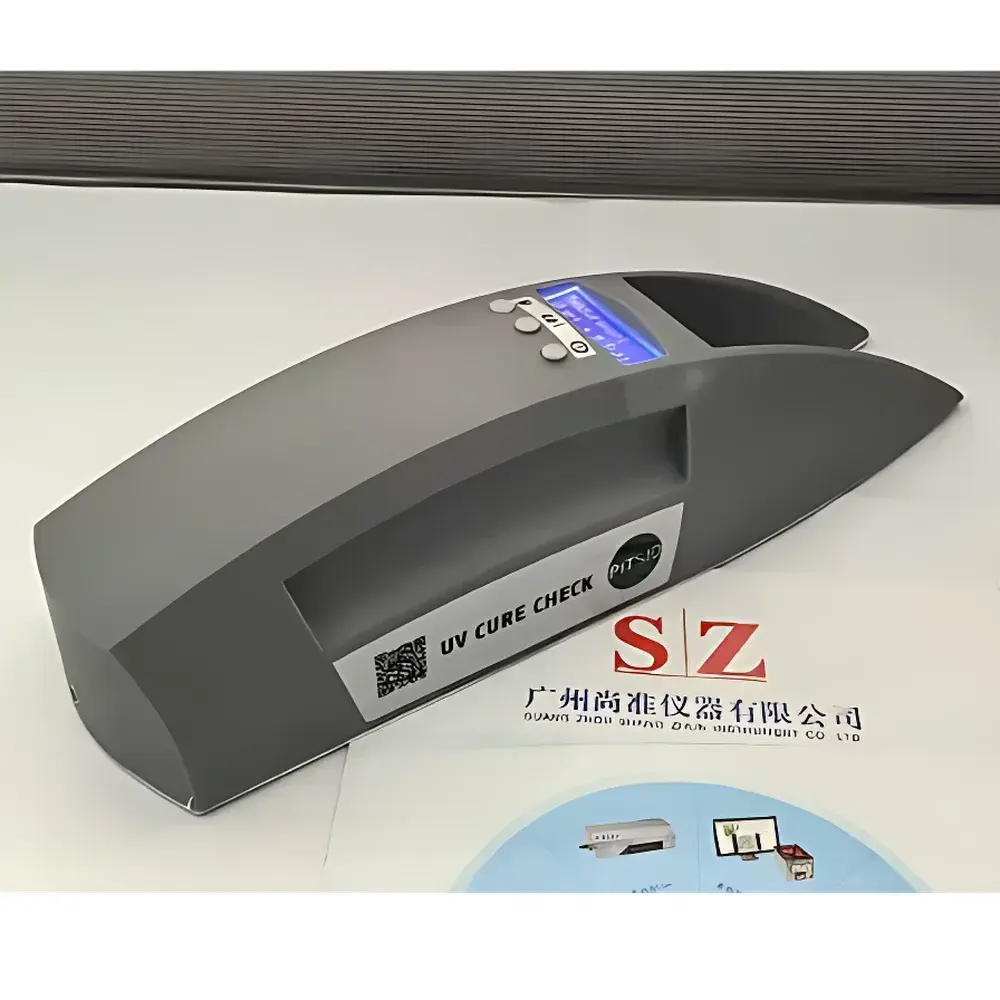
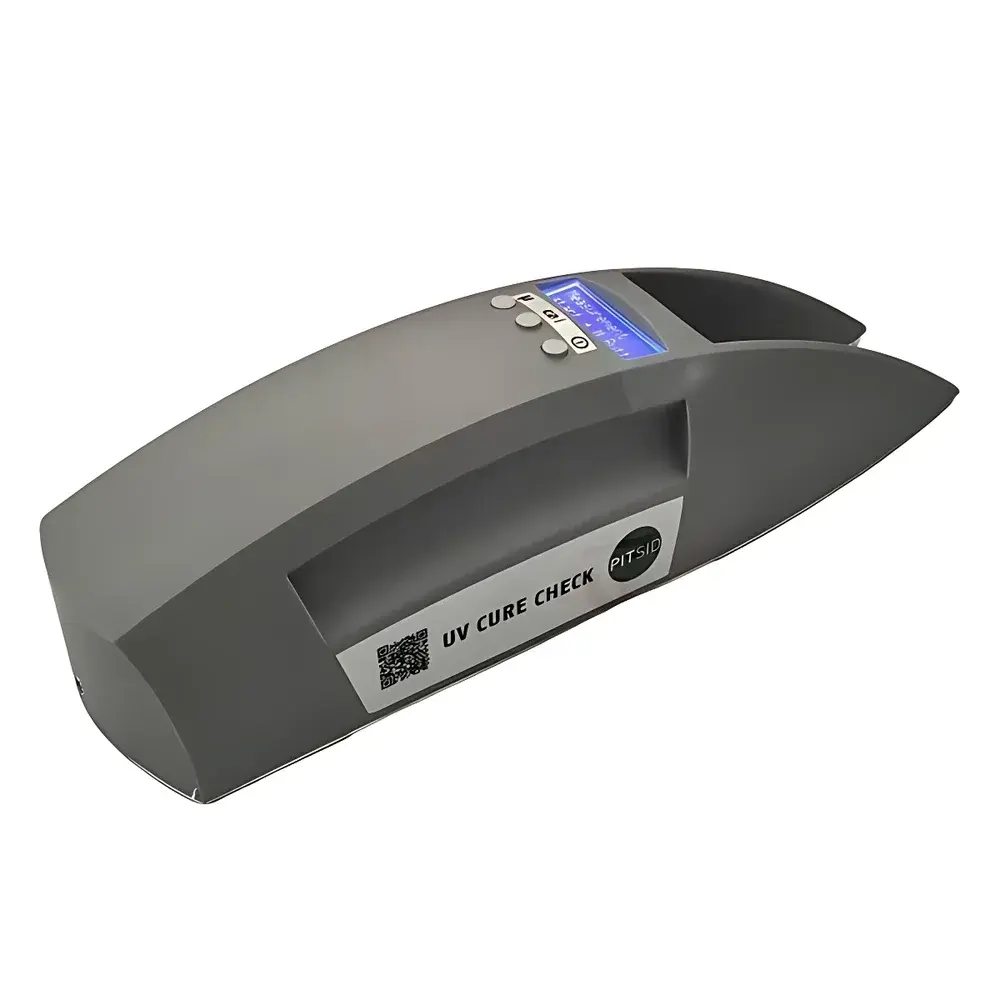
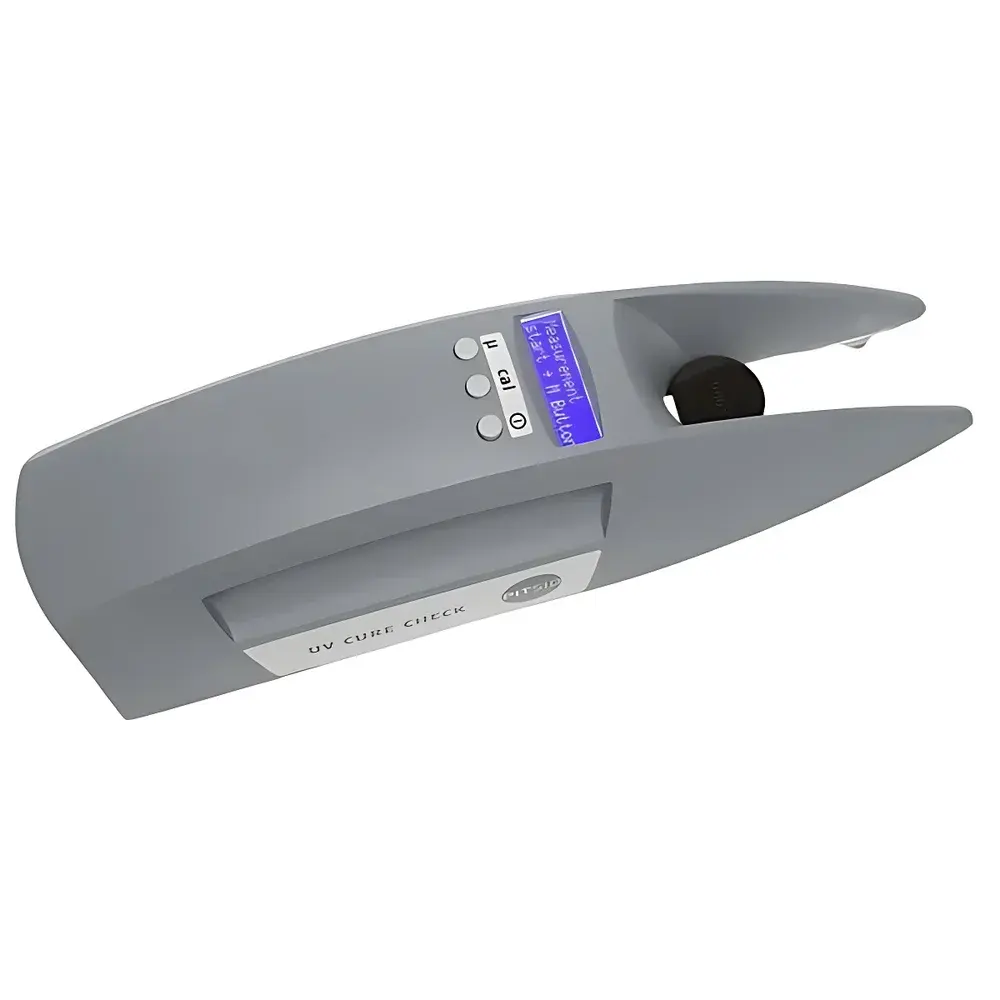
UV CURE CHECK by SHANG ZHUN
| Brand | SHANG ZHUN |
|---|---|
| Origin | Germany |
| Model | UV CURE CHECK |
| Measurement Principle | Sliding Coefficient of Friction (COF) |
| Accuracy | ±10% repeatability per single measurement |
| Measurement Time | ~5 s |
| Display | Dual-line LCD (15 × 52 mm) |
| Dimensions | 350 × 105 × 90 mm |
| Weight | 1100 g (including friction kit) |
| Power | 6 × 1.5 V AA batteries or external DC power adapter |
| Auto-off | 10 min after last operation |
| Includes | Instrument unit, batteries, power adapter, carrying case, and 10 replaceable friction pads |
Overview
The UV CURE CHECK by SHANG ZHUN is a handheld, non-destructive process verification instrument engineered for real-time assessment of UV-curable ink and coating cure status in high-speed web and sheetfed offset, flexographic, and digital printing environments. Unlike optical or thermal methods, it operates on a validated physical principle: the sliding coefficient of friction (COF) between a standardized test slider and the cured surface. As photopolymerization proceeds, crosslink density increases, resulting in measurable changes in surface mechanical resistance to shear deformation. The UV CURE CHECK quantifies this change by measuring dynamic COF under controlled normal force and sliding velocity — a parameter empirically correlated with degree of cure (DOC) across common acrylate- and epoxy-based UV formulations. Designed for integration into routine press-side quality control workflows, it delivers rapid, operator-independent pass/fail evaluation without requiring lab-grade calibration or consumables beyond standard friction pads.
Key Features
- Real-time, in-line COF-based cure verification directly at the delivery stack — no sample removal or laboratory analysis required
- Pre-calibrated sliding mechanism with precision-machined stainless steel slider and interchangeable polymer friction pads (10 included)
- Dual-line LCD display (15 × 52 mm) showing instantaneous COF value and reference baseline comparison in real time
- Battery-powered operation (6 × AA, 1.5 V) with optional DC adapter for extended shifts; auto-power-off after 10 minutes of inactivity
- Rugged industrial housing (350 × 105 × 90 mm; 1100 g) rated for pressroom vibration, dust, and ambient temperature fluctuations (15–35 °C)
- Measurement repeatability within ±10% under consistent environmental conditions — compliant with internal QC protocols aligned with ISO 8295 (plastics — determination of coefficient of friction)
Sample Compatibility & Compliance
The UV CURE CHECK is compatible with standard UV-curable offset inks, UV varnishes, aqueous/UV hybrid coatings, and EB-curable systems applied to paper, board, PET, PP, and coated substrates. It does not require substrate-specific calibration but assumes uniform film thickness (typical range: 1–5 µm dry). While not certified to ASTM D1894 or ISO 8295 as a primary metrology device, its operational methodology adheres to the physical principles defined therein. Data output supports traceability requirements under ISO 9001:2015 Clause 8.5.2 (Identification and traceability) and facilitates documentation for GMP-aligned print production audits. No regulatory certification (e.g., FDA, CE) applies, as the device performs non-invasive mechanical characterization only.
Software & Data Management
The UV CURE CHECK operates as a standalone field instrument with no embedded firmware update capability or digital data export interface. All measurements are displayed locally and retained only visually; users must manually record values in logbooks or LIMS-compatible spreadsheets. This design prioritizes robustness, electromagnetic immunity, and minimal maintenance over connectivity — aligning with ISO/IEC 17025:2017 Annex A.3 (equipment suitability) for instruments used in accredited testing laboratories where electronic data capture is not mandated. For enterprises requiring automated reporting, third-party barcode-scanned logging or camera-based OCR integration is feasible via external mobile applications.
Applications
- Press-start validation: Confirm minimum energy dose (mJ/cm²) delivered by UV lamps before job release
- Process drift monitoring: Detect gradual lamp aging, reflector fouling, or conveyor speed deviations during long runs
- Substrate changeover verification: Validate cure performance across different paper calipers or synthetic films
- UV formulation qualification: Compare relative cure response of new ink/varnish batches against master standards
- Root cause analysis for rub-off, blocking, or poor adhesion in post-press finishing (e.g., foil stamping, lamination)
FAQ
How is the “full cure” reference value established?
A fully cured reference sample must be prepared under maximum UV energy exposure (slowest line speed, highest lamp output) and measured separately. This value serves as the 100% baseline for all subsequent comparative readings.
Does ambient humidity affect measurement accuracy?
Yes — COF is sensitive to surface moisture. Measurements should be performed at stable RH (40–60%) and substrate temperature ≥20 °C to minimize condensation or static effects.
Can the UV CURE CHECK measure through overprint varnishes?
It measures the topmost cured layer only. If a matte or soft-touch overprint varnish is applied post-UV, its COF dominates the reading — separate baseline calibration is required.
What is the service life of a friction pad?
Each pad is rated for ~200 measurements under typical pressroom conditions. Visual inspection for wear or contamination is recommended prior to each use.
Is calibration traceable to national standards?
No — the instrument is factory-set using NIST-traceable reference surfaces. Field recalibration is not supported; periodic verification against a known reference sample is advised every 3 months.
Related Products







