
VACUUBRAND® BVC Series Vacuum Liquid Aspiration System
| Brand | VACUUBRAND® |
|---|---|
| Origin | Germany |
| Manufacturer Type | Authorized Distributor |
| Origin Category | Imported |
| Model | BVC Series |
| Price Range | USD 2,700 – 6,800 (est.) |
| Ultimate Vacuum | 100 mbar |
| Maximum Flow Rate | 11.6 L/min |
| Dimensions | 410 × 194 × 448 mm |
Overview
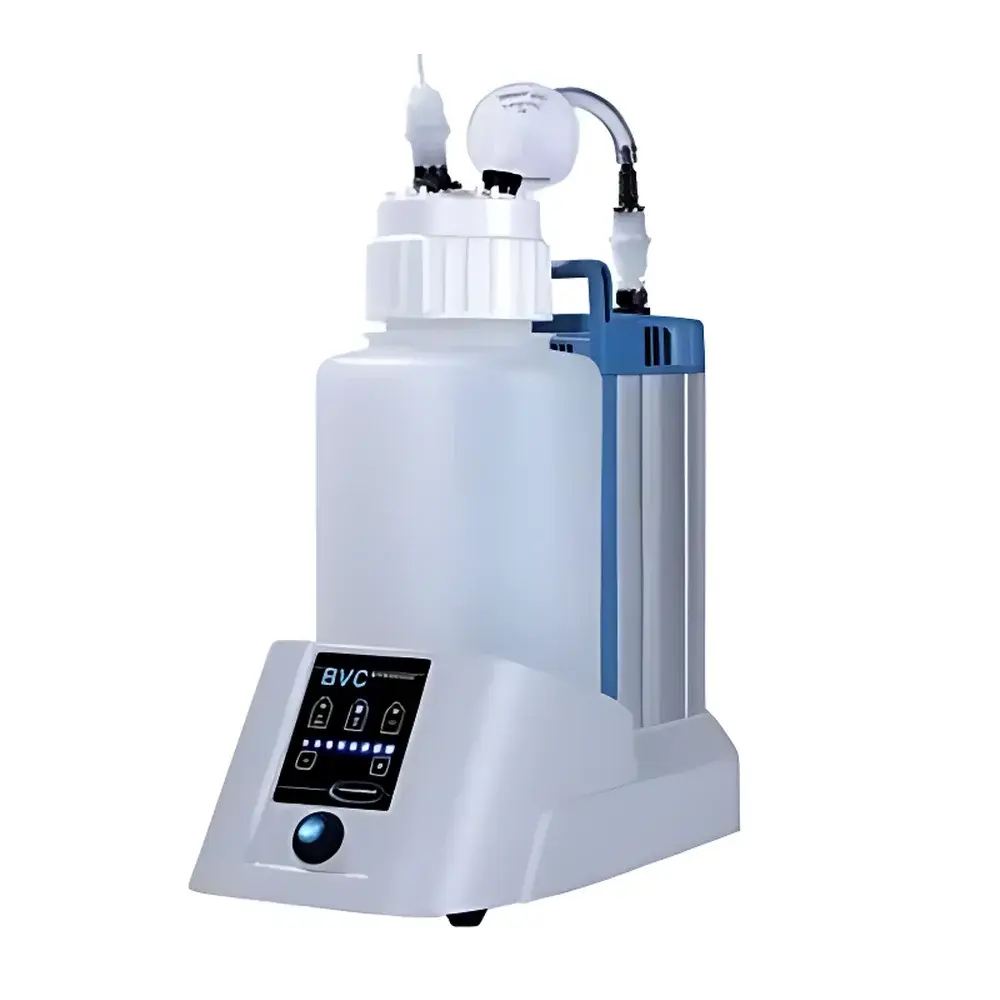
The VACUUBRAND® BVC Series Vacuum Liquid Aspiration System is an engineered solution for precise, safe, and contamination-controlled supernatant removal across life science, clinical diagnostics, and pharmaceutical laboratories. Designed around a modular architecture, the system operates on vacuum-driven aspiration principles—utilizing regulated negative pressure to draw liquid through sterile-filtered tubing and disposable tips or reusable handpieces. Unlike fixed-vacuum benchtop aspirators, the BVC platform integrates intelligent vacuum control with chemical-resistant components to ensure compatibility with aggressive reagents (e.g., sodium hypochlorite, ethanol, organic solvents) while maintaining sterility integrity. Its core function—controlled aspiration without splashing, foaming, or cross-contamination—is achieved via real-time vacuum modulation, non-contact liquid level detection (BVC Professional), and integrated 0.2 µm hydrophobic sterilizing filters placed upstream of the pump. The system meets fundamental requirements for GLP-compliant liquid handling workflows and supports ISO 13485-aligned instrumentation validation protocols.
Key Features
- Modular configuration: Three tiers—BVC basic (external vacuum source), BVC control (integrated chemically resistant diaphragm pump), and BVC professional (enhanced with non-contact liquid level sensor and auto-lock quick-connect interface)
- Chemical resilience: ME 1C diaphragm pump with PTFE-coated components and EPDM elastomers; validated for continuous operation with chlorine-based disinfectants, alcohols, and acidic/alkaline solutions
- Precision vacuum regulation: Touchscreen interface enables stepless adjustment of vacuum level (10–100 mbar) and flow rate, minimizing shear stress on sensitive cells or precipitates
- Low-noise operation: Sound pressure level ≤ 48 dB(A) at 1 m distance—suitable for open-lab environments and laminar flow hoods
- Ergonomic design: Compact footprint (410 × 194 × 448 mm), intuitive handpiece placement, and vertical bottle orientation reduce operator fatigue during extended use
- Dual-handpiece capability: Optional second VHC aspiration handle allows concurrent operation by two users—ideal for high-throughput cell culture or QC labs
- Autonomous pump management: Vacuum-on-demand activation eliminates footswitch dependency; pump idles when no aspiration is detected, extending service intervals
Sample Compatibility & Compliance
The BVC Series accommodates both 4 L polypropylene (PP) collection vessels—autoclavable at 121 °C, 2 bar for ≥20 cycles—and 2 L borosilicate glass bottles with reinforced silicone coating for mechanical impact resistance and chemical barrier protection. Glass variants are certified for use with oxidizing agents such as 5% sodium hypochlorite, peracetic acid, and hydrogen peroxide-based sterilants. All configurations include in-line 0.2 µm PTFE hydrophobic filters compliant with ASTM F838-20 for bacterial retention validation. The system supports USP sterility testing workflows and aligns with ISO 15189 Annex A.3.2 for pre-analytical equipment qualification. Optional accessories meet EN 61000-6-3 EMC standards and carry CE marking under Directive 2014/30/EU (EMC) and 2014/35/EU (LVD).
Software & Data Management
While the BVC Series does not incorporate embedded software or network connectivity, its touchscreen interface logs operational parameters—including total runtime, average vacuum setpoint, and number of aspiration cycles—for manual audit trail generation. Settings are retained after power cycling, and the touch panel complies with IEC 61000-4-2 (ESD immunity). For regulated environments, the system supports 21 CFR Part 11-compliant documentation when paired with external lab information management systems (LIMS) via timestamped operator entries. Calibration records for vacuum sensors (traceable to PTB, Germany) and filter integrity test reports (per ISO 13408-2) are provided with each unit shipment.
Applications
- Cell culture supernatant decanting in biosafety cabinets (BSL-2)
- Media exchange in stem cell and primary neuron cultures
- Clarified lysate transfer during protein purification workflows
- Waste aspiration in ELISA plate washing stations
- Decontamination fluid removal following surface disinfection protocols
- Pre-analytical sample preparation for molecular diagnostics (e.g., cfDNA isolation)
- QC/QA liquid handling in GMP-grade cleanrooms where vapor-phase corrosion resistance is critical
FAQ
Can the BVC system be used with corrosive disinfectants such as bleach?
Yes—the BVC control and BVC professional models feature a chemically resistant ME 1C diaphragm pump and optional 2 L coated borosilicate glass collection bottles rated for repeated exposure to 5% sodium hypochlorite.
Is autoclaving supported for all bottle types?
The 4 L PP bottles are fully autoclavable (121 °C, 2 bar, ≥20 cycles); glass bottles are heat-stable but not autoclavable due to thermal shock risk—sterilization is performed via ethylene oxide or vaporized hydrogen peroxide.
What safety mechanisms prevent liquid ingress into the pump?
All models include a 0.2 µm hydrophobic filter; BVC professional adds non-contact capacitive liquid level detection that halts aspiration before the liquid reaches the filter housing.
Does the system support regulatory compliance for pharmaceutical manufacturing?
It satisfies key elements of EU GMP Annex 11 (instrument qualification) and US FDA expectations for documented instrument performance—though formal validation must be conducted per site-specific protocols.
How is maintenance minimized in daily operation?
The diaphragm pump requires no oil changes; service intervals exceed 10,000 hours under typical lab usage, and only the filter cartridge and tubing need periodic replacement per ISO 13485 preventive maintenance schedules.



