
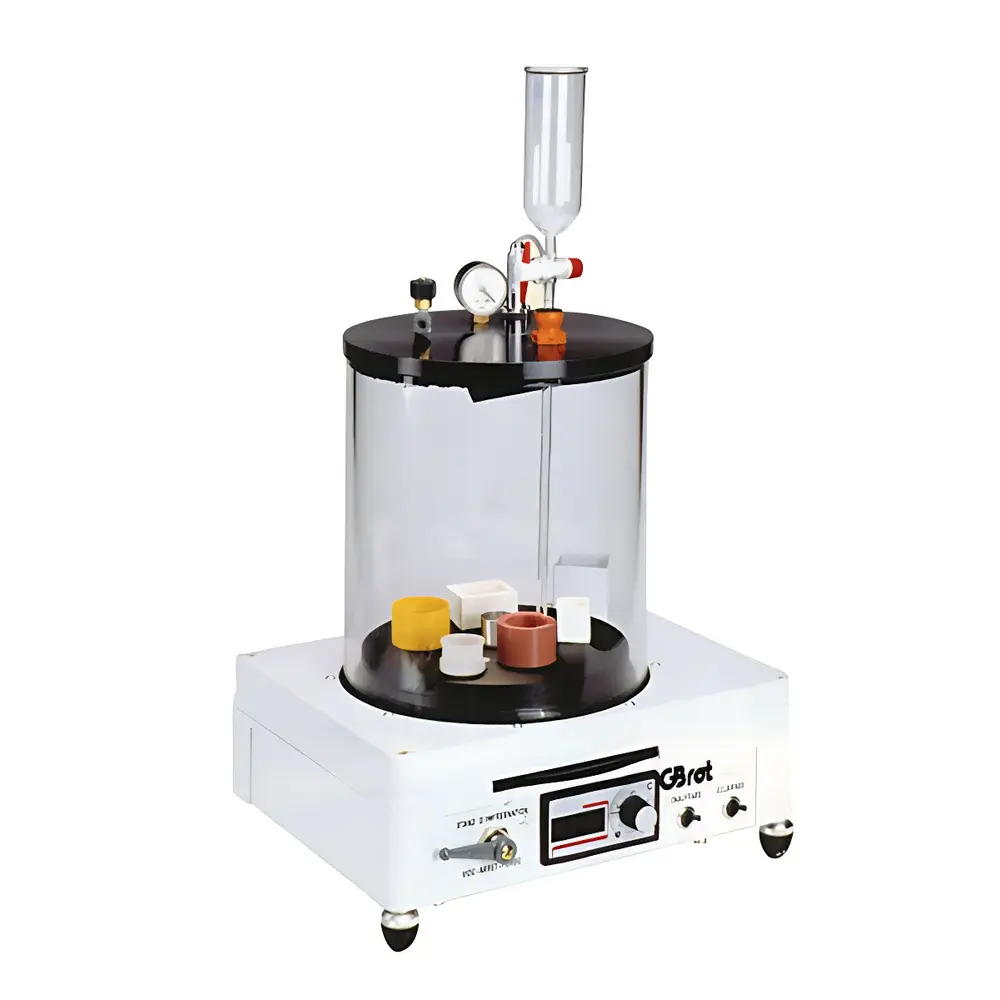
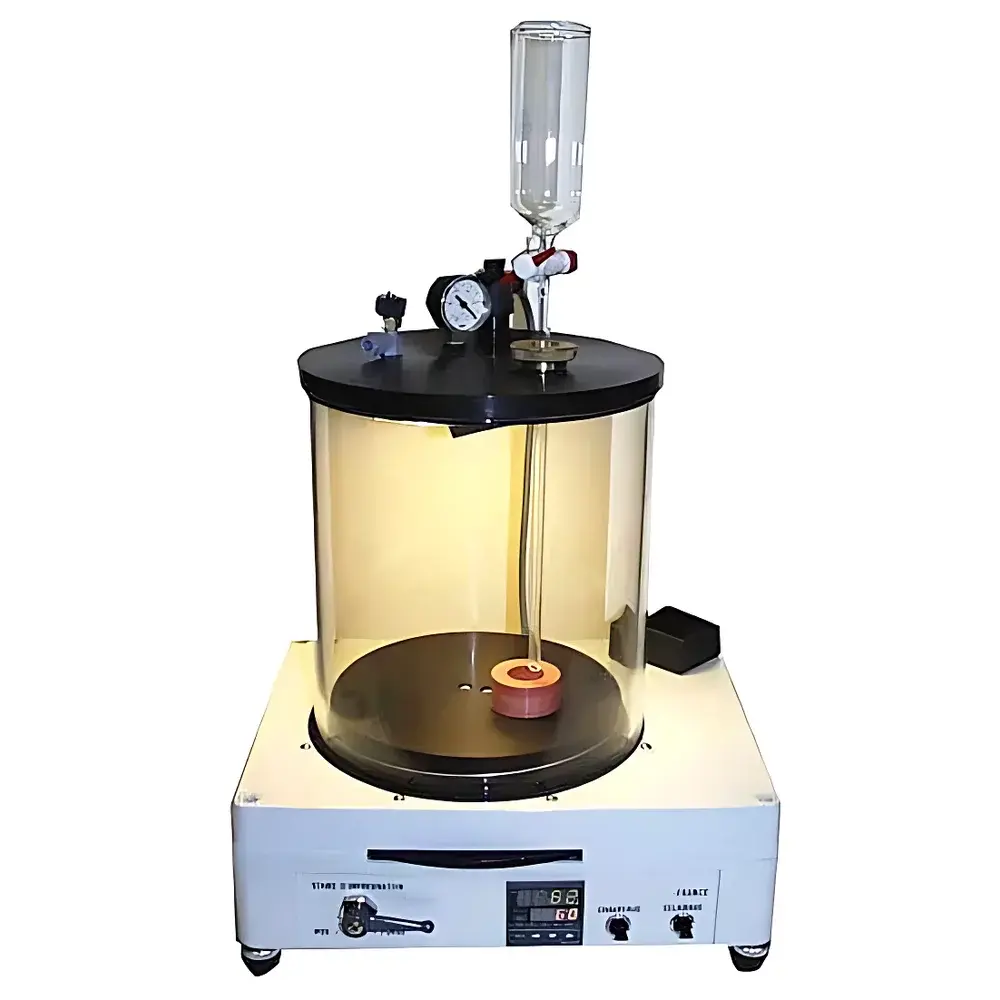
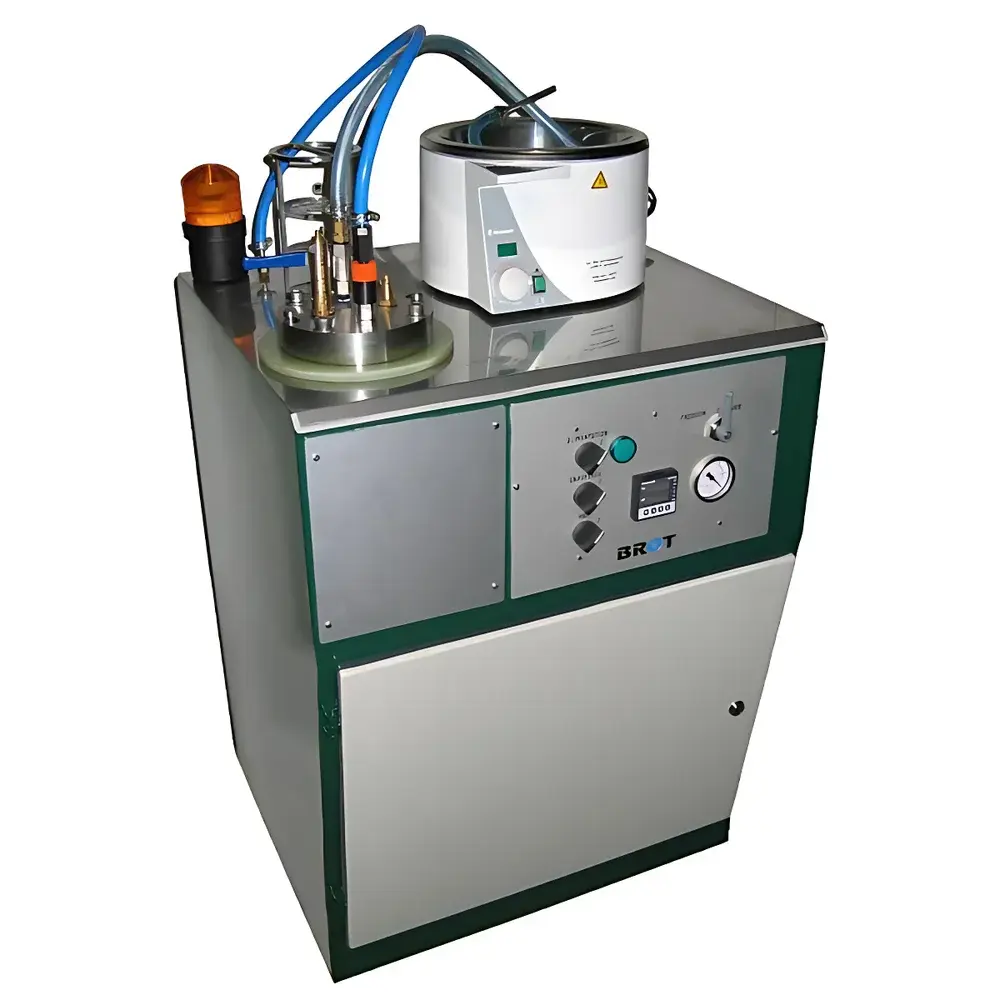
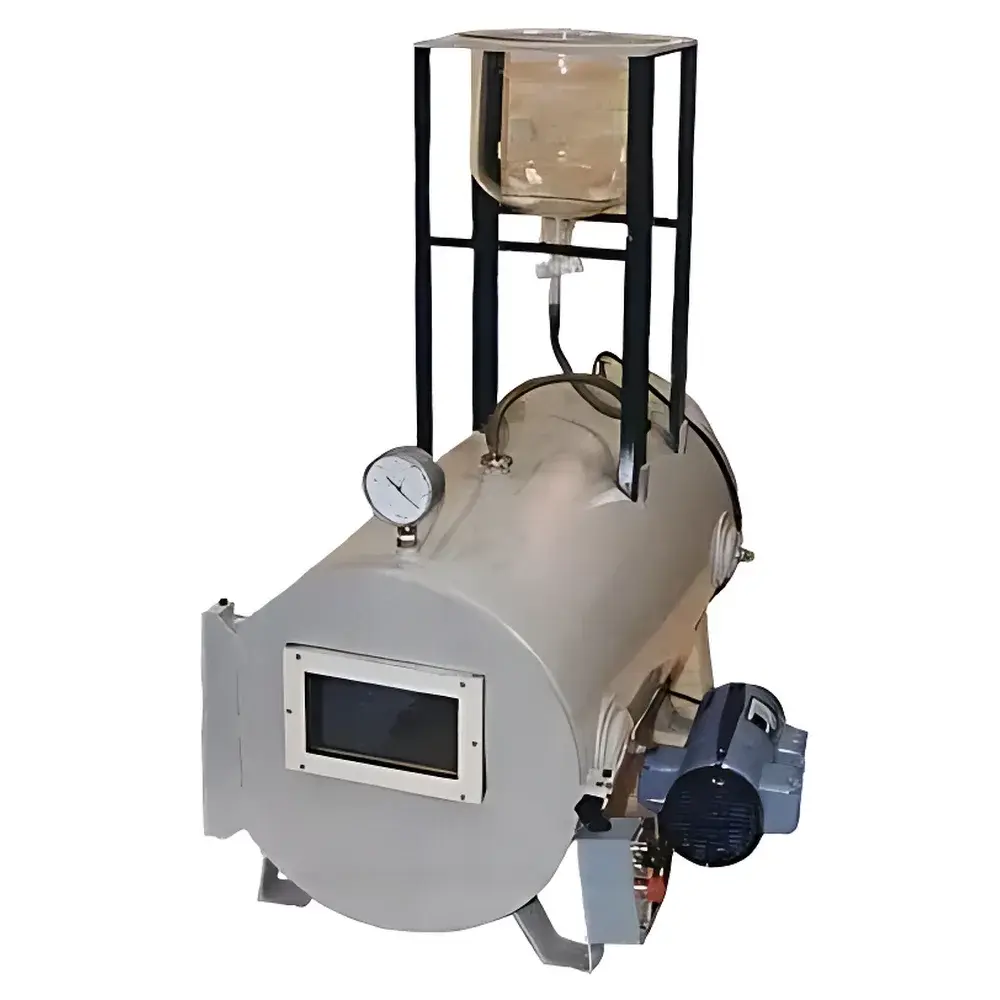
Vacuum Impregnation and Curing Press D 04 05 by BROT-LAB
| Brand | French BROT-LAB |
|---|---|
| Origin | France |
| Model | D 04 05 |
| Type | Hot Mounting Press |
| Temperature Range | 25–80 °C |
| Sample Capacity | 1–12 specimens simultaneously |
| Vacuum System | Low-noise electric vacuum pump |
| Rotating Platform Diameter | 200 mm |
| Dimensions (W×D×H) | 350 × 350 × 400 mm |
| Weight | 13 kg |
| Resin Injection Vessel | 125 mL glass funnel with PTFE stopper |
| Heating Plate | Adjustable, up to 80 °C |
| Vacuum & Temperature Monitoring | Integrated digital sensors |
Overview
The BROT-LAB D 04 05 Vacuum Impregnation and Curing Press is a precision-engineered hot mounting system designed for the reliable encapsulation and consolidation of fragile, porous, or granular specimens—particularly geological samples such as loose rock cuttings, sand grains, soil aggregates, and friable mineral fragments. Unlike conventional cold-mounting techniques that rely on ambient-cure resins and extended dwell times, the D 04 05 employs a controlled thermal-vacuum process grounded in capillary impregnation physics: under sub-atmospheric pressure, air is evacuated from interstitial voids within the sample; subsequently, thermosetting resin is drawn into the matrix via differential pressure, followed by heat-assisted polymerization at precisely regulated temperatures (25–80 °C). This sequence ensures uniform resin penetration, minimal bubble entrapment, and dimensional stability—critical prerequisites for subsequent thin-section preparation, polishing, SEM stubbing, or microstructural analysis. The system conforms to standard laboratory workflows aligned with ASTM E3-22 (Standard Guide for Preparation of Metallographic Specimens) and ISO 16097:2021 (Microscopy — Preparation of Geological Thin Sections), supporting reproducible sample integrity across academic, petroleum, and environmental geoscience laboratories.
Key Features
- Integrated vacuum chamber with real-time digital pressure monitoring (range: 0–100 kPa absolute) and PID-controlled heating plate (±1 °C accuracy)
- Motor-driven rotating platform (200 mm diameter) enabling simultaneous treatment of 1–12 specimens in standardized metal or phenolic molds
- Low-noise electric vacuum pump (<52 dB(A)) with integrated oil-free diaphragm technology—eliminating maintenance intervals and solvent contamination risks
- Modular resin delivery system: 125 mL borosilicate glass funnel with PTFE-sealed valve and calibrated flow control for consistent injection volume and rate
- Thermally isolated chamber design with insulated door gasket and overheat protection circuitry (auto-shutdown at >85 °C)
- Compact footprint (350 × 350 × 400 mm) and lightweight construction (13 kg) suitable for benchtop deployment in ISO Class 5–7 cleanrooms or shared core facilities
Sample Compatibility & Compliance
The D 04 05 accommodates specimens ranging from fine-grained sediments (<63 µm) to coarse gravel fractions (up to 8 mm), including silicates, carbonates, clays, coal fragments, and weathered metamorphic debris. Compatible mold types include standard 25.4 mm, 30 mm, and 35 mm diameter compression rings (available separately), as well as custom cavity inserts for irregular geometries. All wetted components—including funnel, valve, and chamber lining—are chemically resistant to epoxy, acrylic, and polyester resins, as well as common solvents (e.g., acetone, xylene). The system supports GLP-compliant documentation when paired with external data loggers; temperature and vacuum profiles can be recorded per batch for audit trails. It meets CE marking requirements under Directive 2014/30/EU (EMC) and 2014/35/EU (LVD), and its operational parameters align with IEC 61000-6-2/6-3 immunity and emission standards.
Software & Data Management
The D 04 05 operates via an embedded microcontroller interface with tactile membrane keypad and dual-line LCD display showing real-time vacuum level (kPa), setpoint and actual temperature (°C), and elapsed cycle time. While the base unit does not include PC connectivity, optional RS-485 or USB-to-serial adapters enable integration with third-party SCADA or LIMS platforms. Logged parameters—including ramp rate, hold duration, final cure temperature, and vacuum decay rate—can be exported as CSV files for traceability in regulated environments governed by FDA 21 CFR Part 11 (when used with validated electronic signature protocols) or ISO/IEC 17025 quality management systems. Batch-specific metadata (operator ID, sample ID, resin lot number) may be manually entered and retained for ≥100 cycles.
Applications
- Geological thin-section preparation: stabilization of unconsolidated cuttings prior to diamond-blade slicing and grinding
- Petrographic analysis: embedding of carbonate-rich sands for cathodoluminescence (CL) and electron microprobe mapping
- Environmental sedimentology: consolidation of contaminated soils for sequential extraction or XRD sample presentation
- Archaeometric studies: low-disturbance mounting of fragile ceramic shards or fossilized bioclasts
- Materials science: pre-embedding of powder metallurgy compacts or additive-manufactured lattice structures before metallographic sectioning
- Forensic geology: preservation of trace particulate evidence without thermal degradation or resin migration artifacts
FAQ
What resin types are compatible with the D 04 05 system?
Epoxy (e.g., Epofix®, Araldite®), acrylic (e.g., Technovit® 7200), and polyester resins—provided viscosity remains below 1,200 mPa·s at processing temperature. Low-viscosity formulations (<300 mPa·s) yield optimal infiltration in high-porosity samples.
Is vacuum pump oil replacement required?
No—the integrated pump uses a dry diaphragm mechanism with no lubricating oil; only periodic filter cleaning (every 200 operating hours) is recommended.
Can the system be used for cold mounting?
Yes, by setting the heating plate to 25 °C and extending vacuum dwell time (typically 15–30 minutes), users may perform ambient-cure impregnation using slow-polymerizing resins.
How is mold ejection handled post-cure?
The heated platens allow controlled thermal contraction upon cooling; standard molds feature tapered sidewalls and release agents (e.g., silicone spray) to ensure clean demolding without mechanical force.
Does the unit support automated cycle programming?
The base model offers fixed-step operation (vacuum → injection → heat hold → cooldown); programmable multi-stage cycles require the optional D-CTRL module (sold separately), which adds 5-step profile memory and ramp/soak functionality.
Related Products



