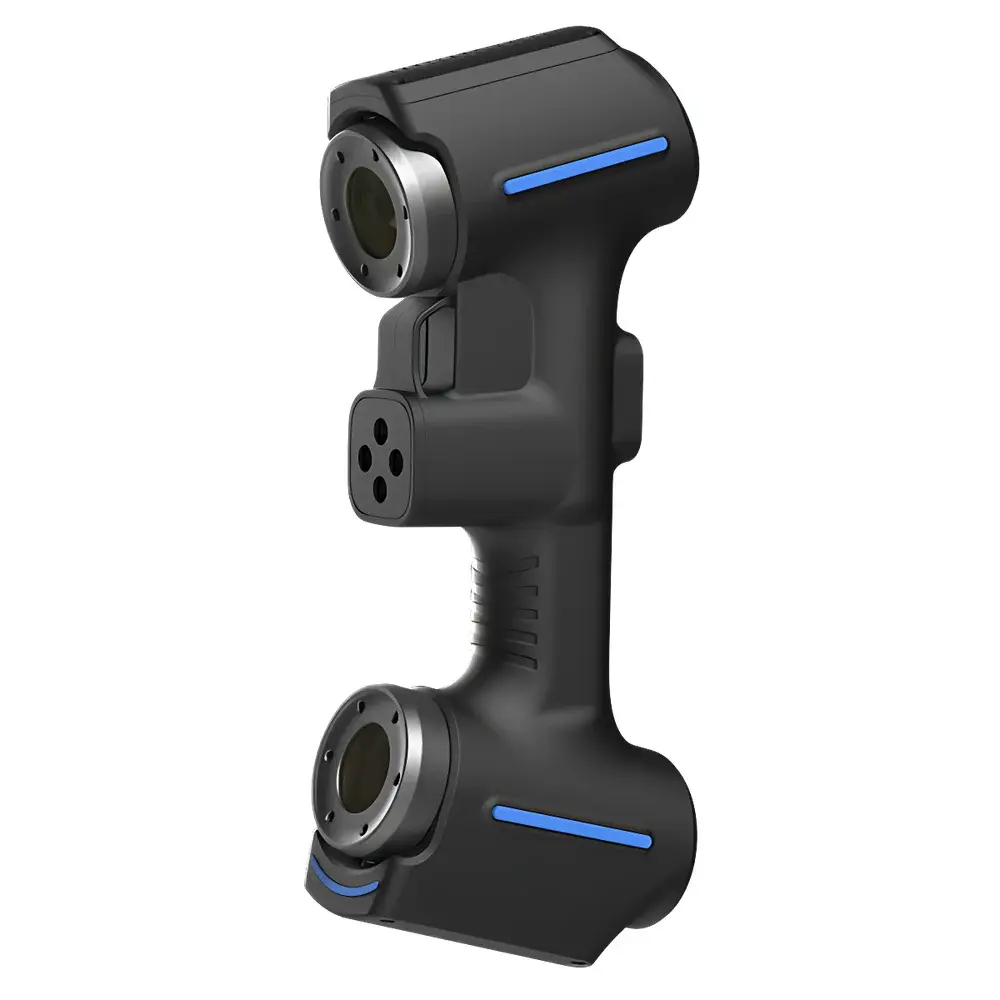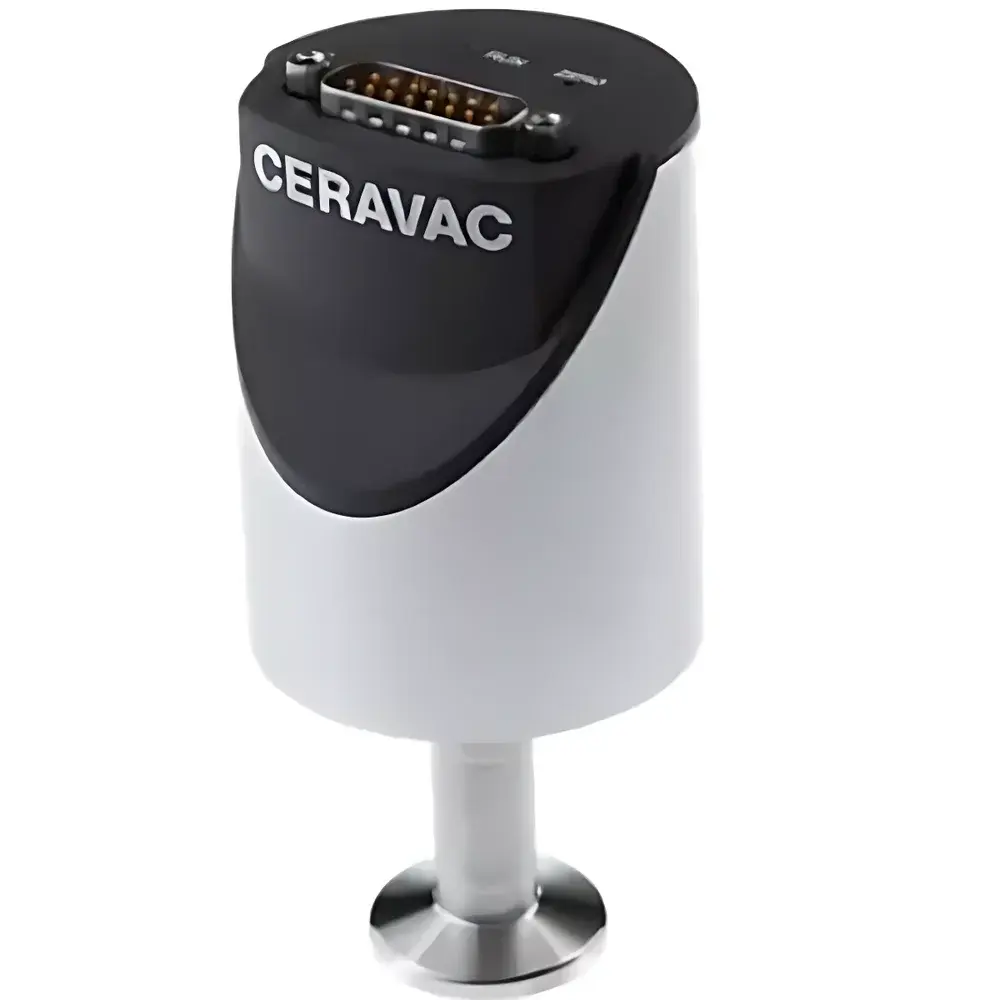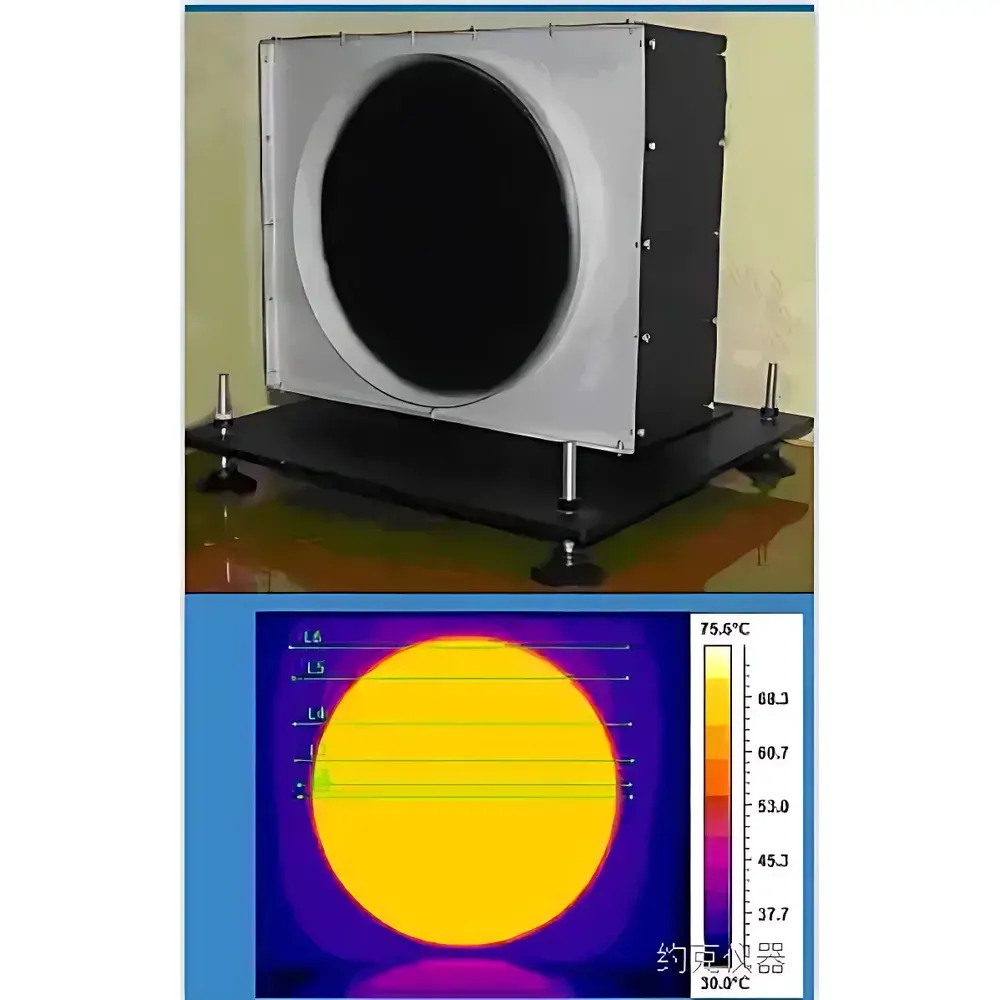
VNIIOFI BB80/350 Large-Aperture Cryogenic Blackbody Calibrator
| Brand | VNIIOFI |
|---|---|
| Origin | Russia |
| Model | BB80/350 |
| Aperture Diameter | 350 mm |
| Temperature Range | 220–350 K |
| Additional Setpoint | 313 K |
| Spectral Range | 2.5–15 µm |
| Emissivity | 0.96 ± 0.02 |
| Uncertainty (280–300 K) | ±0.1 K |
| Repeatability (300 K) | 0.5 K |
| 10-Minute Stability | 5 K |
| Continuous Operation Time | 8 h |
| Operating Environment | Indoor, Dry Nitrogen Atmosphere, Standard Pressure |
| Ambient Temperature | 0–30 °C |
| Vacuum Chamber Pressure | 10⁻⁵–10⁻⁸ Torr |
| Cryogenic Base Temperature | 77 K |
Overview
The VNIIOFI BB80/350 is a high-precision large-aperture cryogenic blackbody calibrator engineered for radiometric and thermographic calibration of infrared (IR) sensors, thermal imagers, and spectral radiometers operating in the mid- to long-wave infrared (MWIR/LWIR) bands. Based on fundamental principles of cavity radiation physics, the BB80/350 employs a deep, temperature-controlled cylindrical cavity with actively cooled walls and a precisely regulated aperture stop to achieve near-ideal blackbody behavior across its operational range. Its design conforms to the theoretical requirements of Planckian radiation sources as defined in ISO 9000-series metrology standards and supports traceable calibration against national primary standards maintained by institutes such as VNIIOFI (All-Russian Research Institute of Optical and Physical Measurements). The unit operates within a vacuum chamber (10⁻⁵–10⁻⁸ Torr), enabling thermal isolation from ambient fluctuations and minimizing convection-induced uncertainties—critical for low-temperature radiometric stability.
Key Features
- Large 350 mm effective aperture diameter optimized for collimated beam illumination and full-aperture calibration of wide-field IR optics and focal plane arrays.
- Cryogenic operation down to 220 K, with base cooling provided by liquid nitrogen (77 K) and active closed-cycle refrigeration for fine temperature control between 220 K and 350 K.
- High emissivity cavity surface (ε = 0.96 ± 0.02) achieved via precision-machined, gold-plated copper cavity geometry and optimized internal baffling to suppress stray radiation and enhance effective emissivity uniformity.
- Stable temperature control at key reference points—including a dedicated 313 K (40 °C) setpoint aligned with common industrial and environmental test conditions—ensuring compatibility with ASTM E1543 and ISO 18434-1 protocols.
- Integrated vacuum-compatible temperature monitoring using calibrated platinum resistance thermometers (PRTs) traceable to ITS-90, with dual-sensor redundancy for real-time validation of cavity wall uniformity.
- Robust mechanical architecture designed for laboratory integration, including vibration-damped mounting interface and standardized flange connections (CF-350 or ISO-KF equivalents) for vacuum and purge gas lines.
Sample Compatibility & Compliance
The BB80/350 accommodates a broad class of infrared detectors and optical systems requiring calibration under controlled low-temperature blackbody conditions. It is routinely deployed for verification of spaceborne IR instruments (e.g., Earth observation payloads), ground-based atmospheric remote sensing spectrometers (e.g., FTIR systems operating in 2.5–15 µm), and industrial thermal cameras used in cryogenic process monitoring. The system complies with international radiometric calibration frameworks including ISO/IEC 17025:2017 (general requirements for competence of testing and calibration laboratories), and supports audit-ready documentation per GLP and GMP guidelines. While not inherently FDA-certified, its uncertainty budget and traceability chain meet the technical prerequisites for use in regulatory-compliant environments where IR thermometry validation is required under 21 CFR Part 11 data integrity provisions.
Software & Data Management
The BB80/350 interfaces with VNIIOFI’s proprietary calibration control suite (v4.2+), which provides real-time PID loop supervision, automated temperature ramping profiles, and synchronized acquisition of cavity PRT readings, vacuum pressure logs, and purge gas flow metrics. All measurement records are timestamped, digitally signed, and stored in HDF5 format to ensure long-term readability and interoperability with third-party analysis tools (e.g., MATLAB, Python-based radiometric processing pipelines). Audit trails include operator ID, parameter change history, and calibration certificate generation compliant with ISO/IEC 17025 Annex A.2 requirements for measurement uncertainty reporting.
Applications
- Radiometric calibration of space-qualified infrared radiometers and hyperspectral imagers prior to launch.
- Validation of emissivity models and atmospheric transmittance algorithms in climate research laboratories.
- Traceable temperature scale dissemination for national metrology institutes performing inter-laboratory comparisons at sub-ambient temperatures.
- Performance verification of cryogenically cooled quantum-well infrared photodetectors (QWIPs) and type-II superlattice (T2SL) focal plane arrays.
- Supporting ISO 12241-compliant thermal imaging system qualification in aerospace non-destructive testing (NDT) facilities.
FAQ
What is the recommended warm-up time before achieving thermal equilibrium at 280 K?
Typical stabilization requires 90–120 minutes after reaching target setpoint, depending on initial vacuum level and ambient humidity history.
Can the BB80/350 be operated continuously beyond 8 hours?
Extended operation is possible with scheduled cooldown cycles and nitrogen replenishment; however, the 8-hour specification reflects validated performance under ISO/IEC 17025-compliant calibration conditions.
Is the 350 mm aperture usable at all temperatures within the 220–350 K range?
Yes—the aperture remains fully functional across the entire range, though optimal radiometric uniformity is certified between 250 K and 330 K per VNIIOFI Certificate of Calibration No. BB-80/350-2023-087.
Does the system include NIST-traceable calibration documentation?
VNIIOFI provides an accredited calibration certificate referencing the Russian National Metrology Institute (FSUE VNIIOFI); direct NIST traceability requires bilateral comparison or third-party cross-calibration services.
What purge gas specifications are required for dry nitrogen operation?
Dew point ≤ –40 °C, O₂ content < 10 ppm, particle filtration to ISO Class 5 (Class 100) is mandatory to prevent condensation and contamination of cold surfaces.