
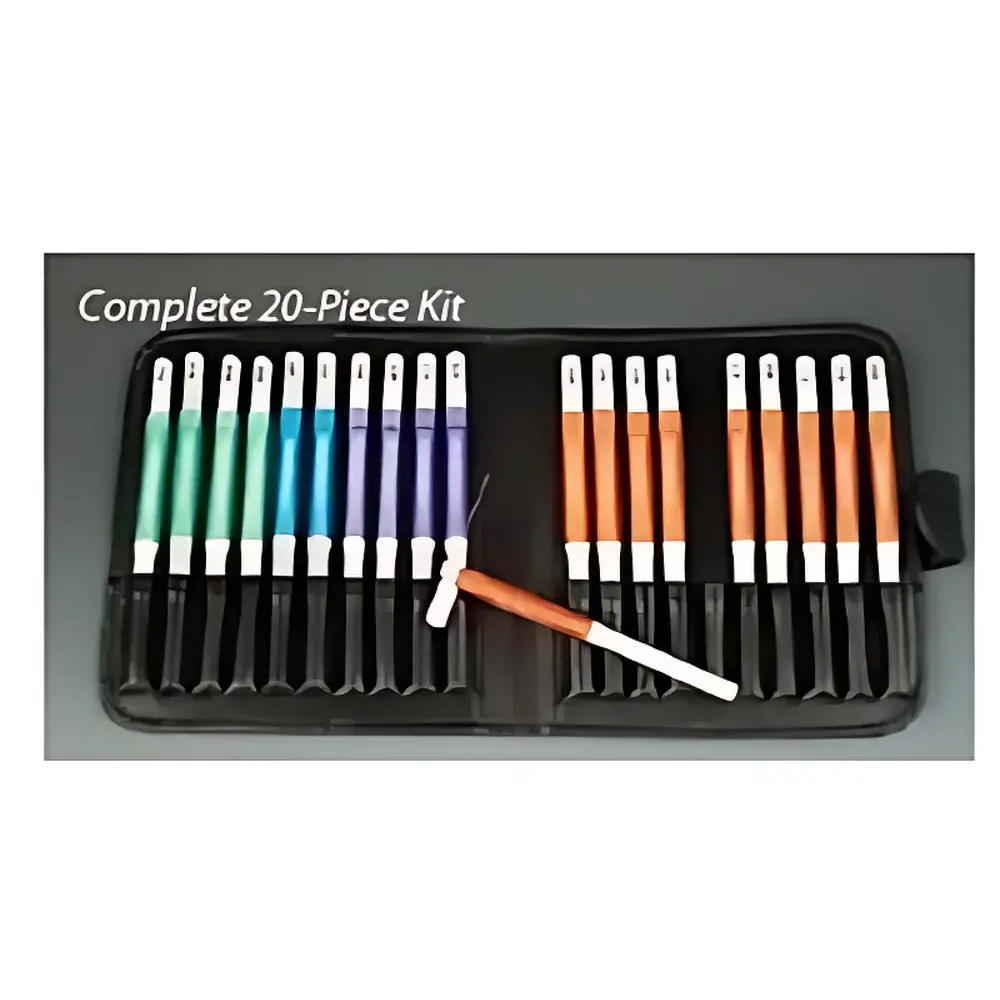
Von Frey Filaments Set for Rodent Nociception Testing
| Origin | USA |
|---|---|
| Manufacturer Type | Authorized Distributor |
| Import Status | Imported |
| Model | Von Frey Filaments Set |
| Pricing | Available Upon Request |
Overview
The Von Frey Filaments Set for Rodent Nociception Testing is a standardized, calibrated mechanical allodynia and hyperalgesia assessment tool engineered for quantitative sensory evaluation in preclinical pain research. Based on the principle of monofilament force application, this set operates under the up-down method (Dixon, 1965) or fixed-stimulus protocols to determine the 50% paw withdrawal threshold (PWT) in rats and mice. Each filament delivers a precise, reproducible bending force—governed by Euler–Bernoulli beam theory—when applied perpendicularly to the plantar surface until slight buckling occurs. This biomechanical stimulus activates low-threshold mechanoreceptors and Aβ/Aδ nociceptors, eliciting a reflexive hindpaw withdrawal response. The system is validated for longitudinal monitoring of neuropathic, inflammatory, and chemotherapy-induced peripheral pain models, supporting translational neuroscience and analgesic drug development.
Key Features
- Comprehensive 20-filament array covering a calibrated force range from 0.008 g to 300 g (0.078 mN to 2.943 N), enabling high-resolution threshold mapping across baseline sensitivity and pathological hypersensitivity states.
- Individually laser-calibrated filaments manufactured from stainless-steel-reinforced nylon, ensuring long-term dimensional stability, minimal hysteresis, and compliance with ISO 17025 traceable calibration standards.
- Ergonomic, non-slip handle design with color-coded filament storage slots for rapid identification and protocol adherence during blinded behavioral testing.
- Compatible with standard rodent testing environments including elevated mesh floors, acrylic enclosures, and temperature-controlled arenas (22–24°C ambient, ≥1 hr acclimation required).
- No electrical components or software dependency—designed for manual, observer-independent application consistent with IASP and NIH Office of Laboratory Animal Welfare (OLAW) guidelines for minimally invasive nociceptive assays.
Sample Compatibility & Compliance
This filament set is optimized for use in C57BL/6, Sprague-Dawley, and Wistar rodents (male/female, 18–35 g mice; 180–250 g rats). It supports bilateral assessment of plantar, dorsal, and lateral paw surfaces, as well as tail and facial regions (e.g., infraorbital nerve territory) with appropriate restraint protocols. All filaments meet ASTM F2742-21 specifications for biomedical tactile stimulators. The testing methodology aligns with established SOPs referenced in GLP-compliant toxicology studies and is cited in >1,200 peer-reviewed publications indexed in PubMed. Data collection adheres to ARRIVE 2.0 reporting standards and supports audit readiness for FDA pre-IND submissions involving pain end points.
Software & Data Management
While the filaments themselves are hardware-only, the set integrates seamlessly with third-party behavioral tracking platforms (e.g., EthoVision XT, ANY-maze, Noldus) via manual timestamp annotation or CSV-based export workflows. Users may log withdrawal responses using standardized binary scoring (0 = no withdrawal; 1 = rapid, unambiguous withdrawal within 3 s) and calculate PWT using the Chaplan–Dixon algorithm implemented in open-source R packages (e.g., qpcR, psycho) or MATLAB-based analysis scripts. Raw data files retain full audit trail metadata—including operator ID, session date/time, animal ID, filament sequence, and environmental conditions—for 21 CFR Part 11–compliant documentation when paired with validated electronic lab notebooks (ELNs).
Applications
- Quantification of mechanical allodynia in chronic constriction injury (CCI), spared nerve injury (SNI), and streptozotocin-induced diabetic neuropathy models.
- Evaluation of anti-hyperalgesic efficacy of novel opioid-sparing compounds (e.g., Nav1.7 inhibitors, TRPV1 antagonists) in dose–response and time-course studies.
- Baseline phenotyping of genetically modified mouse lines exhibiting altered nociceptor excitability or synaptic transmission in dorsal horn circuits.
- Assessment of central sensitization following repeated intraplantar capsaicin or carrageenan administration.
- Cross-species validation of translational biomarkers between rodent PWT shifts and human QST (quantitative sensory testing) outcomes.
FAQ
How often should filaments be replaced?
Filaments should be inspected before each use for kinking, fraying, or permanent deformation; replacement is recommended after 500 applications per filament or every 6 months under routine lab use.
Is calibration verification required between experiments?
Yes—users must perform daily verification using a certified digital force gauge (±0.1 mN accuracy) per ISO/IEC 17025-accredited lab SOPs prior to initiating behavioral sessions.
Can this set be used for non-rodent species?
Limited validation exists for guinea pigs and rabbits; however, force thresholds and response interpretation require species-specific normative databases and ethical approval beyond standard rodent protocols.
Does the set include training materials?
A comprehensive SOP document, video-based technique guide, and sample data analysis template are provided with purchase, aligned with NIH Behavioral Core Facility best practices.
Are custom filament arrays available?
Yes—custom configurations (e.g., logarithmic spacing, extended high-force range up to 500 g) can be ordered directly through the authorized distributor under ISO 9001-certified manufacturing oversight.



