
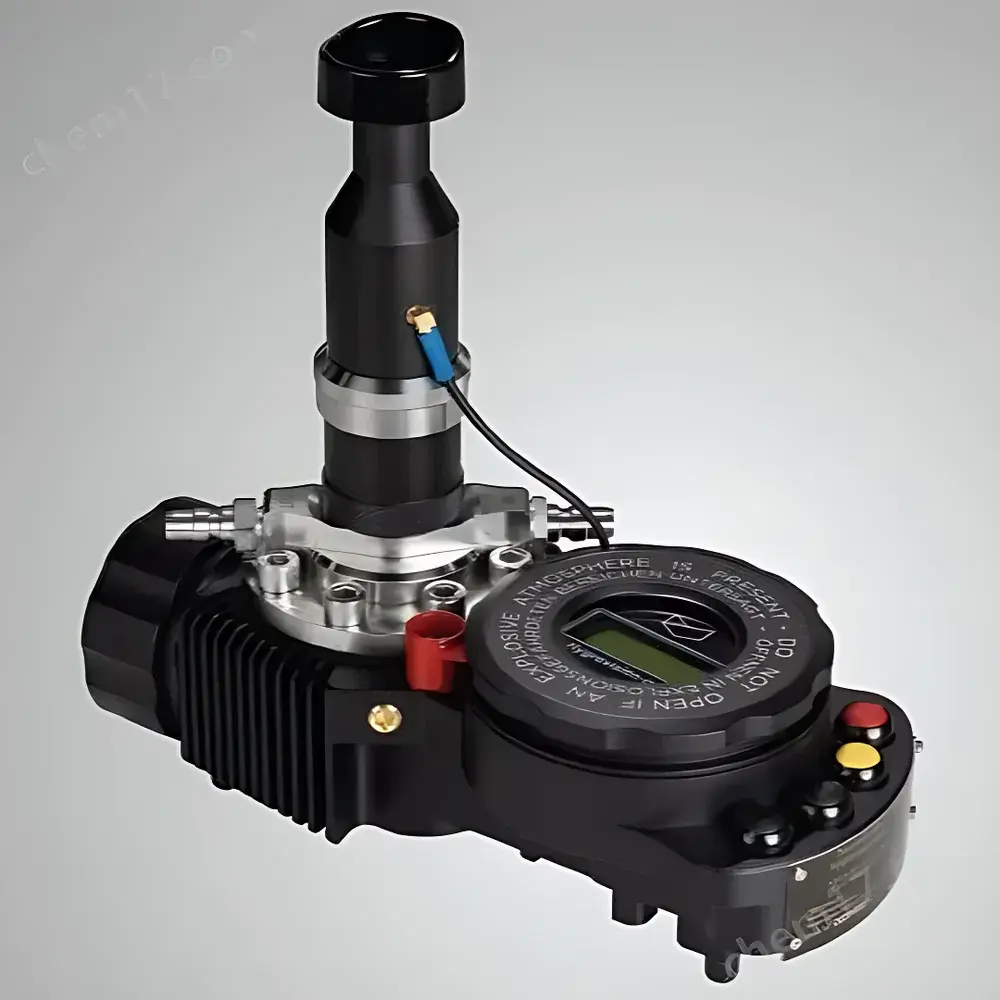
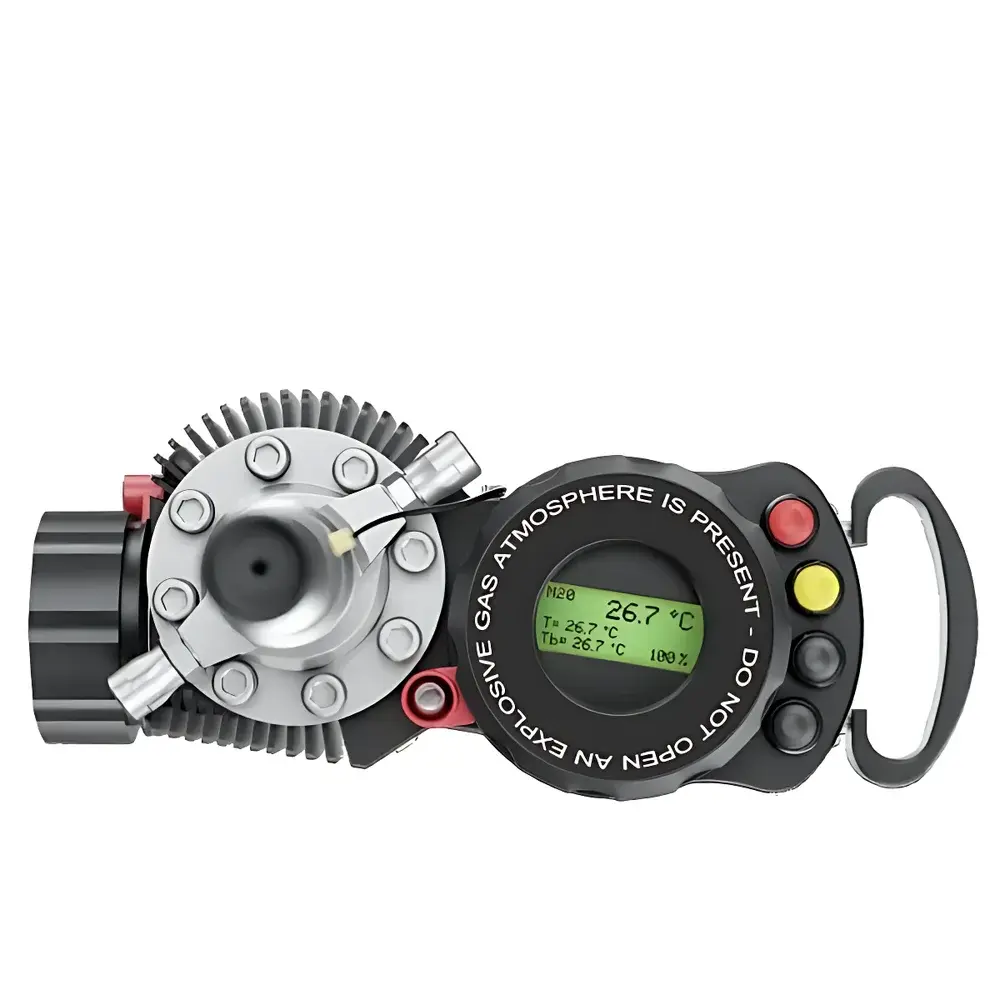
VYMPEL Hygrovision min SL Portable Hydrocarbon & Water Dew Point Analyzer
| Brand | VYMPEL (Russia) |
|---|---|
| Origin | Russia |
| Model | Hygrovision min SL |
| Type | Portable Chilled-Mirror Dew Point Analyzer |
| Measurement Principle | Chilled-mirror (optical condensation detection) |
| Operating Temperature | -20 °C to +50 °C |
| Accuracy | ±1 °C |
| Resolution | 0.1 °C |
| Range | -50 °C to ambient temperature |
| Sample Flow Rate | 0.2–2 L/min |
| Max Sample Pressure | 230 bar |
| Battery Life | ≥12 h (up to 20 h) |
| IP Rating | IP67 |
| ATEX/IECEx Certification | Ex db ib IIB+H2 T5 |
| Dimensions (W×D×H) | 253 × 120 × 110 mm (excl. microscope) |
| Weight | ~4 kg |
| Standards Compliance | ISO 6327, ISO 11150 (TR), ISO 12148 (TR), ASTM D1142, DIN 51781, GB/T 17283-2014, GB/T 27895-2011 |
Overview
The VYMPEL Hygrovision min SL is a fully portable, battery-powered chilled-mirror dew point analyzer engineered for trace-level moisture and hydrocarbon dew point determination in pressurized gas streams. It operates on the first-principle optical condensation method: a thermoelectrically cooled, highly polished mirror surface is exposed to sample gas under controlled flow and pressure; real-time optical monitoring detects the onset of condensate formation via integrated light-emitting diodes and photodetectors. This direct, physical measurement eliminates calibration drift and ensures metrological traceability without reliance on sensor polymers or electrochemical elements. Designed specifically for high-risk industrial environments—including Zone 1 and Zone 2 explosive atmospheres—the instrument meets rigorous intrinsic safety requirements (Ex db ib IIB+H2 T5) and supports operation across natural gas transmission, hydrogen energy infrastructure, biogas upgrading, and petrochemical process validation.
Key Features
- Chilled-mirror core with active mirror temperature control and automatic mirror cleaning cycle to prevent contamination-induced measurement hysteresis
- High-resolution optical condensation visualization system enabling unambiguous identification of dew formation onset—critical for low-dew-point hydrogen and LNG applications
- Integrated auxiliary cooling channel for extended low-temperature capability down to -50 °C, supporting ultra-dry gas specifications required in fuel cell hydrogen (ISO 8573-1 Class 1) and cryogenic processing
- Ruggedized IP67-rated enclosure with externalized measurement head design: sample gas pathways are physically isolated from electronics, eliminating risk of internal overpressure during high-pressure sampling (up to 230 bar)
- Four-button intuitive interface with 4-line alphanumeric LCD display—fully operable with gloves in field conditions
- Rechargeable lithium-ion battery pack delivering ≥12 hours of continuous operation (up to 20 h at moderate ambient temperatures), compatible with 12 V DC vehicle power supply
Sample Compatibility & Compliance
The Hygrovision min SL is validated for use with natural gas, hydrogen, syngas, nitrogen, argon, helium, and other non-corrosive, non-particulate hydrocarbon-containing gas mixtures. Its pressure-tolerant measurement chamber enables direct sampling from pipelines, compressor stations, storage vessels, and mobile refueling units without external pressure reduction. The analyzer conforms to international standard methodologies for both water and hydrocarbon dew point assessment: water dew point measurements comply with ISO 6327, ASTM D1142, and DIN 51781; hydrocarbon dew point evaluation follows ISO TR 11150 and ISO TR 12148 guidance. All firmware and hardware configurations support GLP-compliant data logging, including timestamped dew point events, mirror temperature profiles, and ambient condition metadata—essential for audit readiness under ISO/IEC 17025 and API RP 14E frameworks.
Software & Data Management
Data acquisition is performed locally via the onboard microcontroller with no external PC dependency. Each measurement session generates a structured ASCII log file containing dew point value, mirror temperature ramp rate, condensation detection confidence index, sample pressure, flow rate, and environmental parameters. Files are exportable via USB-C interface in CSV format for integration into LIMS, SCADA, or QA/QC reporting systems. While the device operates in manual mode only (no automated triggering or scheduled sampling), its deterministic measurement protocol ensures full reproducibility across operators and shifts—enabling robust inter-laboratory comparison studies. Audit trails retain all user-initiated actions (e.g., mirror clean command, zero calibration request) with immutable timestamps, satisfying basic FDA 21 CFR Part 11 record-keeping expectations where electronic signatures are not mandated.
Applications
- Field verification of online moisture analyzers in natural gas custody transfer stations
- Hydrogen purity certification prior to fuel cell stack integration (per ISO 14687-2)
- Drying validation during pipeline commissioning, pigging, and inert gas purging operations
- Spot-checking of LNG carrier hold tanks and vapor recovery units
- Quality assurance of compressed biogas injected into municipal gas grids
- Technical due diligence during asset acquisition in midstream infrastructure projects
FAQ
Does the Hygrovision min SL require periodic calibration with certified gas standards?
No—its chilled-mirror principle relies on fundamental thermodynamic phase-change physics. Routine verification using NIST-traceable humidity reference generators or chilled-mirror transfer standards is recommended annually per ISO/IEC 17025, but recalibration is not required between verifications.
Can it measure hydrocarbon dew point in sour gas containing H₂S?
The instrument is designed for non-corrosive gases. H₂S concentrations exceeding 10 ppm may degrade the gold-coated mirror surface and compromise long-term accuracy; use is not recommended without upstream sulfur removal.
Is the optical system serviceable in the field?
Yes—the detachable optical module can be replaced by trained personnel using standard Torx tools; no alignment fixtures or laser collimation equipment are required.
How does the auxiliary cooling channel improve low-dew-point performance?
It circulates a secondary coolant loop adjacent to the primary Peltier stage, reducing thermal load on the mirror assembly and extending stable sub-zero mirror operation—particularly critical when measuring below -40 °C in high-pressure hydrogen.
What documentation is supplied for regulatory submissions?
Each unit ships with a Factory Calibration Certificate (including mirror emissivity verification), EC Declaration of Conformity (ATEX/IECEx), ISO 17025-accredited test report excerpt, and full compliance matrix mapping to ISO, ASTM, and GB standards.




