
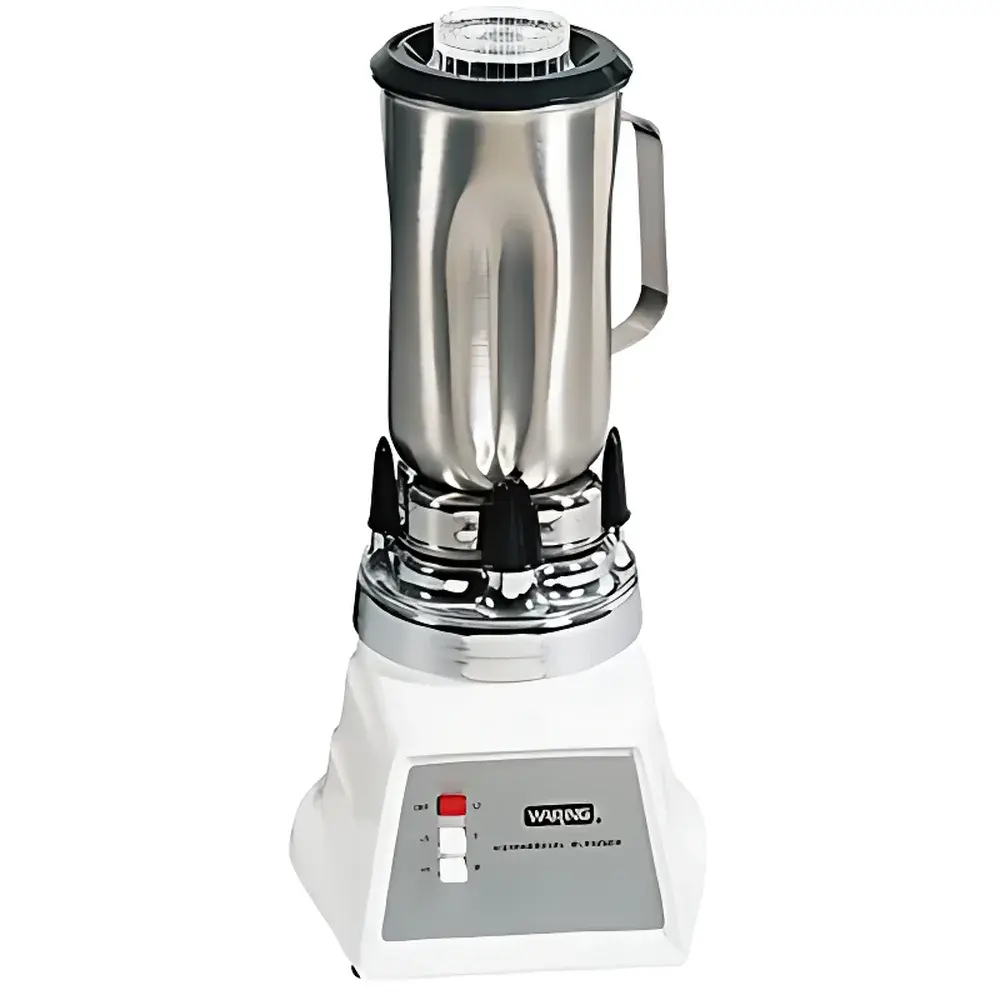
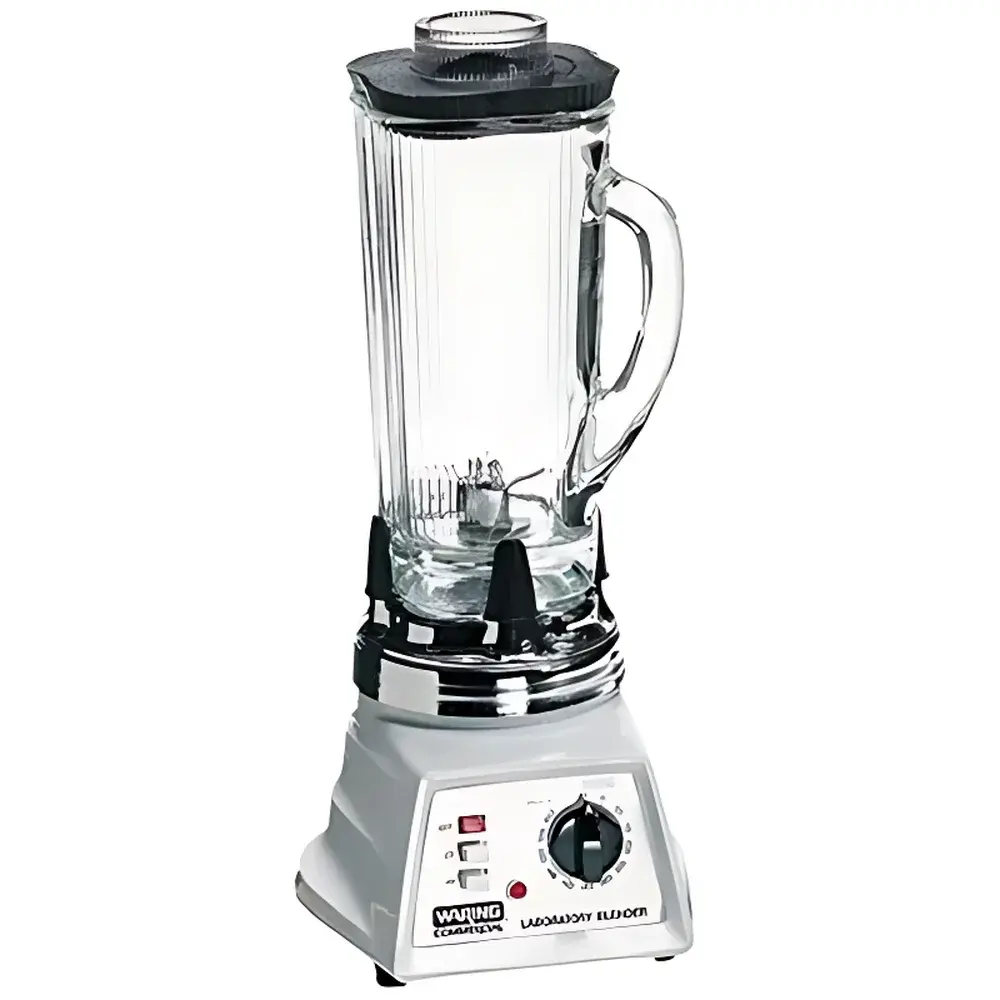
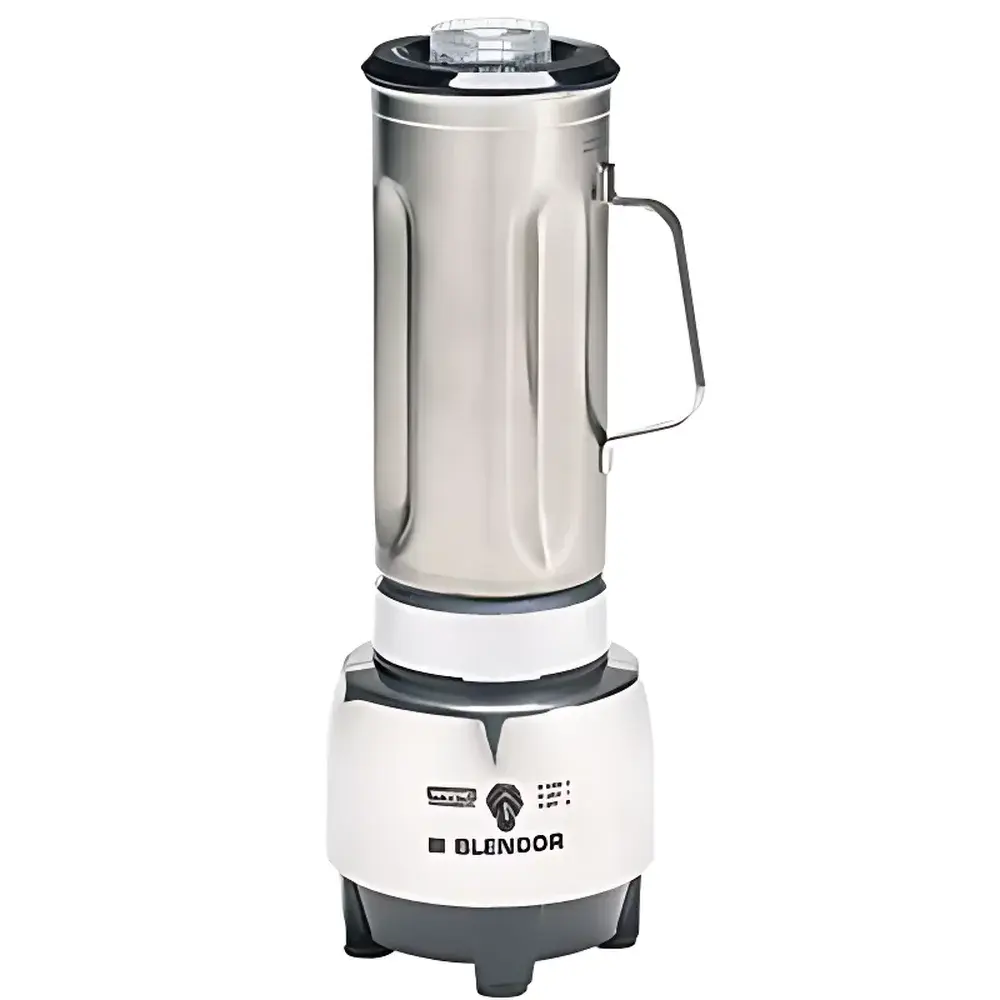
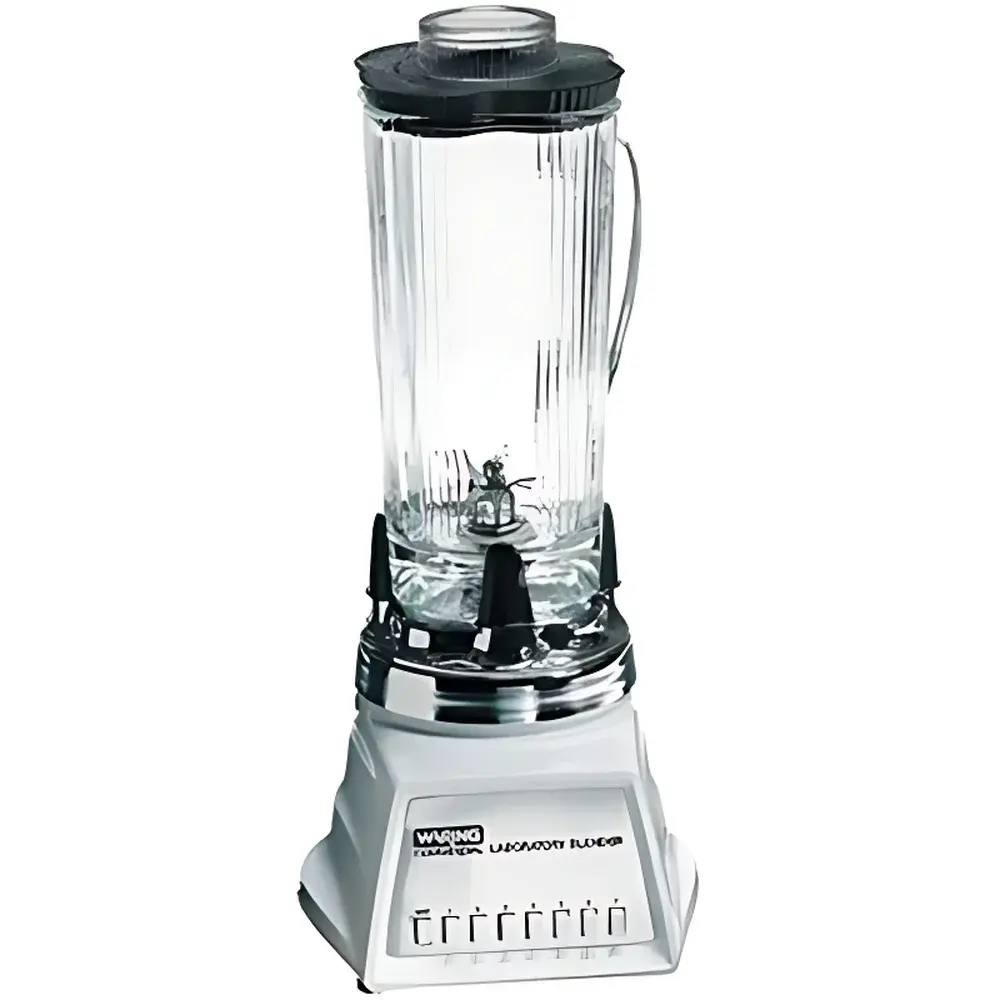
Waring HGB Series Dual-Speed and Variable-Speed Laboratory Homogenizers
| Brand | Waring |
|---|---|
| Origin | USA |
| Model Series | HGB, 8010/8011, 7012, LB10, HGB550SS |
| Speed Range | 1,000–25,000 rpm (model-dependent) |
| Vessel Capacity | 1 L, 2 L, 4 L |
| Vessel Material | Borosilicate Glass or Stainless Steel (SSS) |
| Motor Type | Standard or High-Torque |
| Input Voltage/Frequency | 120 V / 60 Hz or 240 V / 50–60 Hz |
| Current Draw | 1.9–7.0 A |
| Shipping Weight | 5.0–6.4 kg |
| Timer | Mechanical 3-min auto-shutoff (select models) |
| Bearing System | Precision sleeve bearing (HGB series) |
Overview
The Waring HGB Series laboratory homogenizers are engineered for precision mechanical disruption of biological, pharmaceutical, food, and environmental samples requiring consistent particle size reduction, cell lysis, emulsification, or suspension homogenization. Operating on the principle of high-shear rotor-stator interaction, these devices generate intense hydrodynamic forces—cavitation, turbulence, and radial shear—to rapidly and reproducibly disintegrate soft to moderately fibrous tissues, cultured cells, plant material, and viscous suspensions. Designed and manufactured in the United States, the HGB platform offers modular configurations—including dual-speed (fixed 18,000/22,000 rpm), 7-speed stepped, and continuously variable-speed (1,000–22,000 rpm) variants—enabling method scalability from benchtop R&D to QC release testing. All units comply with IEC 61000-6-3 (EMC) and IEC 61000-6-2 (immunity) standards and are constructed with UL-recognized components for safe operation in ISO 17025-accredited laboratories.
Key Features
- Robust induction motor architecture with thermal overload protection and sealed ball or sleeve bearing systems (HGB models feature precision-machined sleeve bearings for extended service life and reduced runout)
- Interchangeable borosilicate glass or stainless-steel vessels (1 L, 2 L, and 4 L capacities) compatible with autoclaving (glass) and CIP/SIP protocols (SSS)
- Dual-speed models (e.g., 8010G/8011G) offer rapid switching between 18,000 rpm (low-shear pre-homogenization) and 22,000 rpm (high-intensity disruption), optimized for reproducible tissue homogenization per ASTM D7217
- 7-speed (7012G) and continuously variable-speed (LB10G) models support method development across diverse sample viscosities and particulate loads, enabling adherence to USP <711> dissolution homogeneity requirements
- Mechanical 3-minute countdown timer (select models) provides hands-free operation and mitigates operator-induced variability—critical for GLP-compliant workflows
- Low-vibration base design with non-slip rubber feet ensures stability during prolonged operation at maximum speed, minimizing energy loss and acoustic noise (<72 dB(A) at 1 m)
Sample Compatibility & Compliance
Waring HGB homogenizers accommodate a broad spectrum of sample types: mammalian and insect cell suspensions, liver/kidney tissue, bacterial pellets, algae cultures, polymer dispersions, and food matrices (e.g., dairy emulsions, fruit pulps). Vessel geometry and rotor tip speed (up to ~4,200 cm/s) are validated for efficient lysis without significant protein denaturation or nucleic acid shearing under controlled conditions (≤30 s pulses, 4 °C ambient). The devices meet essential safety and performance criteria outlined in ISO 13485 (for medical device manufacturing support), FDA 21 CFR Part 11 (when paired with compliant data logging systems), and EU Machinery Directive 2006/42/EC. Optional documentation packages include Factory Acceptance Test (FAT) reports and IQ/OQ templates aligned with GMP Annex 15 expectations.
Software & Data Management
While the HGB series operates as standalone analog instruments, its repeatable speed settings and mechanical timer enable full traceability in paper-based or electronic lab notebook (ELN) systems. For regulated environments, users integrate these homogenizers into validated workflows by recording speed selection, duration, vessel lot number, and operator ID in audit-trail-enabled platforms (e.g., LabWare LIMS, Thermo Fisher SampleManager). No proprietary firmware or cloud connectivity is embedded—ensuring deterministic behavior, minimal cybersecurity surface, and compatibility with air-gapped laboratory networks. Calibration verification is performed annually using NIST-traceable tachometers; calibration certificates are supplied upon request.
Applications
- Pre-analytical sample preparation for HPLC, LC-MS, and ELISA assays requiring uniform matrix homogenization
- Cell lysis and subcellular fractionation in proteomics and metabolomics pipelines
- Homogenization of pharmacopeial reference standards (USP <1059>, EP 2.9.33) for assay validation
- Particle size distribution studies of nanoemulsions and colloidal suspensions prior to laser diffraction analysis
- Food safety testing—homogenization of composite samples for pathogen enrichment (ISO 6579-1) and mycotoxin extraction (AOAC 2005.02)
- Environmental testing—extraction of microplastics from sediment cores and tissue digestion for heavy metal analysis (EPA Method 3050B)
FAQ
Are Waring HGB homogenizers suitable for sterile processing?
Yes—stainless-steel vessels (SSS variants) and autoclavable glass vessels support sterilization at 121 °C for 20 min. Rotor assemblies must be disassembled and cleaned per Waring’s maintenance protocol before re-autoclaving.
Can I use non-Waring vessels with these homogenizers?
No. Only Waring-certified vessels ensure correct rotor immersion depth, torque transfer efficiency, and mechanical clearance—substitution risks motor strain, inconsistent shear profiles, and voided warranty.
What maintenance intervals are recommended?
Inspect bearings and shaft runout every 200 operating hours; lubricate sleeve bearings per manufacturer guidelines every 500 hours. Replace carbon brushes in standard motors after ~1,000 hr cumulative runtime.
Do these units support regulatory compliance for pharmaceutical QA/QC?
Yes—they are routinely deployed in cGMP environments when operated within validated parameters (speed, time, temperature) and documented per SOPs referencing ASTM E2500 and ICH Q5C.
Is technical support available outside North America?
Global distributor networks provide local service, spare parts logistics, and application engineering support; all documentation is available in English with multilingual translation kits upon request.



