
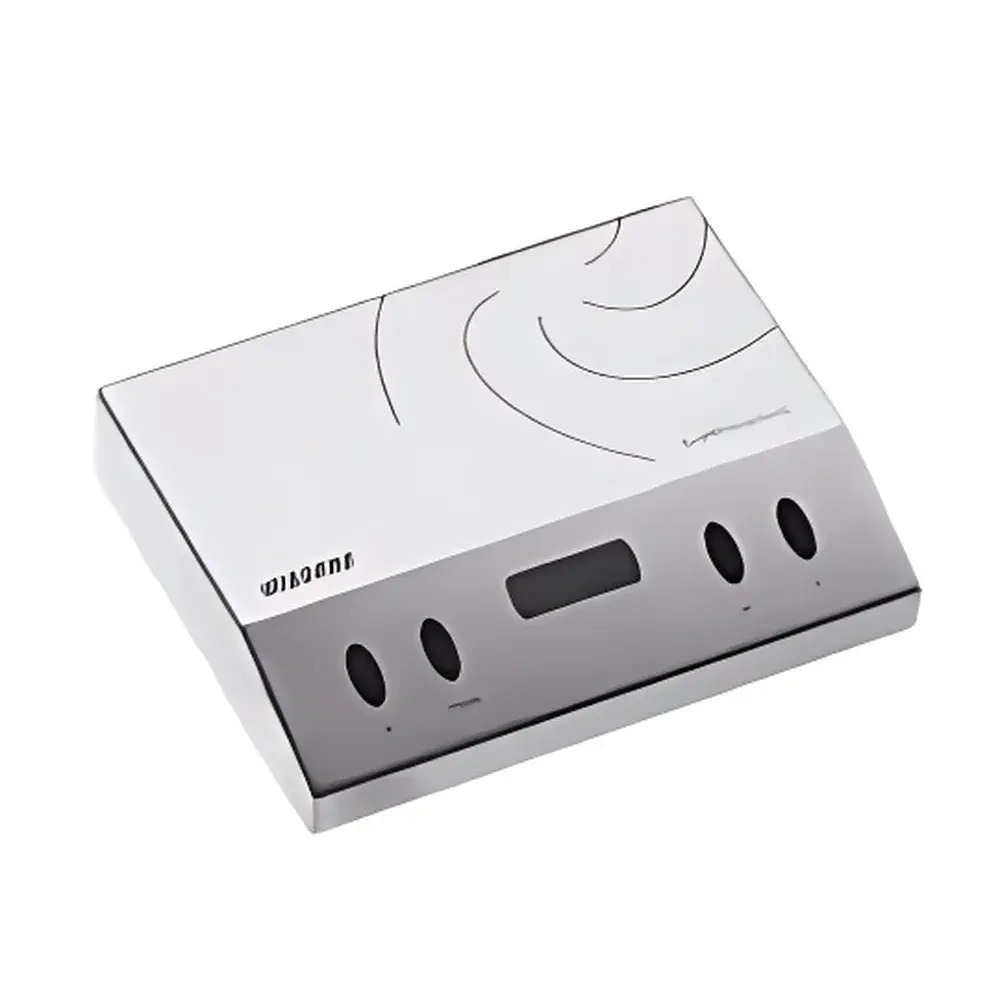
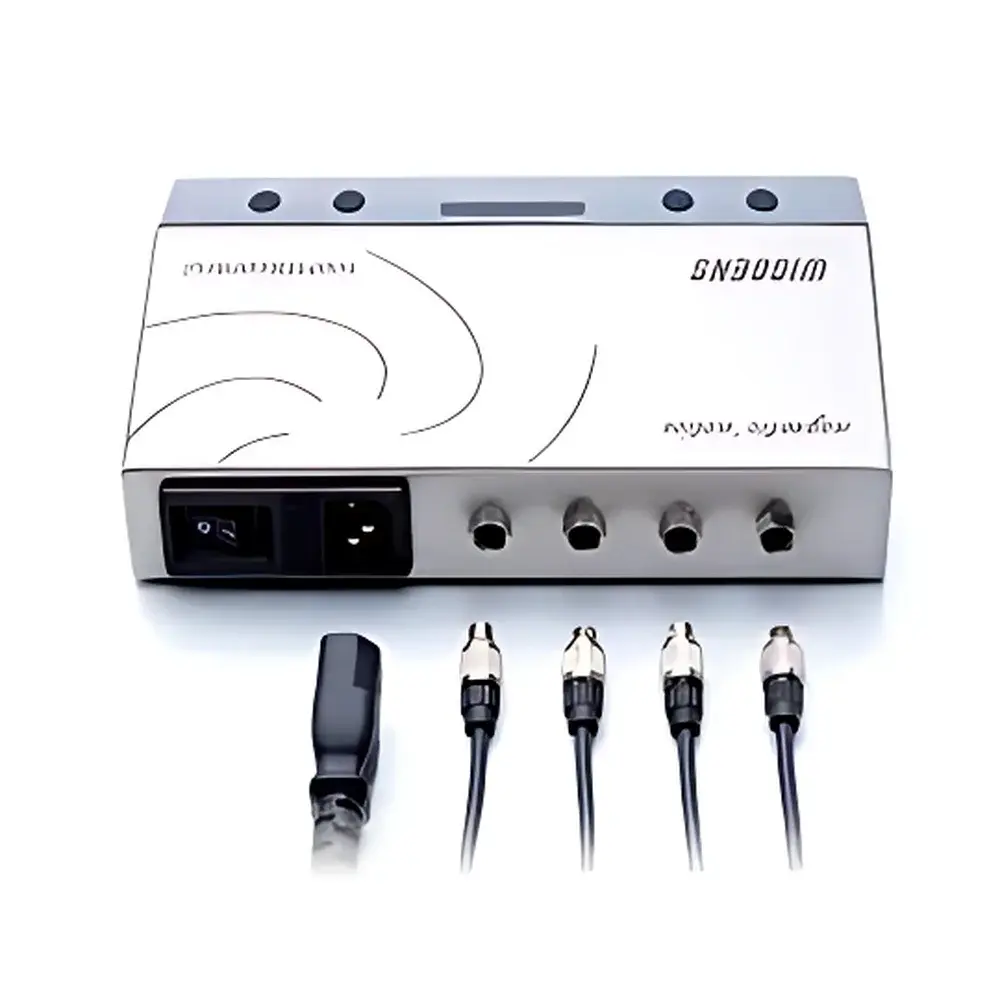
WIGGENS BioMIX Control / MS4 Cell Culture-Optimized Magnetic Drive Stirring Controller
| Brand | WIGGENS |
|---|---|
| Origin | Germany |
| Model | BioMIX Control / MS4 |
| Instrument Type | Magnetic Stirrer |
| Speed Range | 2–250 rpm |
| Temperature Operating Range | 0–40 °C (at 80% RH) |
| IP Rating | IP20 (Controller), IP68 (Drive Units) |
| Power Output | 40 W (BioMIX Control), 6 W per position (MS4, up to 4 positions) |
| Interface Options (Optional) | 0–10 V, 4–20 mA, RS232, USB, Ethernet |
| Compliance | Designed for GLP-compliant bioprocessing environments |
Overview
The WIGGENS BioMIX Control and BioMIX Control MS4 are precision-engineered magnetic drive stirring controllers designed exclusively for sensitive biological applications—particularly mammalian cell culture, suspension bioreactors, and long-term microbial fermentation. Unlike conventional stirrers relying on electromagnetic coils or brushed DC motors, the BioMIX system employs a fully isolated, brushless MAG stepper motor architecture housed within hermetically sealed stainless-steel drive units (IP68 rated). This eliminates internal heat generation at the point of sample contact—critical for maintaining thermal stability in CO₂ incubators, hypoxia chambers, and water-jacketed bioreactors. The controller communicates digitally with one (BioMIX Control) or four (MS4) independent BioMIX Drive units via low-voltage DC signaling (48 V), ensuring galvanic isolation and zero electromagnetic interference with adjacent sensitive instrumentation (e.g., pH probes, dissolved oxygen sensors, or live-cell imaging systems). Its operational principle is based on contactless torque transmission via rotating permanent magnetic fields—enabling stable, jitter-free rotation from 2 rpm (ideal for shear-sensitive primary neurons or embryoid bodies) up to 250 rpm (suitable for high-density CHO cultures in 5 L spinner flasks).
Key Features
- Zero-heat magnetic drive architecture: No thermal drift in temperature-controlled enclosures; validated for continuous 72+ hour operation inside CO₂ incubators (37 °C, 5% CO₂, 95% RH)
- True low-speed stability: Smooth, non-pulsating rotation down to 2 rpm without stir bar skipping—even with high-viscosity media (e.g., methylcellulose-based stem cell differentiation matrices)
- Dual-controller platform: BioMIX Control (single-channel, 40 W max) and BioMIX Control MS4 (quad-channel, 24 W total, 6 W per channel), each supporting independent speed and power profiles
- 10-step digital power calibration (10–100%): Enables precise torque matching for varied vessel geometries (T-flasks, roller bottles, custom bioreactor sleeves)
- Soft-start algorithm and auto-memory function: Recalls last-used settings (speed, power, ramp time) across power cycles; prevents mechanical shock during initiation
- Stainless-steel housing (AISI 316L grade): Chemically inert, autoclavable surface; IP20-rated controller unit; fully submersible IP68 drive units rated for direct immersion in water baths or humidified incubator interiors
- Expandable control interface: Optional analog (0–10 V / 4–20 mA) and digital (RS232, USB, Ethernet) outputs support integration into SCADA, LIMS, or custom Python/MATLAB-based bioprocess monitoring frameworks
Sample Compatibility & Compliance
The BioMIX system accommodates standard and custom cell culture vessels—including Corning® HYPERFlasks®, Falcon™ T-225 flasks, Sartorius ambr® 250 bioreactor modules, and bespoke glass or PETG spinner bottles (5–5000 mL volume range). Its non-magnetic stainless-steel platform ensures compatibility with ferromagnetic stir bars (PTFE-coated NdFeB) while eliminating eddy-current heating in conductive media (e.g., serum-supplemented DMEM/F12). All drive units comply with IEC 61000-6-2 (immunity) and IEC 61000-6-4 (emission) standards. The controller firmware supports audit-trail-enabled operation when paired with optional MIX Watch software—providing timestamped logs of speed deviations, stall events, and automatic re-synchronization attempts. This architecture meets foundational requirements for GLP documentation (OECD Series 1, Annex V) and aligns with FDA 21 CFR Part 11 expectations for electronic record integrity when deployed with validated software configurations.
Software & Data Management
While the BioMIX Control operates as a standalone hardware unit, its optional digital interfaces enable full remote orchestration. The Ethernet/USB variants support WIGGENS’ proprietary MIX Watch software—a real-time monitoring suite that detects stir bar misalignment, vortex collapse, or rotational stalling via dynamic current signature analysis. Upon anomaly detection, the system executes autonomous corrective action: deceleration to 0 rpm, brief pause, then controlled re-acceleration with adaptive torque profiling. Logged data includes RPM setpoint vs. actual, motor current draw (mA), thermal status (drive unit surface temp), and event timestamps—all exportable as CSV or integrated into LabArchives or Benchling via API. For regulated environments, optional 21 CFR Part 11-compliant user access controls, electronic signatures, and immutable audit trails are available under custom validation packages.
Applications
- Long-term suspension culture of human iPSCs in stirred-tank bioreactors (passage maintenance, differentiation induction)
- Continuous perfusion systems for monoclonal antibody production using GS-KO CHO cells
- Microcarrier-based expansion of mesenchymal stromal cells (MSCs) in 3D bioreactors
- Low-shear mixing of cryopreservation solutions prior to automated vial filling
- Incubator-integrated agitation of organoid culture plates (e.g., intestinal or cerebral organoids in Matrigel® domes)
- Controlled agitation during exosome isolation protocols involving ultracentrifugation pre-clearance steps
FAQ
Can the BioMIX Drive units be operated inside a CO₂ incubator without condensation-related failure?
Yes. The IP68-rated stainless-steel housing and conformal-coated electronics withstand continuous exposure to 37 °C and ≥95% relative humidity. No condensation ingress has been observed after 120-hour validation runs.
Is the MS4 controller capable of independent speed programming for each of its four channels?
Yes. Each channel accepts discrete speed (2–250 rpm) and power (10–100%) inputs; no inter-channel coupling or master-slave dependency exists.
Does the system support feedback control using external sensors (e.g., inline pH or DO probes)?
Not natively—but optional analog I/O (0–10 V input) allows integration with third-party PID controllers for closed-loop agitation adjustment based on process variables.
What stir bar sizes and materials are recommended for optimal performance?
PTFE-coated NdFeB bars (length: 15–40 mm, diameter: 6–10 mm) yield best torque transfer; avoid ferritic stainless-steel or ceramic bars due to insufficient magnetic coupling.
How is calibration traceability maintained for GxP environments?
WIGGENS provides factory calibration certificates (traceable to PTB, Germany) for speed accuracy (±1 rpm @ 20–250 rpm) and power output (±3% FS); on-site verification protocols are included in the IQ/OQ documentation package.



