
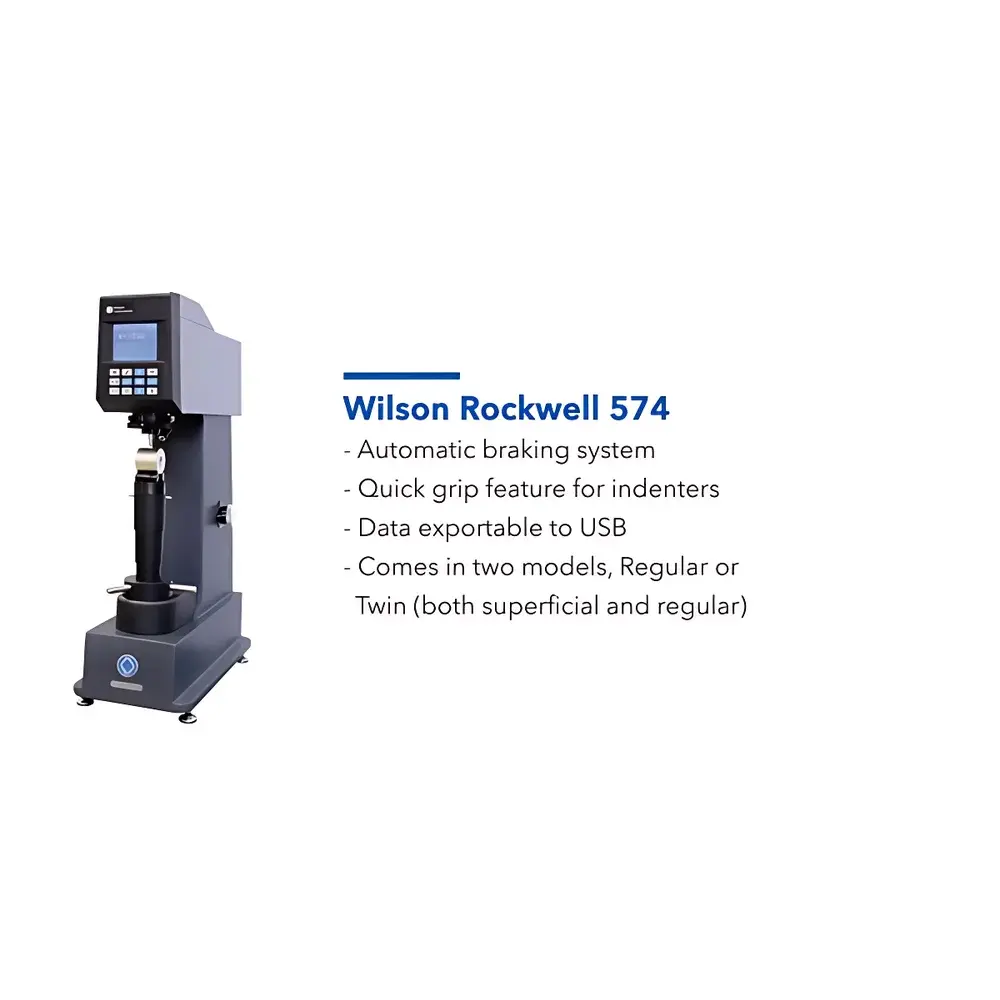
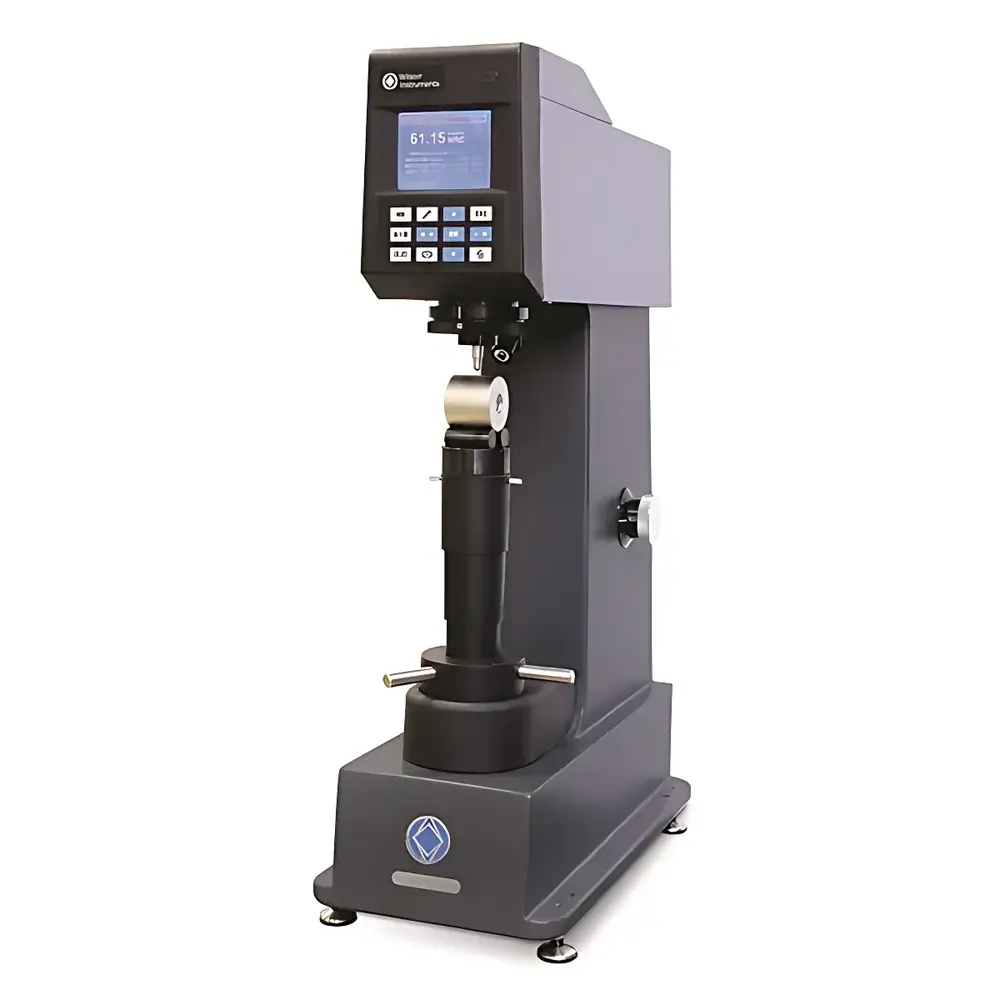
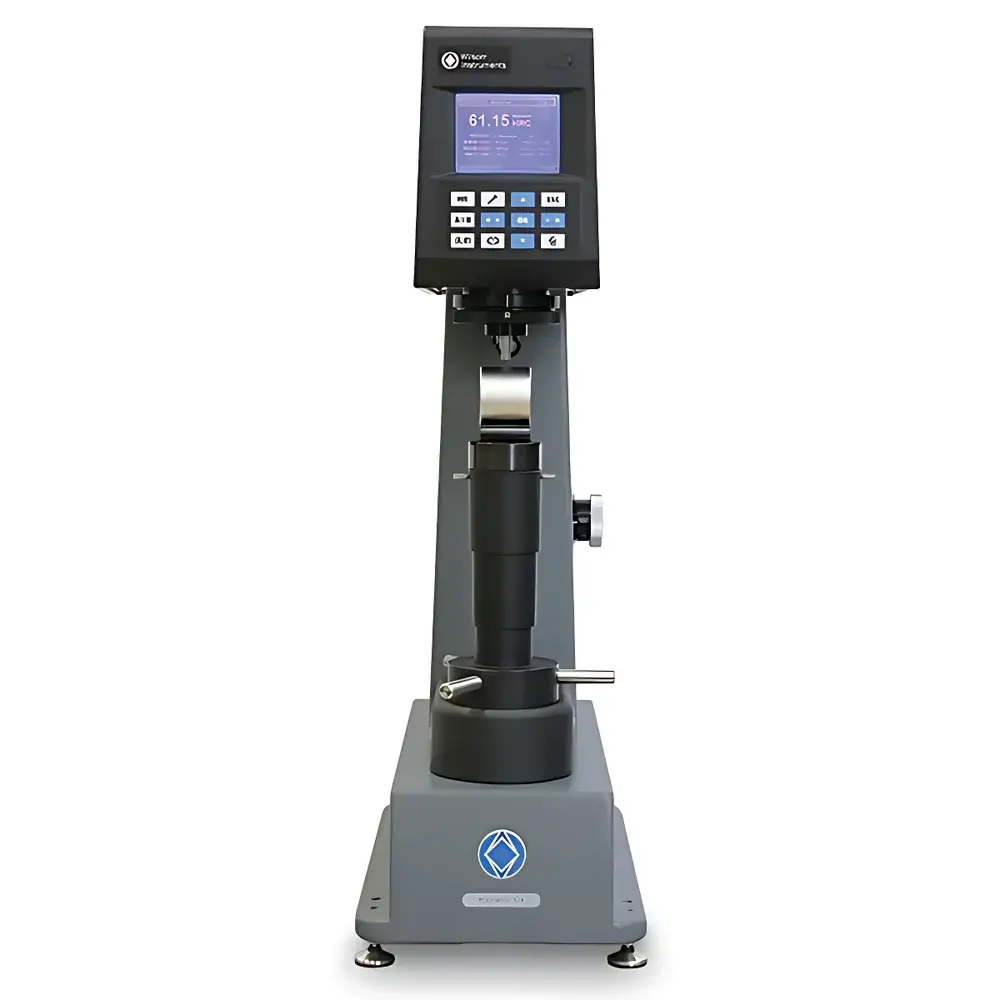
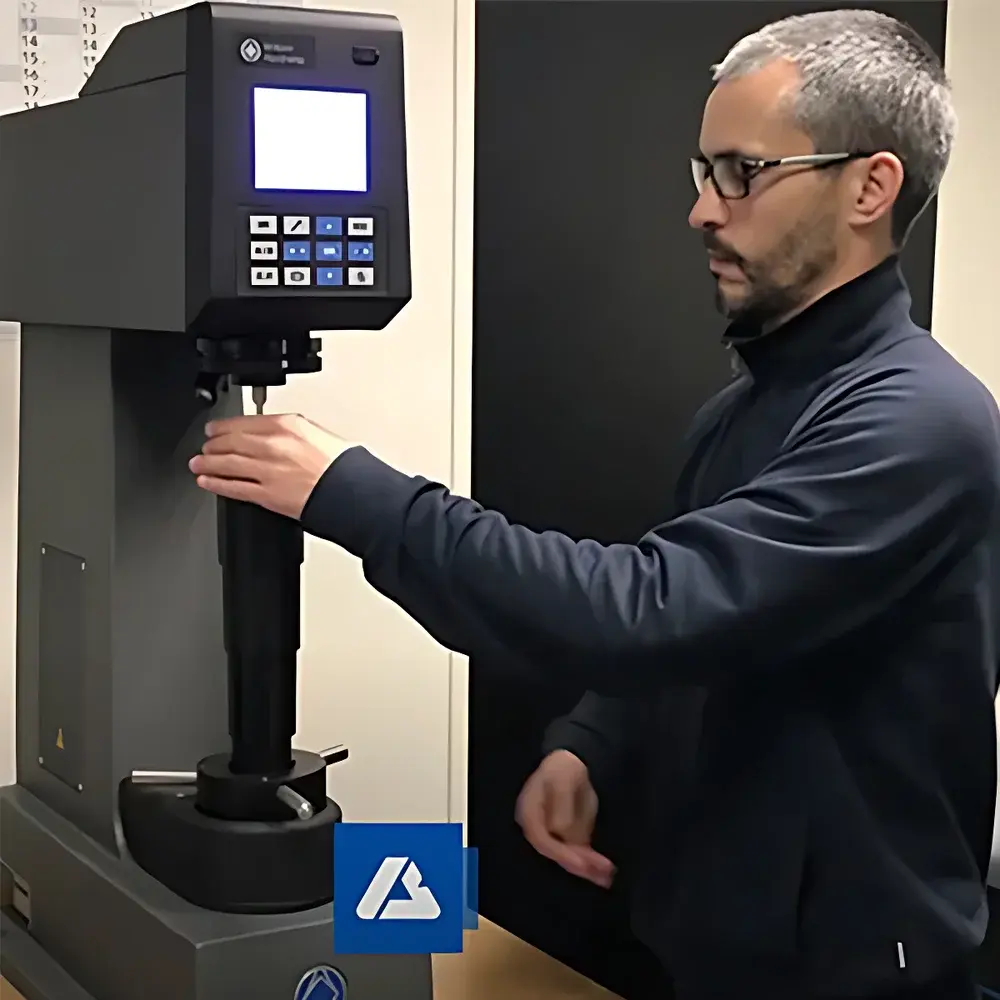
Wilson Rockwell 574 Advanced Hardness Tester
| Brand | Wilson Hardness |
|---|---|
| Origin | Shanghai, China |
| Manufacturer Type | Manufacturer |
| Product Origin | Domestic (China) |
| Model | Rockwell 574 |
| Price Range | USD 28,000 – 42,500 |
| Instrument Type | Rockwell Hardness Tester |
| Hardness Scale Range | HR 10–100 |
| Total Test Force | 3–150 kgf |
| Maximum Specimen Height | 289 mm (H) × 155 mm (D) |
Overview
The Wilson Rockwell 574 Advanced Hardness Tester is an industrial-grade, dual-scale Rockwell hardness testing system engineered for precision, repeatability, and compliance with international metallurgical testing standards. Based on the fundamental Rockwell principle—measuring permanent depth deformation under sequential application of minor (pre-load) and major (main load) forces—the 574 delivers traceable, high-fidelity hardness values across both conventional Rockwell (e.g., HRA, HRB, HRC) and superficial Rockwell (e.g., 15N, 30T, 45W) scales. Its robust mechanical architecture integrates a calibrated dead-weight loading system for main force application and a spring-actuated preload mechanism with automatic electro-mechanical braking to ensure consistent 10 kgf initial force engagement within ±0.5% tolerance. Designed for QC laboratories, heat treatment facilities, and metal component manufacturers, the instrument meets the metrological rigor required for ISO/IEC 17025-accredited testing environments.
Key Features
- Full-scale Rockwell capability: Supports all standard (A–V) and superficial (N, T, W, X, Y series) Rockwell scales per ASTM E18 and ISO 6508-1.
- High-reproducibility loading sequence: Automatic preload braking, programmable dwell times (0.1–50.0 s for minor load; 1.0–50.0 s for major load), and controlled elastic recovery timing (0.2–50.0 s).
- High-resolution digital depth measurement: Optional 0.01 HR or 0.1 HR resolution, enabling statistical process control (SPC)-ready output.
- Integrated USB 2.0 interface for direct data export to Excel, LIMS, or custom QA databases—no proprietary software dependency.
- Ergonomic LCD control panel with intuitive menu navigation, real-time test status feedback, and on-screen statistical summary (mean, SD, min/max, dispersion).
- Sturdy cast-iron frame with hardened steel anvil and precision-ground indenter holder, optimized for long-term stability under repetitive industrial use.
Sample Compatibility & Compliance
The Rockwell 574 accommodates specimens up to 289 mm in height and 155 mm in depth—suitable for large forgings, heat-treated shafts, rolled plates, and thin-section components (e.g., case-hardened gears, bearing races, stamped sheet metal). It complies with ASTM E18 (Standard Test Method for Rockwell Hardness of Metallic Materials), ISO 6508-1 (Metallic materials — Rockwell hardness test — Part 1: Test method), JIS Z2245, GB/T 230.1, and supports hardness conversion per ASTM E140 and ISO 18265. All hardness values are traceable to NIST-certified reference blocks. The system’s GR&R (Gage Repeatability & Reproducibility) performance meets AIAG MSA guidelines for production-level gaging, with typical %R&R < 10% under controlled environmental conditions (23 ± 2°C, 40–60% RH).
Software & Data Management
The 574 operates independently of host PC software—test execution, parameter configuration, and result calculation occur onboard. Raw hardness values, timestamps, scale selection, load sequence parameters, and statistical aggregates are stored in non-volatile memory. Via USB, users export CSV-formatted datasets containing test ID, date/time, scale, load values, depth delta, hardness value, and operator notes. The exported files are fully compatible with FDA 21 CFR Part 11-compliant audit trail systems when ingested into validated LIMS or electronic lab notebooks (ELNs). No cloud connectivity or remote access functionality is included—ensuring data sovereignty and alignment with GMP/GLP network security policies.
Applications
- Quality assurance of through-hardened and surface-hardened steels (e.g., AISI 4140, 52100, 17-4PH).
- Verification of carburized, nitrided, or induction-hardened case depths in automotive and aerospace components.
- In-process monitoring of annealing, quenching, and tempering cycles in heat-treatment lines.
- Acceptance testing of copper alloys (e.g., C11000, C36000), aluminum extrusions, and cast iron grades (ASTM A48, A536).
- Calibration verification and periodic requalification of shop-floor hardness testers per ISO/IEC 17025 clause 6.4.10.
FAQ
Does the Rockwell 574 support ASTM E18-compliant test cycle automation?
Yes—the instrument executes fully automated minor load application, major load application, dwell, unload, and depth measurement per ASTM E18 Section 7.3, including programmable dwell times and auto-braking at the minor load transition point.
Can hardness values be converted between scales onboard?
No—conversion is not performed internally. However, the device exports raw HR values in standardized format, enabling compliant post-processing using ASTM E140 or ISO 18265 lookup tables in external QA software.
Is calibration certification included with shipment?
Each unit ships with a factory calibration certificate traceable to NIST SRM 1263 series reference blocks, valid for 12 months from date of issue.
What maintenance intervals are recommended for routine operation?
Daily visual inspection of indenter and anvil; monthly verification using certified reference blocks; annual full recalibration by an ISO/IEC 17025-accredited service provider.
Is the 574 suitable for testing thin coatings or PVD layers?
No—it is not designed for microhardness or thin-film evaluation. For coatings < 50 µm thick, a Knoop or Vickers microhardness tester (e.g., Wilson Wolpert 401 MVT) is recommended.



