
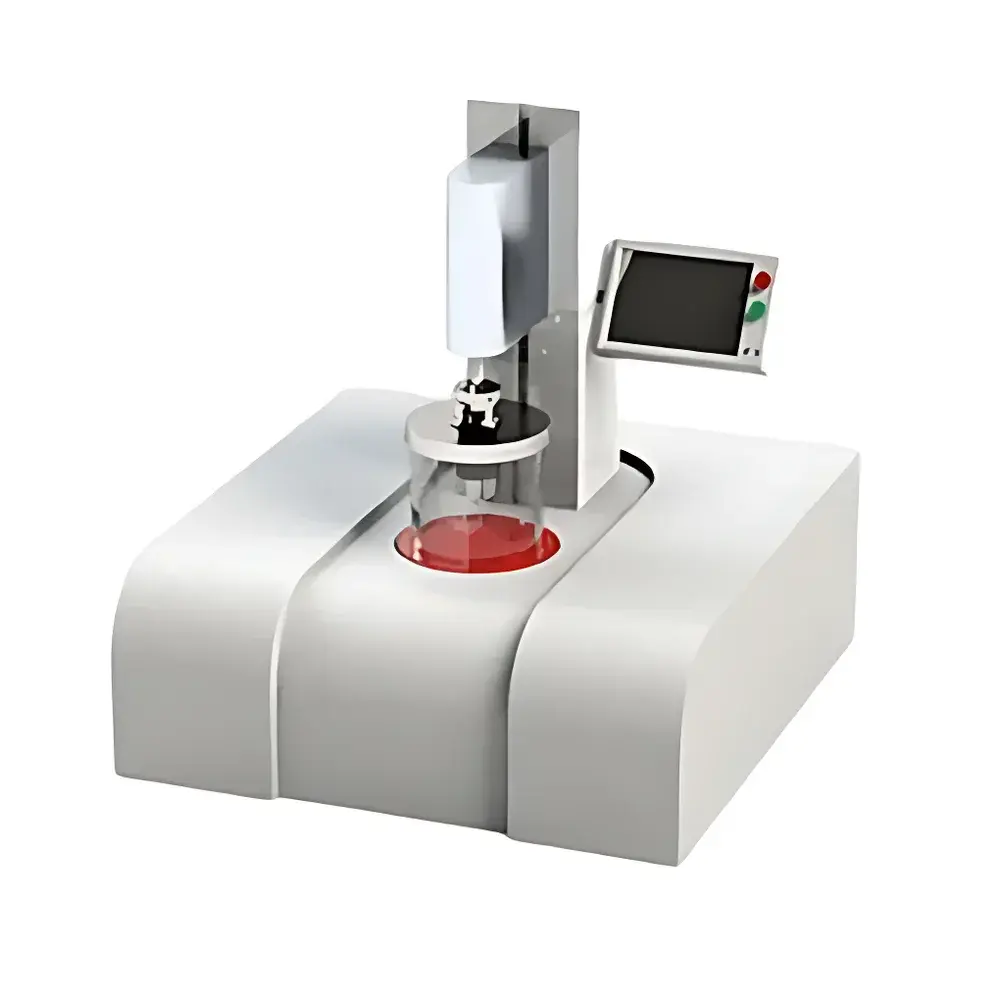
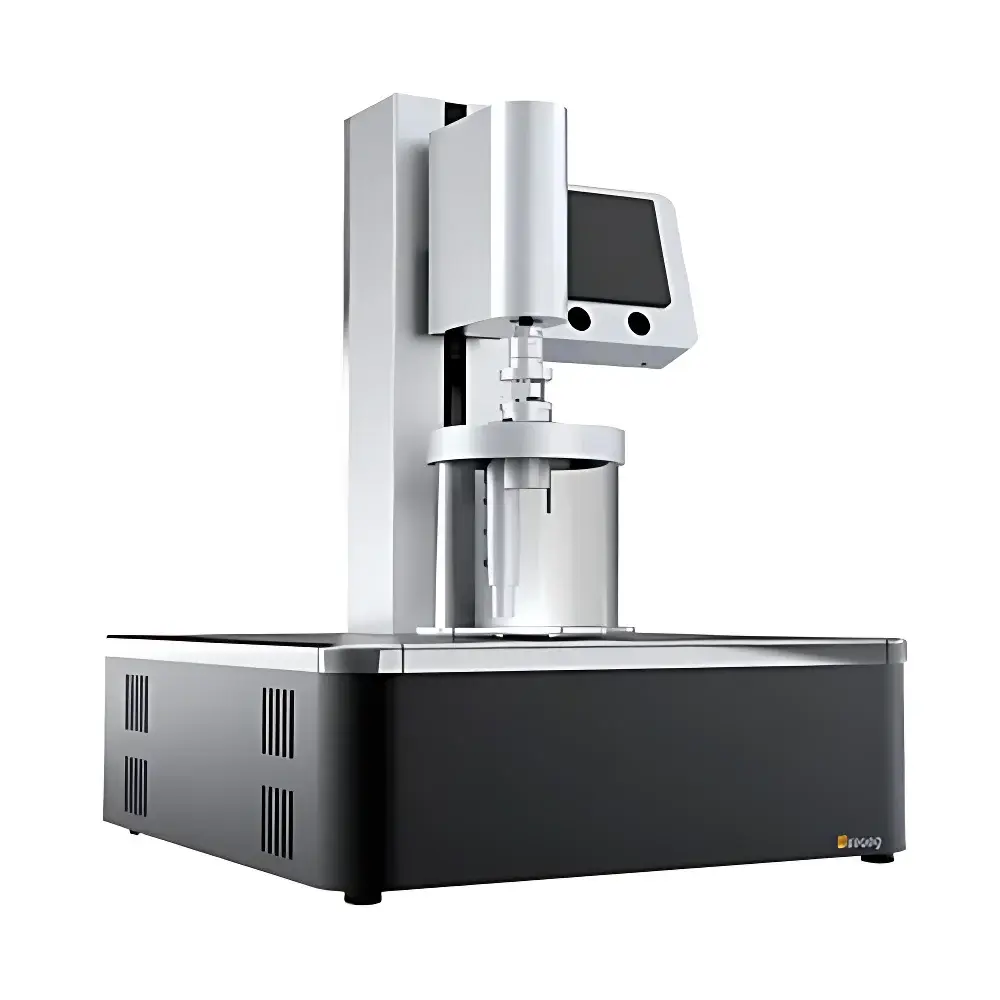
WK-XCor 3000 Stress Corrosion In Situ Sample Holder
| Brand | Wkuang |
|---|---|
| Origin | Jiangsu, China |
| Manufacturer Type | Authorized Distributor |
| Country of Origin | China |
| Model Series | XCOR |
| Temperature Range | Ambient to 80 °C |
| Tensile Load Capacity | 1 kN / 3 kN |
| Loading Modes | Uniaxial Tension, Uniaxial Compression, Bending, Shear |
| Control Modes | Constant Displacement, Constant Load, Slow Strain Rate Testing (SSRT) |
| Environmental Compatibility | Liquid Electrolyte Immersion (e.g., NaCl, H₂SO₄, simulated seawater) |
| Integration Ready | Compatible with Synchrotron X-ray CT, Laboratory Micro-CT, and SEM/TEM In Situ Platforms |
Overview
The WK-XCor 3000 is an engineered in situ sample holder designed for quantitative stress corrosion cracking (SCC) studies under controlled electrochemical and mechanical loading conditions. It operates on the principle of coupled mechanical deformation and corrosive environment exposure—enabling real-time or time-resolved observation of crack initiation, propagation, and interfacial degradation at microstructural scales. Unlike conventional ex situ fracture tests, the XCOR series integrates precise uniaxial or multi-axis mechanical actuation directly within a sealed, chemically compatible chamber that accommodates aggressive aqueous electrolytes. This architecture supports correlative imaging modalities—including synchrotron-based X-ray computed tomography (X-ray CT), laboratory micro-CT, and high-resolution scanning/transmission electron microscopy (SEM/TEM)—to resolve 3D corrosion morphology, hydrogen-assisted cracking paths, and localized strain fields with sub-micrometer spatial fidelity.
Key Features
- Modular dual-load capacity design: Interchangeable load frames supporting either 1 kN or 3 kN maximum tensile/compressive force, calibrated per ISO 7500-1 Class 1 accuracy requirements.
- Thermally stabilized chamber: Integrated Peltier-based temperature control enabling operation from ambient to 80 °C with ±0.5 °C stability—critical for simulating service temperatures in oil & gas, nuclear, or marine environments.
- Electrochemically inert wet-cell construction: Chamber body and fluid pathways fabricated from titanium alloy (Grade 5) and PEEK polymer, ensuring compatibility with chloride-, sulfate-, and acidic electrolytes without galvanic interference.
- Multi-mode mechanical actuation: Programmable displacement control (via precision stepper motor + harmonic drive), load-controlled feedback loops, and slow strain rate testing (SSRT) protocols compliant with ASTM G129 and ISO 7539-7 standards.
- Optimized optical and X-ray path geometry: Low-Z materials and minimized wall thickness ensure minimal beam attenuation for high-contrast X-ray CT reconstruction and seamless integration into SEM/TEM stages with minimal working distance compromise.
Sample Compatibility & Compliance
The WK-XCor 3000 accommodates standard TEM grid-mounted specimens (3 mm diameter), miniature tensile coupons (up to 10 mm gauge length), and custom-fabricated micro-beams. Its sealed electrolyte chamber maintains stable immersion depth during dynamic loading, preventing meniscus-induced artifacts. All wetted components conform to ASTM F2129 for metallic implant corrosion testing methodology, and the system’s mechanical calibration traceability aligns with ISO/IEC 17025-accredited metrology practices. When operated in regulated QC/QA laboratories, audit trails for load history, temperature logs, and timing metadata can be exported in CSV or HDF5 format to support GLP/GMP documentation workflows.
Software & Data Management
The accompanying Wkuang XCOR Control Suite provides deterministic real-time synchronization between mechanical actuation, environmental parameters, and external imaging triggers (TTL/USB). Load-displacement curves are acquired at ≥1 kHz sampling rate with 16-bit ADC resolution. Software supports user-defined test sequences—including stepwise load hold, cyclic loading, and potentiostat-coupled electrochemical impedance spectroscopy (EIS) triggers—and exports data in vendor-neutral formats (HDF5, MATLAB .mat, MIF) for downstream finite element analysis (FEA) or machine learning–based crack segmentation. Optional FDA 21 CFR Part 11 compliance package includes electronic signatures, role-based access control, and immutable audit logs.
Applications
- Investigation of environmentally assisted cracking (EAC) mechanisms in high-strength alloys (e.g., duplex stainless steels, nickel-based superalloys, Ti-6Al-4V) under simulated downhole or coolant chemistry.
- Quantification of hydrogen embrittlement susceptibility via SSRT combined with in situ neutron radiography or synchrotron diffraction mapping.
- Correlation of local plastic strain (measured by digital image correlation or HR-EBSD) with preferential corrosion site formation at grain boundaries or phase interfaces.
- Validation of predictive SCC models used in integrity management frameworks for aging infrastructure (e.g., pipelines, pressure vessels, nuclear fuel cladding).
- Development and qualification of corrosion-resistant coatings and surface treatments under realistic mechanical constraint.
FAQ
Is the WK-XCor 3000 compatible with field-emission SEM systems?
Yes—the holder’s compact profile and low-outgassing material set meet UHV-compatible specifications for FE-SEM operation up to 10⁻⁶ mbar, with optional differential pumping for extended liquid-phase experiments.
Can I perform potentiodynamic polarization simultaneously with mechanical loading?
Yes—integrated 4-wire electrode ports support connection to commercial potentiostats; synchronization is managed via hardware trigger lines in the control software.
What is the minimum resolvable crack width observable using micro-CT with this holder?
Under optimal beam energy (e.g., 30 keV synchrotron source) and voxel size ≤ 0.5 µm, sub-µm intergranular crack tips and oxide layer delamination are resolvable when combined with phase-retrieval reconstruction algorithms.
Does the system support automated long-duration experiments (e.g., >72 hours)?
Yes—continuous operation is enabled by redundant thermal monitoring, closed-loop electrolyte level sensing, and watchdog-triggered emergency unload protocols.
Are custom chamber geometries or alternate load train configurations available?
Yes—Wkuang offers OEM engineering services for application-specific adaptations, including biaxial tension, torsional loading, and high-pressure (<10 MPa) autoclave-integrated variants.





