
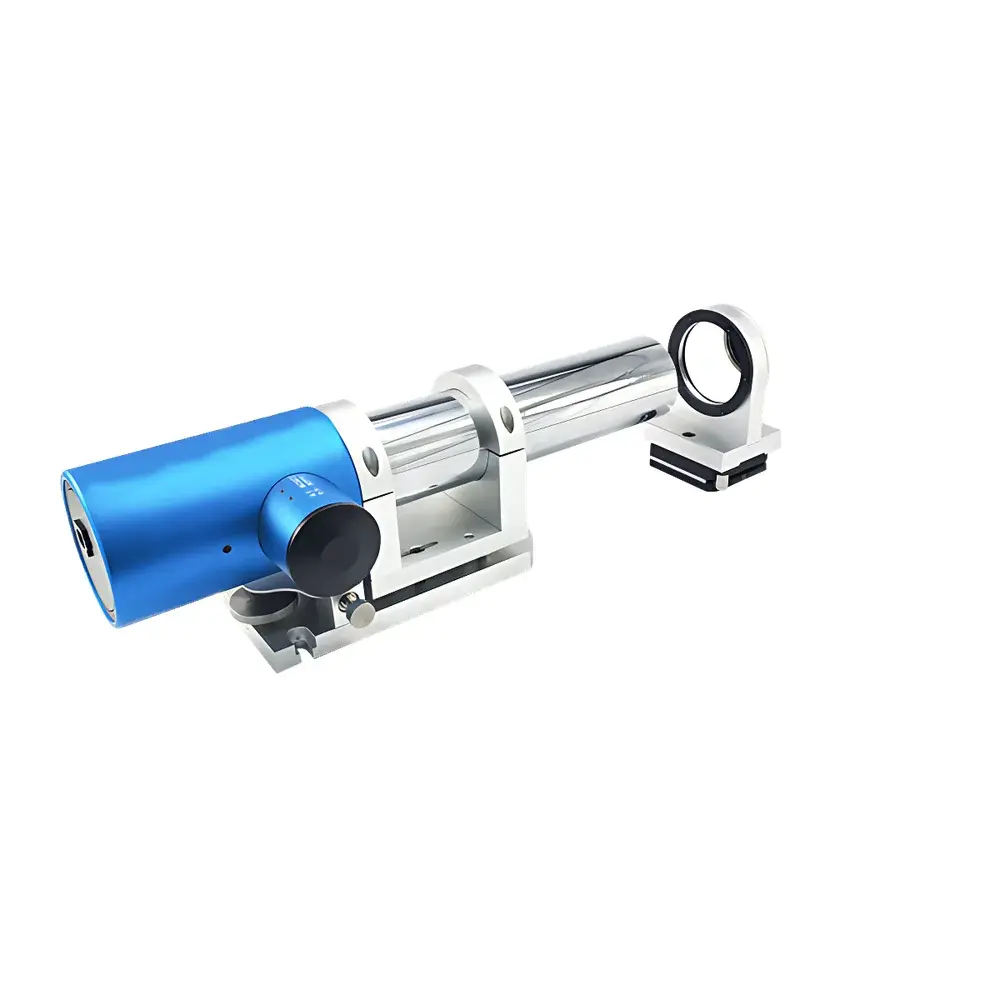
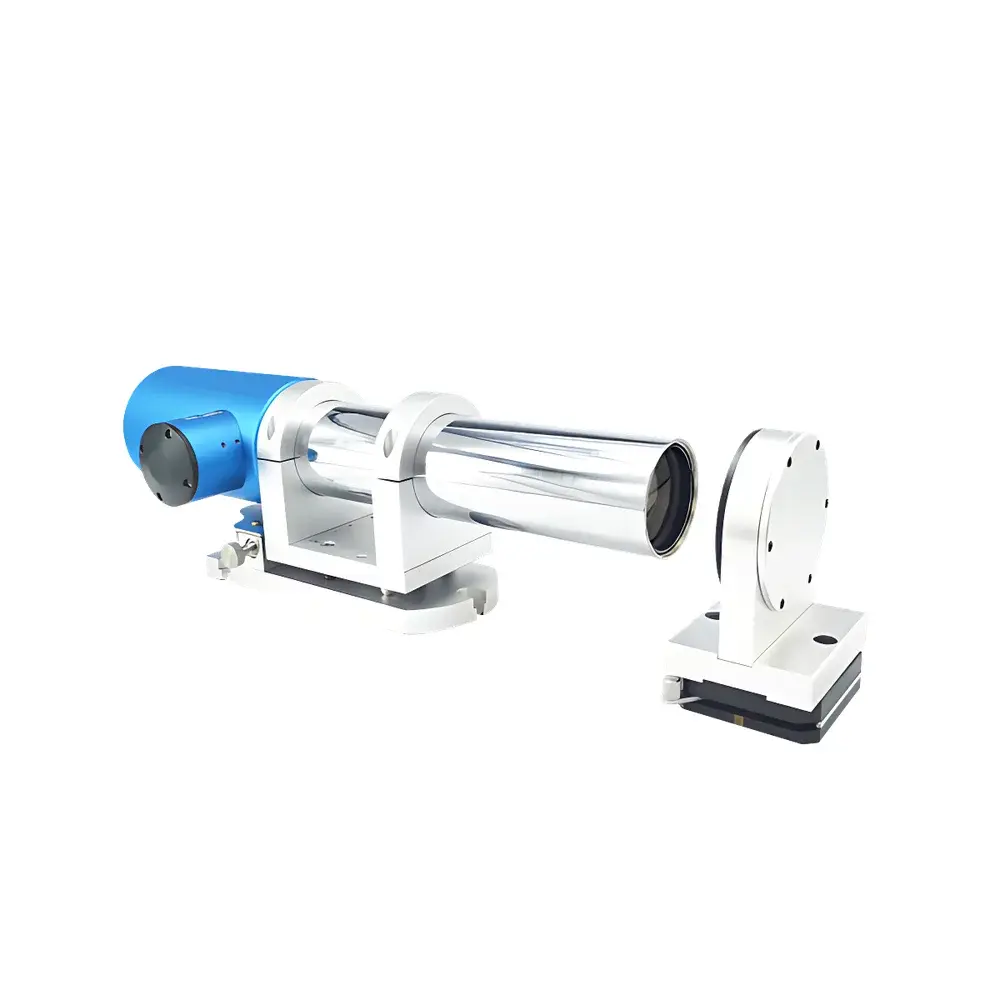
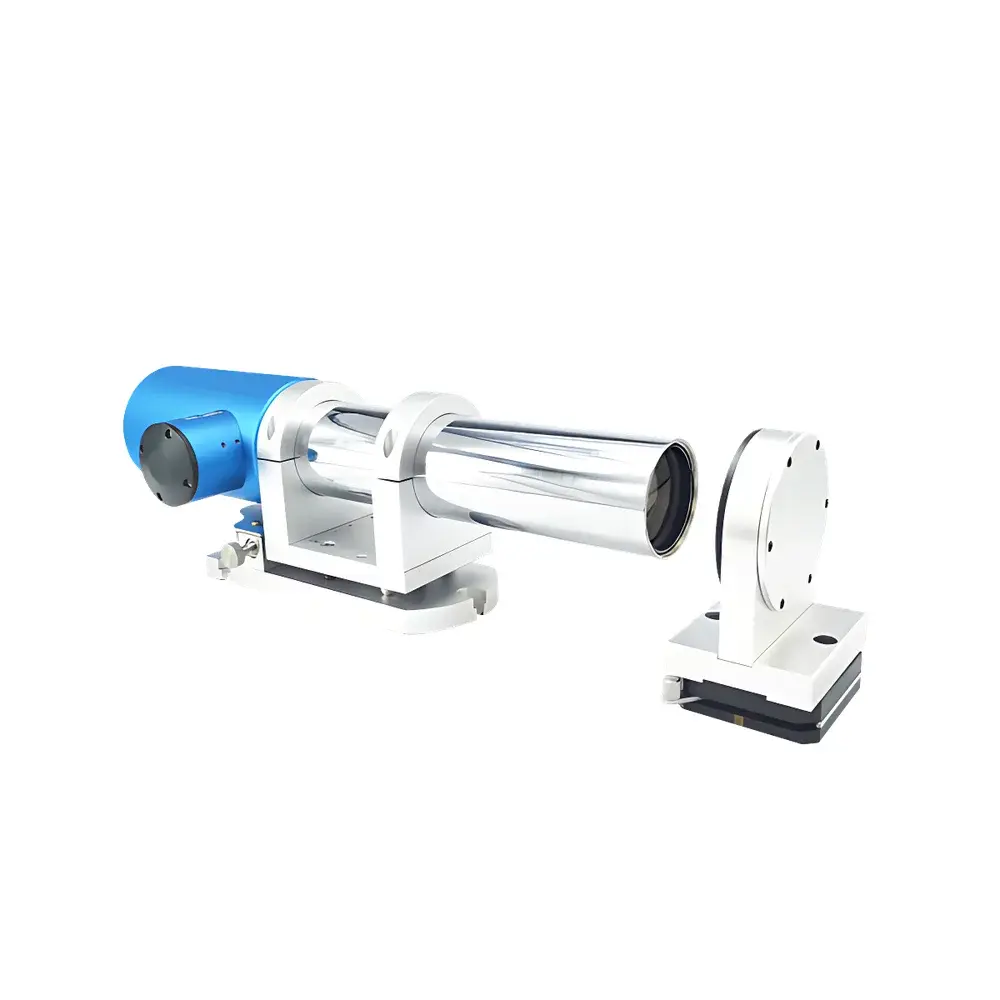
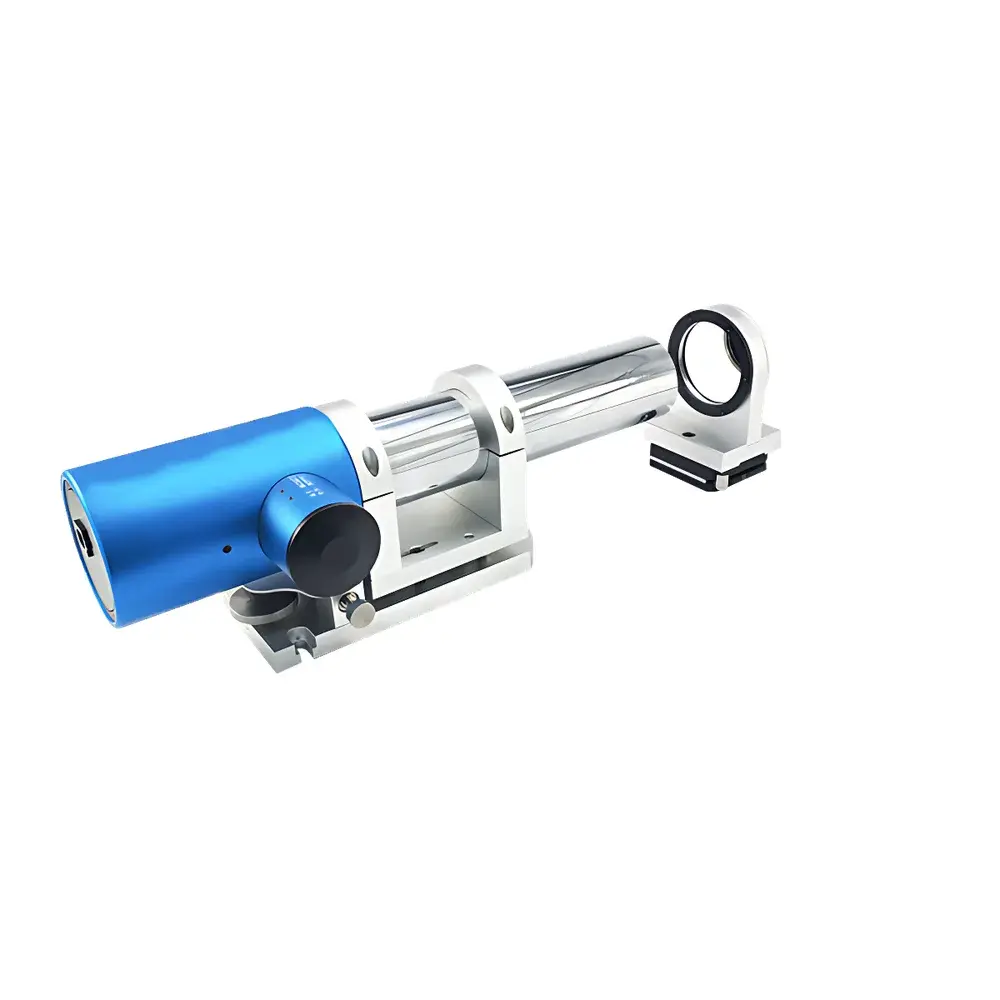
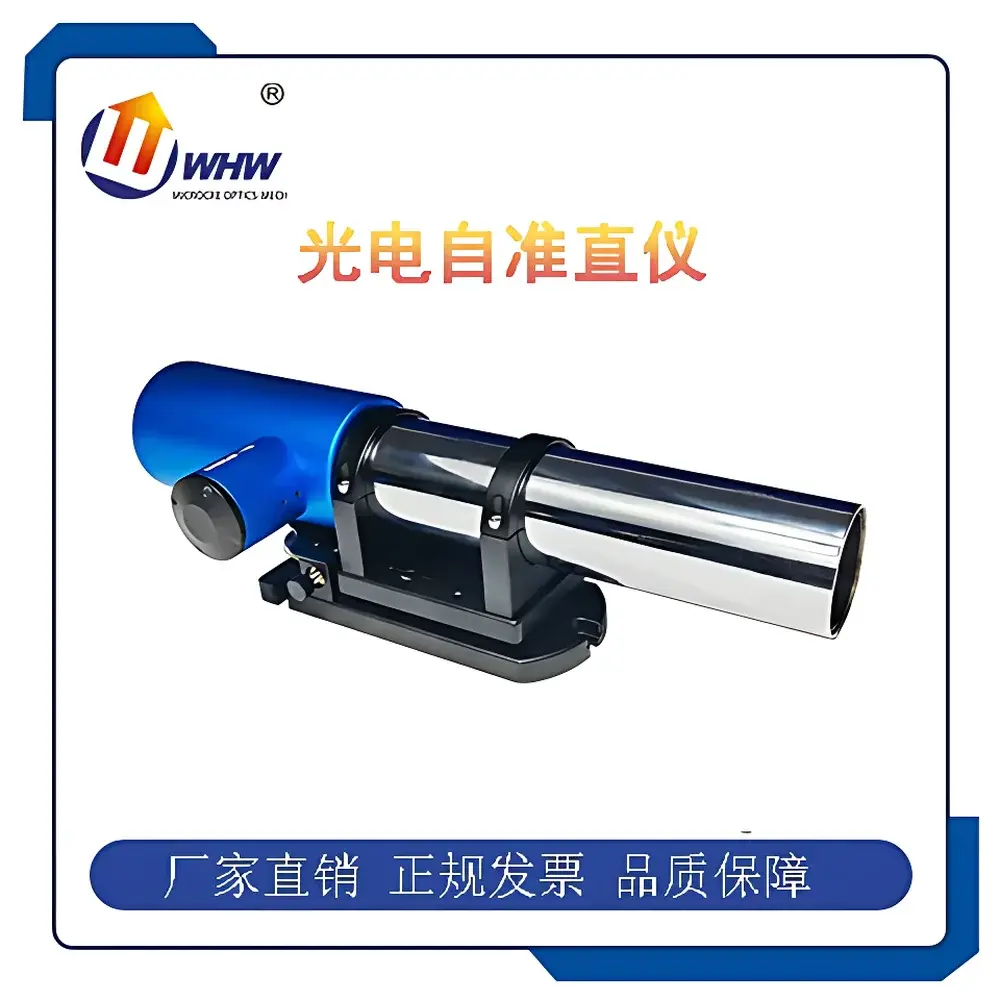
YANRUN MC030-MAT300/48/0.1 Dual-Axis Photoelectric Autocollimator
| Brand | YANRUN |
|---|---|
| Origin | Shanghai, China |
| Manufacturer Type | Manufacturer |
| Country of Origin | Domestic (China) |
| Model | MC030-MAT300/48/0.1 |
| Pricing | Upon Request |
| Focal Length | 300 mm |
| Aperture | 48 mm |
| Light Source | High-Stability Semiconductor LED |
| Measurement Range | 0–30 m |
| Angular Resolution | Adjustable down to 0.0001″ (arc second) |
| Field of View (X/Y) | 2200″ × 1800″ (arc seconds) |
| Accuracy (Center) | ±0.1″ (0–±60″ range), ±0.5″ (0–±600″ range) |
| Frequency Response | ≤30 Hz |
| Interface | USB 2.0 |
| Operating System | Windows 7 or later (64-bit) |
| Minimum PC Requirements | Intel Core i3 (4th gen or newer), ≥2.3 GHz, 64-bit OS |
Overview
The YANRUN MC030-MAT300/48/0.1 Dual-Axis Photoelectric Autocollimator is an advanced optical metrology instrument engineered for high-precision angular measurement in industrial metrology, precision assembly, and calibration laboratories. It operates on the fundamental principle of optical autocollimation: a collimated beam—generated by projecting a reticle image located at the focal plane of a 300 mm focal length objective lens—is directed toward a reflective surface (e.g., a precision mirror). When the mirror rotates by angle α, the reflected beam deviates by 2α, producing a measurable displacement ΔS on a high-resolution photodetector array positioned at the same focal plane. This displacement is digitized and converted into angular deviation with traceable arc-second resolution. Unlike traditional visual autocollimators requiring manual eyepiece alignment, this system employs real-time electronic imaging and centroid-based sub-pixel detection to eliminate parallax and observer-dependent error. Its dual-axis architecture enables simultaneous, independent measurement of pitch and yaw (X and Y angular components) within a single acquisition cycle—critical for evaluating orthogonality, tilt coupling, and dynamic angular stability.
Key Features
- Dual-axis synchronous measurement capability with independent X/Y readouts and real-time vector summation
- Adjustable angular resolution from 1″ down to 0.0001″ (arc second), configurable via software for application-specific sensitivity
- High-stability semiconductor LED light source with >50,000-hour rated lifetime and minimal thermal drift
- Optimized 48 mm aperture objective lens delivering high light throughput and low aberration across the full 2200″ × 1800″ field of view
- USB 2.0 interface enabling plug-and-play integration with standard industrial PCs; no external power supply required
- Automated curve fitting and error evaluation per ISO 230-1 and ISO 10360 standards, including straightness, flatness, perpendicularity, and parallelism analysis modules
- Multi-language UI support (English, Chinese, Russian, Korean) compliant with international lab deployment requirements
- Compact, ruggedized mechanical design suitable for both benchtop metrology labs and on-machine tool verification environments
Sample Compatibility & Compliance
The MC030-MAT300/48/0.1 is compatible with standard optical flats, kinematic mirror mounts, and custom retroreflective targets meeting surface flatness ≤λ/20 (633 nm) and reflectivity ≥95% in the visible spectrum. It supports measurement distances from 0.5 m to 30 m without recalibration, provided ambient temperature remains within ±2°C of the calibration reference condition. The instrument complies with ISO 10110-7 (optical component testing), ISO 230-1 (machine tool geometric accuracy), and ASTM E2919 (standard practice for angular measurement using autocollimation). Its measurement uncertainty budget—validated under GLP-aligned conditions—includes contributions from detector noise, lens distortion, thermal expansion of mechanical housing, and USB timing jitter. For regulated environments (e.g., aerospace MRO or medical device manufacturing), optional audit-trail-enabled firmware supports 21 CFR Part 11-compliant data logging when paired with validated PC configuration.
Software & Data Management
The bundled YANRUN AutoAlign Suite runs natively on Windows 7+ (64-bit) and provides a modular architecture for both routine inspection and advanced metrology workflows. Core functions include live image overlay with crosshair tracking, automatic centroid calculation using Gaussian-weighted moment analysis, and batch-mode statistical process control (SPC) reporting. All raw pixel displacement data, timestamped with microsecond precision, are stored in HDF5 format to ensure integrity and long-term readability. Export options include standardized Excel (.xlsx) reports conforming to ISO/IEC 17025 documentation requirements, CSV for third-party SPC tools, and XML for integration into MES or QMS platforms. Optional modules extend functionality to rotary table calibration (per ISO 230-4), multi-station networked alignment, and Monte Carlo–based uncertainty propagation modeling. Software updates are delivered via secure HTTPS channel with SHA-256 signature verification.
Applications
This autocollimator serves as a primary angular reference in diverse high-accuracy domains: verification of linear axis squareness in CNC machining centers (per ISO 230-1 Annex D); in-situ calibration of goniometers and hexapod stages in semiconductor lithography equipment; alignment of laser cavities and interferometer arms in photonics R&D; flatness mapping of granite surface plates using diagonal scanning protocols; angular stability monitoring of cryogenic optical benches; and validation of inertial sensor bias drift in navigation-grade IMU test benches. Its portability and USB-powered operation make it suitable for field metrology—such as turbine blade vane angle verification at power generation sites—while its sub-arcsecond repeatability supports national metrology institute (NMI) traceability chains when operated under controlled environmental conditions (20 ±0.5°C, <40% RH, vibration-isolated mounting).
FAQ
What is the minimum warm-up time required before high-accuracy measurements?
A minimum 15-minute warm-up is recommended to stabilize thermal equilibrium across the optical train and sensor electronics. For metrological-grade certification, the unit must be acclimatized in a temperature-controlled environment (20 ±0.1°C) for ≥24 hours prior to calibration.
Can the instrument measure dynamic angular motion?
Yes—the system supports continuous acquisition at up to 30 Hz, enabling characterization of low-frequency oscillations (e.g., structural resonance modes, servo loop response) with phase-coherent timestamping.
Is the LED light source replaceable in the field?
No—the LED is hermetically sealed and thermally coupled to the optical housing; replacement requires factory recalibration due to spectral and spatial alignment dependencies.
Does the software support automated report generation for ISO/IEC 17025 compliance?
Yes—reports include operator ID, instrument serial number, environmental logs, uncertainty budgets, and digital signatures; configurable templates align with ILAC-P14 and EURAMET cg-19 guidelines.
What accessories are available for extended functionality?
Available accessories include motorized mirror mounts (±5° travel, 0.01″ step resolution), extended-range retroreflector arrays, vacuum-compatible adapters, and DIN 75200-compliant target plates for automotive headlamp alignment verification.





