
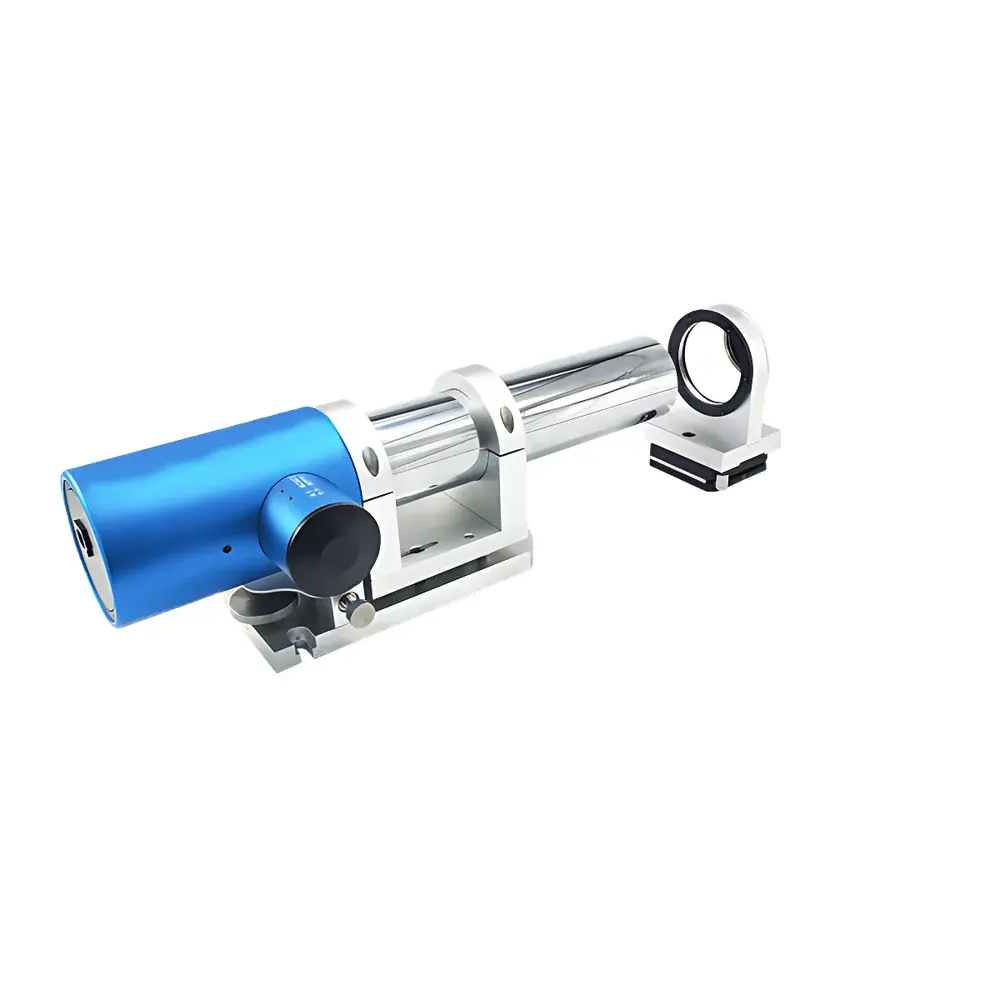
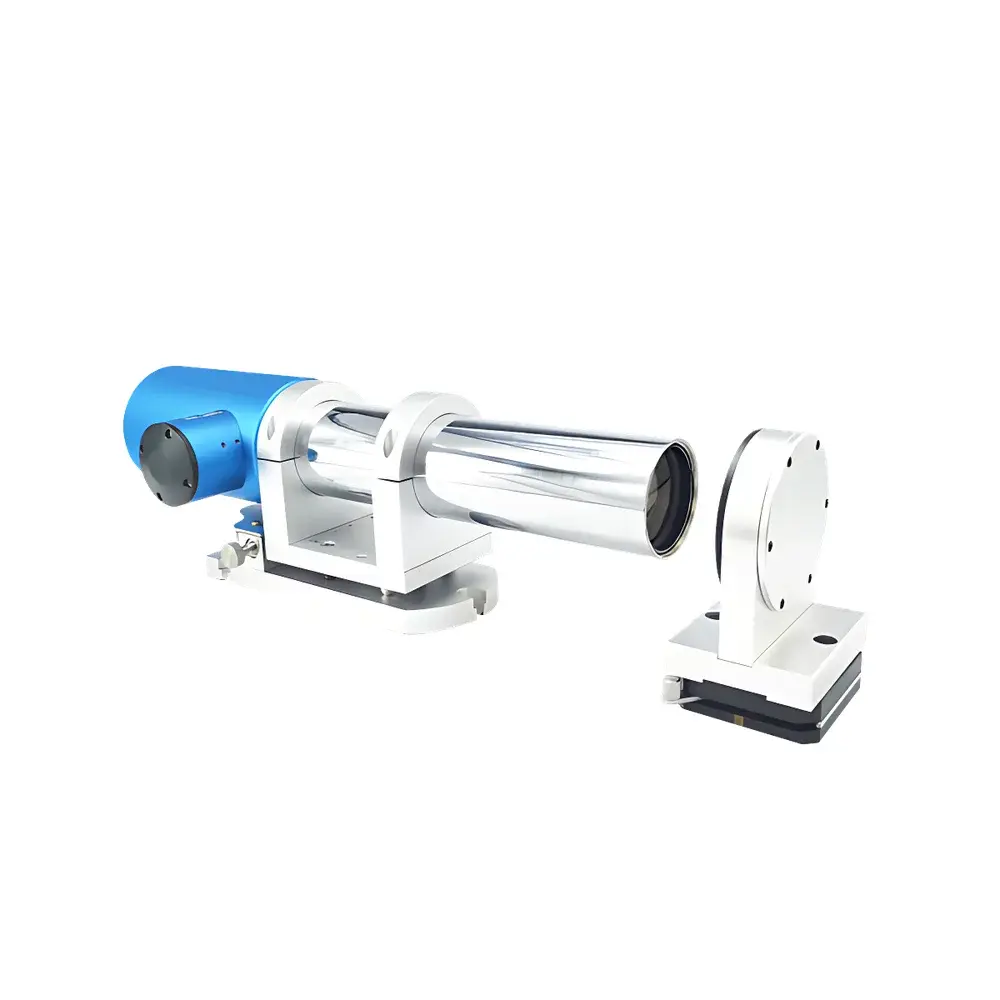
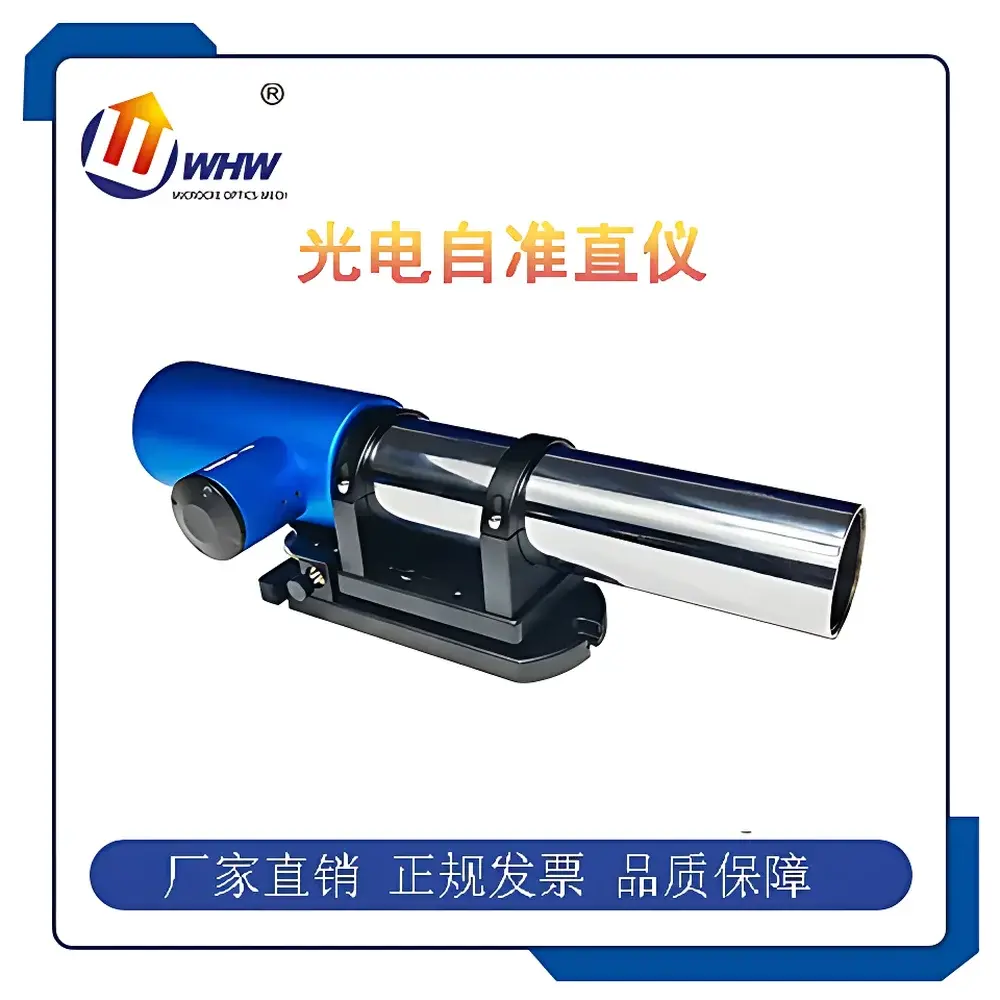
YANRUN MC030-MAT300/48/1 Dual-Axis Photoelectric Autocollimator
| Brand | YANRUN |
|---|---|
| Origin | Shanghai, China |
| Manufacturer Type | Manufacturer |
| Model | MC030-MAT300/48/1 |
| Focal Length | 300 mm |
| Aperture | 48 mm |
| Measurement Range | 0–35 m |
| Angular Resolution | 0.0001″–1″ (adjustable in arcseconds) |
| Field of View (X/Y) | 2200″ × 1800″ |
| Accuracy (Center, ±600″) | ≤ ±1″ |
| Repeatability | ≤ 0.5″ |
| Sampling Frequency | ≤ 30 Hz |
| Interface | USB 2.0 |
| Operating System | Windows 7 or later (64-bit) |
| Dimensions | 388 mm × 135 mm × 125 mm |
| Weight | 5.0 kg |
Overview
The YANRUN MC030-MAT300/48/1 Dual-Axis Photoelectric Autocollimator is a precision optical metrology instrument engineered for high-accuracy angular displacement measurement based on the fundamental principle of optical autocollimation. It employs a collimated beam generated by a 300 mm focal length objective lens, directed onto a plane mirror placed perpendicular to the optical axis. The reflected beam re-enters the objective and is focused onto a high-resolution two-dimensional photoelectric sensor located at the shared focal plane — forming a co-focal detection system. When the mirror rotates by an angle α, the returned image shifts linearly by ΔS on the sensor, corresponding to a deviation of 2α (in radians), enabling sub-arcsecond angular quantification. Unlike traditional visual autocollimators requiring manual eyepiece alignment, this instrument replaces the human observer with a digital imaging sensor and real-time centroid calculation algorithms, eliminating parallax and observer-induced variability. Its compact form factor (388 × 135 × 125 mm), integrated long-life semiconductor LED illumination (rated for >20,000 hours), and USB 2.0 interface enable deployment in both laboratory metrology environments and field-based alignment tasks — including machine tool calibration, optical assembly verification, and inertial platform testing.
Key Features
- Dual-axis simultaneous measurement of X- and Y-direction angular deviations, supporting vectorial error analysis without mechanical reorientation.
- Real-time electronic reticle display with dynamic crosshair tracking, providing immediate visual feedback and reducing operator-dependent interpretation errors.
- Adjustable angular resolution down to 0.0001 arcsecond (0.005 µrad), configurable via software to match application-specific uncertainty requirements.
- High-stability optical architecture featuring a 48 mm clear aperture objective lens optimized for low wavefront distortion and minimal chromatic aberration.
- Embedded firmware with automatic curve fitting, error envelope computation, and ISO 10360-compliant deviation reporting per measurement sequence.
- Multi-language UI support (English, Chinese, Russian, Korean) compliant with international technical documentation standards and multilingual lab workflows.
- USB 2.0 communication protocol ensuring deterministic latency (<10 ms round-trip) and compatibility with standard industrial PCs running Windows 7+ (64-bit).
- Modular software architecture allowing seamless integration of optional analysis modules for straightness, flatness, squareness, and parallelism evaluation per ISO 230-1, ISO 1101, and ASME B89.3.7.
Sample Compatibility & Compliance
The MC030-MAT300/48/1 is designed for use with standard optical-grade plane mirrors (λ/10 surface flatness, ≥95% reflectivity at 635 nm) and supports measurement distances from 0 to 35 meters without recalibration. Its angular accuracy specification (≤ ±1″ within ±600″ range) is validated under controlled metrological conditions per JJG 814–2015 (Chinese National Verification Regulation for Autocollimators) and aligns with traceable calibration practices referenced in ISO/IEC 17025. The device meets electromagnetic compatibility requirements per GB/T 18268.1–2010 (equivalent to IEC 61326-1) and operates within ambient temperature ranges of 15–25 °C for certified performance. While not FDA-regulated, its data logging functionality supports GLP/GMP-aligned audit trails when used in regulated manufacturing settings — particularly in aerospace component alignment and semiconductor lithography stage calibration where positional repeatability ≤0.5″ is critical.
Software & Data Management
The included Windows-based control software provides full instrument configuration, real-time image acquisition, centroid position calculation, and statistical process monitoring. All raw sensor frames and processed angular values are timestamped and stored in binary format with metadata (exposure time, gain setting, thermal drift compensation flag). Export options include CSV and native Excel (.xlsx) formats compliant with ISO 14253-2 for GD&T reporting. Software supports user-defined report templates adhering to internal quality management system (QMS) requirements. Audit trail functionality records all parameter changes, measurement initiations, and calibration events — satisfying basic 21 CFR Part 11 readiness when deployed with password-protected user roles and electronic signature capability (optional add-on module). No cloud connectivity or remote telemetry is implemented; all data remains local unless explicitly exported by the operator.
Applications
- Precision alignment of CNC machine tool spindles, linear guides, and rotary tables per ISO 230-1 geometric accuracy testing protocols.
- Verification of optical mount orthogonality and collimation stability in laser cavity assembly and interferometer setup.
- Dynamic angular monitoring of gimbal platforms and inertial reference units during environmental stress screening.
- Flatness and straightness assessment of granite surface plates and precision air-bearing stages using multi-position reversal techniques.
- Calibration of angle encoders and rotary stages in metrology laboratories accredited to ISO/IEC 17025.
- Quality assurance in aerospace structural component assembly, including wing spar alignment and fuselage section mating verification.
FAQ
What is the minimum measurable angle and how is resolution achieved?
The instrument achieves a base resolution of 0.0001 arcsecond through sub-pixel centroid interpolation of the reflected reticle image on the 2D photodetector array, combined with thermal drift compensation algorithms executed in real time.
Does the system require periodic recalibration?
Yes — annual traceable calibration against a NIST-traceable angle standard is recommended for applications demanding metrological certainty; factory calibration certificates include uncertainty budgets per GUM (JCGM 100:2008).
Can the device operate without a PC?
No — it functions as a USB peripheral requiring continuous host communication for image processing, display rendering, and data storage; no onboard display or standalone operation mode is provided.
Is the LED light source replaceable in the field?
The integrated LED module is soldered and not user-replaceable; however, its rated lifetime exceeds 20,000 operating hours under typical duty cycles, minimizing maintenance intervals.
How does environmental vibration affect measurement stability?
Vibration sensitivity is mitigated by a rigid aluminum alloy chassis and passive damping mounts; for measurements below ±0.2″, operation on a granite slab with active air isolation is advised per ISO 10816-1 guidelines.



