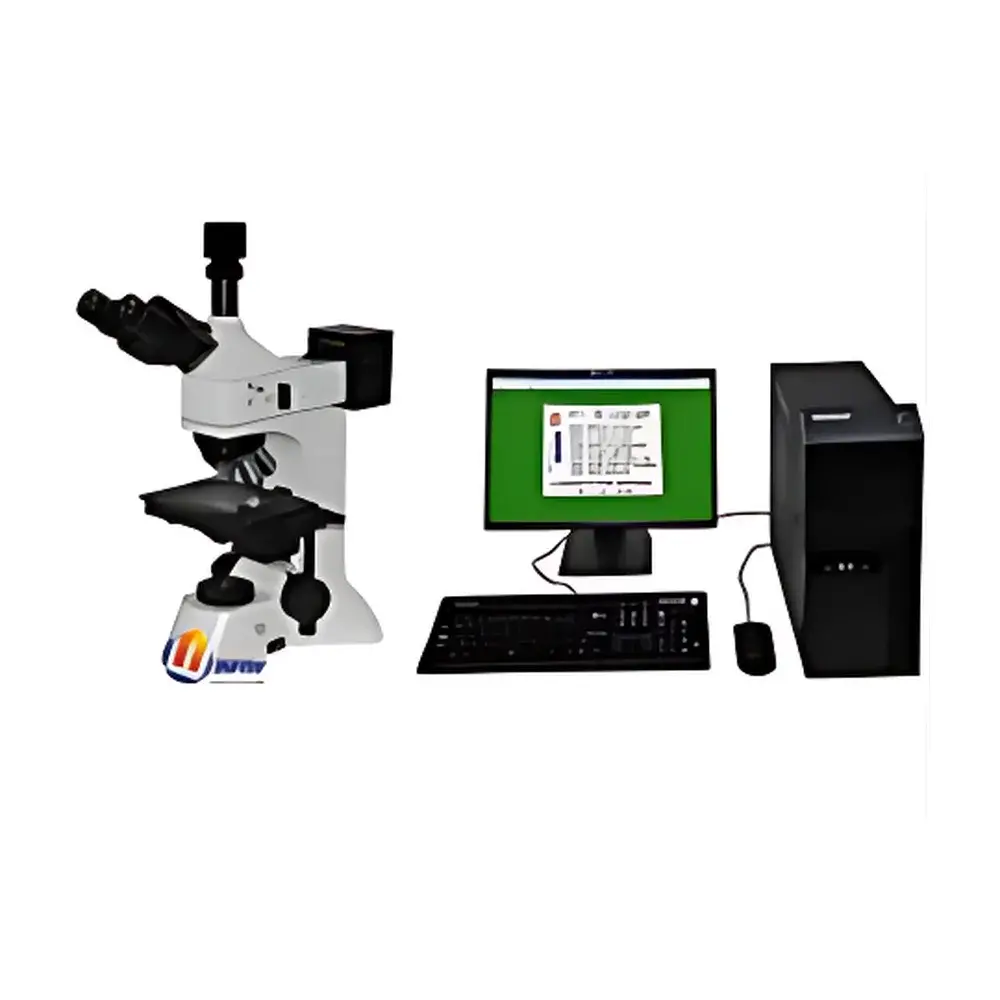
YANRUN MMAS-19 Upright Metallurgical Microscope with Differential Interference Contrast (DIC) and Integrated Image Analysis System
| Brand | YANRUN |
|---|---|
| Origin | Shanghai, China |
| Manufacturer Type | Direct Manufacturer |
| Product Type | Upright Metallurgical Microscope |
| Imaging Analysis System | Integrated MMAS Software Suite |
| Total Magnification Range | 50×–400× |
| Eyepiece | Wide-Field SWF10X (Φ22 mm) |
| Objective Lenses | LMPlan5X/0.12 DIC, LMPlan10X/0.3 DIC, LMPlan20X/0.4 DIC, PL L40X/0.60 |
| Optical Design | Infinity-Corrected, Long Working Distance, Achromatic Plan Objectives |
| Illumination | Reflected (12 V / 50 W Halogen), Transmitted (12 V / 30 W Halogen) |
| DIC Compatibility | Optimized for LMPlan5X/10X/20X DIC objectives |
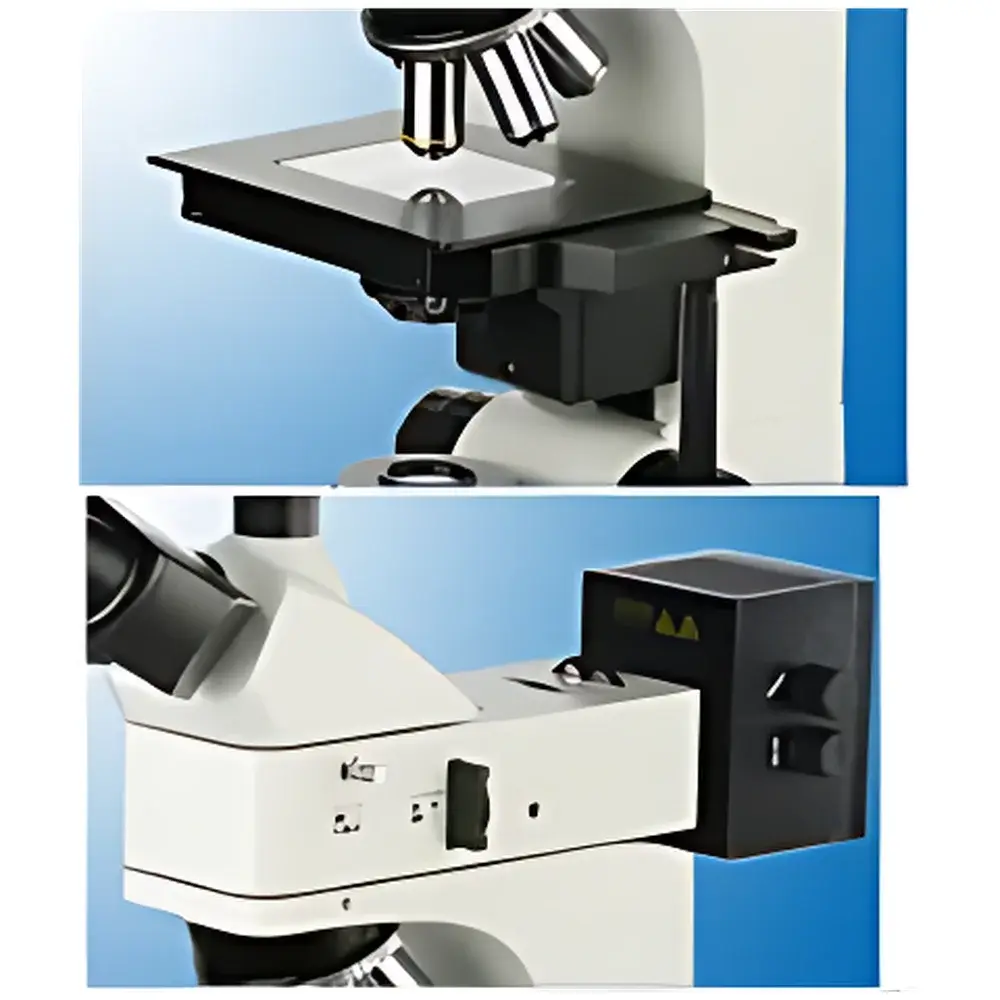
| Mechanical Stage | Dual-layer, 210 × 140 mm, 63 × 50 mm travel |
| Focusing Mechanism | Coaxial coarse/fine focus, fine focus graduation: 2 µm |
| Condenser | Abbe condenser NA 1.25, centerable, built-in field diaphragm |
| Polarization | Built-in rotatable polarizer/analyzer (0–360°) |
| Trinocular Tube | 30° inclination, 100% beam split to camera port |
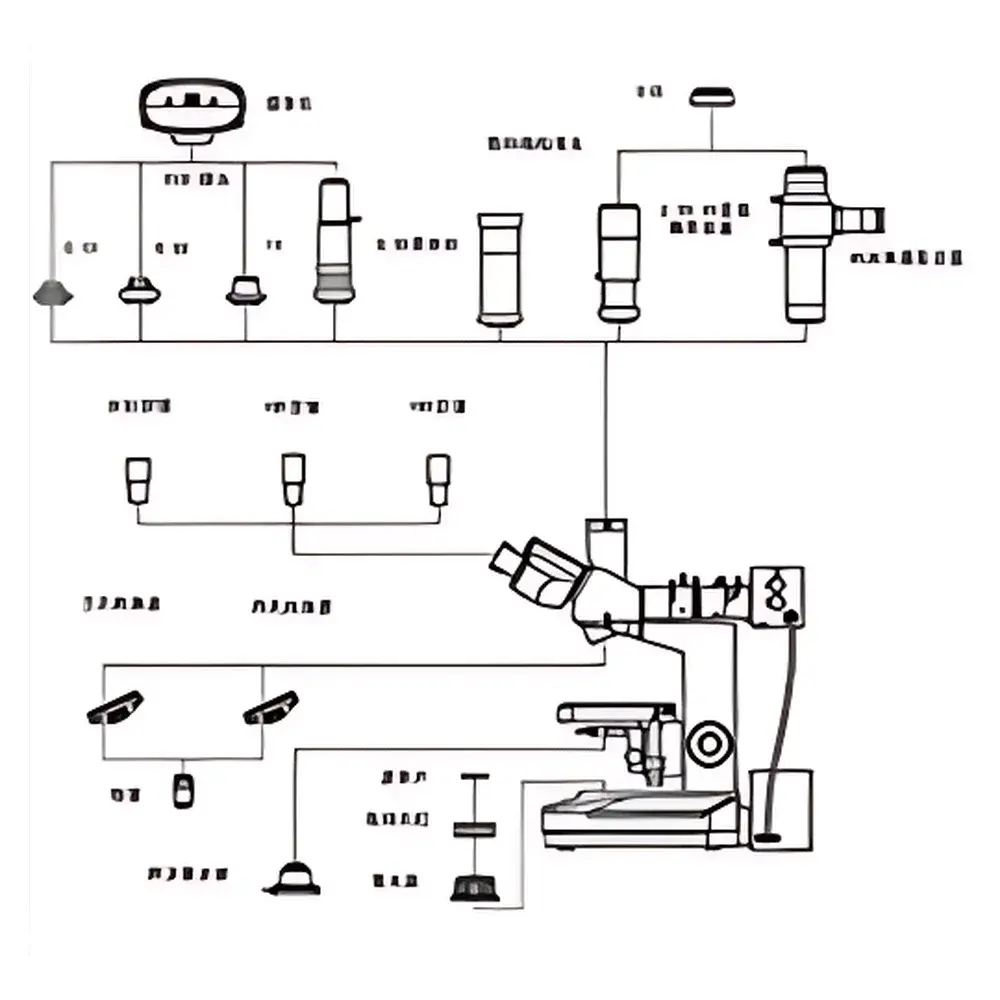
| Accessories Included | 0.5×/1× C-mount adapter, green/blue filter set, ground glass diffuser |
Overview
The YANRUN MMAS-19 is an upright metallurgical microscope engineered for high-fidelity microstructural characterization of opaque, reflective specimens—primarily metals, alloys, ceramics, and advanced composites. It employs a fully corrected infinity optical pathway with long working distance (LWD) plan achromatic objectives optimized for differential interference contrast (DIC), enabling quantitative phase-gradient imaging without staining or etching. The system integrates DIC optics with both reflected (epi-illumination) and transmitted light paths, supporting dual-mode observation critical for comprehensive metallographic evaluation per ASTM E3, ISO 643, and GB/T 13298 standards. Its rigid, vibration-damped mechanical architecture ensures stable focusing during extended acquisition sessions, while the 30° inclined trinocular head supports ergonomic visual inspection and simultaneous digital capture at 100% light throughput—essential for traceable image-based analysis in GLP-compliant laboratories.
Key Features
- Infinity-corrected optical train with four DIC-optimized objectives (5×, 10×, 20×, 40×) delivering flat-field, low-aberration imaging across the full 22 mm field of view.
- DIC module precisely aligned to objective back focal planes; interference contrast modulation controlled via precision micrometer-driven prism translation—enabling reproducible relief enhancement and quantitative topographic sensitivity down to sub-micron surface gradients.
- Built-in polarization system with independently rotatable polarizer and analyzer (0–360°), facilitating birefringence assessment in duplex steels, titanium alloys, and mineral inclusions per ASTM E407 and ISO 80000-7.
- Reflected illumination: 12 V / 50 W halogen source with continuous intensity control and adjustable lamp centering; includes integrated field and aperture diaphragms, blue/green interference filters, and ground-glass diffuser for uniform Köhler illumination.
- Transmitted illumination: 12 V / 30 W halogen unit with Abbe condenser (NA 1.25), vertical adjustment, and built-in field diaphragm—supporting brightfield, darkfield, and oblique illumination modes for transparent or semi-transparent reference specimens.
- Mechanical stage: Dual-layer X–Y translation (63 × 50 mm range) on a 210 × 140 mm platform, designed for repeatable positioning under high-magnification metrology workflows.
- Coaxial coarse/fine focusing mechanism with 2 µm fine-focus graduation, adjustable tension control, upper/lower limit stops, and locking capability—ensuring positional stability during automated z-stack acquisition.
Sample Compatibility & Compliance
The MMAS-19 accommodates standard 25 mm and 30 mm metallographic mounts, as well as polished cross-sections up to 50 mm in diameter when using optional extended-stage adapters. Its long working distance objectives (up to 15 mm at 5×) permit observation of rough or coated surfaces without contact risk. The system complies with ISO 10993-12 (biocompatibility testing support), ASTM E112 (grain size analysis), ASTM E1245 (inclusion rating), and ISO 4497 (powder metallurgy microstructure). All optical components meet RoHS directives, and the illumination circuitry conforms to IEC 61000-4-2 EMC requirements. For regulated environments, MMAS software supports audit trails, user access levels, and electronic signature logging aligned with FDA 21 CFR Part 11 principles.
Software & Data Management
The bundled MMAS image analysis suite is a Windows-based application designed specifically for metallurgical QA/QC and R&D labs. It provides over 400 standardized modules mapped to national and international standards—including ASTM E112, E1245, E1382, ISO 643, ISO 4497, and GB/T 6394. Core functions include automated grain size classification (ASTM, G, Z, JIS), inclusion rating (JK, ASTM E45), phase fraction quantification, linear intercept measurements, and porosity analysis. Geometric tools support calibrated length, area, angle, and circularity measurements with NIST-traceable scale bar integration. Advanced capabilities include multi-field image stitching (mosaicking), focus stacking (z-series fusion), and pseudo-3D surface rendering via gradient-based height mapping. All reports are exportable as PDF, TIFF, or CSV; raw image metadata (magnification, objective ID, illumination mode, DIC bias setting) is embedded and preserved in EXIF-compatible headers.
Applications
The MMAS-19 serves as a primary tool in failure analysis laboratories for identifying fatigue cracks, intergranular corrosion, weld defects, and heat-affected zone (HAZ) microstructural transitions. In foundries and rolling mills, it supports routine verification of annealing homogeneity, decarburization depth, and carbide distribution in tool steels. Academic materials science groups utilize its DIC contrast for real-time observation of dislocation dynamics during in-situ thermal cycling experiments. Semiconductor packaging facilities apply its high-resolution surface profiling to assess solder joint integrity and intermetallic compound (IMC) growth kinetics. Additionally, the system supports forensic metallurgy—e.g., fracture surface morphology correlation with loading history per ASTM E3021—and quality documentation for AS9100 and IATF 16949 audits.
FAQ
Does the MMAS-19 support motorized Z-axis or automated stage control?
No—this configuration features manual coaxial focus and mechanical XY translation. Motorized components are available as factory-installed options (e.g., stepper-driven Z-stage, programmable stage controller) upon request.
Can third-party cameras be used with the MMAS-19’s trinocular port?
Yes—the C-mount interface accepts standard 1/2″ or 2/3″ sensors. Adapter magnifications (0.5×, 1×) ensure optimal pixel-to-object scaling for resolution-limited detectors.
Is DIC alignment performed manually or automatically?
Alignment is manual but highly repeatable: the DIC slider incorporates engraved scales and locking screws; calibration is verified using a standard grating slide per ISO 10110-5.
What file formats does MMAS software import and export?
Imports: BMP, TIFF, JPEG, PNG, RAW (via TWAIN/DirectShow); exports: TIFF (uncompressed), PDF/A-1b, CSV (measurement tables), XML (structured report data).
Does the system comply with ISO/IEC 17025 documentation requirements?
Yes—MMAS generates timestamped, user-attributed records of all measurement parameters, calibration events, and image processing steps, satisfying Clause 7.7 traceability mandates.