
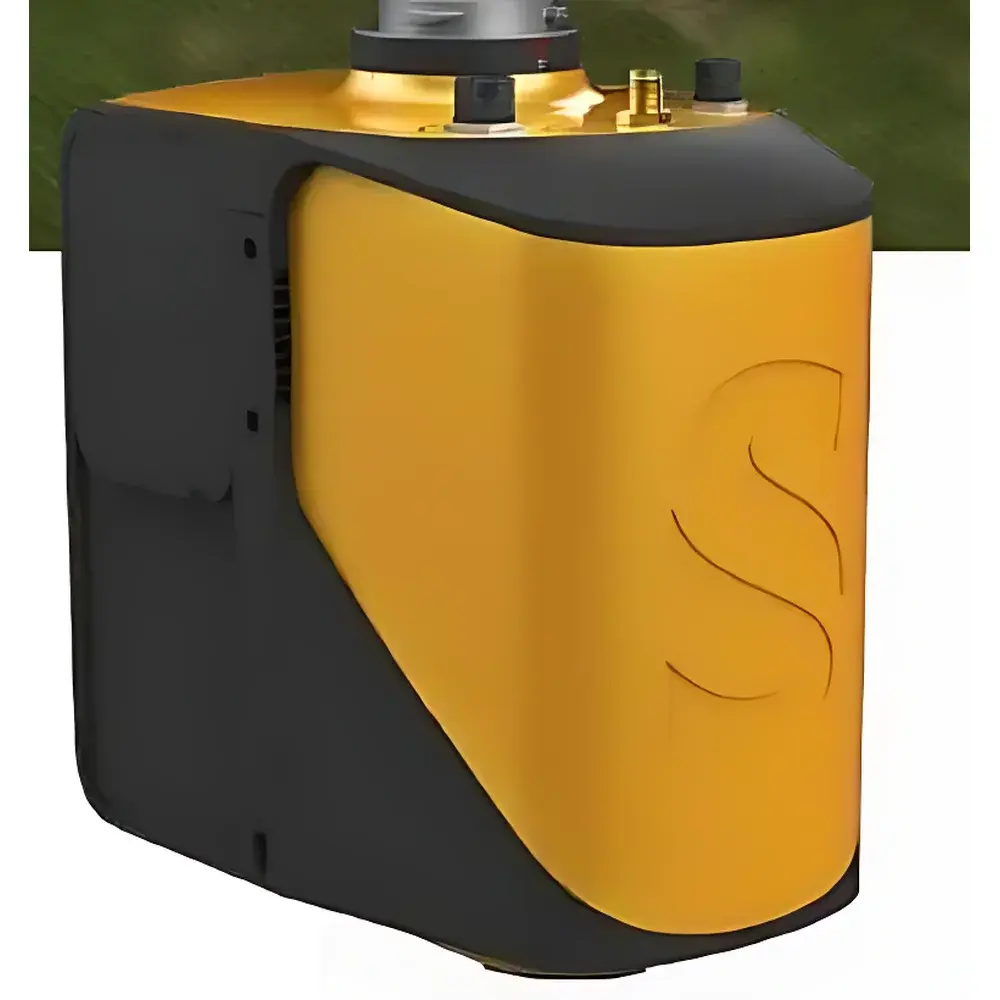
Yellowscan Mapper UAV-Mounted LiDAR System
| Origin | Beijing, China |
|---|---|
| Manufacturer Type | Distributor |
| Origin Category | Domestic |
| Model | Yellowscan Mapper |
| Pricing | Upon Request |
Overview
The Yellowscan Mapper is a turnkey, UAV-integrated Light Detection and Ranging (LiDAR) system engineered for high-precision, medium-range topographic and structural mapping in ecological and environmental remote sensing applications. Based on time-of-flight (ToF) pulsed laser measurement principles, the system emits near-infrared laser pulses (typically 905 nm) and records return signals to generate dense, georeferenced 3D point clouds with centimeter-level relative accuracy and sub-decimeter absolute accuracy when coupled with RTK/PPK GNSS positioning. Its compact, lightweight design (<2.5 kg) enables seamless integration onto multirotor and fixed-wing unmanned aerial platforms—including Ecodrone® series UAVs—without compromising flight endurance or payload stability. The Mapper operates at a maximum scan rate of up to 200,000 points per second, delivering point densities exceeding 500 pts/m² at typical operational altitudes (60–120 m AGL), making it particularly suitable for vegetation structure analysis, terrain modeling, and change detection in dynamic natural and anthropogenic environments.
Key Features
- Integrated ToF LiDAR sensor with 905 nm wavelength laser source and ±30° field-of-view (FOV) dual-axis scanning mechanism
- Real-time onboard GNSS/IMU data fusion supporting both RTK and PPK post-processing workflows
- Lightweight, ruggedized housing rated IP64 for operation in variable field conditions including light rain and dust exposure
- Native compatibility with common UAV autopilot systems (e.g., Pixhawk, ArduPilot) via MAVLink protocol
- Onboard storage (32 GB internal flash) with automatic data buffering and error-resilient file writing
- Calibrated intensity channel enabling semi-quantitative surface reflectance analysis for land cover classification support
Sample Compatibility & Compliance
The Yellowscan Mapper is designed for non-contact, stand-off measurement of natural and built surfaces—including forest canopies, agricultural crops, bare soil, rock outcrops, infrastructure assets, and archaeological features—without physical sampling or ground control point (GCP) dependency in many scenarios. It complies with IEC 60825-1:2014 Class 1 laser safety requirements for airborne operation. Data acquisition workflows align with ISO 19115 metadata standards and support interoperability with GIS platforms such as QGIS, ArcGIS Pro, and CloudCompare. While not certified under FDA or EU MDR frameworks (as it is not a medical device), its output formats (LAS/LAZ, E57, ASCII XYZ) are compatible with regulatory-grade processing pipelines used in environmental impact assessments governed by national frameworks including China’s HJ 93-2013 and US EPA’s Guidance for Remote Sensing Applications in Environmental Monitoring.
Software & Data Management
Data acquisition is managed through YellowScan’s proprietary YellowScan Control software (Windows-based), which provides real-time telemetry monitoring, mission planning, and pre-flight calibration checks. Raw point cloud data are processed using YellowScan Georeferencer—a PPK/RTK-aware tool that integrates GNSS observation files (RINEX), IMU logs, and trajectory solutions to deliver orthorectified, geocoded LAS files. Output supports standard export to industry formats including LAZ (compressed LAS), E57, and CSV/XYZ for downstream analysis in third-party tools. Audit trails, timestamped log files, and versioned configuration profiles meet GLP-aligned documentation practices for scientific reproducibility. Integration with Python-based automation (via provided SDK) allows batch processing and custom workflow scripting for large-scale environmental monitoring programs.
Applications
- Forest inventory and canopy height modeling (CHM) for carbon stock estimation and biodiversity assessment
- Agricultural phenotyping—including crop height, canopy volume, and lodging detection across growth stages
- Geomorphological surveying of riverbanks, landslide-prone slopes, and mine spoil heaps
- Archaeological site prospection and micro-topographic feature mapping beneath vegetation canopy
- Power line corridor inspection and clearance analysis against vegetation encroachment thresholds
- High-resolution digital terrain model (DTM) generation for hydrological modeling and flood risk assessment
FAQ
What UAV platforms is the Yellowscan Mapper certified for?
The system is mechanically and electrically compatible with Ecodrone® series UAVs and has been validated on DJI Matrice 300 RTK, Freefly Alta X, and senseFly eBee X platforms. Integration with other UAVs requires verification of power supply (24–36 V DC), physical mounting interface, and MAVLink telemetry bandwidth.
Does the Mapper support direct georeferencing without ground control points?
Yes—when equipped with an integrated RTK GNSS receiver and operated within coverage of a CORS network or local base station, the Mapper achieves horizontal accuracies better than 5 cm RMS and vertical accuracies better than 8 cm RMS without GCPs. PPK workflows further enhance reliability in GNSS-challenged areas.
Can intensity data be calibrated for radiometric analysis?
The Mapper records uncalibrated intensity values proportional to returned signal amplitude. While not traceable to absolute reflectance units, intensity data support relative surface differentiation and can be normalized using incidence angle correction and cross-platform empirical calibration protocols.
Is firmware update supported over-the-air?
Firmware updates require USB-C connection to a host PC running YellowScan Control; OTA updates are not currently implemented.
What is the recommended maintenance interval for field calibration?
Annual factory recalibration is recommended. Field-level boresight alignment verification should be performed before each major campaign using known planar targets or stable terrain features.
Related Products







