
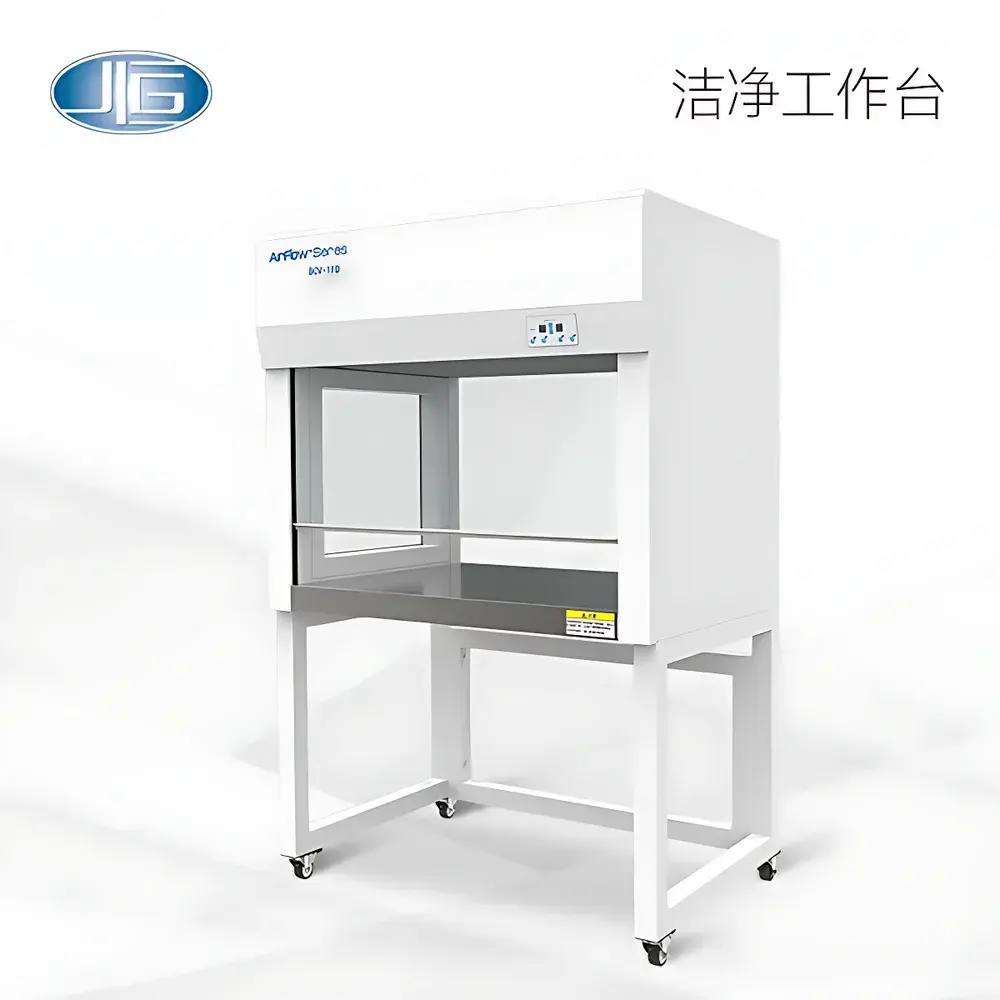
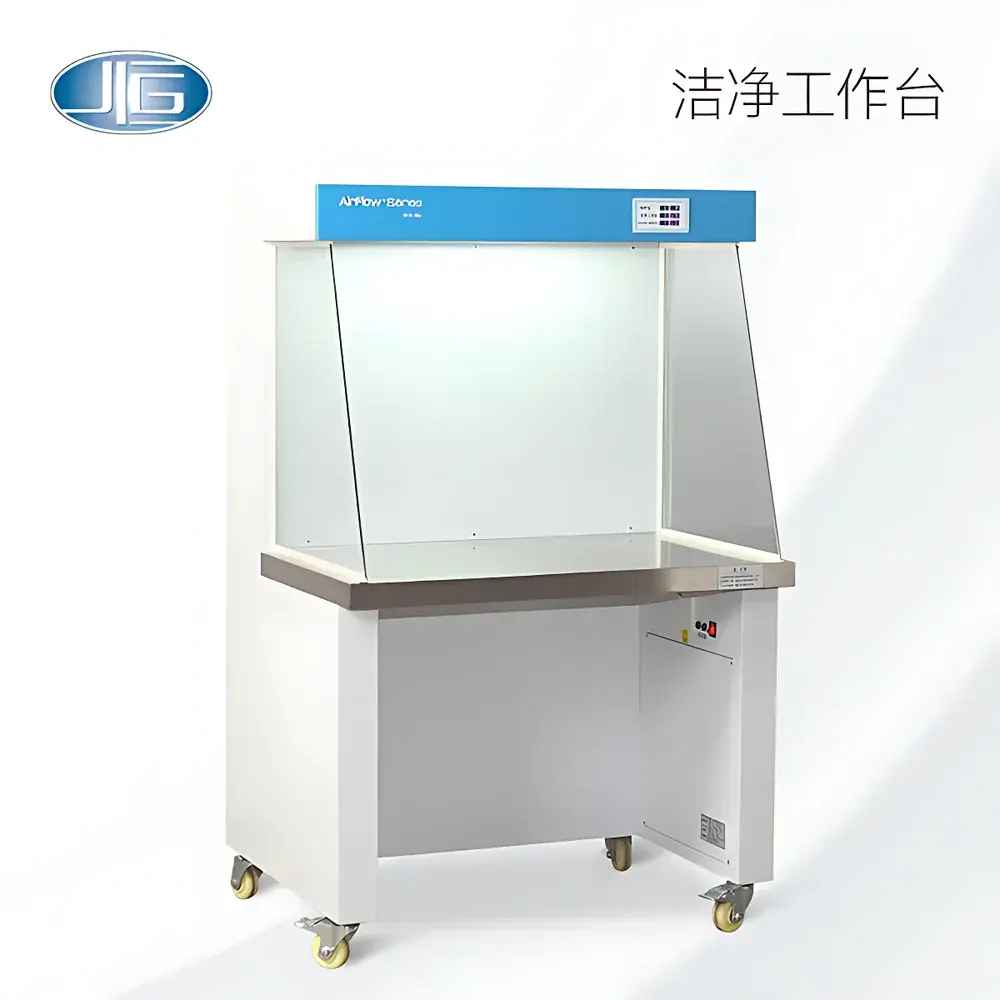
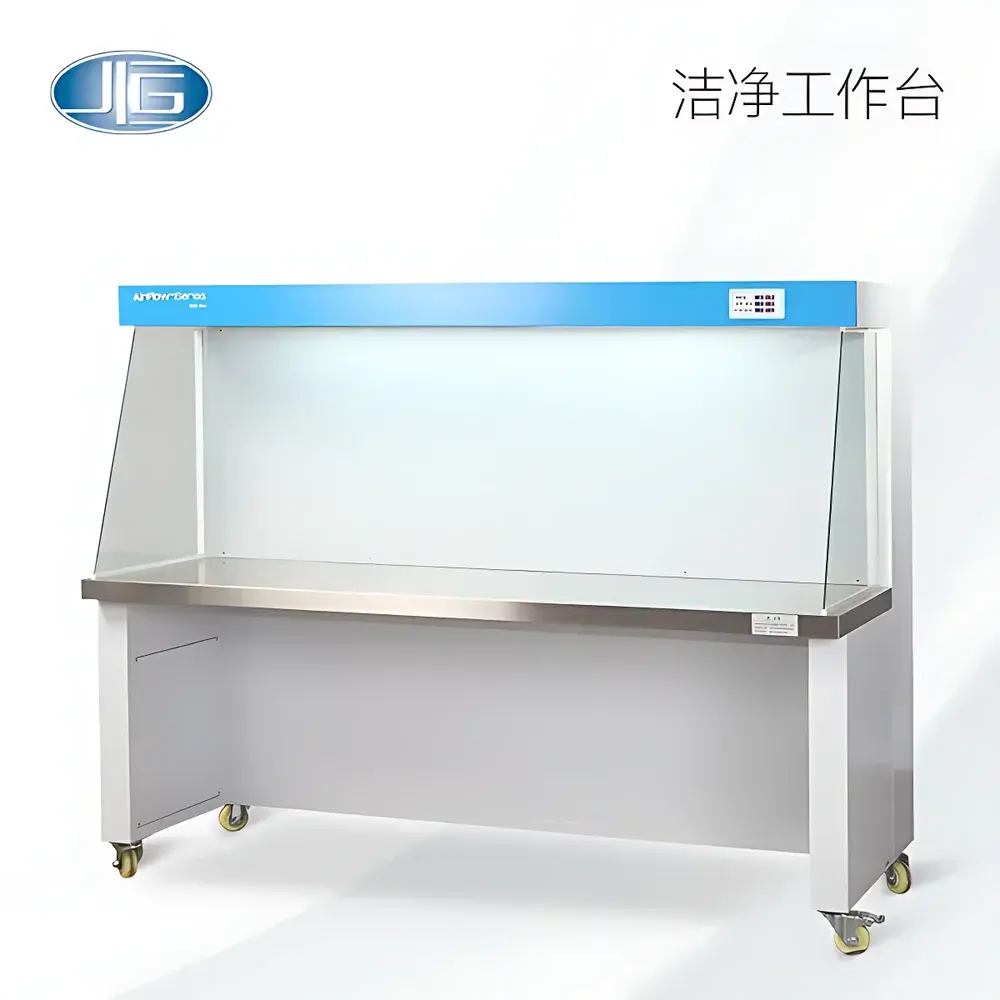
YiHeng BCV/BCH Series Vertical/Horizontal Flow Clean Benches
| Brand | YiHeng |
|---|---|
| Origin | Shanghai, China |
| Manufacturer Type | Direct Manufacturer |
| Product Category | Domestic |
| Models | BCV-1FD, BCV-2FD, BCV-2F, BCH-1BU, BCV-1CU |
| Price Range | USD 1,480 – 2,390 (FOB Shanghai) |
| Instrument Type | Vertical Flow & Horizontal Flow Clean Bench |
| Cleanliness Class | ISO 5 (Class 100) |
| Noise Level | ≤62 dB(A) |
| User Capacity | Single-user single-side / Dual-user single-side |
| Airflow Pattern | Vertical Laminar Flow & Horizontal Laminar Flow |
| Work Surface Material | 304 Stainless Steel |
| Filtration | HEPA Filter (≥99.99% @ 0.3 µm) with Pre-filter |
| Lighting | LED Task Illumination + UV Germicidal Lamp (254 nm) |
| Electrical Outlet | 1 × 10 A / 250 V AC, 1 kW Rated Capacity |
| Window | Tempered Glass, Dual-Side Transparent, Counterbalanced Vertical Sliding |
Overview
The YiHeng BCV/BCH Series Clean Benches are engineered for precision-controlled, particle-free work environments in pharmaceutical QC labs, microbiology research facilities, cell culture suites, and electronics assembly cleanrooms. Designed in strict accordance with ISO 14644-1 Class 5 (equivalent to US FED STD 209E Class 100) requirements, these units employ laminar airflow technology—either vertical downflow (BCV models) or horizontal crossflow (BCH models)—to deliver unidirectional, low-turbulence air across the work surface. The vertical flow configuration directs filtered air downward from the top plenum through a HEPA filter, minimizing turbulence-induced particle resuspension and ensuring consistent protection of samples and operators. Horizontal flow variants provide uniform lateral airflow ideal for sterile open-vessel operations where operator exposure must be minimized. All units feature an integrated aerodynamic chamber geometry validated via smoke visualization and airflow velocity mapping to ensure ≥0.3 m/s average face velocity (adjustable) across the entire work area.
Key Features
- Tempered glass side panels enhance ambient light transmission and visual monitoring without compromising structural integrity or containment performance.
- Counterbalanced vertical sliding sash enables precise, tool-free height adjustment and stable positioning at any operational height—critical for ergonomic workflow continuity and reproducible airflow profiles.
- 304 stainless steel work surface offers corrosion resistance, non-porosity, and compatibility with common disinfectants (e.g., 70% ethanol, sodium hypochlorite), supporting GLP-compliant cleaning validation protocols.
- EC centrifugal blower system delivers high static pressure capability (>120 Pa) at low volumetric flow rates, enabling stable laminar flow even under variable filter loading conditions while maintaining acoustic performance ≤62 dB(A) at 1 m distance.
- Dual-stage filtration: a washable polyester pre-filter captures coarse particulates (>5 µm), extending HEPA service life by up to 3×; the final H14-grade HEPA filter (EN 1822-1 compliant) achieves ≥99.995% efficiency at MPPS (Most Penetrating Particle Size) of 0.3 µm.
- Integrated lighting includes 400–450 lux uniform LED task illumination (CRI >80) and a 254 nm UV-C germicidal lamp with safety interlock—automatically de-energized when sash is opened beyond 50 mm per IEC 61000-6-4 and ANSI/IES RP-27.1-22 guidelines.
Sample Compatibility & Compliance
These clean benches accommodate standard Petri dishes, T-flasks, bioreactor vessels, pipette racks, and microcentrifuge tube holders within defined working envelopes (BCV-1FD: 800 × 450 × 600 mm W×D×H; BCV-2FD: 1360 × 450 × 600 mm). Units comply with ISO 14644-1:2015 (cleanroom classification), ISO 14644-3:2019 (test methods), and EN 12464-1:2021 (lighting requirements). Electrical design conforms to IEC 61010-1:2010 for laboratory equipment safety, including overcurrent protection and grounding continuity verification. Optional documentation packages support audit readiness for GMP Annex 1 (EU), FDA 21 CFR Part 11 (electronic records), and WHO TRS 961 Annex 2 compliance assessments.
Software & Data Management
While the BCV/BCH Series operates as a standalone mechanical-aerodynamic system without embedded firmware or network connectivity, it supports integration into facility-wide environmental monitoring systems (EMS) via optional analog 4–20 mA airflow velocity output (available on BCV-2FD/BCV-2F variants). All units include calibrated airflow sensors traceable to NIM (National Institute of Metrology, China) standards. Maintenance logs—including filter replacement dates, UV lamp usage hours, and annual certification reports—are structured to align with ISO/IEC 17025:2017 documentation requirements for accredited laboratories.
Applications
- Aseptic transfer of microbial cultures and mammalian cell lines in academic and industrial bioprocessing labs.
- Preparation of media, reagents, and standards under controlled particulate conditions for pharmacopeial testing (USP , EP 2.6.12).
- Assembly and inspection of microelectromechanical systems (MEMS) and optical components requiring sub-micron contamination control.
- Handling of sensitive nanomaterials and semiconductor substrates where electrostatic discharge (ESD) mitigation and airborne molecular contamination (AMC) control are secondary priorities.
- Supporting ISO 13485-certified medical device manufacturing processes requiring Class 100 environments for final packaging verification.
FAQ
What ISO cleanliness class does this clean bench achieve?
It meets ISO 14644-1 Class 5 (≤3,520 particles/m³ ≥0.5 µm), verified by certified particle counters during factory acceptance testing.
Is UV lamp operation interlocked with the sash position?
Yes—the UV-C lamp circuit is hardwired to the sash limit switch; illumination ceases immediately if the sash is raised above 50 mm.
Can the unit be validated for GMP compliance?
Yes—documentation packages include IQ/OQ templates, filter certification (DOP/PAO scan reports), and airflow uniformity test data suitable for regulatory submission.
What is the recommended HEPA filter replacement interval?
Under typical laboratory use (8 hrs/day, 5 days/week), replacement is advised every 18–24 months—or sooner if differential pressure exceeds 250 Pa across the filter bank.
Does the unit support external airflow monitoring integration?
Select models (BCV-2FD, BCV-2F) offer optional 4–20 mA analog output for real-time velocity feedback to building management systems (BMS) or EMS platforms.



