
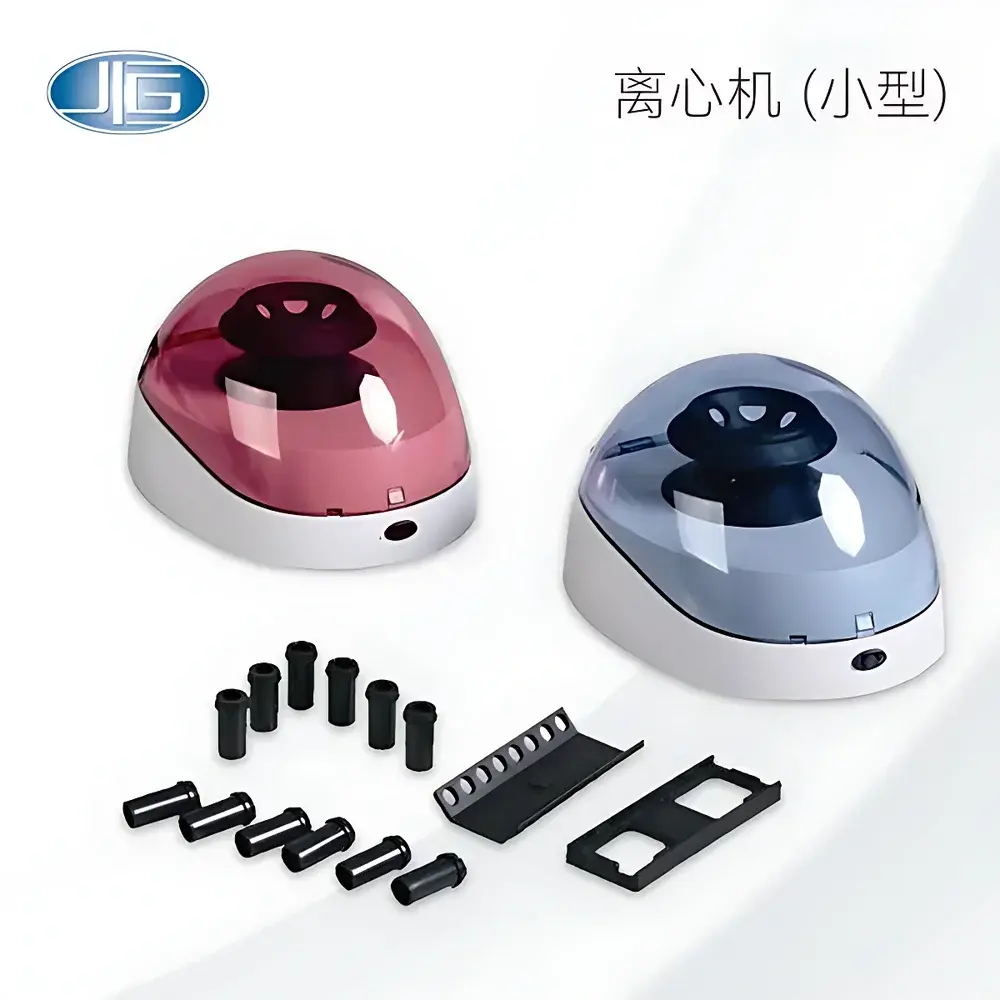
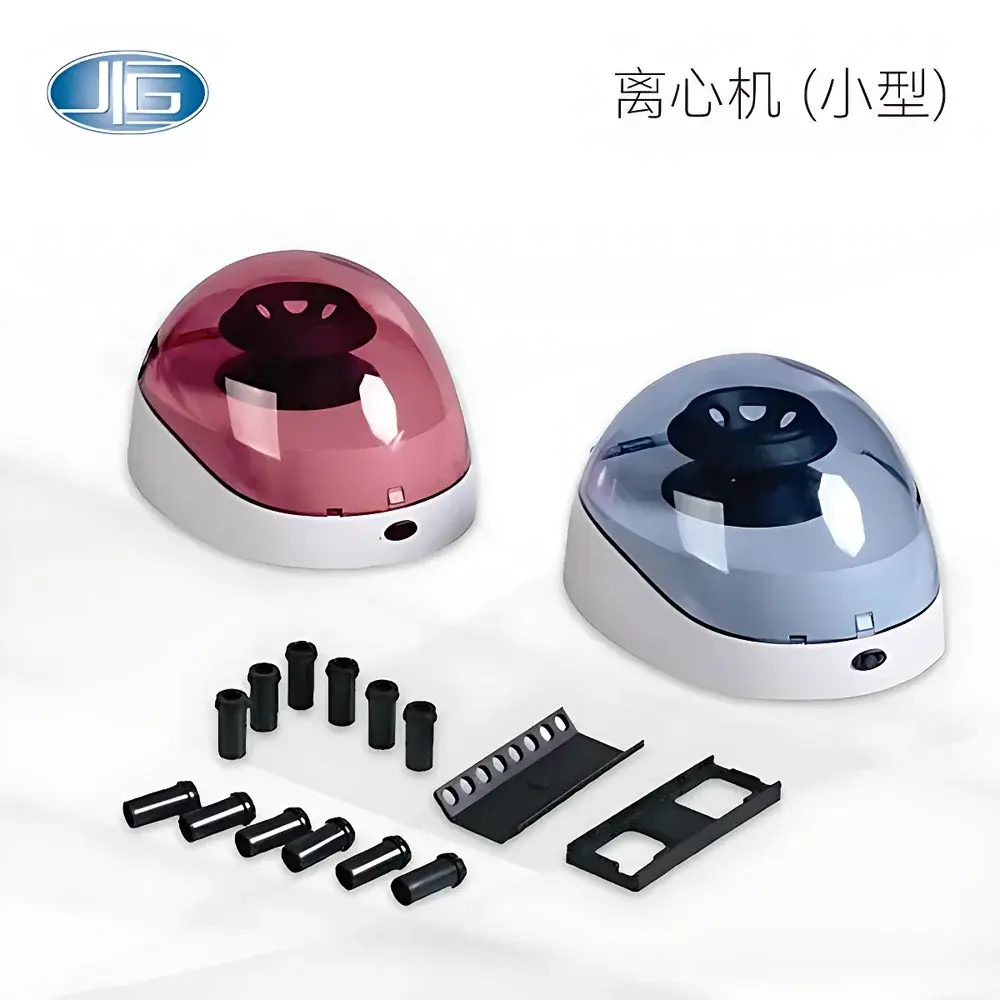
YiHeng BLF6K Benchtop Microcentrifuge
| Brand | YiHeng |
|---|---|
| Origin | Shanghai, China |
| Manufacturer Type | Direct Manufacturer |
| Product Category | Domestic (China-Made) |
| Model | BLF6K |
| Instrument Type | Palm-Sized Centrifuge |
| Speed Range | High-Speed (10,000–30,000 rpm) — *Note: Actual max speed 6,000 rpm* |
| Function | General-Purpose Centrifuge |
| Configuration | Horizontal Rotor Design |
| Separation Class | Cellular & Bacterial Pelletization |
| Max Capacity | 0.2 mL × 8 tubes or two rows of 0.2 mL PCR strips |
| Max Speed | 6,000 rpm |
| Max RCF | 2,000 × g |
| Noise Level | ≤54 dB(A) |
| Acceleration Time to 90% Max Speed | ≤5 s |
| Deceleration Time | Free Stop ≤15 s |
| Rotor Exchange | Tool-Free Quick-Release Mechanism |
| Vibration Damping | Integrated Passive Isolation System |
| Dimensions (W×D×H) | Compact Benchtop Footprint |
| Power Supply | Standard 100–240 V AC, 50/60 Hz |
Overview
The YiHeng BLF6K is a compact, high-reliability benchtop microcentrifuge engineered for routine cellular and bacterial pelleting in academic laboratories, clinical QC environments, and molecular biology workflows. It operates on the principle of centrifugal sedimentation—applying radial acceleration to separate suspended particles based on mass, density, and hydrodynamic radius. With a maximum rotational speed of 6,000 rpm and an achievable relative centrifugal force (RCF) of 2,000 × g, the BLF6K delivers sufficient separation efficiency for nucleic acid extraction, protein precipitation, cell harvesting, and small-volume sample clarification. Its design prioritizes operational stability, acoustic performance, and ergonomic integration into space-constrained lab benches—making it especially suitable for high-throughput PCR prep stations, biosafety cabinets, and shared instrumentation cores where footprint and noise control are critical.
Key Features
- Ultra-low acoustic signature: Engineered with a brushless DC motor and precision-balanced rotor assembly, achieving ≤54 dB(A) during operation—compliant with ISO 7779 and EU Directive 2000/14/EC noise emission standards for laboratory equipment.
- Rapid dynamic response: Reaches 90% of maximum speed within 5 seconds, minimizing protocol wait time and improving throughput in time-sensitive workflows such as RNA isolation or rapid diagnostic assays.
- Passive vibration suppression: Dual-stage elastomeric damping mounts and symmetrical rotor housing geometry reduce transmitted mechanical oscillation to <0.05 mm/s RMS, ensuring compatibility with sensitive optical instruments nearby.
- Tool-free rotor interchange: Patented quick-lock interface allows secure attachment and detachment of horizontal rotors without wrenches or alignment tools—supporting rapid reconfiguration between standard microtubes and PCR strip formats.
- Intelligent braking system: Two deceleration modes—lid-activated electromagnetic brake (≤3 s stop time) and free coast-down (≤15 s)—enhance safety and workflow flexibility while meeting IEC 61000-3-2 harmonic current limits.
- Compact form factor: Occupies <0.015 m² footprint with integrated carry handle, enabling seamless relocation between biosafety cabinets, cold rooms, and laminar flow hoods without compromising structural rigidity.
Sample Compatibility & Compliance
The BLF6K accommodates standard 0.2 mL PCR tubes and eight-tube strips in dual-row configuration, supporting common consumables from leading vendors (e.g., Axygen, Eppendorf, Thermo Fisher). Its rotor geometry ensures uniform tube positioning and balanced load distribution up to full capacity (16 × 0.2 mL). The instrument complies with IEC 61010-1:2010 (Safety Requirements for Electrical Equipment for Measurement, Control, and Laboratory Use), including protection against mechanical hazards, thermal runaway, and rotor overspeed failure. All electrical components meet RoHS 2011/65/EU and REACH SVHC criteria. While not certified for GMP or GLP environments out-of-the-box, its audit-ready mechanical logs (via optional RS-232 output) support traceability under FDA 21 CFR Part 11 when integrated into validated laboratory information management systems (LIMS).
Software & Data Management
The BLF6K operates via an embedded tactile keypad with LED status indicators—no external software required for basic operation. For laboratories requiring electronic recordkeeping, optional serial interface (RS-232) enables connection to host PCs running custom LabVIEW or Python-based logging scripts. Timestamped run parameters—including speed, duration, RCF, and lid-open events—are exportable as CSV files. Firmware supports user-defined presets (up to 5 protocols), each storing speed, time, and brake mode settings. No cloud connectivity or proprietary software suite is provided, preserving data sovereignty and reducing cybersecurity surface area per NIST SP 800-53 Rev. 5 guidelines.
Applications
- Routine pelleting of bacterial cultures (E. coli, Bacillus spp.) prior to lysis or plasmid prep.
- Clarification of lysates in mini-prep and midi-prep workflows.
- Concentration of low-abundance analytes in ELISA or lateral flow assay development.
- Separation of phase layers in phenol-chloroform extractions (e.g., TRIzol®-based RNA isolation).
- Centrifugation of capillary blood samples in point-of-care research settings.
- Pre-spinning of adhesive PCR plates to eliminate air bubbles before thermal cycling.
FAQ
What is the maximum recommended load imbalance tolerance?
The BLF6K is rated for ≤0.1 g mass asymmetry across opposing tube positions—consistent with ISO 15197:2013 requirements for microvolume centrifuge validation.
Can the BLF6K be operated inside a refrigerated environment?
Yes, ambient operating temperature range is 5–40 °C with ≤80% non-condensing humidity; however, condensation on rotor surfaces must be avoided prior to spin initiation.
Is rotor autoclaving supported?
No—the aluminum alloy rotor is not autoclavable; cleaning is limited to 70% ethanol wipe-down and air drying per manufacturer instructions.
Does the unit include a calibration certificate?
Factory calibration of speed and timer accuracy is performed per ISO/IEC 17025-accredited procedures; a traceable calibration report is available upon request at time of purchase.
What safety interlocks are implemented?
Dual redundant lid switches prevent rotation unless fully closed and latched; automatic power cutoff engages if lid is opened mid-run or if abnormal vibration exceeds threshold for >200 ms.



