
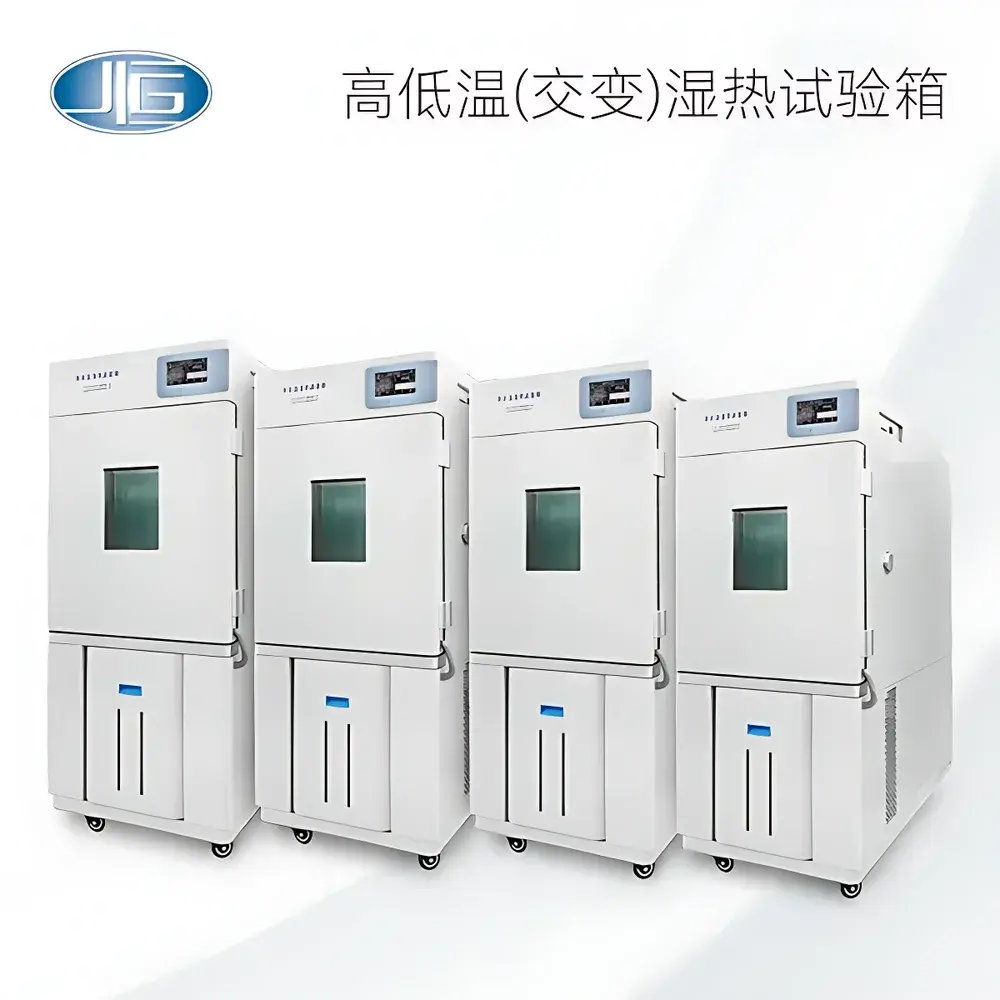
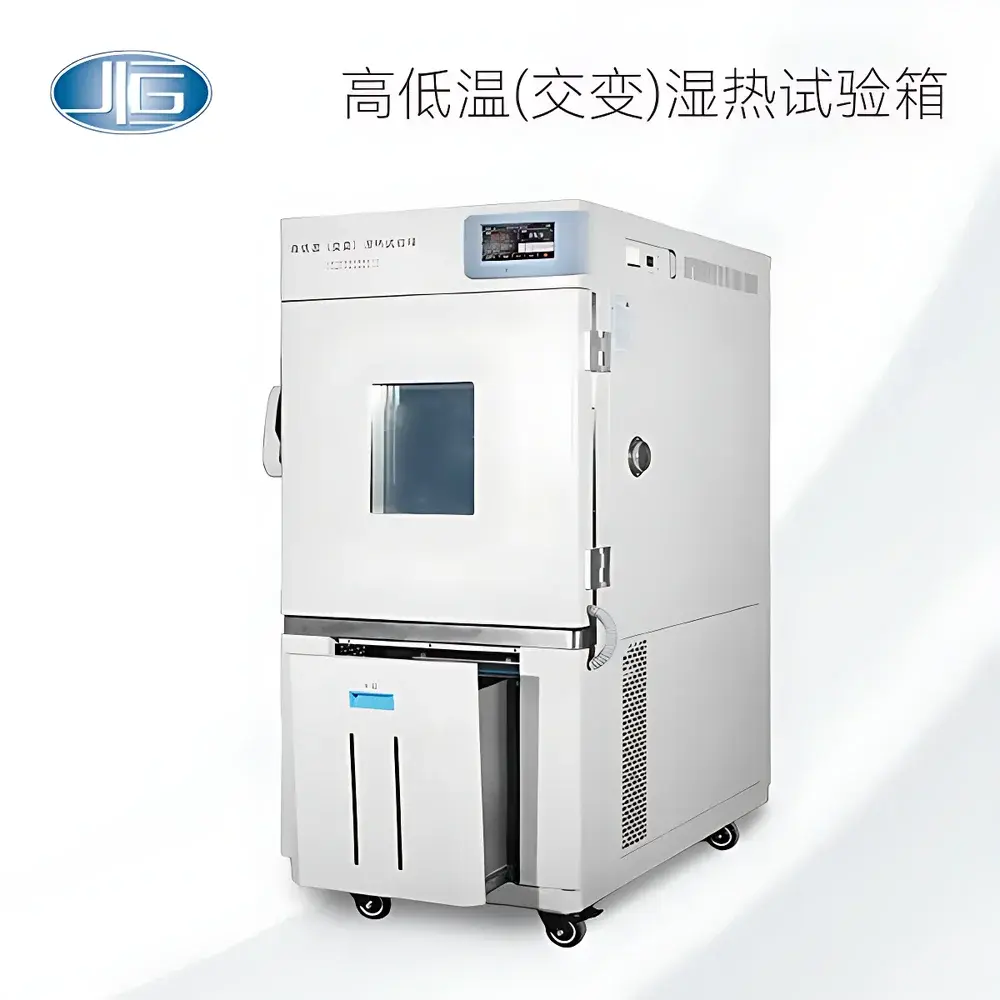
Yiheng BPHS/BPHJS Series Vertical High-Low Temperature & Humidity Cycling Chamber with Color Touchscreen Controller
| Brand | Yiheng |
|---|---|
| Origin | Shanghai, China |
| Manufacturer Type | Direct Manufacturer |
| Country of Origin | China |
| Model | BPHS / BPHJS Series |
| Pricing | Upon Request |
Overview
The Yiheng BPHS/BPHJS Series Vertical High-Low Temperature & Humidity Cycling Chamber is an engineered environmental test system designed for precise, repeatable simulation of dynamic thermal and hygrothermal stress conditions. Based on dual-refrigeration circuit architecture and integrated humidity generation via steam injection or ultrasonic humidification (model-dependent), the chamber operates on fundamental principles of psychrometric control—leveraging dry-bulb/wet-bulb sensing or high-stability capacitive humidity transducers coupled with fuzzy PID temperature-humidity coupling algorithms. It meets core functional requirements for accelerated aging, reliability validation, and qualification testing per IEC 60068-2-1 (cold), IEC 60068-2-2 (dry heat), IEC 60068-2-30 (damp heat, cyclic), and MIL-STD-810H Method 507.5. The vertical configuration optimizes floor space utilization while maintaining uniform internal airflow distribution through a rear-mounted centrifugal circulation fan and optimized baffle-guided wind tunnel design.
Key Features
- Vertical chamber architecture with front-opening double-layer insulated door and magnetic seal gasket for minimized thermal leakage
- Color TFT LCD touchscreen controller (BPHJS series standard) supporting intuitive menu-driven operation in English or Chinese interface
- Fuzzy logic PID control algorithm with auto-tuning capability for simultaneous temperature and humidity regulation; typical temperature stability ±0.5°C, humidity stability ±2% RH (at 25°C/60% RH)
- Imported hermetic scroll compressor (R134a refrigerant) and corrosion-resistant 304 stainless steel interior chamber with radius-corner construction and removable adjustable shelves
- Dual independent safety systems: mechanical over-temperature cut-off switch + electronic digital limiter with audible/visual alarm for over-temperature, under-temperature, humidity deviation, compressor overheat, fan failure, and low-water conditions
- Standard 25 mm or optional 50 mm diameter cable/port access on left sidewall with silicone plug for real-time sensor feedthrough
- Front-accessible pull-out water reservoir with level indicator and anti-spill design for simplified maintenance
Sample Compatibility & Compliance
The chamber accommodates a broad range of sample types—including electronic assemblies, automotive components, polymer packaging, PCBs, medical devices, and optical materials—without requiring internal modifications. Internal dimensions (varies by model; consult datasheet) support standard test specimens up to 300 mm × 300 mm × 300 mm (W×D×H). All models comply with CE marking requirements and conform to electromagnetic compatibility standards EN 61326-1. The control architecture supports audit-ready operation under GLP and GMP environments when configured with optional data logging: full traceability of setpoints, actual values, alarms, and operator actions is maintained with time-stamped records. Optional 21 CFR Part 11-compliant software packages enable electronic signatures, user role management, and immutable data archives.
Software & Data Management
The BPHJS controller includes embedded USB host port (for SD card or flash drive), RS-232 and RS-485 serial interfaces, and optional Ethernet module. Yiheng’s proprietary PC-based control suite (sold separately) enables remote programming of up to 30 chambers simultaneously, real-time multi-channel monitoring, and automated report generation in Excel (.xlsx) or Word (.docx) formats. Data export includes timestamped CSV files containing temperature, relative humidity, ramp rates, dwell times, and alarm events. The software supports curve overlay analysis, statistical process reporting (min/max/mean/stdev), and compliance with ISO/IEC 17025 documentation requirements for calibration and validation records.
Applications
This chamber serves critical roles across R&D, quality assurance, and production release workflows. Typical use cases include: thermal cycling stress screening of solder joints (per IPC-9701), moisture resistance evaluation of conformal coatings (IPC-TM-650 2.6.25), storage stability assessment of pharmaceutical primary packaging (ICH Q1A–Q1E), condensation resistance testing of outdoor enclosures (IEC 60529 IPX4), and preconditioning of lithium-ion battery cells prior to electrical performance testing (UN 38.3 Section 38.3.4). Its programmable profile capability—up to 120 programs, each with 99 segments and 999 cycles—enables complex multi-step sequences such as “-40°C soak → ramp to +85°C at 10°C/min → hold → introduce 85% RH → condensation phase” replicating field-relevant degradation mechanisms.
FAQ
What refrigerant is used, and is it compliant with current environmental regulations?
R134a is employed—a zero-ozone-depletion-potential (ODP = 0) HFC refrigerant permitted under current EU F-Gas Regulation and EPA SNAP program for laboratory-scale environmental chambers.
Can the chamber operate continuously at extreme humidity levels (e.g., 95% RH) without condensation on controls?
Yes—the controller housing features internal humidity shielding and sealed membrane keypad; the display remains fully operational even during prolonged high-RH exposure.
Is third-party calibration certification available?
Factory calibration certificates (traceable to NIM, China) are provided; UKAS or DAkkS-accredited external calibration services can be arranged via authorized partners.
Does the system support validation protocols (IQ/OQ/PQ)?
Yes—comprehensive validation documentation templates (including protocol outlines, acceptance criteria, and test record forms) are supplied upon request for GxP-regulated facilities.
What is the maximum allowable ambient operating temperature for installation?
The unit is rated for ambient temperatures between 5°C and 35°C with ≤80% non-condensing relative humidity; cooling capacity degrades above 30°C ambient without supplemental ventilation.



