
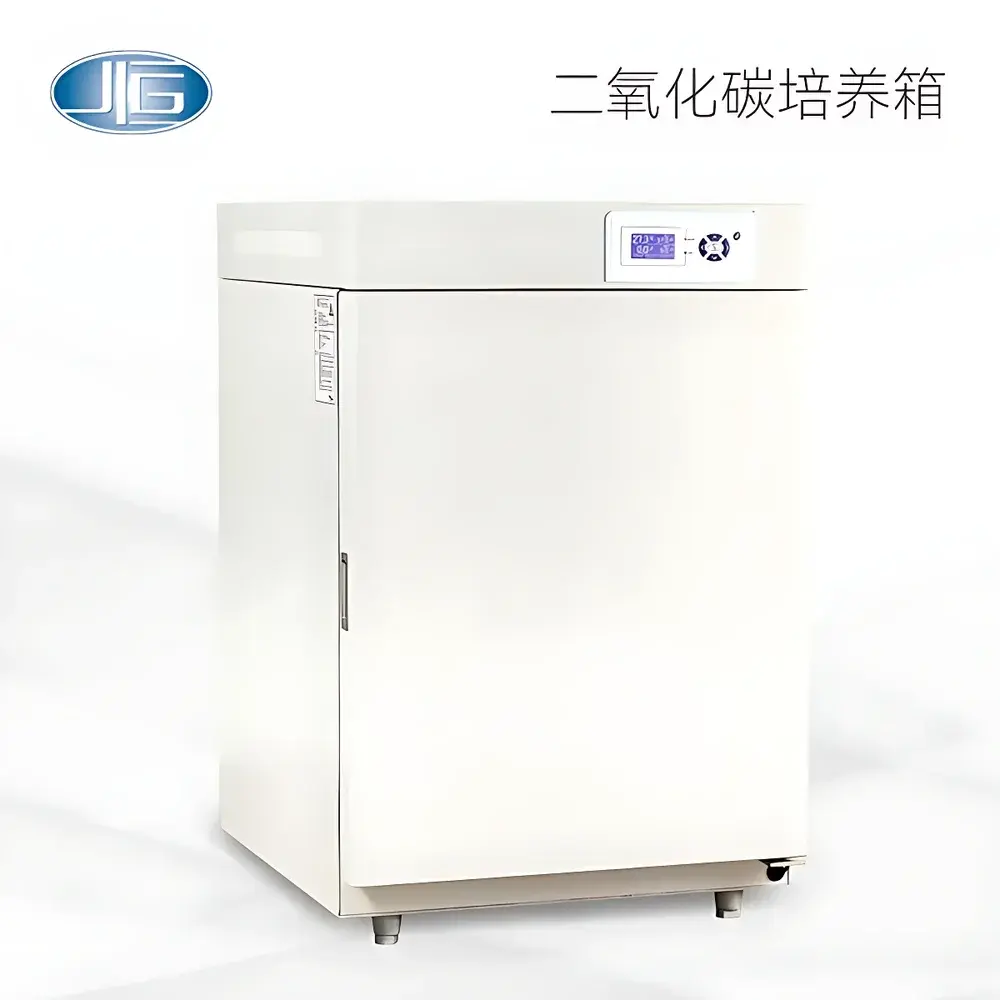
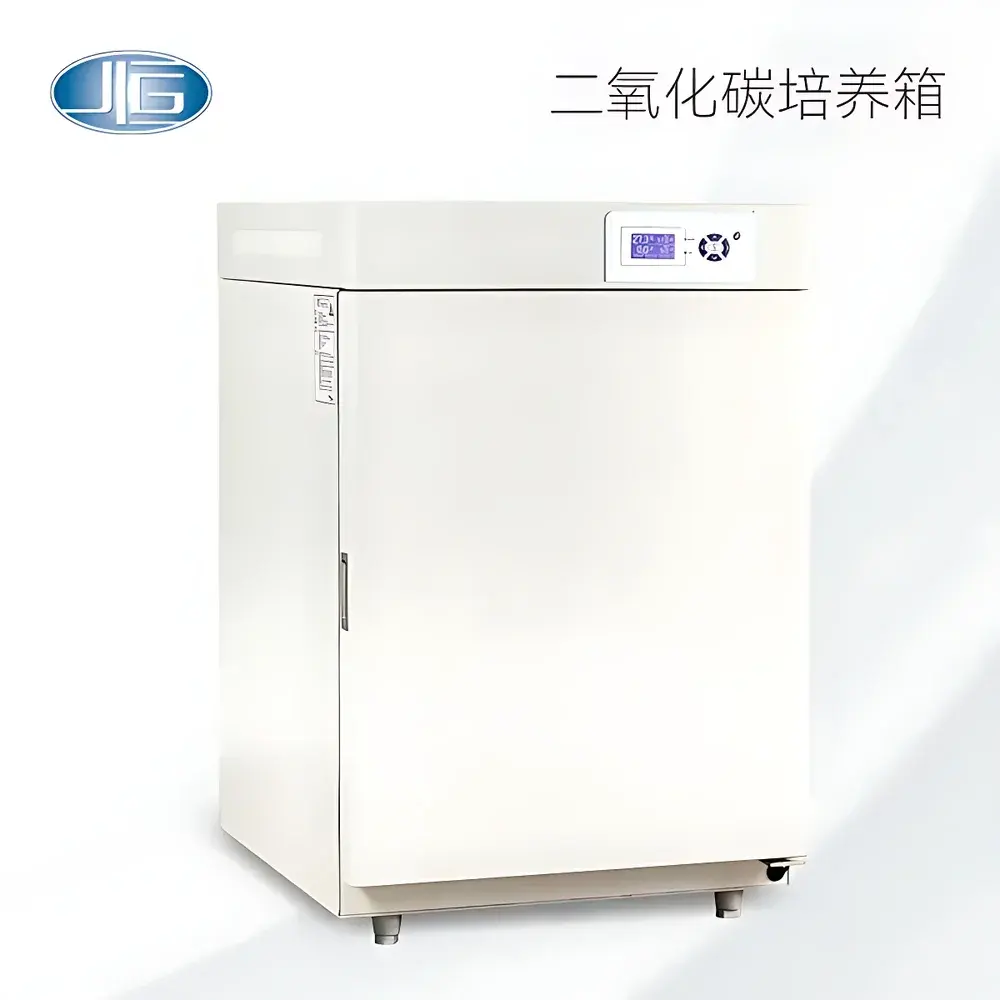
Yiheng BPN-50CH(UV) CO₂ Incubator
| Brand | Yiheng |
|---|---|
| Origin | Shanghai, China |
| Manufacturer Type | Direct Manufacturer |
| Product Category | Domestic |
| Model | BPN-50CH(UV) |
| Instrument Type | Air-Jacketed CO₂ Incubator |
| CO₂ Detection | Infrared (IR) Sensor |
| Temperature Control Range & Accuracy | RT+5°C to 50°C |
| Temperature Uniformity | ±0.2°C |
| CO₂ Concentration Control Range & Accuracy | 0–20% (v/v) |
| Chamber Capacity | 50 L |
| Internal Dimensions (W×D×H) | 400 × 350 × 350 mm |
| Microbial Filter Efficiency | ≥99.99% for particles ≥0.3 µm |
| UV Sterilization | Top-mounted germicidal UV lamp (254 nm) |
Overview
The Yiheng BPN-50CH(UV) is an air-jacketed, microprocessor-controlled CO₂ incubator engineered for reliable, contamination-minimized cell culture in academic research laboratories, biopharmaceutical QC environments, and clinical diagnostic settings. It operates on the principle of maintaining a tightly regulated gaseous microenvironment—specifically 5% CO₂ (standard for mammalian cell culture), precise temperature (typically 37°C), and high relative humidity (>90%)—to replicate physiological conditions required for optimal cellular proliferation and metabolic activity. The incubator employs infrared (IR) CO₂ sensing technology, which provides rapid, drift-free, and humidity-independent gas concentration monitoring—a critical advantage over thermal conductivity (TC) sensors in shared-lab or high-traffic environments where frequent door openings occur. Its air-jacketed thermal architecture ensures faster temperature recovery and superior stability compared to water-jacketed alternatives, while minimizing maintenance overhead.
Key Features
- Air-jacketed thermal design with independent heating circuits for chamber and door—enabling rapid temperature equilibration (<15 min from ambient to 37°C) and minimizing thermal gradients across the workspace.
- Infrared (IR) CO₂ sensor with real-time feedback control loop, delivering long-term calibration stability and immunity to ambient humidity fluctuations; no routine recalibration required under normal operating conditions.
- UV germicidal irradiation system (254 nm wavelength) mounted at the rear top interior surface, activated manually or via scheduled cycles to sterilize circulating air and moisture vapor from the humidification pan—reducing airborne microbial load without chemical agents.
- HEPA-grade microbial inlet filter (≥99.99% efficiency for particles ≥0.3 µm) installed inline with the CO₂ supply, preventing introduction of exogenous bacteria, spores, and particulates into the sterile chamber environment.
- Intelligent fan-speed modulation: airflow velocity automatically adjusts based on thermal load—reducing turbulence during steady-state incubation to prevent evaporation from culture vessels and shear stress on adherent monolayers.
- Heated inner glass door with anti-condensation circuitry, eliminating dew formation and associated microbial bridging pathways between external and internal surfaces.
- Electropolished stainless-steel interior (304 grade) with seamless, radius-cornered construction and removable, adjustable shelving—facilitating thorough cleaning, autoclave-compatible component handling, and compliance with ISO 13485 and GLP documentation requirements.
Sample Compatibility & Compliance
The BPN-50CH(UV) accommodates standard tissue-culture formats including T-25/T-75 flasks, 6-/12-/24-/96-well plates, Petri dishes, and roller bottles (up to 500 mL). Its 50 L usable volume supports medium-throughput workflows without compromising environmental uniformity. The incubator meets essential safety and performance benchmarks aligned with IEC 61010-1 (Laboratory Equipment Safety) and complies with ISO 13485:2016 for medical device manufacturing support environments. While not FDA 510(k)-cleared as a standalone medical device, its design supports adherence to USP , ASTM E1755-20 (Standard Guide for Cell Culture Incubators), and EU Annex 1 (Manufacture of Sterile Medicinal Products) principles regarding environmental control and contamination risk mitigation.
Software & Data Management
The microprocessor-based LCD controller features password-protected parameter setting, real-time display of chamber temperature, CO₂ concentration, and elapsed UV cycle time. Optional data logging (via RS-485 or USB interface, depending on firmware version) enables export of time-stamped environmental records for audit trails. When integrated with laboratory information management systems (LIMS), the incubator supports basic 21 CFR Part 11-compliant electronic recordkeeping—including user authentication, change history, and alarm event timestamping—suitable for GMP-aligned cell banking and process validation protocols.
Applications
- Mammalian and insect cell line propagation (e.g., HEK293, CHO-K1, Sf9) requiring strict pH buffering via CO₂/HCO₃⁻ equilibrium.
- Stem cell expansion and differentiation assays sensitive to thermal and gaseous microenvironmental perturbations.
- Microbiological co-culture studies where selective CO₂ enrichment suppresses non-target organisms.
- Regulatory batch testing of biologics, vaccines, and monoclonal antibodies per pharmacopeial methods (e.g., EP 2.6.27, USP ).
- Teaching laboratories conducting foundational cell biology experiments with reproducible environmental control.
FAQ
What is the recommended calibration interval for the IR CO₂ sensor?
Under continuous operation in controlled lab environments, the IR sensor requires verification every 6 months using a certified reference gas (5.0 ± 0.1% CO₂ in N₂); full recalibration is rarely necessary unless exposed to condensate ingress or physical shock.
Can the UV lamp be operated while samples are inside the chamber?
No—UV sterilization must only be performed during empty-chamber cycles. The unit includes interlocked safety cutoffs that disable UV emission when the door is open or if internal temperature exceeds 40°C.
Is the incubator compatible with CO₂ supply lines using medical-grade gas regulators?
Yes; the inlet accepts standard 1/8″ NPT threaded connections and is rated for input pressures between 0.02–0.06 MPa (2–6 psi), compatible with most hospital-grade CO₂ manifolds and pressure-reducing valves.
How does the heated door function impact energy consumption?
The door heating circuit draws ≤15 W and activates only when chamber humidity exceeds 85% RH and ambient temperature falls below 22°C—optimized to minimize standby power use while ensuring consistent condensation control.
Does the unit support remote monitoring via Ethernet or Wi-Fi?
The base model does not include network connectivity; however, third-party IoT adapters (e.g., Modbus TCP gateways) can be integrated via the RS-485 port for centralized environmental dashboarding in multi-incubator facilities.




