
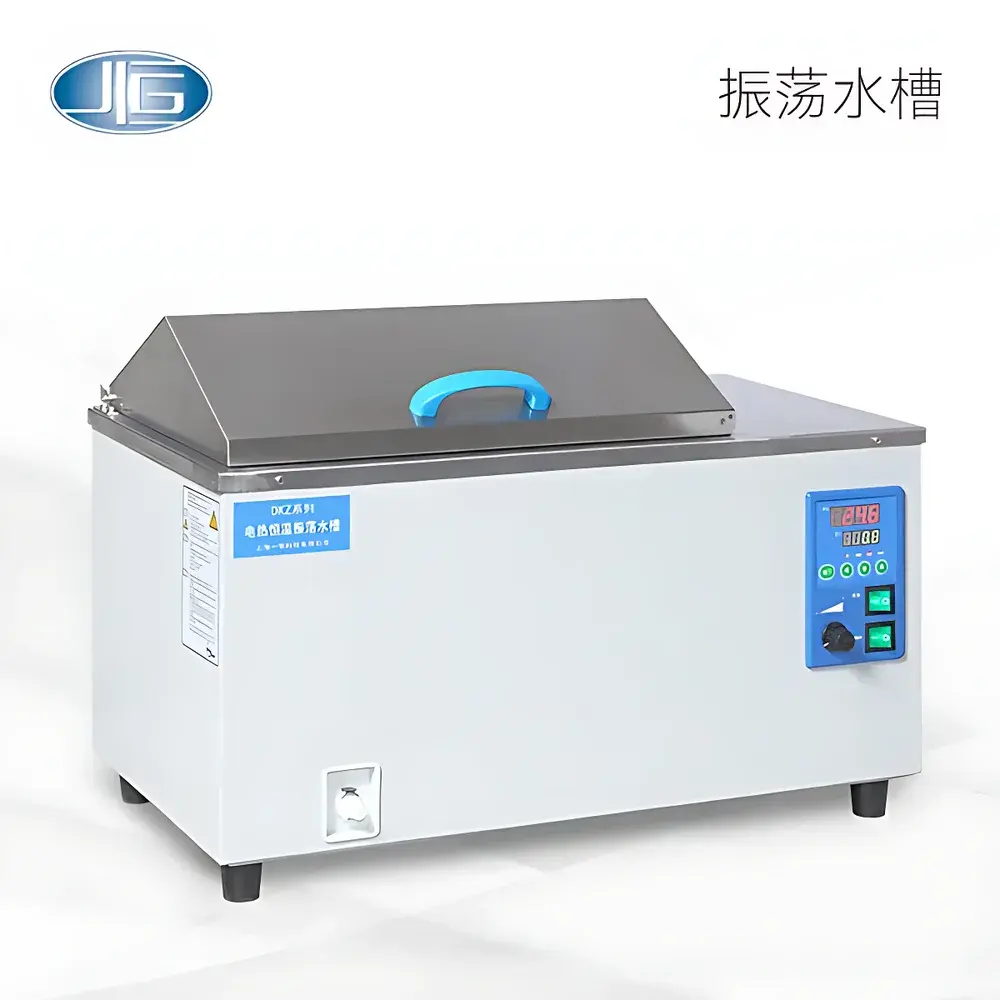
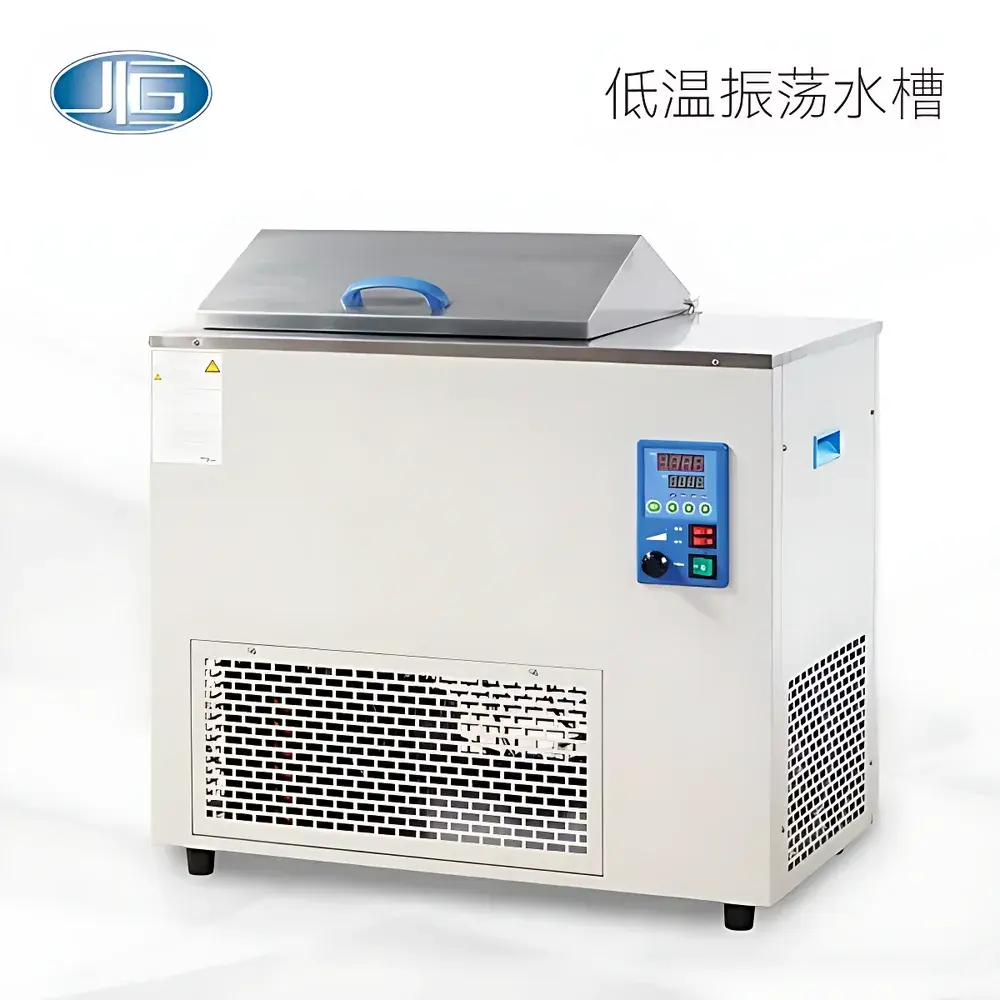
YIHENG DKZ Series Constant-Temperature Orbital Shaker Bath
| Brand | YIHENG |
|---|---|
| Origin | Shanghai, China |
| Manufacturer Type | Direct Manufacturer |
| Product Category | Domestic |
| Model | DKZ Series |
| Price Range | USD 980 – 3,300 (FOB Shanghai) |
| Instrument Type | Water Bath Constant-Temperature Orbital Shaker |
| Oscillation Frequency | 30–180 rpm |
| Oscillation Amplitude | 30 mm or 40 mm (specify at order) |
| Temperature Range | RT+5°C to 99°C (standard), or 10°C to 99°C (low-temperature variant) |
| Shelf Capacity | 20 standard shake flasks (e.g., 250 mL Erlenmeyer) |
| Construction | Stainless Steel 304 Interior & Lid |
| Control System | Microprocessor-Based PID Temperature Controller with Timer |
| Safety Features | Over-Temperature Audio-Visual Alarm, Heater Open-Circuit Detection, Sensor Fault Diagnostics, Upper/Lower Limit Thermal Alerts |
| Drive System | AC Gear Motor with Stepless Speed Regulation |
| Optional | Multi-Stage Programmable Controller (7 programs × 63 steps |
| time per step | 1–99 h 59 min) |
Overview
The YIHENG DKZ Series Constant-Temperature Orbital Shaker Bath is a precision-engineered laboratory instrument designed for simultaneous temperature control and orbital agitation of liquid cultures, enzymatic reactions, solubility studies, and cell suspension protocols. It operates on the principle of controlled convection-driven heat transfer combined with uniform orbital motion—typically 20–25 mm radius circular displacement—to ensure homogeneous mixing while maintaining thermal stability across the entire water bath volume. Unlike air-jacketed incubator shakers, this unit employs direct-contact water immersion heating and forced convection circulation, delivering superior temperature uniformity (±0.3°C at 37°C) and faster thermal equilibration. Its dual-range capability—RT+5°C to 99°C for general use, and 10°C to 99°C for low-temperature applications—supports both mesophilic microbiological growth and cold-sensitive protein expression workflows. The bath’s stainless steel 304 construction ensures long-term corrosion resistance in saline, buffered, or mildly acidic aqueous environments common in molecular biology and fermentation labs.
Key Features
- Stainless steel 304 interior tank and hinged lid—resistant to chlorides, phosphate buffers, and ethanol-based cleaning agents; fully autoclavable components compatible with GLP lab hygiene standards.
- Microprocessor-based PID temperature controller with ±0.1°C setpoint resolution, integrated digital timer (0–999 minutes), and real-time deviation display.
- Self-diagnostic system continuously monitors heater integrity, PT100 sensor functionality, and thermal limit compliance—triggering audible/visual alerts and automatic cut-off upon fault detection.
- AC gearmotor with stepless speed regulation (30–180 rpm), delivering consistent torque across the full range without gear slippage or harmonic vibration—critical for shear-sensitive mammalian cell cultures.
- Modular oscillation platform with quick-release fasteners enables tool-free removal of the entire shelf assembly for thorough decontamination between experiments.
- Soft-start oscillation initiation prevents splash-out during water bath startup—particularly essential when handling high-volume flasks (>500 mL) or low-surface-tension media.
Sample Compatibility & Compliance
The DKZ Series accommodates up to 20 standard Erlenmeyer flasks (250 mL), or equivalently sized culture vessels, arranged on a single large-diameter orbital plate. Flask clamping is not integrated; users employ universal rubber grommets or optional spring-loaded flask holders (sold separately) to secure varying neck diameters (24–45 mm). The unit complies with IEC 61010-1:2010 for electrical safety in laboratory equipment and meets CE marking requirements for electromagnetic compatibility (EMC Directive 2014/30/EU). While not certified for ISO 13485 or FDA 21 CFR Part 11 out-of-the-box, its programmable controller supports audit-trail-capable data logging when interfaced with validated third-party software—enabling alignment with GMP/GLP documentation practices in regulated bioprocessing labs.
Software & Data Management
The standard configuration includes local front-panel operation only. An optional multi-stage programmable controller adds advanced scheduling capability: up to 7 independent programs, each containing 63 sequential steps. Each step defines target temperature, dwell time (1 minute to 99 h 59 min), and ramp rate (°C/min)—enabling complex thermal profiles such as heat-shock induction or gradual cooling post-incubation. All parameter changes are timestamped and stored in non-volatile memory. For traceability, external RS-232 or USB-to-serial adapters allow connection to PC-based LabVIEW or Python-controlled acquisition systems. Raw temperature and RPM logs can be exported in CSV format for statistical process control (SPC) analysis per ASTM E2587-22 guidelines.
Applications
- Microbial growth kinetics under controlled thermal and agitation conditions (e.g., E. coli expression optimization per ISO 11133:2014).
- Suspension culture of insect or mammalian cells requiring precise oxygen transfer and minimal shear stress.
- Enzyme activity assays where reaction rate depends on both temperature and mixing homogeneity (e.g., lipase hydrolysis per AOAC 993.21).
- Solubility and dissolution testing of pharmaceutical excipients in aqueous media (aligned with USP <711> principles).
- Preparation of competent cells, plasmid minipreps, and antibody purification buffers requiring consistent thermal equilibration prior to centrifugation.
FAQ
What is the temperature uniformity specification across the bath volume?
At 37°C, uniformity is ±0.3°C (measured at 9 points using calibrated PT100 probes per ASTM E145-21 Annex A3).
Can the DKZ bath operate continuously for 72+ hours?
Yes—the system is rated for continuous duty at any setpoint within its operational range, provided ambient temperature remains ≤30°C and ventilation clearance ≥10 cm on all sides.
Is the water bath compatible with sterilization via hydrogen peroxide vapor (HPV)?
The stainless steel chamber and sealed electronics housing resist HPV exposure; however, prolonged cycles (>60 min at >1000 ppm) may degrade the silicone door gasket—replacement gaskets are available as spare parts.
Does the optional programmable controller support password-protected parameter editing?
Yes—two-tier access (operator and administrator) is enforced via 4-digit PIN; all edits are logged with user ID, timestamp, and pre/post values.
What maintenance intervals are recommended for optimal performance?
Biannual inspection of water level sensor calibration and annual verification of PID loop response using NIST-traceable dry-block calibrators (recommended per ISO/IEC 17025:2017 Clause 6.4.10).
Related Products



