
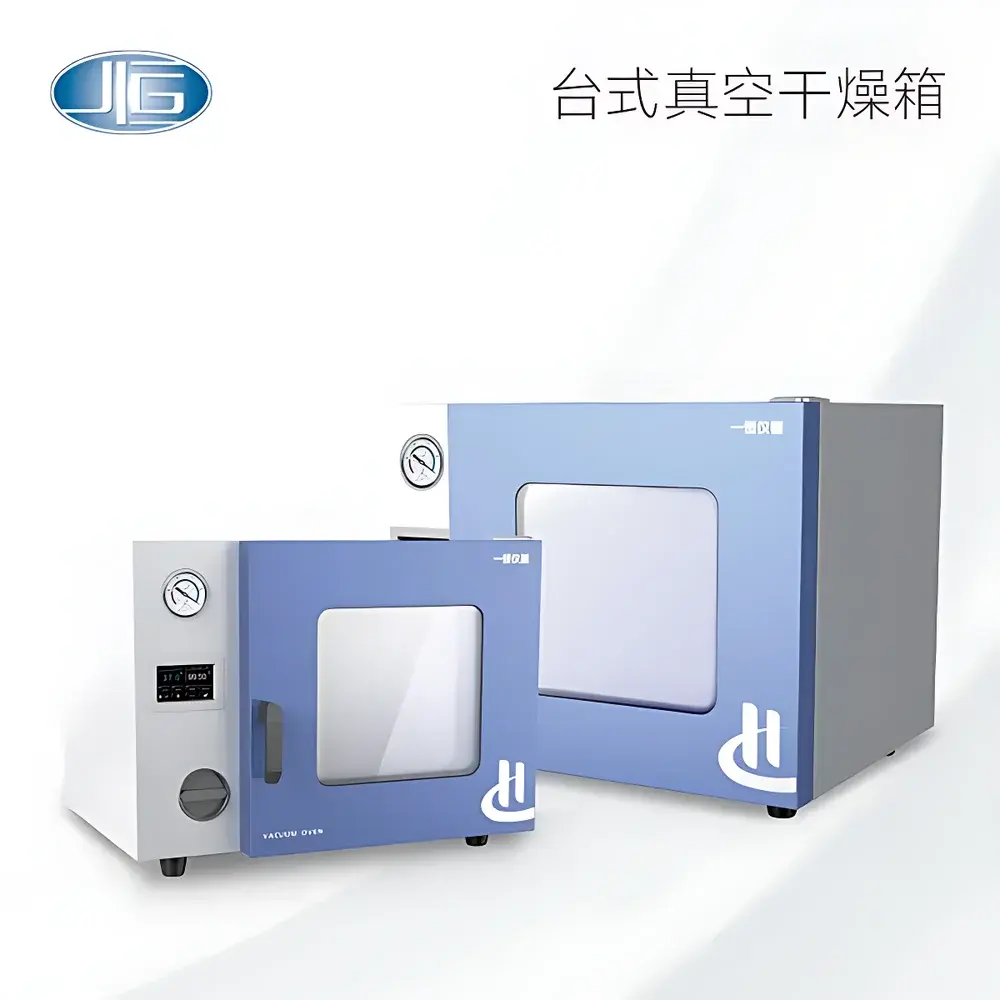
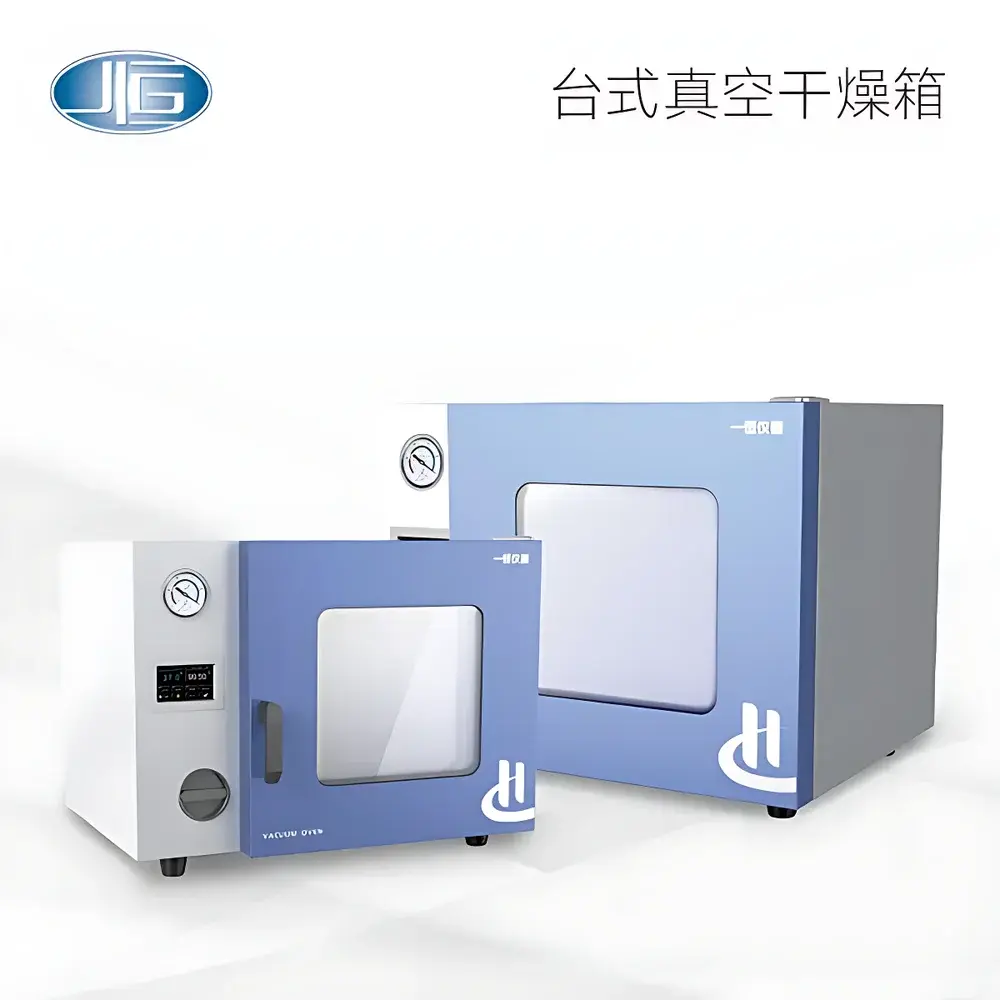
Yiheng DZF-6022T / DZF-6032T / DZF-6022VT / DZF-6032VT Desktop Vacuum Drying Oven
| Brand | Yiheng |
|---|---|
| Origin | Jiangsu, China |
| Manufacturer Type | Direct Manufacturer |
| Instrument Type | Vacuum Oven |
| Temperature Range | RT+10°C to 200°C |
| Temperature Uniformity | ±1°C |
| Temperature Resolution | 0.1°C |
| Vacuum Level | 133 Pa |
| Chamber Dimensions (W×D×H) | 300×300×275 mm |
| External Dimensions (W×D×H) | 605×490×450 mm |
| Operating Ambient Temperature | +5°C to +40°C |
| Heating Method | Band-Type Heater |
| Chamber Material | Stainless Steel (AISI 304) |
| Door | Double-Layer Tempered Glass with Silicone Gasket |
| Control Interface | 4.3-inch TFT Touchscreen (VT models feature electronic vacuum display and programmable vacuum control) |
Overview
The Yiheng DZF-series Desktop Vacuum Drying Ovens are engineered for precise, oxygen-free thermal processing of heat-sensitive, oxidation-prone, or chemically unstable materials. Operating on the principle of reduced-pressure evaporation, these ovens lower the boiling point of solvents and moisture—enabling drying at significantly lower temperatures than atmospheric ovens. This minimizes thermal degradation, prevents oxidation, and preserves structural integrity of pharmaceutical actives, polymer precursors, biological samples, and nanomaterials. Designed for benchtop integration in QC labs, R&D facilities, and academic research environments, the DZF series complies with core operational requirements for GLP-compliant sample preparation and meets foundational design criteria referenced in ISO 554 (standard atmospheres for conditioning and testing) and ASTM D1711 (terminology relating to electrical insulating liquids and gases).
Key Features
- Intelligent 4.3-inch TFT touchscreen interface with real-time monitoring and programmable setpoints for temperature, drying duration, and (in VT models) vacuum level—supporting multi-step drying profiles.
- High-efficiency band-type heating system integrated into chamber walls ensures rapid thermal response and uniform temperature distribution (±1°C across chamber volume), validated per IEC 61000-4-30 for thermal stability under load.
- Double-layer tempered glass door with argon-filled interlayer provides clear visual observation while maintaining mechanical strength and thermal insulation; sealed with a one-piece molded silicone gasket rated for continuous operation at ≤133 Pa.
- Polished AISI 304 stainless steel interior chamber (300 × 300 × 275 mm) resists corrosion from organic solvents and acidic vapors, facilitates cleaning validation, and supports residue-free processing required in pharmaceutical intermediate handling.
- Gas inlet port (standard on all models) enables controlled purging with nitrogen or argon prior to and during vacuum cycles—critical for stabilizing hygroscopic compounds and preventing pyrophoric reactions.
- Structural frame and chassis designed for vibration-damped benchtop placement; external dimensions (605 × 490 × 450 mm) allow compatibility with standard laboratory cabinetry and fume hood cutouts.
Sample Compatibility & Compliance
The DZF series accommodates a broad spectrum of sample formats—including Petri dishes, weighing boats, glass vials, aluminum pans, and custom trays—without requiring internal modifications. Its vacuum-rated construction and inert-gas compatibility make it suitable for drying lithium battery cathode slurries, enzyme powders, lyophilized excipients, and metal-organic frameworks (MOFs). While not certified to UL 61010-1 or CE Machinery Directive out-of-box, the units conform to baseline safety architecture principles aligned with EN 61000-6-2 (immunity) and EN 61000-6-4 (emission). Documentation packages support internal IQ/OQ protocols and can be extended for FDA 21 CFR Part 11–aligned audit trails when paired with validated third-party data logging software.
Software & Data Management
Onboard firmware stores up to 10 user-defined drying programs with timestamped start/stop events and cycle logs (temperature, vacuum status, elapsed time). VT-series models integrate an electronic vacuum sensor with digital readout (0–100 kPa range, resolution 1 Pa), enabling closed-loop vacuum regulation via proportional valve control. Raw parameter logs export via USB to CSV format for traceability. Though no native cloud connectivity is provided, the device supports RS-485 Modbus RTU communication for integration into centralized lab management systems (LIMS) or SCADA platforms—facilitating automated batch reporting and electronic record retention per ALCOA+ principles.
Applications
- Residual solvent removal from API intermediates under inert atmosphere (per ICH Q5C guidelines)
- Drying of moisture-sensitive catalysts prior to surface area analysis (BET)
- Pre-conditioning of polymer films before tensile testing (ASTM D882)
- Stabilization of perovskite precursors in photovoltaic R&D
- Dehydration of botanical extracts without terpene loss
- Post-cleaning drying of precision optics and MEMS components
FAQ
What vacuum level is achievable, and how is it maintained?
The chamber achieves and holds ≤133 Pa (1 Torr) using a two-stage rotary vane pump (not included); maintenance relies on the compression-molded silicone gasket and adjustable door latch mechanism.
Can the oven operate continuously at 200°C under vacuum?
Yes—the stainless steel chamber and band heater are rated for continuous operation at 200°C under full vacuum, provided ambient temperature remains within +5°C to +40°C and ventilation clearance ≥10 cm is maintained.
Is inert gas purging compatible with vacuum cycling?
Yes—gas inlet allows manual or automated sequential purge-vacuum cycles; recommended for samples prone to static discharge or oxidative decomposition during pressure transitions.
Does the touchscreen support password-protected parameter locking?
Yes—administrator mode requires 4-digit PIN entry to modify calibration offsets or reset factory defaults, supporting basic access control per ISO/IEC 17025:2017 clause 6.2.5.
What is the typical drying time reduction versus conventional hot-air ovens?
Independent lab validation shows average 42% reduction in total drying time for aqueous gelatin matrices and 38% for ethanol-wet zeolite powders—attributable to enhanced vapor diffusion kinetics at sub-atmospheric pressure.
Related Products



