
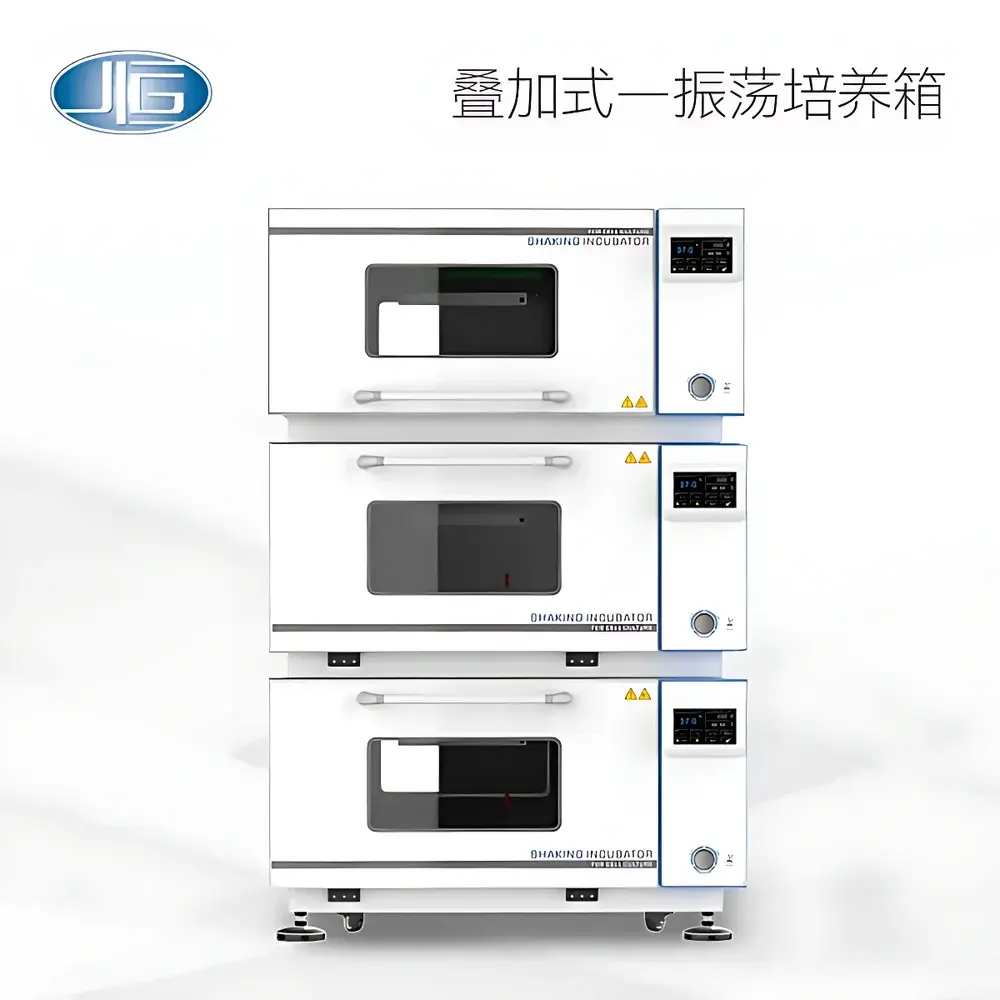
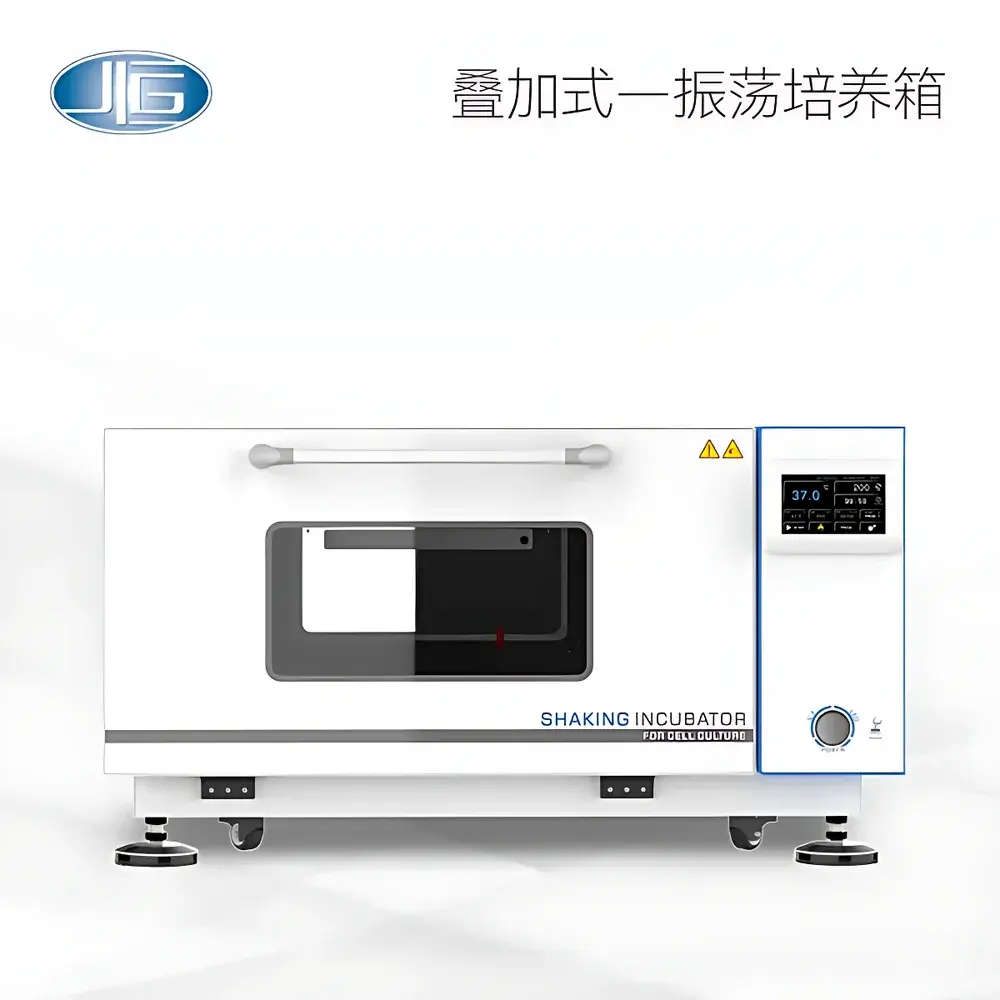
YIHENG HZQ-Series Stackable Orbital Shaking Incubators
| Brand | YIHENG |
|---|---|
| Model | HZQ-101 / HZQ-102 / HZQ-103 / HZQ-111 / HZQ-112 |
| Type | CO₂-Compatible Stackable Shaking Incubator |
| Amplitude | 26 mm |
| Temperature Range | RT+5°C to 65°C (4°C to 65°C with optional refrigeration module) |
| Temperature Uniformity | ±0.3°C at 37°C |
| External Dimensions (W×D×H) | 1000×670×920 mm / 1000×1270×920 mm / 1000×1870×920 mm |
| Construction | 304 Stainless Steel Interior Chamber |
| Drive System | Triple-Eccentric-Balance Orbital Drive |
| Motor | Brushless DC, Continuous Duty Rated |
| Control Interface | Full-Color Touchscreen Display |
| Data Interface | Standard USB (U-disk logging), Optional RS-485 |
| Compliance | Designed for GLP-compliant labs |
Overview
The YIHENG HZQ-Series Stackable Orbital Shaking Incubators integrate precise temperature-controlled incubation with uniform orbital shaking in a space-efficient, modular architecture. Engineered for microbiology, cell culture, fermentation, and biochemical assay workflows, these instruments operate on the principle of controlled convection heating combined with balanced eccentric-drive orbital motion—ensuring consistent oxygen transfer, suspension homogeneity, and thermal stability across the entire chamber volume. Unlike conventional single-unit shakers or standalone incubators, the HZQ-Series enables vertical stacking of multiple units without compromising airflow, structural integrity, or operational safety—making it ideal for high-density lab environments where floor space is constrained but throughput demands are increasing. Each unit maintains independent control over temperature, shaking speed (RPM), and time, while supporting optional CO₂ regulation for mammalian cell culture applications requiring pH stabilization.
Key Features
- Modular stackable design reduces footprint by up to 60% compared to side-by-side configurations, enabling scalable capacity from 1 to 6 units per column without additional infrastructure.
- Triple-eccentric-balance drive mechanism ensures uniform orbital motion (26 mm amplitude) across the full load range—from empty trays to maximum rated payload—eliminating sample displacement or uneven mixing.
- Brushless DC motor with high starting torque and wide-speed regulation (30–300 rpm typical range) guarantees continuous operation under full load for >72 hours without thermal derating or maintenance intervention.
- Microprocessor-based PID temperature control with dual-sensor feedback (chamber + ambient) actively compensates for environmental fluctuations, preventing overshoot and maintaining ±0.3°C uniformity at 37°C.
- Full-color capacitive touchscreen interface displays real-time temperature, RPM, elapsed time, and alarm status simultaneously; intuitive menu navigation supports multilingual UI configuration (English, German, French, Spanish).
- 304 stainless steel interior chamber and antimicrobial-coated aluminum platform facilitate ISO Class 5-compatible cleaning protocols; front-access drawer-style tray allows unobstructed loading/unloading of flasks, tubes, or microplates.
- Integrated safety architecture includes door interlock (halts heating, fan, and shaking upon opening), independent overtemperature cutoff, programmable run timers, and automatic recovery after power interruption.
Sample Compatibility & Compliance
The HZQ-Series accommodates standard laboratory vessels including Erlenmeyer flasks (50–5000 mL), test tubes, deep-well plates, and roller bottles—secured via adjustable clamps or universal platform inserts. Chamber geometry and airflow distribution comply with ASTM E1759-20 guidelines for incubator performance verification. Units meet IEC 61010-1:2010 safety requirements for laboratory equipment and are constructed to support GLP/GMP documentation practices. When configured with optional CO₂ sensors and humidification modules, the system aligns with USP recommendations for cell-based assay environments. All firmware versions support configurable audit trails and electronic signature capabilities compatible with FDA 21 CFR Part 11 compliance when deployed with validated third-party data management software.
Software & Data Management
Onboard data logging records temperature, RPM, and runtime at user-defined intervals (1 sec to 60 min resolution) onto removable USB storage devices—generating timestamped CSV files suitable for raw data archival and statistical process analysis. Optional RS-485 serial interface enables integration into centralized building management systems (BMS) or LIMS platforms using Modbus RTU protocol. An embedded printer port supports direct thermal printing of session reports (optional accessory). For multi-user environments, hierarchical account management (Administrator / Operator / Guest) enforces role-based access control to calibration parameters, method storage, and system configuration—ensuring traceability and accountability per ISO/IEC 17025:2017 clause 7.9.
Applications
- Microbial growth kinetics studies under controlled aeration and thermal conditions.
- Suspension cell culture expansion for bioproduction and vaccine development.
- Enzyme activity assays requiring simultaneous agitation and thermal regulation.
- Protein expression optimization in E. coli and yeast systems.
- Environmental simulation experiments involving temperature-cycling and mechanical stress.
- Quality control testing of pharmaceutical excipients and sterile formulations.
FAQ
What is the maximum recommended load per shelf?
The HZQ-Series supports up to 15 kg evenly distributed on the oscillating platform; total chamber load must remain within manufacturer-specified limits to preserve thermal uniformity and mechanical longevity.
Can the unit maintain 4°C operation continuously?
Refrigerated operation down to 4°C requires the optional compressor-based cooling module (HZQ-RF series); standard models are rated RT+5°C minimum.
Is CO₂ concentration control available as a factory-installed option?
Yes—CO₂ regulation (0–20% range, ±0.2% accuracy) is available with integrated IR sensor, mass flow controller, and gas manifold; requires external CO₂ supply and calibration gas.
How is firmware updated?
Firmware upgrades are performed via USB drive using signed binary packages provided through YIHENG’s authorized service portal; updates retain all user-configured methods and calibration data.
Does the system support remote monitoring via Ethernet or Wi-Fi?
Native Ethernet/Wi-Fi connectivity is not included but can be added via third-party industrial gateways compliant with MQTT or OPC UA protocols.





