
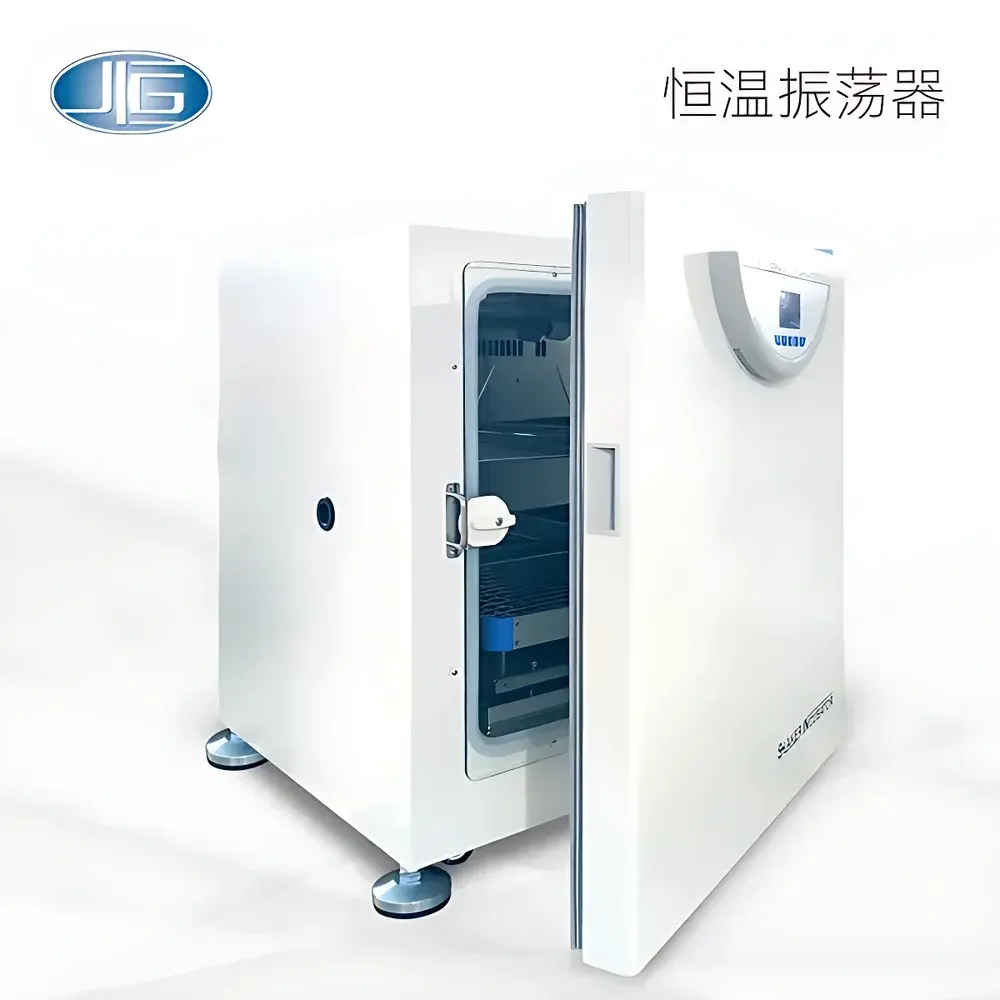
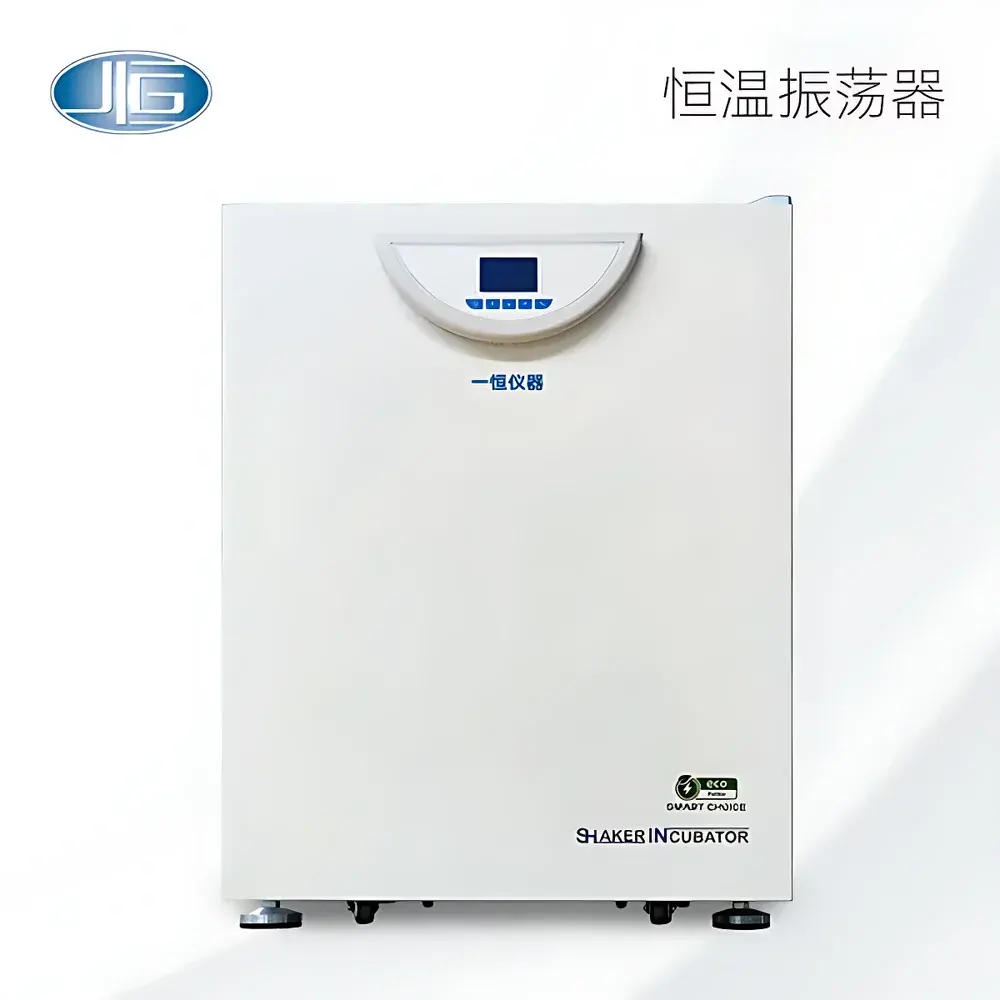
Yiheng HZQ-X300C Dual-Layer Constant-Temperature Orbital Shaker
| Brand | Yiheng |
|---|---|
| Origin | Shanghai, China |
| Manufacturer Type | Direct Manufacturer |
| Regional Category | Domestic (China) |
| Model | HZQ-X300C |
| Quotation | USD 3,500 (FOB Shanghai) |
| Instrument Type | General-Purpose Orbital Shaker |
| Timer Range | 0–5999 min |
| Oscillation Speed | 40–300 rpm |
| Orbit Diameter | 20 mm |
| Temperature Range | 5–65 °C |
| Shelf Quantity | 1 stainless-steel platform |
Overview
The Yiheng HZQ-X300C Dual-Layer Constant-Temperature Orbital Shaker integrates precise temperature control with uniform orbital motion in a single compact footprint—engineered for microbiology, cell culture, molecular biology, and biochemical incubation applications. Unlike conventional shakers or standalone incubators, this unit operates as both a temperature-regulated orbital shaker and a static incubator: after shaking ceases, the system maintains setpoint temperature without mechanical interruption, enabling seamless transition from agitation to stationary incubation. Its core thermal architecture employs an eco-friendly R134a-free refrigeration system paired with PID-controlled heating and forced-air convection, ensuring ±0.3 °C temperature uniformity across the chamber (measured at 37 °C, no load). The orbital drive mechanism utilizes a brushless DC motor with high starting torque and broad speed regulation (40–300 rpm), delivering consistent motion profiles over extended durations—validated for continuous operation exceeding 72 hours without thermal derating or speed drift.
Key Features
- Dual-mode operational logic: automatic mode-switching between orbital shaking and static incubation without manual reconfiguration or equipment relocation.
- Large-format tempered glass observation window with integrated thermal insulation—enabling real-time visual monitoring while minimizing heat loss and condensation.
- Single-tier 304 stainless-steel platform (20 mm orbit diameter), corrosion-resistant and autoclavable; compatible with universal clamps, flask holders, microplate adapters, and custom fixtures (sold separately).
- Intelligent microprocessor control with LCD interface: displays real-time temperature, speed, remaining time, and system status; supports parameter recall after power interruption.
- Comprehensive safety architecture: door interlock disables heating, fan, and oscillation upon opening; independent overtemperature cutoff (adjustable limit); soft-start motor control prevents sample splashing and belt slippage.
- Low-heat brushless DC motor with sealed bearings—designed for >20,000-hour service life and zero maintenance under nominal load conditions.
- 25 mm access port on left chamber wall for external sensor cabling, gas inlet tubing, or pH/DO probe integration.
Sample Compatibility & Compliance
The HZQ-X300C accommodates standard laboratory vessels including Erlenmeyer flasks (50–2000 mL), test tubes, Petri dishes, and multiwell plates up to 96-well format. Chamber dimensions (W × D × H: 480 × 420 × 320 mm) support high-density loading while maintaining airflow symmetry. All wetted surfaces—including inner chamber, platform, and shelf—are electropolished 304 stainless steel, compliant with ISO 14644-1 Class 8 cleanroom handling protocols for aseptic workflows. Optional UV-C germicidal lamp (254 nm, 15 W) mounted on rear wall meets ISO 15223-1 requirements for periodic decontamination of air and surface bioburden in cell culture environments. Unit conforms to IEC 61010-1:2010 for electrical safety and EN 60335-1:2012 for household and similar electrical appliances—certified for laboratory use under GLP-compliant facilities.
Software & Data Management
Standard configuration includes RS-485 serial interface (Modbus RTU protocol) and USB host port for direct data export to USB flash drives. Optional software package enables time-synchronized logging of temperature, speed, elapsed time, and alarm events at user-defined intervals (1–60 sec resolution). Exported .csv files are compatible with MATLAB, Python pandas, and LIMS platforms. Audit trail functionality records operator ID, parameter changes, and system faults—supporting FDA 21 CFR Part 11 compliance when deployed with electronic signature modules. Firmware supports firmware-over-the-air (FOTA) updates via USB; version history and calibration logs are retained in non-volatile memory.
Applications
- Microbial growth kinetics studies (E. coli, yeast, Bacillus spp.) under controlled aeration and temperature gradients.
- Mammalian and insect cell suspension cultures requiring low-shear orbital mixing (e.g., CHO, HEK293, Sf9).
- Enzyme reaction profiling, protein solubilization, and antigen-antibody binding assays where thermal stability and mixing homogeneity are critical.
- Environmental microbiology: BOD testing, activated sludge simulation, and biodegradation screening per ASTM D5338 and ISO 14855-2.
- Pharmaceutical QC: dissolution media conditioning, excipient dispersion, and stability-indicating assay preparation.
FAQ
Does the HZQ-X300C support multi-segment programmable protocols?
Yes—optional firmware upgrade enables up to 16-step temperature/speed/time sequences with ramp-hold logic and event-triggered outputs.
What is the maximum flask capacity at 300 rpm?
At full speed, the platform safely accommodates four 1 L Erlenmeyer flasks (50% fill volume) or eight 500 mL flasks with standard spring clamps.
Is validation documentation available for GMP environments?
IQ/OQ templates, traceable calibration certificates (NIST-traceable thermistors and tachometers), and risk assessment reports are provided upon request.
Can the unit operate unattended overnight?
Yes—built-in timer, power-fail recovery, and dual-limit thermal protection enable fully autonomous 24/7 operation within specified environmental conditions (15–30 °C ambient, <80% RH).
Is the UV sterilization module validated for mycoplasma reduction?
Independent third-party testing confirms ≥3-log reduction of Mycoplasma hominis and Acholeplasma laidlawii after 30 min exposure at 1 m distance—per ISO 13408-1 Annex C methodology.




