
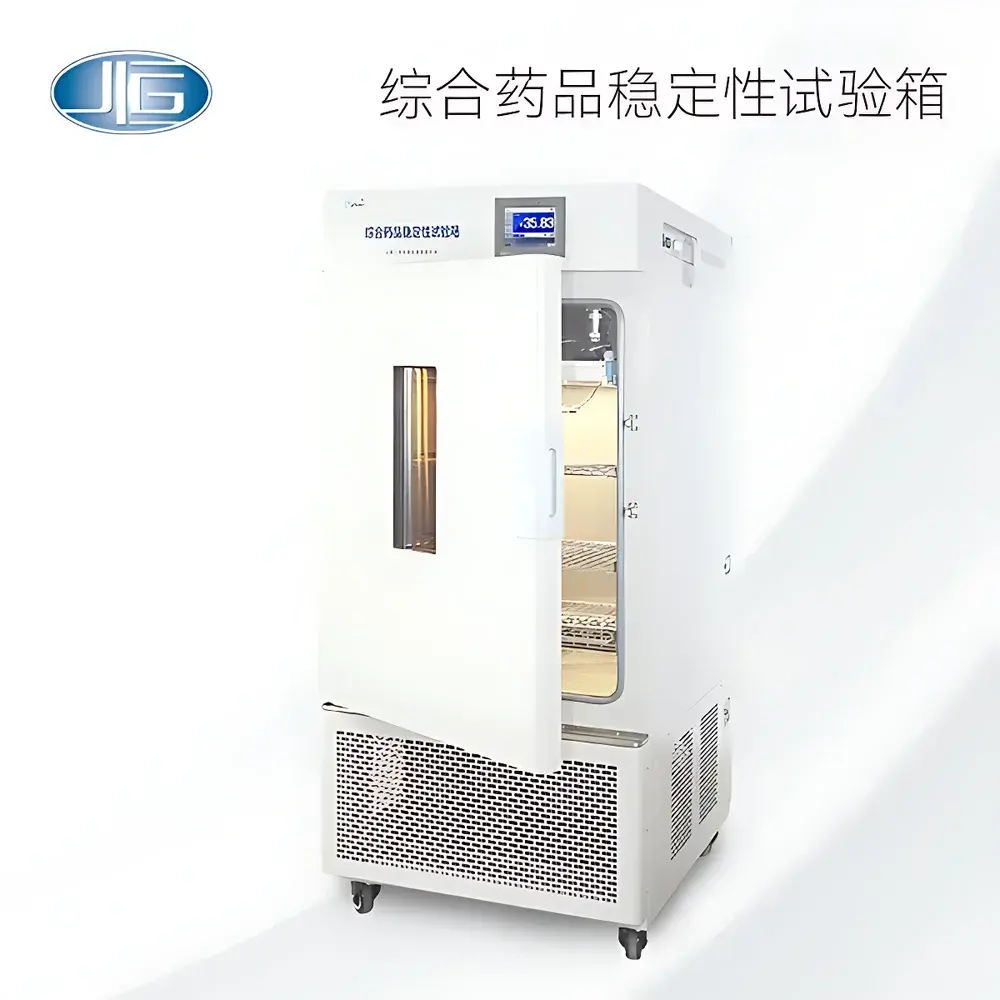
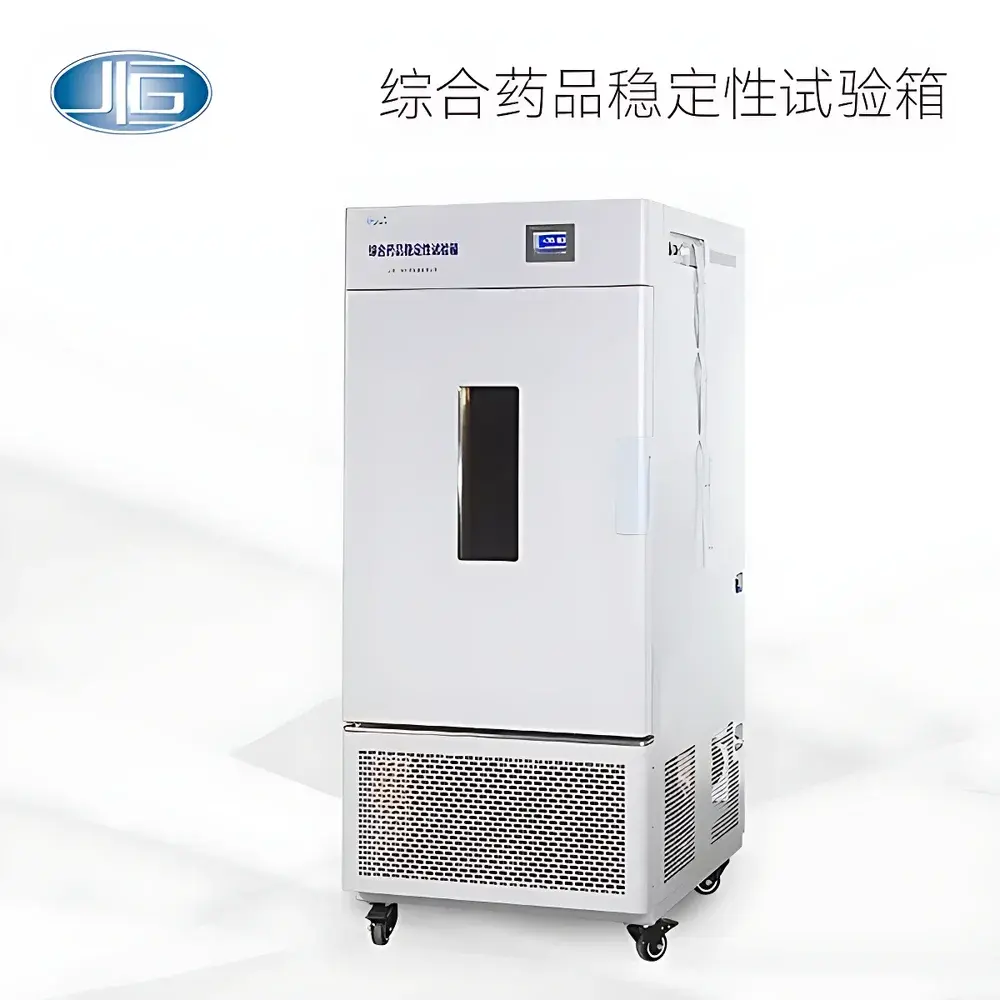
YiHeng LHH-SD / LHH-GSD / LHH-SDP / LHH-GSP Series Pharmaceutical Stability Testing Chambers
| Brand | YiHeng |
|---|---|
| Origin | Shanghai, China |
| Manufacturer Type | Direct Manufacturer |
| Product Origin | Domestic (China) |
| Models | LHH-SD, LHH-GSD, LHH-SDP, LHH-GSP |
| Price Range | USD 7,000 – 11,200 |
Overview
The YiHeng LHH-SD, LHH-GSD, LHH-SDP, and LHH-GSP Series Pharmaceutical Stability Testing Chambers are engineered for precision-controlled long-term and accelerated stability studies in compliance with ICH Q1A(R3), Q5C, and Q5D guidelines. These chambers utilize dual-stage refrigeration architecture with automatic compressor redundancy, combined with PID-controlled heating, humidification, and optional photometric regulation, to maintain stable, traceable environmental conditions across extended durations—critical for assessing drug product shelf life, degradation kinetics, and formulation robustness under defined temperature (e.g., 25 °C/60% RH, 30 °C/65% RH, 40 °C/75% RH), high-humidity, and photostability stress conditions.
Key Features
- Dual independent refrigeration system with auto-switching compressors ensures uninterrupted operation for ≥180 days—eliminating manual defrost cycles and minimizing thermal/hygrometric drift during continuous stability protocols.
- Microprocessor-based controller with 7-inch capacitive touchscreen interface supports multilingual (English/Chinese) operation, real-time trend visualization, and up to 100 programmable profiles (1000 segments, 999 cycles), each segment configurable to 99 hours 59 minutes.
- Stainless steel 304 interior chamber with radius-corner construction and seamless welding enables ISO 14644-compliant cleaning and reduces microbial retention risk.
- Uniform airflow distribution via rear-mounted centrifugal fan and optimized ducted wind path achieves ±0.3 °C temperature uniformity and ±2% RH homogeneity across the working volume (per ASTM E2709-21 validation methodology).
- High-stability humidity control using high-temperature-capable capacitive humidity sensors (operable up to 85% RH at 60 °C), eliminating reliance on maintenance-intensive wet-bulb/dry-bulb systems.
- Integrated safety architecture includes independent over-temperature/under-temperature alarm, high/low humidity alarm, audible-visual fault indication, password-protected parameter lockout, and non-volatile memory retention of setpoints and event logs.
Sample Compatibility & Compliance
These chambers accommodate standard ICH-compliant stability storage configurations—including open trays, sealed vials, blister packs, and primary packaging assemblies—within their validated working volume. All models meet essential requirements for GLP and GMP-aligned environments per FDA 21 CFR Part 11 (when paired with compliant data logging software), EU Annex 11, and WHO TRS 992 Annex 5. Optional UV-C germicidal irradiation (254 nm) provides periodic decontamination of internal air and water reservoir surfaces, reducing bioburden accumulation during multi-month trials. Optional photometric modules integrate calibrated silicon photodiodes for real-time illuminance monitoring (0–10,000 lux) and closed-loop LED intensity adjustment—enabling ICH Q1B-compliant near-UV and visible light exposure testing without lamp aging-induced variability.
Software & Data Management
The embedded controller supports RS-232 and RS-485 serial communication for integration into centralized laboratory informatics systems (LIMS) or SCADA platforms. Optional PC-based software enables remote programming, real-time monitoring, automated report generation (PDF/CSV), and audit-trail-enabled data archiving—including timestamped setpoint changes, alarm events, and sensor calibration history. Data export conforms to ALCOA+ principles (Attributable, Legible, Contemporaneous, Original, Accurate, Complete, Consistent, Enduring, Available) and supports 21 CFR Part 11 electronic signature workflows when deployed with validated authentication modules.
Applications
- ICH Q1A(R3)-mandated long-term (25 °C/60% RH), intermediate (30 °C/65% RH), and accelerated (40 °C/75% RH) stability testing of APIs and finished dosage forms.
- ICH Q1B photostability assessment under Option 1 (near-UV/visible) and Option 2 (controlled irradiance) protocols.
- High-humidity stress testing per USP and Ph. Eur. 2.2.45 for hygroscopicity evaluation and excipient compatibility screening.
- Real-time stability monitoring for regulatory submissions (IND, NDA, MA) and post-approval change management (PACMP).
- Accelerated degradation modeling for forced degradation studies supporting analytical method development and validation.
FAQ
What ICH guidelines do these chambers support?
They are designed to meet environmental control requirements specified in ICH Q1A(R3), Q1B, Q5C, and Q5D for temperature, humidity, and light exposure parameters.
Is 21 CFR Part 11 compliance achievable?
Yes—when used with validated third-party data acquisition software featuring electronic signatures, audit trails, and role-based access control.
How is humidity stability maintained at elevated temperatures?
By employing high-temperature-rated capacitive RH sensors and a steam-generating humidifier with PID feedback—avoiding dry-wet bulb inaccuracies above 40 °C.
Can the chamber operate unattended for 6 months?
Yes—dual compressor redundancy, no-defrost operation, and non-volatile memory ensure uninterrupted performance under validated load conditions.
What validation documentation is provided?
Factory-installed IQ/OQ documentation packages (including temperature mapping, humidity uniformity, and alarm response verification) are available upon request.
Related Products





