
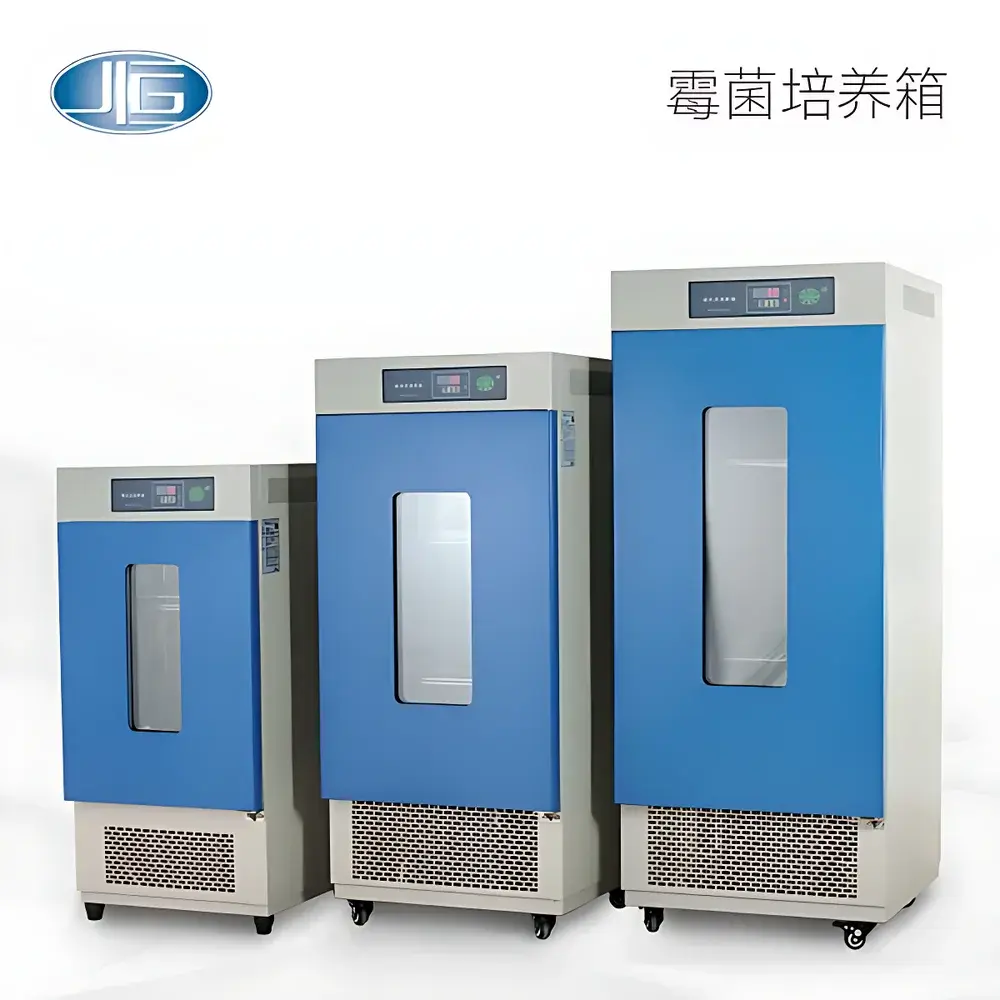
YiHeng MJ-Series Mold Incubator
| Brand | YiHeng |
|---|---|
| Origin | Shanghai, China |
| Manufacturer Type | Direct Manufacturer |
| Country of Origin | China |
| Model | MJ-Series |
| Price Range | USD 1,400 – 5,700 (FOB) |
| Air Circulation | Natural Convection |
| Temperature Control Range | 0–60 °C |
| Temperature Fluctuation | ±0.5 °C (at high setpoints), ±1.0 °C (at low setpoints) |
| Temperature Uniformity | ±1.5 °C to ±2.5 °C (measured at 25 °C reference point) |
| External Dimensions (W×D×H) | 530 × 560 × 1080 mm |
| Internal Chamber Dimensions (W×D×H) | 400 × 350 × 500 mm |
Overview
The YiHeng MJ-Series Mold Incubator is a precision-engineered, naturally ventilated incubation system designed for controlled microbial growth, long-term culture maintenance, and environmental simulation in life science laboratories. Built upon fundamental principles of thermal equilibrium and passive heat distribution, this incubator delivers stable, reproducible temperature environments without forced air circulation—minimizing mechanical stress on delicate biological specimens such as filamentous fungi, bacterial colonies, and embryonic plant tissues. Its operational range (0–60 °C) supports both mesophilic and psychrotolerant organism cultivation, including standard protocols for mold propagation (e.g., Aspergillus niger, Penicillium chrysogenum), BOD5 incubation per ISO 5815-1, and pharmaceutical stability testing under ICH Q1A(R2) guidelines. The unit complies with general laboratory safety requirements outlined in ISO/IEC 17025:2017 for equipment used in accredited microbiological testing.
Key Features
- Mirror-finished stainless steel interior chamber with radius-rounded corners (R ≥ 15 mm) for seamless cleaning and reduced microbial retention points—fully compliant with GLP hygiene standards.
- Hermetically sealed, high-efficiency compressor using R134a refrigerant (non-ozone-depleting, GWP = 1,430), delivering consistent cooling performance across the full temperature span while maintaining energy consumption below 0.85 kWh/day (typical at 25 °C).
- Monolithic polyurethane foam insulation (≥50 mm thickness, density 38–42 kg/m³) applied via high-pressure injection molding, reducing thermal bridging and improving effective thermal resistance by ≥25% compared to segmented insulation designs.
- Microprocessor-based PID temperature controller with 0.1 °C resolution, ±0.3 °C factory calibration accuracy, and programmable timer (1 min to 999 h)—supporting unattended overnight or multi-day incubation cycles.
- Three-stage manual fan speed selector (off / low / medium) for optional gentle air redistribution—prevents desiccation of agar plates and liquid cultures during extended incubation periods.
- Dual-limit independent temperature safeguard circuit: primary control loop + hardware-based overtemperature cutoff (adjustable threshold, default 65 °C), certified to IEC 61000-6-2 EMC immunity standards.
- Optional RS485 serial interface (Modbus RTU protocol) and real-time thermal printout module (via integrated thermal printer or external ESC/POS-compatible device) for audit-ready data capture.
Sample Compatibility & Compliance
The MJ-Series accommodates standard microbiological consumables—including Petri dishes (up to 150 mm Ø), test tubes (16 × 150 mm), Erlenmeyer flasks (up to 1 L), and multi-well plates—without spatial interference. Adjustable stainless steel shelving (three positions, 50 mm pitch) allows vertical optimization for stacked plate storage or upright tube racks. The chamber meets ISO 14644-1 Class 8 (100,000) cleanroom compatibility when operated in dedicated low-particulate environments. While not classified as medical devices under FDA 21 CFR Part 820, the incubator is routinely validated for use in USP / microbial enumeration and pharmacopeial sterility testing workflows. Documentation packages include Factory Acceptance Test (FAT) reports, traceable NIST-calibrated temperature verification logs, and material compliance declarations (RoHS, REACH).
Software & Data Management
The MJ-Series operates autonomously without proprietary software dependencies. Optional RS485 integration enables connection to third-party Laboratory Information Management Systems (LIMS) or SCADA platforms via standard Modbus register mapping (e.g., holding registers 40001–40005 for setpoint, actual temp, status flags). Thermal printer output provides timestamped hardcopy records meeting ALCOA+ data integrity criteria (Attributable, Legible, Contemporaneous, Original, Accurate). All firmware revisions undergo version-controlled release cycles with documented change logs—supporting regulatory audits under FDA 21 CFR Part 11 (when paired with compliant electronic signature solutions) and EU Annex 11 requirements for computerized system validation.
Applications
- ISO 6222-compliant total coliform and E. coli enumeration in water quality labs
- ICH Q5C cell bank storage condition qualification (2–8 °C and 25 °C/60% RH simulated environments)
- Fungal purity testing per EP 2.6.12 and JP XVII Annex 5
- Biochemical oxygen demand (BOD5) measurement per ASTM D5210 and ISO 5815-1
- Seed germination and phytohormone response studies in plant biotechnology
- Validation of antimicrobial efficacy (ISO 22196, JIS Z 2801) under controlled thermal conditions
FAQ
Does the MJ-Series support humidity control?
No—this model is a dry-air, temperature-only incubator. Humidity regulation requires the separate MJ-HP series with integrated ultrasonic humidification and condensation recovery.
Can it be used for CO₂-dependent cell cultures?
No—CO₂ incubation necessitates gas-tight sealing, infrared CO₂ sensors, and pH-buffered media; refer to YiHeng’s IC Series for such applications.
What calibration documentation is provided?
Each unit ships with a Certificate of Conformance and a 3-point NIST-traceable temperature verification report (at 5 °C, 25 °C, and 45 °C) performed per ISO/IEC 17025-accredited procedures.
Is remote monitoring supported out of the box?
Not natively—but the RS485 interface enables integration with industrial IoT gateways (e.g., Siemens Desigo CC, Ignition SCADA) for cloud-based logging and alarm notification via MQTT or OPC UA.
How often does the unit require preventive maintenance?
Compressor oil and refrigerant integrity should be verified annually; door gasket integrity and sensor drift checks are recommended every six months per manufacturer’s PM schedule (documented in Operation Manual Rev. 3.2).




