
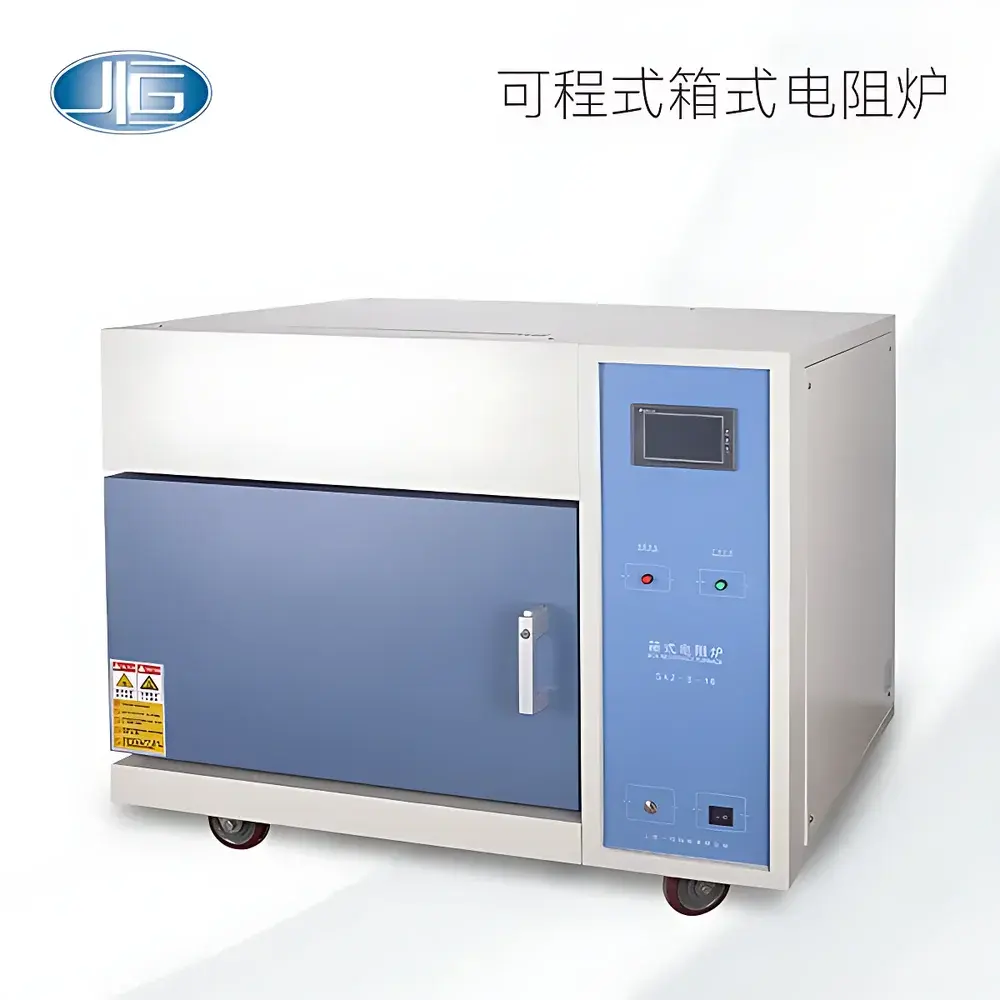
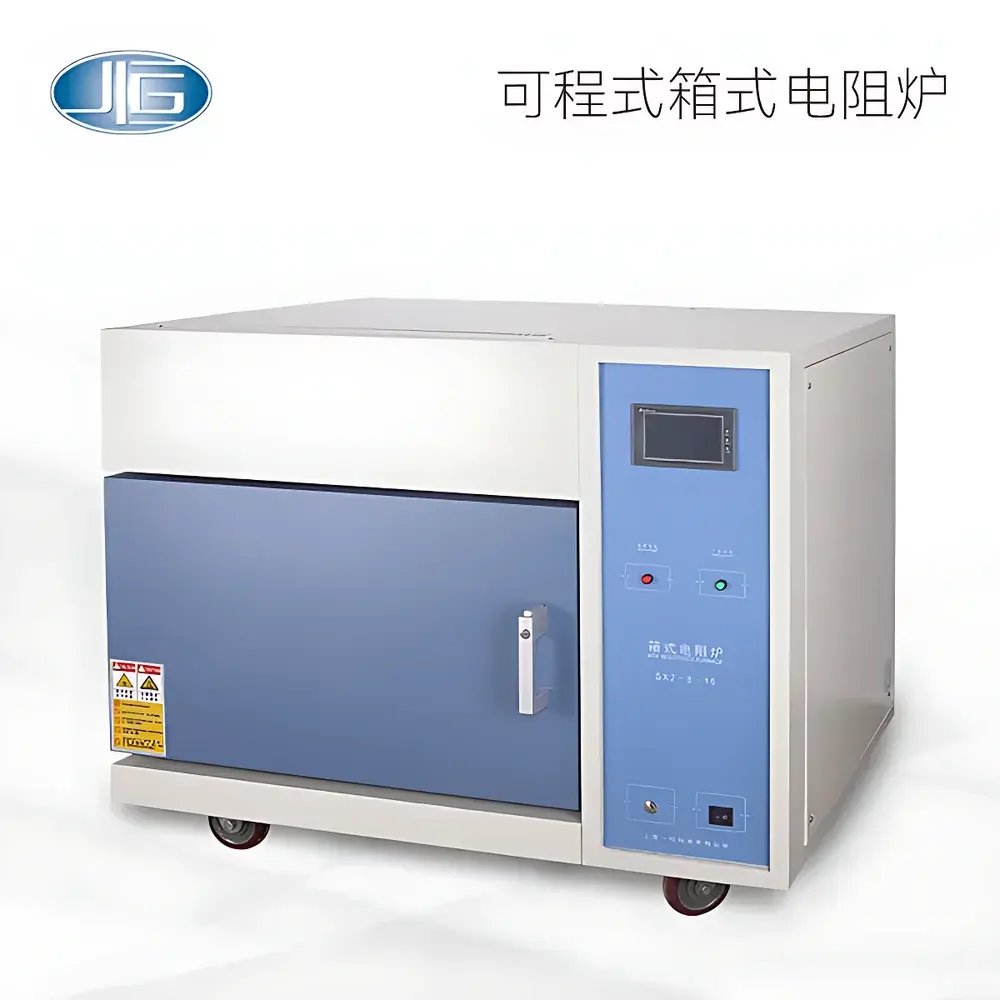
YIHENG (Shanghai Yiheng Scientific Instrument Co., Ltd.) YH-GF1600P Programmable Box-Type Muffle Furnace
| Brand | YIHENG |
|---|---|
| Origin | Shanghai, China |
| Manufacturer Type | Direct Manufacturer |
| Product Category | Domestic |
| Model | High-Temperature Resistance Furnace |
| Instrument Type | Box Furnace |
| Maximum Temperature | 1600 °C |
| Rated Power | 4000 W |
| Heating Element | Kanthal A1 Resistance Wire |
| Internal Chamber Dimensions (W×D×H) | 200 mm × 400 mm × 160 mm |
| Control System | Microprocessor-Based PID Controller with 10-Step Programmable Ramp/Soak Function |
| Insulation Material | Ceramic Fiber Board |
| Chamber Lining Options | Refractory Brick (N-Series) or Ceramic Fiber Module |
| Safety Features | Automatic Power Cut-off on Door Opening, Over-Temperature Protection, Over-Current & Over-Voltage Protection |
| Construction | Stainless Steel Inner Door Liner and Exterior Panel |
Overview
The YIHENG YH-GF1600P is a microprocessor-controlled, programmable box-type muffle furnace engineered for precise high-temperature thermal processing in research laboratories, materials science facilities, and quality control environments. Operating on resistive heating principles via high-purity Kanthal A1 alloy heating elements, the furnace achieves stable and uniform temperature distribution up to 1600 °C within its insulated chamber. Its muffle design isolates the sample from direct contact with heating elements and combustion byproducts—ensuring contamination-free thermal treatment essential for ashing, sintering, calcination, heat treatment of ceramics, metallurgical sample preparation, and thermal gravimetric pre-conditioning. The unit complies with fundamental safety and performance expectations aligned with IEC 61000-6-3 (EMC emissions) and IEC 61000-6-2 (immunity), and its construction supports adherence to GLP-compliant thermal process documentation when integrated with validated data logging systems.
Key Features
- Programmable 10-step temperature profile controller with independent ramp rate, soak time, and power modulation per segment—enabling complex thermal cycles such as controlled oxidation, annealing sequences, and multi-stage sintering without manual intervention.
- Robust dual-layer insulation: outer ceramic fiber board (density ≥ 128 kg/m³) combined with air-gap isolation minimizes surface temperature rise (< 55 °C at ambient +25 °C), enhancing lab safety and reducing HVAC load.
- Interlocked stainless steel hinged door with positive-seal gasket ensures automatic disconnection of heating power upon opening—meeting mechanical safety requirements per EN 61000-1-2 and eliminating risk of accidental exposure to radiant heat.
- Two optional chamber linings: refractory brick (N-Series) for long-term stability in continuous operation (>10,000 h at ≤1400 °C), or low-thermal-mass ceramic fiber modules for rapid thermal cycling and energy efficiency.
- Microprocessor-based PID algorithm with auto-tuning capability delivers ±1 °C temperature stability over full operating range; digital display includes real-time setpoint, actual temperature, elapsed time, and active program step.
- Integrated protection suite includes over-temperature cut-off (adjustable trip point), over-current relay, voltage surge suppression, and thermal fuse redundancy—designed for unattended overnight operation under supervised laboratory protocols.
Sample Compatibility & Compliance
The YH-GF1600P accommodates standard crucibles (alumina, silicon carbide, platinum, or quartz), ceramic setters, and metal trays up to 180 mm × 380 mm × 140 mm in footprint. Its sealed muffle architecture prevents cross-contamination between successive runs—critical for ASTM E1679 (ash content determination), ISO 562 (coal coke reactivity), and USP heavy metals testing workflows. While not intrinsically rated for hazardous atmosphere use, it may be operated inside ventilated fume hoods or connected to exhaust manifolds meeting ASHRAE 110 standards. For regulated environments, optional RS485 Modbus RTU interface enables integration into SCADA or LIMS platforms supporting 21 CFR Part 11 audit trail requirements when paired with compliant software.
Software & Data Management
The furnace operates autonomously via front-panel controls but supports external monitoring and data capture through its serial communication port. When interfaced with YIHENG’s optional PC-based YH-LogSuite v3.2 software (Windows 10/11 compatible), users can remotely configure programs, log temperature/time profiles at 1-second intervals, generate CSV reports, and export timestamped calibration logs. All recorded datasets include operator ID, program ID, start/stop timestamps, and deviation alerts—facilitating traceability in ISO/IEC 17025-accredited labs. Firmware updates are delivered via USB flash drive with cryptographic signature verification to ensure integrity.
Applications
- Thermal decomposition and ash residue analysis per AOAC 942.05 and EPA Method 2540E
- Sintering of oxide ceramics (e.g., Al₂O₃, ZrO₂) and ferrite components under controlled oxidizing atmospheres
- Heat treatment of tool steels and nickel-based superalloys during metallurgical R&D
- Pre-firing of catalyst supports and battery cathode precursors (e.g., LiCoO₂, NMC)
- Calibration of thermocouples (Types S, R, B) and radiation pyrometers using fixed-point cells
- Residue ignition in pharmaceutical excipient purity testing (Ph. Eur. 2.2.34)
FAQ
What type of thermocouple is used for temperature sensing?
Type S (Platinum/Rhodium 10%) thermocouple with ceramic protection sheath, calibrated to NIST-traceable standards.
Can this furnace operate under inert or reducing atmospheres?
No—it is designed for air atmosphere only; optional quartz tube accessories with gas inlet/outlet ports are available separately for limited inert gas purging.
Is the 1600 °C rating sustainable for continuous operation?
Yes, when equipped with refractory brick lining and operated at ≤1550 °C for >8 h/day; ceramic fiber lining is rated for intermittent use up to 1600 °C.
Does the programmable controller support hold-at-temperature functions?
Yes—each of the 10 program steps can be configured as either a ramp-to-temperature segment or a dwell (soak) segment with user-defined duration.
What maintenance is required for long-term reliability?
Annual inspection of heating element continuity, thermocouple drift verification, and gasket integrity check; ceramic fiber insulation requires no scheduled replacement under normal use.



