
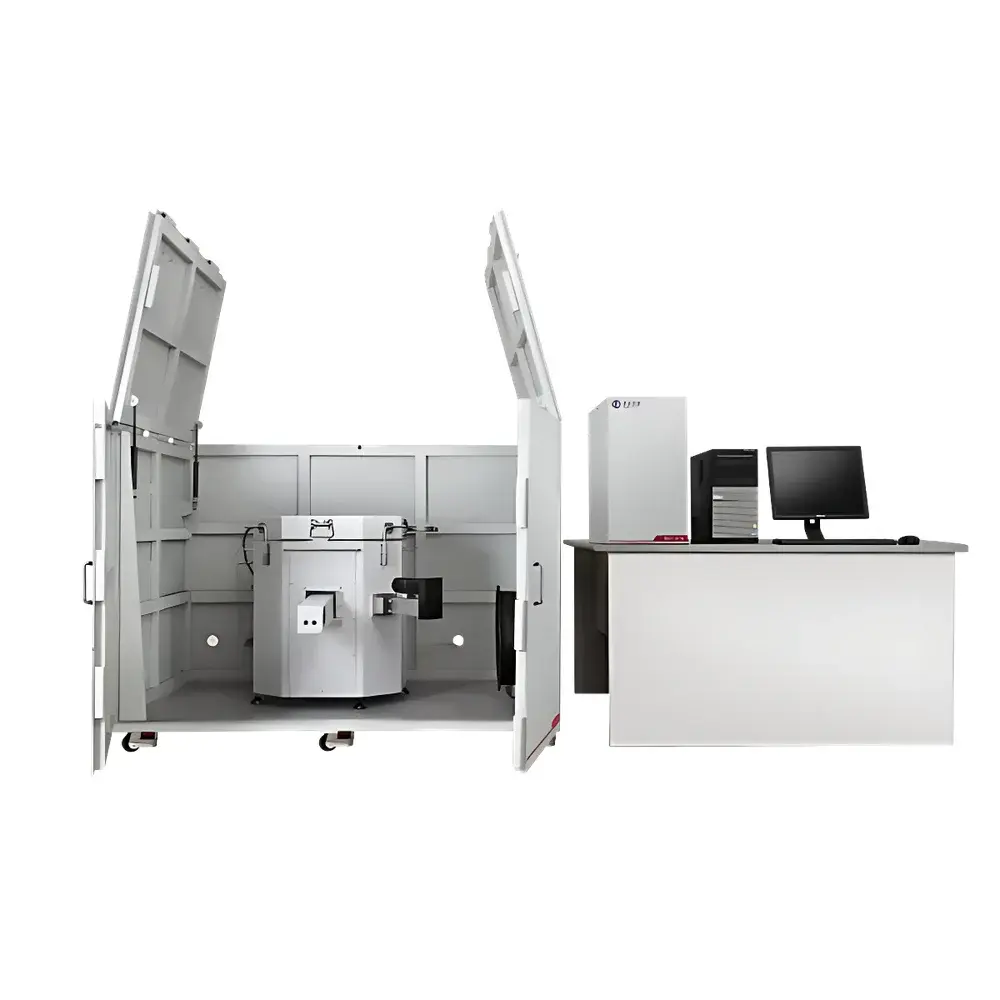
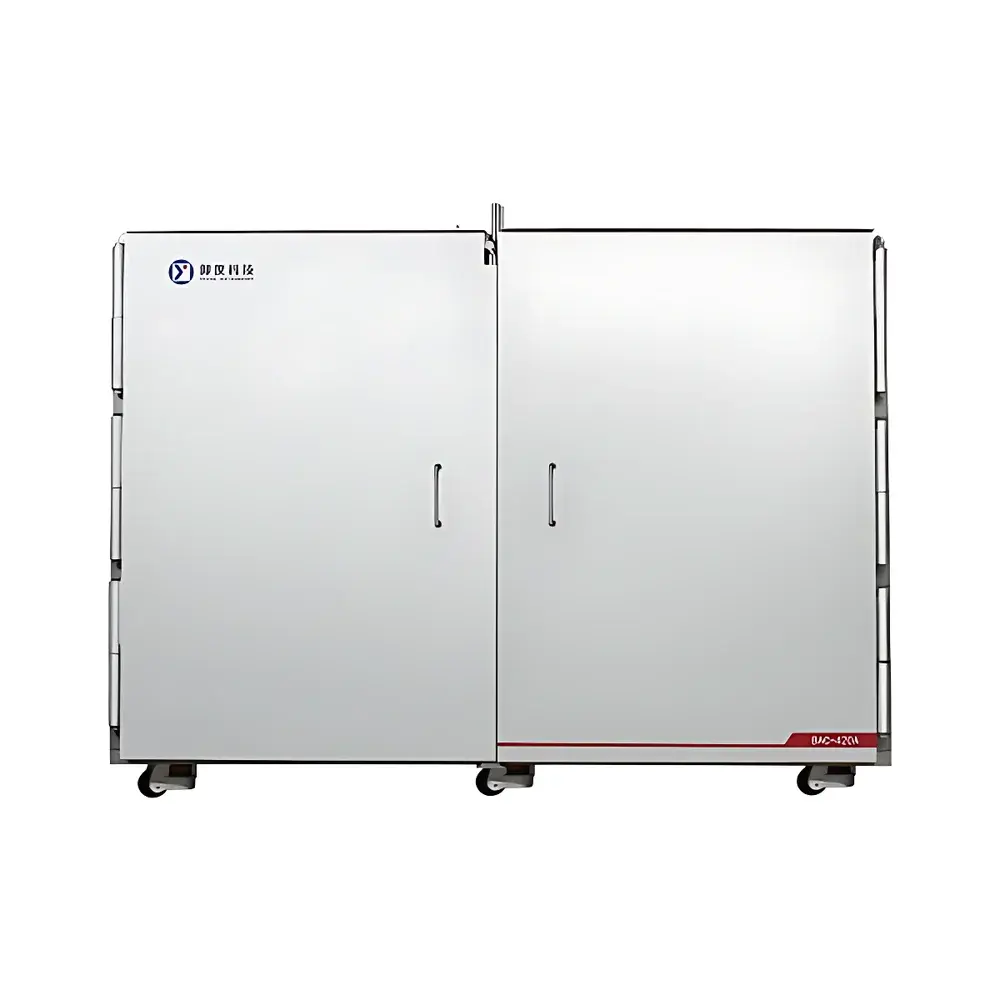
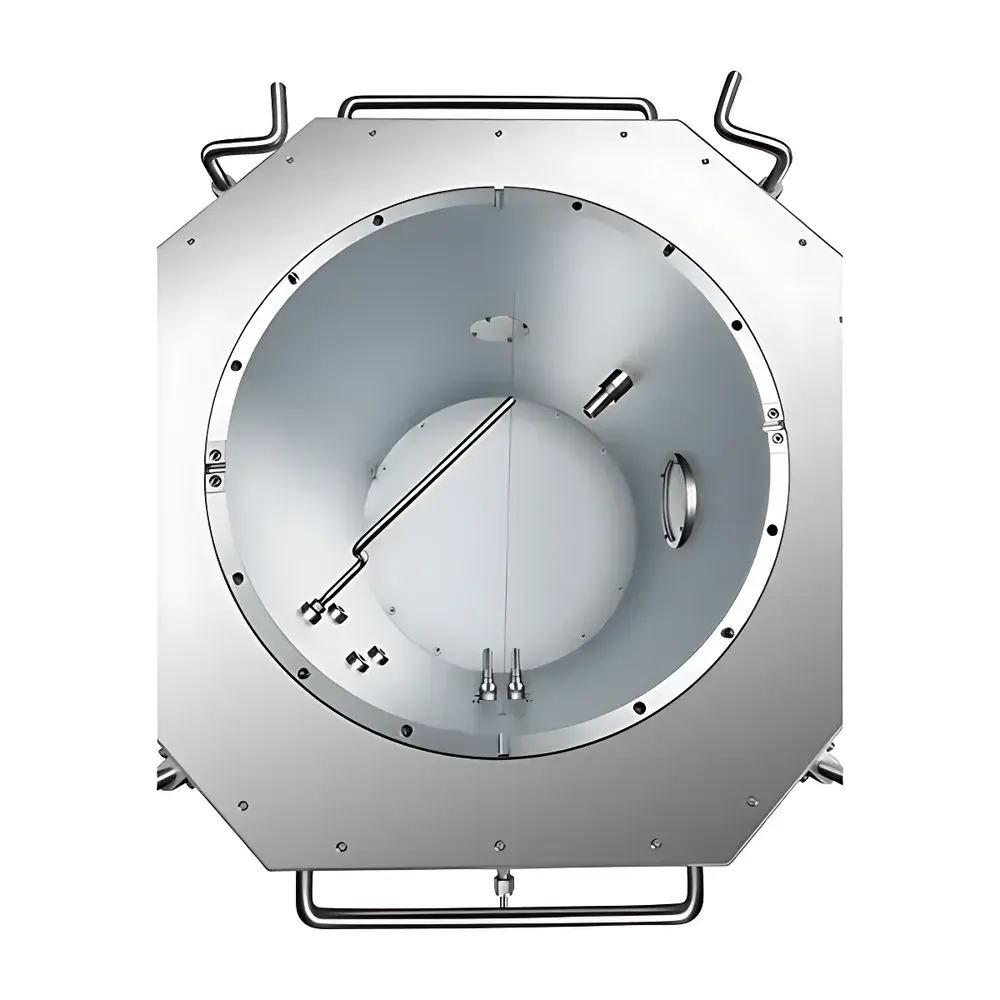
Young Instruments BAC-420A Large-Format Battery Accelerating Rate Calorimeter (ARC)
| Brand | Young Instruments |
|---|---|
| Origin | Zhejiang, China |
| Manufacturer Type | Direct Manufacturer |
| Model | BAC-420A |
| Measurement Mode | Adiabatic Calorimetry |
| Instrument Type | Accelerating Rate Calorimeter |
| Adiabatic Chamber Dimensions | Ø420 mm × 520 mm depth |
| Self-Heating Detection Sensitivity | <0.02 °C/min |
| Wall-Sample Temperature Difference Control | ≤0.5 °C |
| Temperature Control Range | RT to 300 °C |
| Temperature Tracking Rate | 0.02–13 °C/min |
| Sealed Test Vessel Pressure Range | 0–2 MPa |
| Nail Penetration Stroke | Software-Configurable |
| Current Handling Capacity (Charge/Discharge Electrodes) | ±500 A |
Overview
The Young Instruments BAC-420A is a large-format, adiabatic accelerating rate calorimeter engineered for high-fidelity thermal safety characterization of lithium-ion battery cells and small modules used in grid-scale energy storage and electric vehicle applications. It operates on the principle of adiabatic heat flow compensation—where the instrument actively adjusts the furnace temperature to match the sample’s surface temperature in real time, thereby minimizing heat loss and enabling true adiabatic conditions. This ensures accurate quantification of self-heating onset, thermal runaway initiation temperature (Tonset), maximum self-heating rate (dT/dt)max, adiabatic temperature rise (ΔTad), specific heat capacity (Cp), and gas evolution kinetics under controlled electrochemical or mechanical abuse conditions. Designed specifically to comply with GB/T 36276–2023 “Lithium-ion Batteries for Electric Energy Storage,” the BAC-420A supports standardized testing protocols for large-format prismatic and pouch cells (100–600 mm in longest dimension), bridging the gap between laboratory-scale ARC systems and industrial-scale thermal validation requirements.
Key Features
- High-sensitivity adiabatic control: Real-time wall-sample temperature tracking with ≤0.5 °C deviation, achieving self-heating detection thresholds below 0.02 °C/min—exceeding the sensitivity requirement defined in GB/T 36276–2023 and ASTM E1981.
- Optimized thermal architecture: Patented resistive heating wire configuration enables rapid thermal equilibration and up to 5× faster experimental throughput compared to conventional ARC platforms without compromising adiabatic fidelity.
- Dual-layer safety engineering: Integrated rupture disc and spring-loaded locking mechanism on the reaction chamber, combined with a standard-rated explosion-resistant containment box rated for ≥2 MPa overpressure events.
- Electrochemically integrated test environment: Dual ±500 A current-capable feedthroughs support in situ charge/discharge calorimetry synchronized with thermal data acquisition—enabling direct measurement of Joule heating, reversible entropy effects, and total enthalpy generation.
- Modular abuse capability: Software-configurable nail penetration stroke, programmable pressure ramping, and sealed vessel operation up to 2 MPa facilitate standardized mechanical, electrical, and thermal abuse testing per UL 9540A, SAE J2464, and USABC SAND99-0497 protocols.
Sample Compatibility & Compliance
The BAC-420A accommodates single large-format cells (prismatic, pouch, or cylindrical) with dimensions up to 600 mm in length and small modular assemblies (e.g., 2–4 parallel-connected cells). Its Ø420 mm × 520 mm deep adiabatic cavity provides sufficient radial and axial clearance for representative thermal boundary conditions during runaway propagation studies. The system is validated against multiple international regulatory and industry standards, including GB/T 36276–2023 (China), UL 9540A (USA), SAE J2464-R2009 (automotive), ASTM E1981–98(2012) (accelerating calorimetry methodology), SN/T 3078.1–2012 (chemical thermal stability), and UL 1973 (stationary battery safety). All calibration and verification procedures follow ISO/IEC 17025–compliant traceability frameworks, supporting GLP and GMP-aligned audit readiness.
Software & Data Management
The proprietary BACControl™ software suite provides full instrument orchestration, including multi-stage temperature ramping, dynamic adiabatic gain adjustment, real-time gas pressure logging, and synchronized electrochemical parameter acquisition. Data output conforms to ASTM-compliant CSV and HDF5 formats, with built-in metadata tagging for test condition traceability. Audit trail functionality meets FDA 21 CFR Part 11 requirements for electronic records and signatures, including user authentication, action logging, and immutable data archiving. Optional integration with MATLAB® and Python APIs enables custom post-processing of thermal runaway kinetics, Arrhenius parameter fitting, and comparative hazard ranking across cell chemistries.
Applications
- Thermal runaway initiation and propagation analysis for NMC, LFP, and next-generation solid-state battery cells.
- Quantitative evaluation of thermal management system (TMS) design margins using experimentally derived ΔTad and (dT/dt)max values.
- Gas volume and composition analysis (when coupled with optional FTIR or GC-MS interfaces) for venting behavior modeling.
- Specific heat capacity determination via modulated heating protocols, supporting accurate thermal simulation input for multiphysics battery models.
- Regulatory submission support for UN 38.3, IEC 62619, and regional energy storage certification schemes.
FAQ
What battery sizes can the BAC-420A accommodate?
Cells up to 600 mm in length and small modules (≤4 cells) are supported within the Ø420 mm × 520 mm adiabatic chamber.
Does the system support simultaneous electrochemical cycling and thermal monitoring?
Yes—dual ±500 A feedthroughs enable real-time current/voltage synchronization with thermal data at 10 Hz sampling resolution.
How is adiabatic performance verified?
Through independent NIST-traceable calibration using reference materials (e.g., potassium hydrogen phthalate), with wall-sample temperature difference continuously monitored and logged.
Is the software compliant with 21 CFR Part 11 for regulated environments?
Yes—BACControl™ includes role-based access control, electronic signatures, and tamper-evident audit logs required for pharmaceutical and energy storage QA/QC workflows.
Can the BAC-420A be used for non-battery applications?
While optimized for electrochemical systems, its adiabatic platform is applicable to any exothermic material requiring high-sensitivity thermal stability assessment—e.g., electrolytes, binders, or cathode slurries—subject to pressure and size constraints.



