
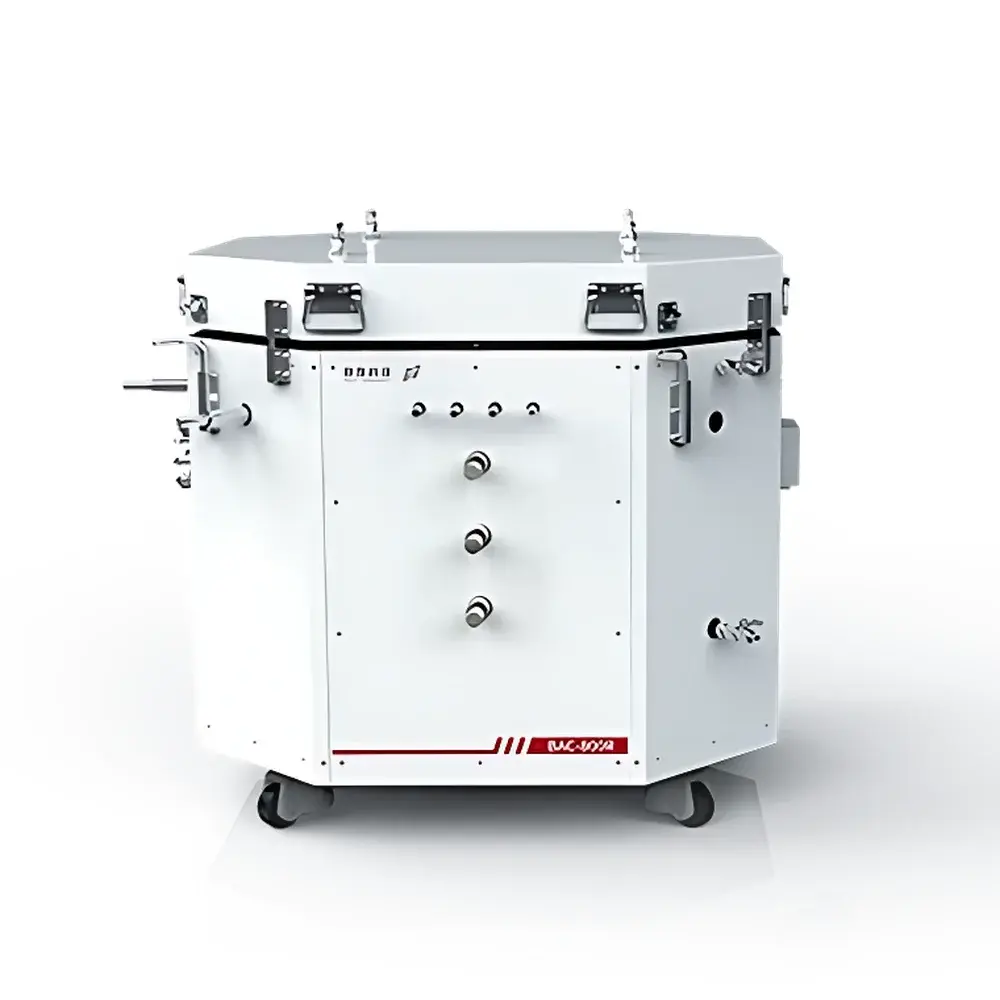
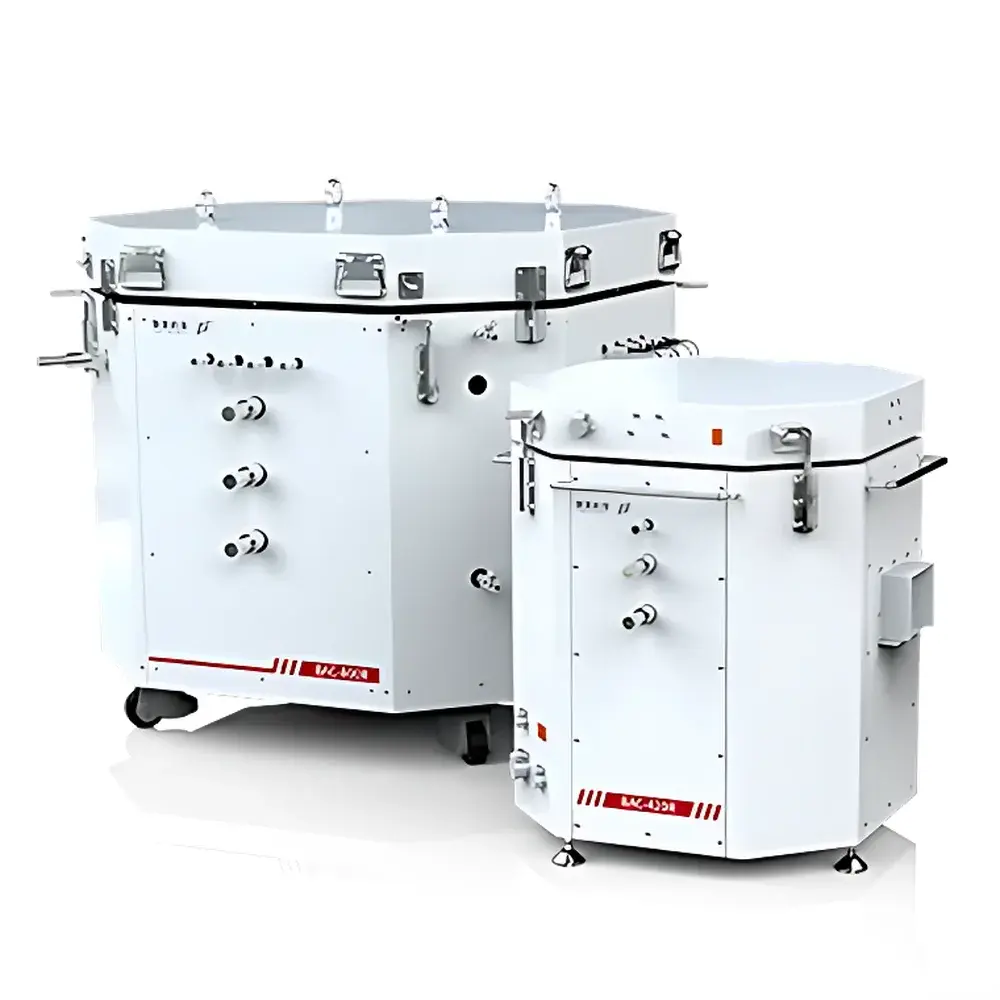
Young Instruments BAC-800R Adiabatic Battery Calorimeter
| Brand | Young Instruments |
|---|---|
| Origin | Zhejiang, China |
| Manufacturer Type | Direct Manufacturer |
| Model | BAC-800R |
| Compliance | GB/T 36276-2023, GB 38031-2020, SAE J2464-2009, UL 9540A-2019, SN/T 3078.1-2012, SAND 2005-3123, SAND 99-0497-1999 |
| Adiabatic Chamber Dimensions | 800 × 520 mm (L × W) |
| Temperature Control Range | RT+5°C to 300°C (optional low-temp module: –25°C) |
| Temperature Resolution | 0.001°C |
| Chamber Temperature Stability | ±0.05°C |
| Self-Heating Detection Sensitivity | 0.02–0.05°C/min |
| Temperature Tracking Rate | 0.02–15°C/min |
| Wall-to-Sample Temperature Difference (Isothermal Mode) | <1°C |
| Maximum Sample Length | ≤600 mm |
| Safety Features | Pressure Relief Valve + Mechanical Interlock on Lid |
Overview
The Young Instruments BAC-800R Adiabatic Battery Calorimeter is an engineered thermal analysis system designed specifically for quantitative evaluation of adiabatic temperature rise behavior in lithium-ion battery cells used in grid-scale energy storage applications. It operates on the principle of heat-flow nullification via dynamic temperature tracking—where the calorimeter’s inner chamber wall temperature is continuously adjusted in real time to match the surface temperature of the test cell, thereby minimizing heat exchange between the sample and its surroundings. This active adiabatic control enables high-fidelity measurement of exothermic reactions during thermal runaway propagation, self-heating onset, and post-charge relaxation phases. The instrument meets the stringent experimental requirements defined in GB/T 36276-2023 “Lithium-ion Batteries for Electric Energy Storage”, including mandatory test protocols for adiabatic temperature rise rate (dT/dt), time-to-thermal-runaway, and maximum temperature under zero-heat-loss conditions. Its architecture supports both single-cell and multi-cell stack configurations within standardized dimensional envelopes, making it suitable for R&D labs, third-party certification bodies, and battery safety validation centers operating under ISO/IEC 17025 or IEC 62619-compliant quality frameworks.
Key Features
- Active adiabatic control with closed-loop temperature tracking algorithm ensuring wall-to-sample ΔT < 1°C during isothermal operation and sustained adiabatic fidelity over extended test durations.
- High-resolution thermal sensing (0.001°C resolution) coupled with ultra-low drift electronics enabling detection of self-heating rates as low as 0.02°C/min—well below the 0.02°C/min threshold specified in GB/T 36276-2023 Annex D.
- Modular thermal chamber design accommodating cells up to 600 mm in length; optional HWS (Hot-Wire Simulation) extension kit available for accelerated thermal runaway triggering and propagation analysis.
- Dual-layer safety architecture: integrated pressure relief valve rated for ≥20 bar burst pressure, plus electromechanical lid interlock that physically disables heating and data acquisition if the chamber door is not fully secured.
- Wide operational temperature range from –25°C (with low-temperature module) to 300°C, supporting low-temperature abuse testing per UL 9540A-2019 and cryogenic characterization per SAND2005-3123 guidelines.
Sample Compatibility & Compliance
The BAC-800R accepts prismatic, pouch, and cylindrical lithium-ion cells with a maximum length of 600 mm and cross-sectional dimensions compatible with the 800 × 520 mm adiabatic cavity footprint. It supports standard electrode chemistries including LFP, NMC, NCA, and LCO, and is validated for use with both dry-room-assembled and pre-conditioned cells. All test procedures align with national and international regulatory frameworks: GB/T 36276-2023 (China), GB 38031-2020 (EV battery safety), SAE J2464-2009 (abuse testing), UL 9540A-2019 (energy storage system evaluation), and legacy SAND reports for DOE-funded battery safety research. Data output conforms to ASTM E698-20 and ISO 11357-7:2017 requirements for kinetic analysis of exothermic decomposition.
Software & Data Management
The embedded control software provides synchronized acquisition of thermocouple voltage, chamber wall temperature, sample surface temperature, pressure transducer output, and auxiliary analog inputs at up to 10 Hz sampling rate. Raw data is stored in HDF5 format with embedded metadata—including operator ID, test protocol version, calibration timestamps, and audit trail logs—to support GLP/GMP compliance. Export modules generate CSV, Excel, and PDF reports compliant with FDA 21 CFR Part 11 requirements for electronic records and signatures. Optional Python SDK enables integration with custom thermal modeling workflows (e.g., COMSOL Multiphysics or MATLAB-based Arrhenius parameter fitting).
Applications
- Quantitative determination of adiabatic temperature rise rate (dT/dt) and onset temperature for thermal runaway initiation under zero-heat-loss conditions.
- Evaluation of thermal stability margins across state-of-charge (SOC) ranges, including 0%, 50%, and 100% SOC per GB 38031-2020 Clause 7.4.
- Validation of thermal barrier materials and cell-to-cell propagation suppression strategies in module-level safety design.
- Supporting UN 38.3 T.4 thermal test documentation and IEC 62619 hazard assessment reporting.
- Generation of kinetic parameters (Ea, A) for exothermic decomposition reactions using isoconversional methods (e.g., Friedman, Ozawa-Flynn-Wall).
FAQ
Does the BAC-800R meet ISO/IEC 17025 traceability requirements for calibration?
Yes—each unit ships with NIST-traceable calibration certificates for all thermocouples and temperature controllers, and optional on-site calibration verification services are available.
Can the system perform tests under inert atmosphere?
Yes—the chamber includes dual gas purge ports (N₂ and Ar) with mass flow controllers and O₂ sensor feedback, supporting controlled-atmosphere testing per UL 9540A Section 5.3.
Is remote monitoring supported?
Yes—via secure HTTPS interface with role-based access control, real-time waveform streaming, and automated email/SMS alerts for critical events (e.g., pressure spike >15 bar or dT/dt >5°C/min).
What is the typical turnaround time for a full adiabatic test cycle?
From ambient soak to thermal runaway completion and cooldown: approximately 6–12 hours depending on cell size, SOC, and trigger method (internal short, external heating, or overcharge).
Are firmware updates provided post-purchase?
Yes—free lifetime firmware updates include new test protocols (e.g., upcoming GB/T 36276 revisions), enhanced diagnostics, and expanded compliance reporting templates.



