
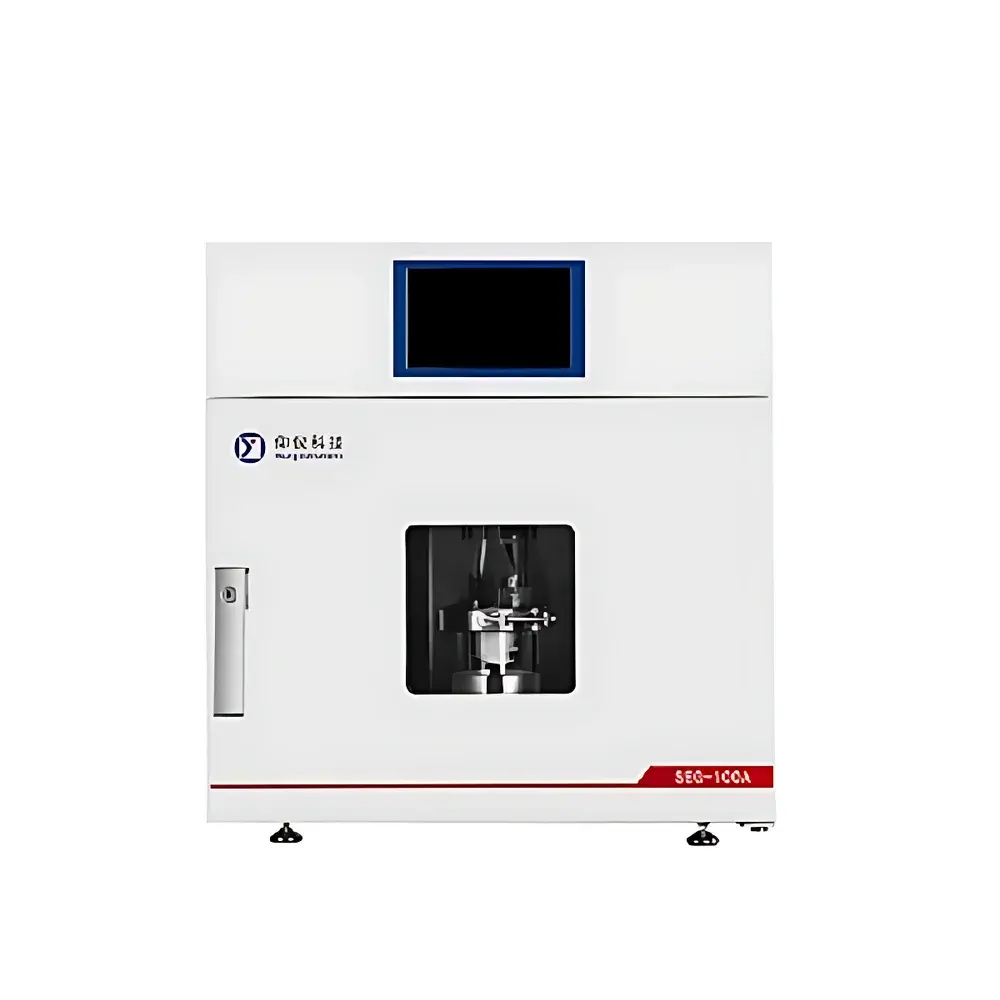
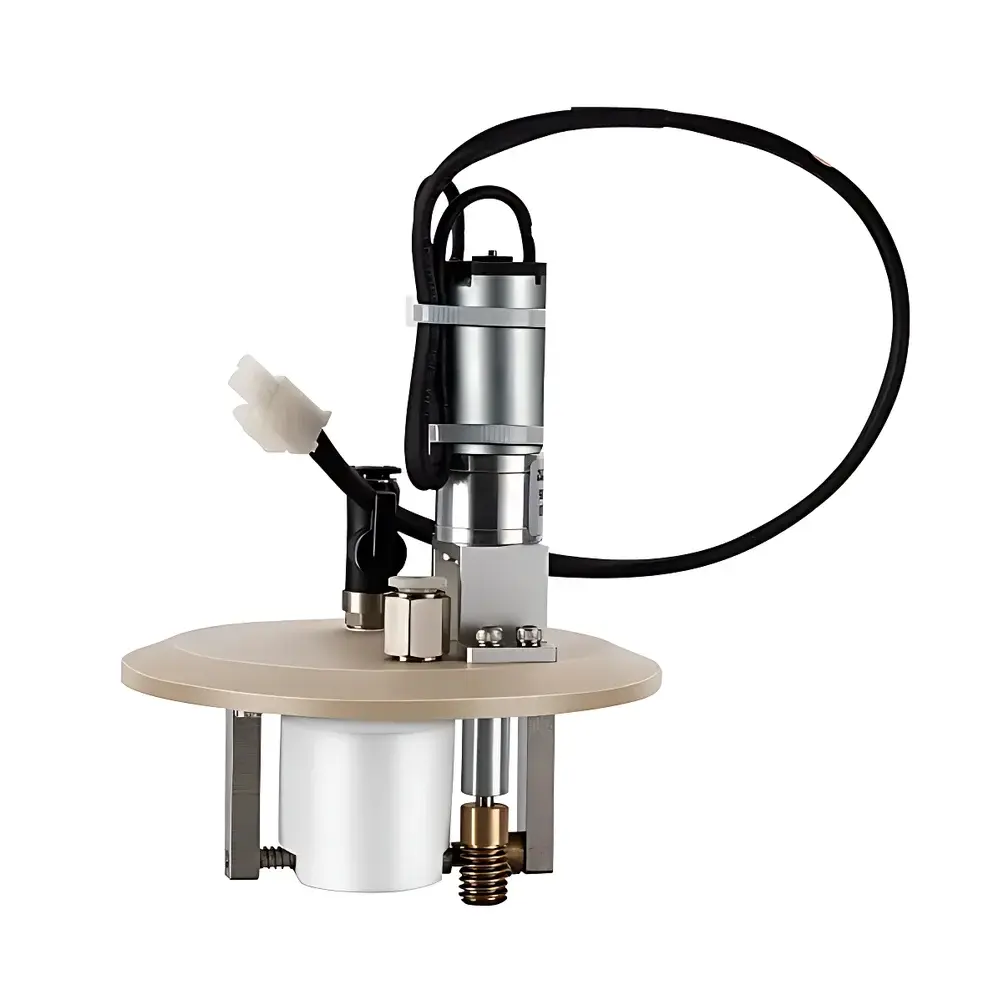
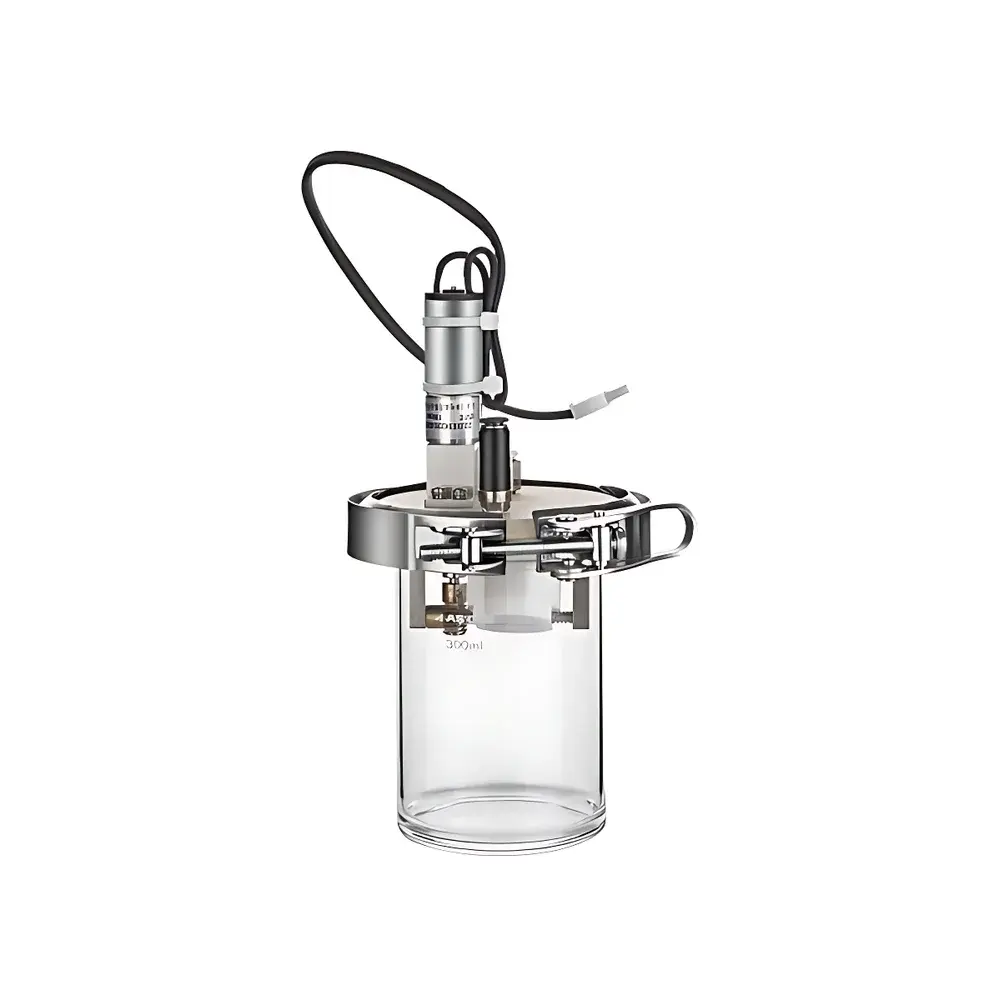
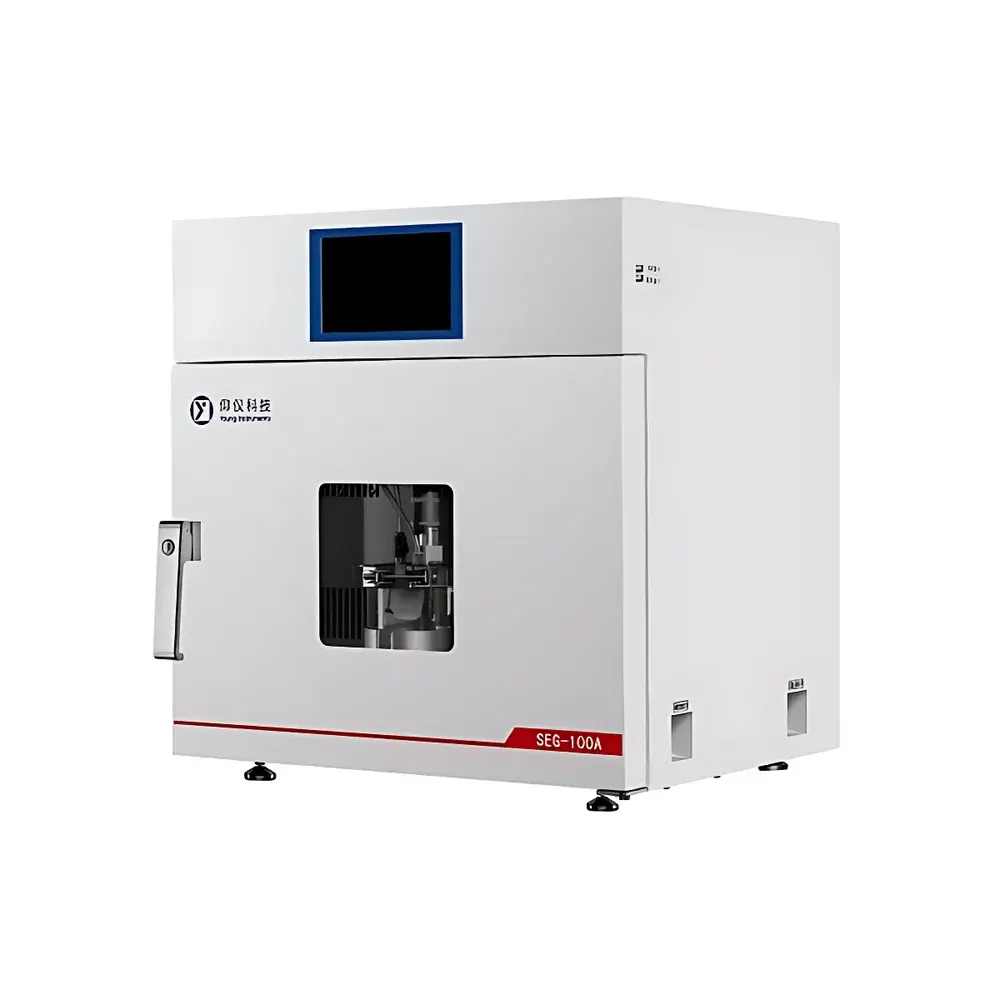
Young Instruments SEG-100A Water-Reactivity Gas Evolution Tester
| Brand | Young Instruments |
|---|---|
| Origin | Zhejiang, China |
| Manufacturer Type | Direct Manufacturer |
| Model | SEG-100A |
| Operating Ambient | −5°C to 45°C, <95% RH |
| Test Chamber Temperature Range | 10°C–35°C (default setpoint: 20°C, software-adjustable) |
| Temperature Stability | ±0.5°C |
| Water Addition Volume | 400 mL (automated sample immersion) |
| Sample Cup Capacity | 20 mL |
| Gas Volume Measurement Accuracy | ±0.5 mL |
| Maximum Gas Collection Capacity | 0–800 mL |
| Gas Volume Resolution | 0.01 mL |
| Gas Evolution Rate Range | 0–100 L/min/kg |
| Gas Sampling Interval | 1 s |
| Rate Calculation Interval | 1 min–1 h (software-configurable) |
| Total Timing Range | 0–240 h |
| Water Injection Volume | 300 mL |
| Water Injection Accuracy | ≤±1 mL |
| Pressure Measurement Range | −5 kPa to +5 kPa |
| Pressure Measurement Accuracy | ±0.1% FS |
| Optional Mass Measurement Range | 0–3100 g |
| Mass Measurement Accuracy | ±0.01 g |
| Water Bath Temperature Control | 20°C ±0.5°C (adjustable) |
Overview
The Young Instruments SEG-100A Water-Reactivity Gas Evolution Tester is a fully automated, regulatory-compliant instrument engineered for the quantitative determination of gas volume and evolution kinetics generated when hazardous substances react with water. It operates on the principle of pressure-balanced gas displacement within a sealed, thermostatically controlled reaction chamber—enabling precise, real-time volumetric measurement of evolved gases without leakage or atmospheric interference. Designed specifically for classification and hazard assessment under UN TDG, GHS, and national regulatory frameworks, the SEG-100A delivers traceable, reproducible data required for transport category assignment (e.g., Class 4.3), packaging group determination, and regulatory submission dossiers. Its architecture integrates high-fidelity pressure transduction, gravimetric monitoring (optional), and programmable fluidic actuation to ensure metrological integrity across extended test durations up to 240 hours.
Key Features
- Pressure-balance gas collection method with dual-stage sealing and active leak compensation, eliminating gas loss during sample immersion and initial reaction phases.
- Automated, motor-driven sample introduction mechanism ensures consistent, operator-independent immersion of solid or powder samples into pre-measured deionized water (300 mL injection ±1 mL accuracy).
- Integrated Peltier-assisted thermal regulation system maintains test chamber temperature at user-defined setpoints (10–35°C) with stability of ±0.5°C—critical for kinetic comparability across interlaboratory studies.
- High-resolution gas volume detection (0.01 mL resolution, ±0.5 mL absolute accuracy) coupled with configurable sampling intervals (1-second acquisition) enables robust derivation of instantaneous and time-averaged evolution rates (0–100 L/min/kg).
- Modular gas handling path constructed from chemically inert fluoropolymers and stainless-steel components, resistant to acidic, alkaline, and reducing atmospheres commonly generated by alkali metals, metal hydrides, or phosphides.
- Onboard gas bag deployment module allows direct transfer of evolved gas into certified analytical-grade Tedlar® or aluminum-laminated bags for subsequent GC-MS, FTIR, or flammability testing per ASTM E681 or ISO 8007-3.
- Full audit trail functionality compliant with GLP and FDA 21 CFR Part 11 requirements—including electronic signatures, parameter change logging, and immutable raw data archiving (timestamped binary files stored internally and exportable via USB).
Sample Compatibility & Compliance
The SEG-100A accommodates solids, granules, and powders in standard 20 mL sample cups, supporting both bulk and representative subsampling protocols. It is validated for use with UN Class 4.3 substances including sodium metal, calcium carbide, lithium aluminum hydride, sodium borohydride, and reactive organometallics. The system meets all technical requirements of UN Manual of Tests and Criteria, Section 33.4.1.4 (Test N.5); GB 30000.13–2013 (GHS implementation); GB/T 21619–2008; GB 19521.4–2004; GA/T 536.4–2005; GB 5085.5–2007 (hazardous waste reactivity); and NY/T 1860.29–2016 (agrochemical screening). All calibration procedures follow ISO/IEC 17025–aligned traceability chains, with factory-certified reference standards provided for pressure, volume, temperature, and mass modules.
Software & Data Management
The embedded Windows CE platform hosts a dedicated control suite featuring intuitive touchscreen navigation (7-inch capacitive display), multilingual UI support (English default), and context-aware parameter validation. Users define test profiles—including temperature setpoint, rate calculation window, termination criteria (e.g., plateau detection or elapsed time), and safety interlocks (pressure override, thermal cutoff). Real-time visualization includes synchronized plots of cumulative gas volume, first-derivative evolution rate (min/hour max overlay), and chamber pressure deviation. Raw datasets (CSV and binary) are timestamped, digitally signed, and stored with full metadata (operator ID, calibration status, environmental logs). Export options include PDF reports compliant with OECD Test Guideline 104 formatting and direct integration with LIMS via OPC UA.
Applications
- Determination of packing group (I, II, or III) for UN Class 4.3 dangerous goods in accordance with TDG and IMDG Code requirements.
- Supporting safety data sheet (SDS) Section 9 (Physical and chemical properties) and Section 10 (Stability and reactivity) authoring.
- Regulatory submission packages for REACH registration, EPA TSCA reporting, and Chinese MEPP hazardous chemical inventory listing.
- Quality control of moisture-sensitive raw materials in pharmaceutical, battery, and specialty chemical manufacturing.
- Research into hydrolysis kinetics of novel energetic materials, hydrogen-storage compounds, and catalyst precursors.
- Validation of desiccant efficacy and barrier packaging performance under simulated humidity ingress conditions.
FAQ
What regulatory standards does the SEG-100A directly support?
It is fully aligned with UN Test N.5, GB 30000.13–2013, GB/T 21619–2008, GB 19521.4–2004, GA/T 536.4–2005, GB 5085.5–2007, and NY/T 1860.29–2016.
Can the system quantify hydrogen concentration in the evolved gas?
No—the SEG-100A measures total evolved gas volume and rate only. For compositional analysis, collected gas must be transferred to external analyzers (e.g., GC-TCD, portable H₂ sensors).
Is third-party calibration certification available?
Yes—NIST-traceable calibration certificates for pressure, temperature, volume, and optional mass modules are provided upon request, with annual recalibration services supported.
Does the instrument support unattended overnight operation?
Yes—fully autonomous execution up to 240 hours with built-in thermal and pressure fault protection, automatic shutdown on error, and resume-from-interrupt capability.
What maintenance is required for long-term reliability?
Quarterly verification of seal integrity, biannual replacement of gas-path O-rings (fluoroelastomer grade), and annual sensor recalibration using manufacturer-provided kits.
Related Products






